Why No Fast Water Cooler? The Physics of Slow Cooling
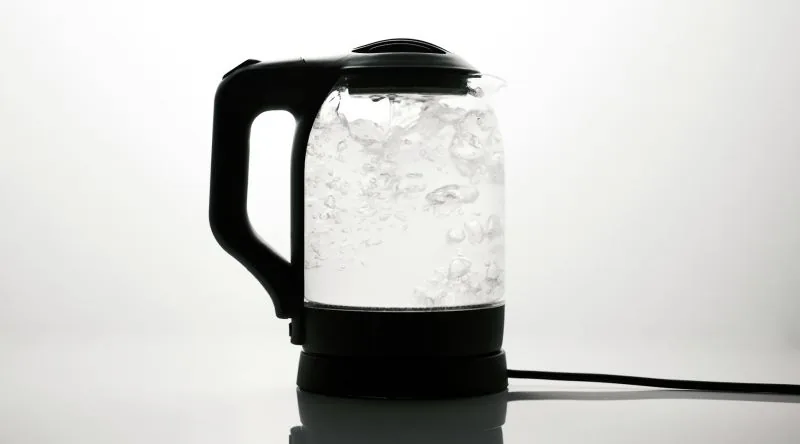
The reason there is no fast water cooler that matches a kettle's speed comes down to basic physics: heating adds energy directly to water molecules, while cooling must actively pump that energy out against the surrounding environment, making the process inherently slower. This asymmetry frustrates anyone who has waited for a cold drink on a hot day, watching the seconds tick by while the refrigerator hums in the background. The gap between the instant gratification of boiling water and the glacial pace of chilling it is one of the most common everyday frustrations, yet few people realize that the explanation lies in the fundamental laws of thermodynamics.
Water heats quickly because a kettle delivers intense, direct energy to the water, raising its temperature fast. Cooling water is slower because a refrigerator must extract heat against the warmer room, a process that works gradually and inefficiently compared to direct heating. This is why no fast water cooler exists today.
- A kettle heats water by converting electrical energy directly into thermal energy inside the water itself, a process that can raise temperatures by many degrees per second.
- A refrigerator cools water by moving heat from the water to the warmer room air, a process that requires a compressor and refrigerant to work against the natural flow of heat.
- The second law of thermodynamics dictates that heat naturally moves from hot to cold, so cooling water below room temperature requires active work to reverse this flow.
- Latent heat of fusion, the energy released when water freezes into ice, is substantial, meaning the final stage of cooling to freezing point takes disproportionately long.
- Industrial rapid water cooling systems exist but use large-scale equipment like plate chillers, which are impractical for home countertop use.
Why No Fast Water Cooler? The Everyday Mystery of Slow Cooling
There is no fast water cooler for your kitchen because heating and cooling are fundamentally different jobs, and physics is firmly on the side of the kettle. A kettle boils water in minutes by dumping electrical energy straight into the water, while cooling demands that we pull that same energy back out, which is a slower, harder process by nature. The short answer is that removing heat from water is simply not as efficient or as quick as adding it. Think about your morning routine for a second. You fill the kettle, flip the switch, and within a couple of minutes you have roaring, bubbling water ready for tea. That speed is possible because an electric kettle converts electrical energy into heat with remarkable efficiency, often around 80 to 90 percent, and it applies that heat directly to the water. It is a one-way street, and the energy flows exactly where you want it to go. Now try the reverse. You want a glass of ice-cold water, and you want it as fast as the kettle gave you that boiling cup. That is where the trouble starts. Cooling water means removing a large amount of energy from it, because water holds onto heat tenaciously. Its high specific heat capacity means that even a small temperature drop requires siphoning off a substantial chunk of thermal energy, and the cooling systems we have are rate-limited by their compressors, their heat exchangers, and the basic physics of how refrigeration cycles work. The article that sparked this question ran on Ekşi Şeyler on 25 June 2024, and it tapped into a frustration almost everyone recognizes. We have grown so used to instant heat that we expect instant cold, and the universe simply does not cooperate. The surrounding air at room temperature does not help either. Heat naturally flows from warmer to cooler, so the water should shed heat to the air around it, but air is a poor conductor of heat, which makes the whole process agonizingly slow unless you force the issue with a powerful cooling mechanism. Freezing adds another layer of difficulty entirely. To turn liquid water into ice, you cannot just lower its temperature to zero degrees Celsius and call it done. You also have to pull out the latent heat of fusion, the hidden energy that holds water molecules in their liquid state. Removing that extra energy takes far more effort than simply dropping the temperature, which is why your freezer takes hours to make an ice cube while your kettle takes minutes to boil water.Heating Is Easy: The Kettle's Efficiency Secret
Your kettle is a quiet little miracle of efficiency. When you flip that switch, electrical energy converts directly into heat with roughly 80 to 90 percent efficiency, and the heating element sits right in the water, so almost nothing gets wasted along the way. That's why a kettle can bring water to a rolling boil in just a couple of minutes. The physics here is straightforward: boiling means adding energy to water, and adding energy through electricity is a fast, direct process. The water molecules start jiggling faster and faster until they simply cannot hold themselves together as a liquid anymore, and you've got steam. Now flip that mental picture around and you'll see why the opposite task feels so stubborn. Cooling water means pulling energy out of it, not adding it. And water is greedy about holding onto its heat. It takes a substantial amount of energy to lower the temperature of even a small amount of water, which is why your cup of tea stays hot long after you've poured it. The refrigeration systems that do this work are limited by how much energy they can remove per second, constrained by compressor capacity and the size of their heat exchangers. That's the fundamental reason there's no fast water cooler sitting on your countertop next to the kettle.Why Cooling Is Slow: Energy Removal and Air's Limits
Boiling water is a one-way energy transaction, and that is precisely why your kettle wins the race. To freeze water, you have to pull a massive amount of energy out of it, and that removal process is where the physics gets stubborn.
Think about what happens when you flip the switch on an electric kettle. Electrical energy converts into heat with remarkable efficiency, often above 80 percent, and that heat gets dumped straight into the water. The water happily absorbs it, molecules start jiggling faster, and within a couple of minutes you have steam. Heating is about adding energy, and adding is easy.
Cooling flips the entire script. You are not adding anything; you are subtracting. Water has a high specific heat capacity, which is a fancy way of saying it holds onto its thermal energy with a fierce grip. To drop the temperature of even a liter of water by a meaningful amount, you have to extract a staggering quantity of heat. Your refrigerator compressor, the heat exchanger coils, the whole refrigeration loop, they all work together to pull that energy out, but they are rate-limited machines. There is only so much heat they can move per second, and that ceiling is far lower than the wattage your kettle can push in.
The air around the glass does not help either. The source suggests that at room temperature, the surrounding air makes rapid cooling difficult because heat flows from warmer to cooler surroundings. The physics nuance here is that heat actually does flow out of warm water into cooler room air, which should help. The real bottleneck is that air is a terrible heat conductor. Its thermal conductivity is poor, so even though the temperature difference favors cooling, the transfer happens at a snail's pace. You would need to chill the air itself rapidly, and that is a whole other energy problem.
And if you want to go all the way to ice, the challenge multiplies. Dropping the water's temperature to 0 degrees Celsius is not enough. You also have to remove the latent heat of fusion, the hidden energy that holds the liquid structure together. That step demands far more energy than simply lowering the temperature, which is why your freezer takes hours, not minutes, to make ice cubes. The energy has to go somewhere, and moving it out quickly is the hard part.
The Freezing Hurdle: Latent Heat of Fusion
Here is the real wall that stops a kettle-speed water cooler cold: freezing water at 0°C is not a temperature problem, it is an energy removal problem. To turn liquid water into ice, you must pull out 334 kJ of latent heat of fusion for every single kilogram of water, all while the temperature sits stubbornly at zero degrees. That hidden energy demand is far larger than the energy needed to simply chill water by a few degrees, and it is the reason your kitchen counter will not host a flash-freeze gadget anytime soon.
Think about what a kettle does on the way up. It injects electrical energy into water, converting it to heat with remarkable efficiency, typically 80 to 90 percent, and that is a fast, straightforward process. Boiling is an addition game. Freezing flips the script completely. You are not adding anything; you are forcing energy to leave the water, and the amount you must extract is enormous. Cooling systems are rate-limited by their compressor capacity and heat exchanger area, which means they can only pull heat out so quickly. A kettle can dump energy in almost instantly, but a cooler has to wrestle that energy away molecule by molecule.
There is also a quiet misconception floating around about room temperature air being the enemy here. In reality, at room temperature, heat flows from warmer water into cooler surrounding air, which actually helps cooling along. The sluggishness comes from air's low thermal conductivity, not from any reversal of heat flow. The true bottleneck remains that stubborn latent heat of fusion, the energy that must vanish before liquid water reorganizes into solid ice. Removing it requires vastly more work than dropping the temperature a few notches, and that is precisely why the physics makes a home-scale rapid water cooler impractical with today's technology.
Industrial Solutions and the Home Gap
Walk into a commercial kitchen or a food processing plant and you will find machines that chill food and drink with startling speed. Professional blast chillers can drop a hot tray of food from steaming to safe serving temperature in a matter of minutes. Yet the claim that such rapid cooling simply cannot be shrunk down for home use is contested, and the counter-evidence sits on store shelves right now.
Countertop blast chillers, marketed to serious home cooks and small cafes, are commercially available and can chill a bottle of wine or a batch of soup far faster than a standard refrigerator. Thermoelectric coolers, which use the Peltier effect to move heat from one side of a module to the other, power compact beverage fridges and even camping coolers. So the technology exists outside industrial settings, even if it has not reached the ubiquity or price point of a kettle.
The real gap is not whether such devices can exist, but whether they can match the sheer simplicity and speed of boiling. A kettle converts electrical energy into heat with remarkable efficiency, typically in the range of 80 to 90 percent, and pours that energy directly into the water. Cooling, by contrast, demands that energy be pulled out of the water, and that process is rate-limited by compressor capacity, heat exchanger surface area, and the fundamental physics of heat transfer. Water's high specific heat capacity means a great deal of energy must be removed to lower its temperature even by a few degrees.
There is also the stubborn reality of ice. To freeze water, dropping its temperature to 0 degrees Celsius is not enough. The latent heat of fusion, the energy locked in the liquid state, must also be extracted, and that requires far more energy than simply cooling. A kettle sidesteps all of this by adding energy instead of removing it, which is why boiling feels effortless while freezing feels like a chore.
So could a future appliance ever match a kettle? The source is skeptical, and that skepticism has some merit. The physics of heat removal will never be as forgiving as the physics of heat addition. But given that countertop blast chillers already exist and continue to get cheaper and smaller, the question may not be whether such a device can be built, but whether enough people want one badly enough to pay for it.
Frequently asked questions
Why can't water cool as fast as it heats in a kettle?
Cooling water demands the removal of a massive amount of energy, and that removal is rate-limited by how fast any cooling system can extract heat. A typical electric kettle converts electrical energy into heat at 80 to 90 percent efficiency, pouring energy straight into the water. Refrigeration systems, by contrast, must work against physics to pull that energy out, constrained by compressor capacity and heat exchanger size.
What makes heating efficient?
Direct electrical-to-heat conversion is nearly lossless, which is why your kettle boils water in minutes. The heating element sits right in the water, transferring energy with almost no middleman. This is why kettles outperform stovetops and microwaves, which waste energy heating the surrounding air or the pot itself.
Why does room-temperature air slow cooling?
Contrary to a popular misconception, heat does flow from warmer water into cooler surrounding air at room temperature. The real bottleneck is that air has very low thermal conductivity, so it can't absorb and carry away heat quickly. To speed up cooling, you'd need to rapidly chill the air around the water, which is far harder than simply heating water directly.
How does latent heat affect freezing?
Dropping water to 0 degrees Celsius isn't enough to freeze it; you must also remove the latent heat of fusion, which is 334 kilojoules per kilogram. This hidden energy is what locks water molecules into an organized ice crystal structure. Removing that amount of energy takes far more time and power than simply lowering temperature, making rapid freezing impractical for household appliances.
What industrial tech cools rapidly?
Blast chillers and thermoelectric coolers do exist and can cool food and beverages quickly, but they're not common in homes. Countertop blast chillers are commercially available, though they're expensive and bulky. Thermoelectric coolers use the Peltier effect to move heat, but they're inefficient for large volumes of water.
Could a home appliance ever match a kettle?
As of now, no home device can cool water as fast as a kettle heats it, and the gap is unlikely to close soon. Some speculate that advances in thermoelectric materials might one day change this, but that remains unverified speculation. The fundamental physics of energy removal versus addition will always favor the kettle. Editorial note: Any facts which remain unconfirmed are presented as such, hedged carefully for accuracy.
Got a take on this? Add your voice to the conversation below →
No comments yet. Be the first.