Medieval Sexuality: Galen's Weird Ideas About Sex
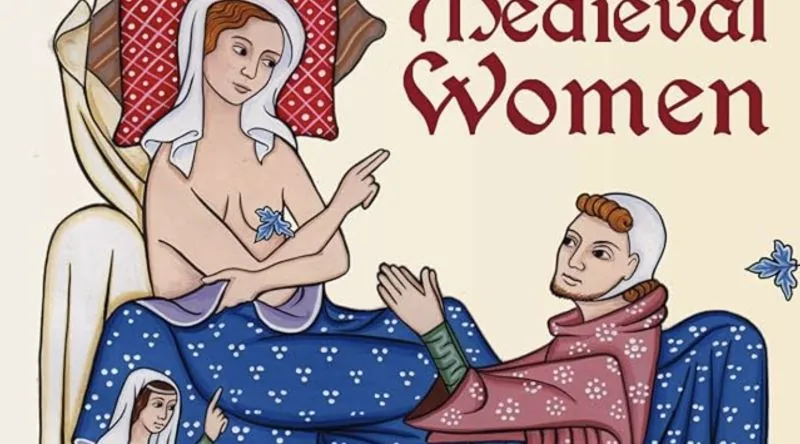
Medieval sexuality was shaped by Galen's ancient theories, which held that women were essentially inverted men and that sex was a vital health necessity, influencing European medicine and daily life for centuries. These ideas, passed down from a second-century Roman physician, created a worldview where bodily fluids, heat, and balance dictated everything from diet to marital advice. It is a strange, deeply human story of how people tried to make sense of their bodies with the tools they had, and it still echoes in how we think about health and desire today.
In medieval Europe, doctors followed Galen's teaching that sex was essential for physical and mental health. They believed women had internal versions of male genitals, semen came from refined blood, and that holding in seed could cause serious illness. These theories guided real treatments for centuries.
- Galen's theory of female anatomy held that women's reproductive organs were simply inverted versions of men's, with the same parts inside instead of outside.
- Medieval doctors believed semen was produced from blood that had been "cooked" or refined by body heat, with the brain playing a key role in the process.
- Sex was viewed as a health necessity in medieval times, since doctors thought retained seed could cause physical and mental distress in both men and women.
- Medieval treatments for uterine suffocation often involved midwives manually moving the womb back into place or using strong-smelling substances to encourage it to shift.
- Medieval medicine viewed menstruation as a natural purging of excess blood, and doctors linked its absence to various illnesses that they treated with bloodletting.
A World Where Sex Was Medicine
If you wanted to understand your own body in medieval Europe, you did not open a biology textbook. You turned to Galen, the Greek physician who died in the year 216 and whose ideas still ruled university medicine more than a thousand years later. His framework shaped medieval sexuality from the ground up, dictating everything from how doctors explained erections to why they worried about a man's hair falling out.
Galen's system rested on four humors: blood, phlegm, black bile, and yellow bile. Health meant keeping these fluids in balance, and your personal balance depended on your temperature and moisture. Women, the theory went, ran cold and damp. Men ran hot and dry. That single distinction explained almost everything medieval thinkers believed about sex, anatomy, and illness. It told them why women menstruated, why men produced semen, and why too much intercourse could ruin a man's kidneys while too little could poison a woman's womb.
The humoral lens also decided who was considered the default human. Because men were hot and dry, they were seen as the perfected version of the species. Women, stuck with their cold, moist nature, were understood as lesser variations. This was not a casual prejudice. It was medical doctrine, taught in universities and repeated in natural philosophy texts across Christendom. Every medieval belief about sexuality, from the mechanics of conception to the proper treatment for a wandering womb, flowed from this one foundational idea about heat and moisture.
The Inverted Body: Why Women Were 'Imperfect Men'
Picture the medieval medical mind at work: it saw the female body as a mirror image of the male, flipped inward instead of outward. The uterus was essentially an inverted penis, and the ovaries were treated as roughly equivalent to testicles. This anatomical worldview, rooted in the theories of the Greek physician Galen, shaped how medieval thinkers explained everything from menstruation to desire.
The logic ran like this. Men were hot and dry, the ideal state for a human body. Women, by contrast, were cold and moist, which made them something less than complete. Albertus Magnus, the 13th-century German scholar, described women as unfinished men. The famous inverted penis idea, however, actually traces back to Galen centuries earlier, not to Albertus himself. In Galen's telling, the penis was a perfected organ turned outward, while the womb was its imperfect counterpart kept inside the body.
That cold, moist nature explained menstruation too. Medieval thinkers argued that women simply lacked the bodily heat to dry up their excess fluids. Since they could not process these surplus liquids the way men did, their bodies were forced to expel them regularly. Hence the monthly bleeding, seen not as a healthy cycle but as a necessary purge of what the body could not transform.
Menstrual blood carried a strange double reputation. Bartholomeus Anglicus, a 13th-century English scholar, claimed it flowed into the womb like filth into a sewer and could rust metal and kill living creatures. Sex with a post-menopausal woman was considered especially dangerous, since her retained bad humors had nowhere to go. Yet the very same blood was also believed to nourish the embryo during pregnancy and to transform into breast milk after birth. One fluid, two wildly different jobs: poison and life-giver.
This paradox sat at the heart of medieval sexuality. The body was a system of humors and temperatures, and every function had to be balanced against the others. Menstruation was both a curse and a necessity, a fact of female biology that medieval medicine could only explain by turning women into lesser versions of men.
The Wind of Desire and the Mystery of Semen
Medieval doctors believed an erection was powered by wind, quite literally a spirit or breeze moving through the body. If a man struggled to perform, the prescription was simple: eat chickpeas and other gas-producing foods to generate more internal air. This pneumatic view of arousal fit neatly into the Galenic system that dominated medieval sexuality, where the body was a vessel of moving spirits and humors rather than muscles and blood flow.
The logic followed a certain internal consistency. If air filled the penis to stiffen it, then more air meant a better result. Chickpeas, beans, and similar legumes were the go-to remedy for men who reported difficulty, since these foods were known to produce plenty of gas. Whether the treatment actually worked is another question entirely, but the theory held firm in medical texts of the period.
Far stranger was the debate over where semen actually came from. The dominant theory, inherited from Galen and Aristotle, held that semen was a byproduct of digestion. Excess food was fermented in the body and then whitened by the power of the testicles, transforming ordinary nutrients into the milky fluid of reproduction. This explained why men felt drained after sex, since they were literally expelling processed nourishment.
But a competing camp argued for a far more surprising origin: the brain. Supporters pointed out that semen and brain matter shared a similar color, texture, and moistness, suggesting they were related substances. They also cited secondary evidence that seemed to connect the two organs. During sex, they observed, a man's eyes took on a distinctly different appearance. And there was an even more peculiar proof: cutting the veins behind a man's ears would supposedly render him sterile, which could only make sense if semen traveled from the brain down through those pathways.
This brain theory carried real weight in medieval sexuality, even if it never fully displaced the digestive model. Both explanations coexisted in medical writings, with different physicians favoring different accounts. The testicle theory had the advantage of matching the obvious anatomy, while the brain theory offered a more poetic vision of conception as an act of pure thought made flesh. Either way, the mystery of male arousal and reproduction was clearly a subject of intense curiosity, and medieval thinkers approached it with the same seriousness they applied to any other branch of natural philosophy.
Too Much, Too Little: Sex as a Delicate Health Balance
Galen's secretion theory, which dominated medieval European medicine, cast sex as a form of bodily excretion that was genuinely beneficial, but only when practiced in moderation. The Greek physician's framework, developed in the second century, treated semen as a digestive residue that needed periodic release, much like other waste products. Yet medieval thinkers, following his logic, warned that the body paid a steep price when a man overindulged.
The core problem, as they saw it, was that intercourse drained both heat and moisture from the male body. Excessive sex was believed to dry the system out, producing a cascade of alarming symptoms: hair loss, heart and lung troubles, and kidney failure. The eyes and brain were thought to be especially vulnerable because of their supposed "strong connection" to semen. Albertus Magnus, the thirteenth-century German scholar, insisted that men who had too much sex developed sunken, shrunken eyes and weakened vision. He even told the story of a monk who, after desiring a beautiful woman seventy times before morning prayer, died of what he called "half-starvation." An autopsy reportedly showed his brain had shrunk to the size of a pomegranate.
But abstinence carried its own dangers. Constantine the African, an eleventh-century monk-physician, is said to have declared that "no one who abstains from sexual intercourse can be healthy," though the exact wording cannot be verified from surviving texts. The logic behind the claim was straightforward: sex helped expel digestive excess, and long-term celibacy meant retaining too much semen. Maino de Maineri, an Italian physician, warned that retained semen could poison the entire body, not just the reproductive organs, leading to anxiety, depression, headaches, and weight loss. In extreme cases, prolonged sexual deprivation could reportedly kill a man.
Women faced a different equation entirely. In the medieval understanding, frequent sex was considered a health necessity for the female body. Women were thought to be cold and moist by nature, and intercourse supposedly warmed them, softening their cold constitution. As one contemporary text put it, women who had sex often "do not have their lives shortened like men." The stakes were high enough that a condition called "suffocation of the womb," believed to strike young girls and widows who went without sex, was treated as a serious medical emergency, with treatments ranging from marriage to more invasive interventions.
The Wandering Womb and Its Cures
In medieval medicine, a woman who went too long without sex risked a terrifying diagnosis: suffocation of the womb. Young girls and widows were thought especially vulnerable, since their bodies held onto "seed" that had nowhere to go. The symptoms read like a mystery illness: fainting spells, stomach troubles, loss of appetite. The prescribed cure, more often than not, was marriage, so the patient could have regular intercourse.
The logic came straight from Galen, the second-century Greek physician whose ideas shaped medieval medicine. His theory held that women, being cold and moist by nature, produced their own version of semen. When that seed sat trapped in the womb, it was believed to put pressure on the body and cause those alarming collapses. The name of the condition came from the belief that the womb could move upward and suffocate the patient from within.
Some doctors took a gentler approach than pushing a patient toward the altar. John of Gaddesden, an English physician writing in the early 1300s, recommended travel abroad and frequent exercise to shake the womb back into place. But when lifestyle changes failed, things got stranger. His Rosa Anglica describes cupping on the groin, special drinks, and pessaries made from powdered fox penis, inserted to draw out the offending seed.
For women in acute distress, Gaddesden had a more direct method. He advised that a midwife insert a finger coated with lily or laurel oil into the uterus and move it forcefully, the goal being to bring the patient to orgasm and expel the trapped seed. It was a medical procedure, not a pleasure, but the intent was unmistakably physical.
Arnau de Vilanova, a Catalan physician of the same era, offered his own variation. He recommended inserting silk soaked in vinegar or saltwater mixed with ground sage and natron into the vagina. The result, he believed, would draw out the excess seed and relieve the pressure. Arnau was honest enough to acknowledge that some women, including the wives of Florentine merchants, took matters into their own hands through masturbation. But he would not recommend it as a treatment, because it was a sin.
The irony is striking: a woman could be prescribed marriage, manual stimulation by a midwife, or a pessary made from fox penis powder, all for her health. Yet the one solution she could perform herself was off the table, condemned as immoral. Medieval sexuality was full of such contradictions, where the cure and the sin were often the same act, separated only by who performed it and why.
Fatal Desires and the Plague's Warning
In 1152, Ralph, Count of Vermandois, lay dying, and his physician knew exactly why. The doctor had warned the aging nobleman to stay away from his young bride, but Ralph had ignored the advice. After examining the count's urine, the physician made a grim prediction: Ralph would be dead within three days. He was right.
Ralph's death became a cautionary tale across medieval Europe about the dangers of excessive desire. Ralph had married for the third time, taking a wife much younger than himself, and the physical demands of the marriage proved too much for his aging body. Medieval medical thinking held that sex drained both heat and moisture from a man's body. Too much of it dried you out completely, leading to hair loss, heart and lung problems, and kidney failure. The count's death was seen as proof that this theory was not merely academic speculation.
The warnings became even more urgent in the 14th century, as the Black Death swept through Europe. Plague treatises advised men to avoid sex entirely if they wanted to survive. The reasoning was simple: intercourse weakened the spirit, and a weakened spirit could not fight off the plague. During those terrifying years, abstinence was framed as a matter of life and death.
But medieval medicine never settled on a single answer about sex. The same doctors who warned against excess also insisted that too little could be just as deadly. Men who married but failed to fulfill their marital duties were said to die from retaining seed. The body needed to expel excess fluids, and blocking that natural process was dangerous. Maino de Maineri, an Italian physician, wrote that retained semen could poison the whole body, harming the heart and causing anxiety and depression. Headaches, weight loss, and even death were possible outcomes.
So medieval men faced a delicate balancing act when it came to sex. Too much sex dried the body and could kill, as Ralph of Vermandois found out. Too little sex let poisonous vapors build up inside, with equally deadly results. The line between these two dangers was thin, and many men apparently lacked the wisdom to walk it. It is no surprise that medieval medical texts devoted so much attention to the topic.
Medieval STDs: Foul Vapors and Urine Washes
Medieval people understood that some diseases spread through sex, even without knowing about bacteria or viruses. Their explanations were creative, and their preventive advice ranged from the merely odd to the genuinely alarming.
Consider the fear of leprosy, which hung heavy over medieval Europe. A story from 15th-century Toulouse tells of a man who slept with a prostitute and reportedly watched his face begin to swell afterward. According to his own account, he was seized with terror, convinced he had caught leprosy, and swore he would never lie with a woman again. Whether that exact episode happened as described is hard to verify, but the fear itself was real and widespread.
How did people think leprosy traveled through sex? A 13th-century medical text, likely written by Gilbertus Anglicus, laid out a bizarre chain of events. If a leper had sex with a woman, his semen could linger in her womb and transform into what they called "foul vapor." When a healthy man later had intercourse with that same woman, the warmth of his body would draw that poisonous vapor in through his open pores. Within a short time, sores would appear on his genitals, and then the disease would spread through his entire body.
The recommended defenses were drastic. John of Gaddesden, an English physician writing in the early 14th century, advised that any man who had intercourse with a woman he suspected of being a leper should immediately wash his penis with his own urine, or else with a mixture of vinegar and water. That was only the first step. The man then needed to undergo phlebotomy, the practice of drawing blood from a vein, followed by a full three months of purification treatments involving ointments and medicines.
Medical manuals of the period were packed with other remedies for the swollen, itchy genitals that could follow a risky encounter. Poultices and herbal washes were standard fare, though none of them would have done much against an actual infection. The underlying theory, that disease traveled through vapors and imbalances rather than invisible organisms, meant that even the most earnest treatments were doomed to fail. Still, the impulse was there: medieval sexuality was not naive about the risks of the body, even if its understanding of those risks was profoundly off the mark.
Frequently asked questions
What did Galen believe about female anatomy?
Galen, the Greek physician whose theories dominated medieval medicine, saw female anatomy as an inverted version of the male. He viewed the uterus as something like an inside-out penis, with the ovaries roughly matching the testicles. This framework shaped how medieval thinkers understood everything from conception to desire.
Why did medieval doctors think women menstruated?
Medieval doctors believed women's cold and moist nature prevented them from drying up excess fluids the way men could. Since their bodies lacked the heat to evaporate these leftover substances, women had to expel them regularly as menses. This Galenic explanation treated menstruation as a necessary monthly purge rather than a sign of illness.
How did medieval medicine explain semen production?
The dominant theory held that semen was a residue of digested food, cooked and whitened in the testicles. But a competing view argued it came from the brain, pointing to the similar white, soft, moist texture of both substances. Some even claimed that cutting the veins behind a man's ears would make him sterile, supposedly proving the brain connection.
What were the medieval health risks of too much sex?
Excessive sex was thought to dry the body out, leading to hair loss, heart and lung problems, kidney failure, sunken eyes, and weakened vision. Albertus Magnus, the 13th-century scholar, told of a monk who died after desiring a beautiful woman seventy times before morning prayer; his brain had shrunk to the size of a pomegranate.
What was uterine suffocation and how was it treated?
Uterine suffocation was a condition believed to strike women who abstained from sex, especially young girls and widows. Symptoms included fainting, stomach troubles, and loss of appetite. The best cure was marriage, but doctors also recommended travel, exercise, cupping on the groin, special drinks, and pessaries made from powdered fox penis.
How did medieval doctors treat sexually transmitted diseases?
John of Gaddesden, an English physician, advised washing the penis with urine or vinegar and water after intercourse with a suspected leper. This was followed by bloodletting and a three-month purification regimen of ointments and drugs. Medieval medicine had no knowledge of germs, but it did recognize that some diseases spread through intimate contact. Editorial note: Some details about specific medieval remedies and the exact prevalence of certain beliefs remain unconfirmed in surviving records, and those points are presented as such.
Got a take on this? Add your voice to the conversation below →
No comments yet. Be the first.