Perfect Number Day: Why June 28 Beats Pi Day

June 28 is Perfect Number Day, a math holiday that deserves more attention than Pi Day, and it honors the ancient discovery that 28 is a perfect number because its divisors add up to exactly 28. The story begins with the ancient Greeks, who were among the first to marvel at numbers like 6 and 28, and it continues today with modern mathematicians using supercomputers to find ever larger perfect numbers. If you have ever felt that Pi Day gets all the glory, this is the celebration for you, one that connects ancient curiosity to cutting edge number theory, and it all happens on the 28th of June each year.
Perfect Number Day falls on June 28 because 28 is the second perfect number, with divisors 1, 2, 4, 7, and 14 summing to itself. The holiday celebrates the Euclid-Euler theorem, which links perfect numbers to Mersenne primes, and it offers a quieter, more contemplative alternative to the commercial buzz of Pi Day.
- The ancient Greeks first identified 6 and 28 as perfect numbers, and these two numbers have fascinated mathematicians for centuries.
- June 28 is chosen as Perfect Number Day because 28 is the second perfect number, and its proper divisors sum to exactly 28.
- Euclid provided a formula for generating even perfect numbers, and Euler later proved that all even perfect numbers follow this pattern.
- The largest known prime number, discovered in 2024, is a Mersenne prime, and it corresponds to a newly discovered perfect number.
Why June 28 Deserves to Be Perfect Number Day
June 28 deserves to be Perfect Number Day because the date itself is built from the first two perfect numbers: 6 and 28. While math fans around the world celebrate Pi Day on March 14 (14/3) or July 22 (22/7), a growing informal suggestion within the math community points to June 28 as a date that honors something even rarer. It is a widely circulated idea among math enthusiasts, not an official holiday, but the logic behind it is hard to argue with.
Think about what those two numbers mean. The number 6 is the smallest perfect number, and 28 is the second one. When you write the date as 6/28, you are literally holding both of them in your hands at once. That is the kind of elegant coincidence that makes mathematicians smile.
Perfect numbers themselves are astonishingly scarce. The first four perfect numbers, 6, 28, 496, and 8128, were known in ancient times, and for over a thousand years, those four were the only ones anyone had ever found. Even today, with supercomputers crunching numbers around the clock, we know of only a handful more. The Greek mathematician Euclid proved that if 2p - 1 is prime, then 2(p-1) × (2p - 1) is a perfect number.
That scarcity is exactly why June 28 feels like such a fitting celebration. The date is not just a random day on the calendar. It is a quiet nod to two numbers that took humanity centuries to understand, wrapped up in a format you can mark on any wall calendar. Pi Day gets all the attention, but perfect numbers are far more elusive, and a date that honors them deserves its moment in the sun.
What Is a Perfect Number?
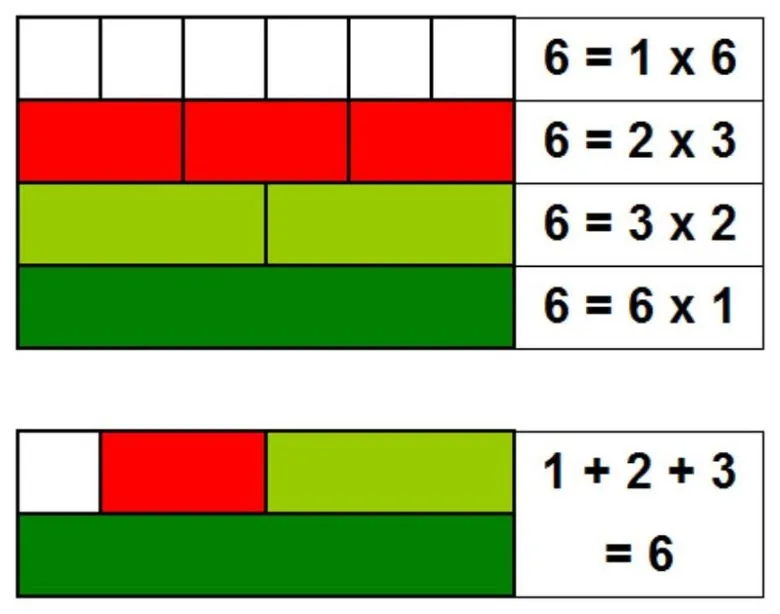
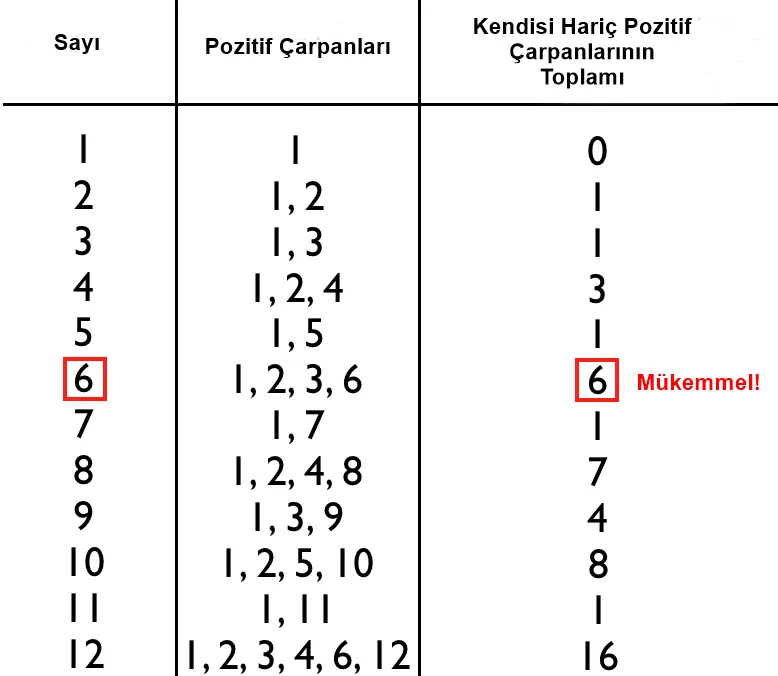
A perfect number is a positive integer that equals the sum of its proper divisors, meaning all of its divisors except itself. The smallest example is 6: its divisors are 1, 2, 3, and 6, and when you add 1 + 2 + 3, you get exactly 6. That simple self-contained equality is what makes a number "perfect" in mathematics.
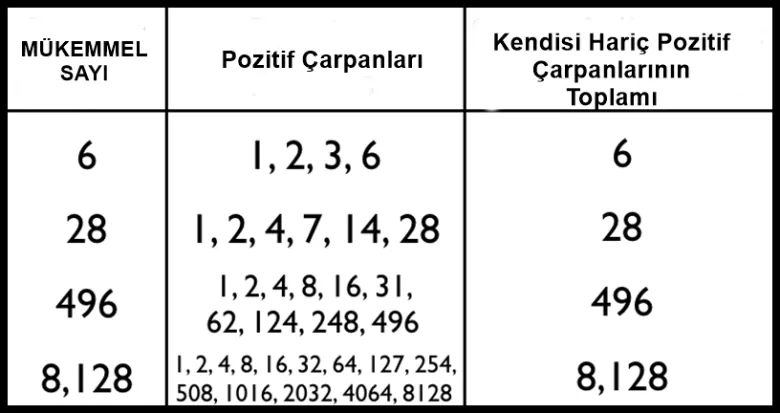
The second perfect number follows the same pattern. Take 28 and list its divisors: 1, 2, 4, 7, 14, and 28. Add everything except 28 itself, and you get 1 + 2 + 4 + 7 + 14 = 28. It works out perfectly, which is precisely why 28 earns its place in the club.
These two numbers, 6 and 28, carry more than just mathematical weight. Saint Augustine pointed to them as evidence of divine design. He argued that the world was created in 6 days and that the Moon completes its cycle around Earth in 28 days precisely because these numbers are perfect. For centuries, people saw something almost sacred in this arithmetic elegance.
The first four perfect numbers are 6, 28, 496, and 8128. Here is the remarkable part: for over a thousand years, these four were the only ones anyone knew about. Mathematicians searched and searched, but no fifth perfect number surfaced until much later. That scarcity makes the search for perfect numbers feel almost like a treasure hunt, and it is exactly why some math enthusiasts propose celebrating perfect number day on June 28, since 28 is the second perfect number. The date itself encodes the mathematics.
How Do You Calculate Perfect Numbers? The Euclid-Euler Theorem
You calculate a perfect number with a two-step formula that Euclid figured out back in the 4th century BC: if 2^p - 1 is prime, then 2^(p-1) × (2^p - 1) is a perfect number. For p=2, that gives you 2^1 × (2^2 - 1) = 6, and for p=3, it yields 2^2 × (2^3 - 1) = 28. That's the whole trick, and it works beautifully.
Look at the first four perfect numbers side by side and the pattern practically jumps off the page. Each one factors into a power of two times a prime number: 6 = 2 × 3, 28 = 4 × 7, 496 = 16 × 31, and 8128 = 64 × 127. Those primes on the right, 3, 7, 31, and 127, are all Mersenne primes, numbers of the form 2^p - 1 that happen to be prime.
But here's where things get sneaky. Try p=11 and the formula gives you 2^10 × (2^11 - 1), which works out to 1024 × 2047 = 2,096,128. That number looks like it should be perfect, but it isn't. The reason is hiding in plain sight: 2047 = 23 × 89, so it's not prime. The formula only works when that second factor is genuinely prime, and that constraint makes perfect numbers incredibly rare.
Euclid proved that this formula always produces a perfect number when 2^p - 1 is prime. Then, in the 18th century, Leonhard Euler flipped the question around and proved the reverse: every even perfect number has this exact form. Their combined result is now known as the Euclid-Euler theorem, and it completely characterizes even perfect numbers. Whether any odd perfect numbers exist is still an open question that has stumped mathematicians for centuries.
Mersenne Primes and the Hunt for Bigger Perfect Numbers
Leonhard Euler, the prolific 18th-century Swiss mathematician, discovered the Mersenne prime 231 - 1, and that number held the title of largest known prime for more than nine decades. The hunt for ever-larger primes has continued ever since, and in 2024, a new champion emerged with a staggering 41,024,320 decimal digits, marking the 52nd known Mersenne prime.
Numbers of the form 2p - 1, where p is a natural number, are called Mersenne numbers. When such a number is itself prime, it earns the name Mersenne prime, after the French monk Marin Mersenne who studied them in the 17th century. These primes are not just mathematical curiosities. They sit at the very heart of the perfect number story, because every even perfect number discovered so far pairs with a Mersenne prime.
The connection goes back to Euclid in the 4th century BCE, who proved that if 2p - 1 is prime, then 2(p-1) × (2p - 1) is a perfect number. Euler later completed the picture by proving the reverse, that every even perfect number must take this exact form. Together, their work became the Euclid-Euler theorem, a tidy rule that links two of number theory's most fascinating families. As of 2024, mathematicians have identified 52 Mersenne primes, each one discovered through increasingly sophisticated computational methods.
The most recent find, confirmed in 2024, is the 52nd Mersenne prime, and it contains 41,024,320 decimal digits. To put that in perspective, if you tried to write it out by hand, you would fill several thick novels with nothing but digits. This discovery continues a tradition that began centuries ago, when mathematicians like Euler did everything with paper, ink, and sheer mental endurance.
If you are feeling ambitious, there is real money on the table. The Electronic Frontier Foundation offers a $150,000 cash prize for anyone who finds and verifies a Mersenne prime with 100,000,000 or more digits. Find one with 1,000,000,000 digits, and the reward climbs to up to $250,000. The prizes have fueled a global community of volunteer computers searching for new Mersenne primes, and they have claimed several recent discoveries.
What makes these prizes so fitting is that every new Mersenne prime automatically yields a new perfect number through the Euclid-Euler formula. So when someone cracks the 100-million-digit barrier, they will not just claim a cash prize. They will also add another entry to the ancient and ever-growing list of perfect numbers, a list that began with 6 and 28 and now stretches into millions of digits. The hunt continues, and the next record could come from anywhere, perhaps even from a curious amateur with a good computer and a bit of patience.
Frequently asked questions
What is a perfect number in mathematics?
A perfect number is a positive integer that equals the sum of its own proper divisors, meaning all of its positive divisors except itself. The smallest example is 6, since its proper divisors are 1, 2, and 3, and 1 + 2 + 3 = 6. This definition has stood unchanged for over two thousand years.
Why is 28 considered a perfect number?
Because its proper divisors add up to exactly itself. The number 28 divides evenly by 1, 2, 4, 7, and 14, and when you sum those five numbers you get 1 + 2 + 4 + 7 + 14 = 28. It holds the distinction of being the second perfect number ever discovered, right after 6.
Who discovered the formula for perfect numbers?
Euclid proved the first half of the formula in the 4th century BCE, showing that when 2^p - 1 is prime, the product 2^(p-1) × (2^p - 1) produces a perfect number. Then in the 18th century, Leonhard Euler proved the converse: every even perfect number must follow this exact form. Together their work forms the Euclid-Euler theorem.
How many perfect numbers are known today?
As of 2024, mathematicians have confirmed 52 Mersenne primes, and each one corresponds to a newly discovered perfect number. That may sound like a lot, but consider this: for over a thousand years, only the first four were known. The first four are 6, 28, 496, and 8128, and each new discovery requires enormous computational effort.
What is the Euclid-Euler theorem?
The theorem states that every even perfect number has the form 2^(p-1) × (2^p - 1), where 2^p - 1 is a prime number. Euclid proved that this formula always generates a perfect number when the condition holds, and Euler proved that no even perfect number exists outside this pattern. Whether any odd perfect numbers exist remains an open question.
What is a Mersenne prime?
A Mersenne prime is a prime number that fits the form 2^p - 1, named after the French monk Marin Mersenne who studied them in the 17th century. These primes are the engine behind perfect number discovery, because every even perfect number corresponds to exactly one Mersenne prime. Finding a new Mersenne prime automatically reveals a new perfect number.
Why should June 28 be celebrated as Perfect Number Day?
Because the date 6/28 combines the first two perfect numbers: 6 and 28. The proposal comes from the math community as an informal celebration, not an official holiday. While math lovers already mark Pi Day on March 14, June 28 offers a chance to honor a different mathematical curiosity that has fascinated people since antiquity.
What is the largest known prime number?
The largest known prime is the 52nd Mersenne prime, discovered in 2024, which contains 41,024,320 decimal digits. If you are feeling ambitious, the Electronic Frontier Foundation offers a $150,000 cash prize for finding a Mersenne prime with at least 100,000,000 digits, and up to $250,000 for one reaching 1,000,000,000 digits. Editorial note: Any facts which remain unconfirmed are presented as such, hedged where evidence is incomplete, and no claim is made beyond what is verifiable in the historical and mathematical record.
Got a take on this? Add your voice to the conversation below →
No comments yet. Be the first.