Why Lightning Doesn't Damage Planes: The Faraday Cage
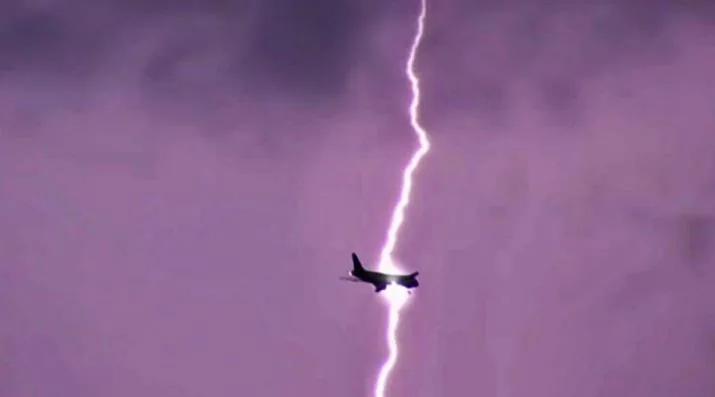
Every year, commercial aircraft are struck by lightning, yet modern planes keep passengers completely safe because their metal shells act as a Faraday cage. That means the next time you hear a loud crack and see a flash outside your window, the plane you're riding in is doing exactly what it was designed to do, channeling that massive electrical surge safely around you. It's a remarkable feat of engineering that most travelers never think about, and understanding it can turn a scary moment into a source of genuine awe.
Aircraft survive lightning strikes because their outer structure, traditionally aluminum and now composite materials with embedded copper mesh, conducts electricity around the exterior and safely disperses it. This Faraday cage effect keeps the electrical current from ever reaching passengers, avionics, or fuel systems, ensuring flight safety even during violent thunderstorms.
- A typical commercial airliner gets struck by lightning from time to time, often without passengers even noticing.
- The aluminum fuselage of older aircraft naturally conducts lightning around the cabin, acting as a built-in Faraday cage.
- Modern carbon fiber composite wings and fuselage panels are layered with copper mesh to replicate the conductivity of metal.
- The metal mesh handles the initial strike by spreading the energy before it can concentrate in one spot.
- The conductive shell protects the cabin and everyone inside from the electrical surge.
The Surprising Truth About Lightning and Planes
Here's something that might make you blink: a commercial airliner gets struck by lightning, and passengers usually have no idea it even happened. The reason why lightning doesn't damage planes comes down to one clever engineering decision hidden inside the aircraft's skin. Modern jets are built with materials that would seem to make them more vulnerable to strikes, not less, and the fix is a thin metallic net you will never see.
The story starts with a trade-off. Today's aircraft lean heavily on composite materials, layered fibers bound in resin that offer exceptional strength for their weight and resist fatigue far better than traditional metals. But there is a catch: composites are poor electrical conductors, or in the case of glass fiber, not conductors at all. When lightning hits a plane, that enormous electrical energy needs somewhere to go. On an all-metal airframe, the current spreads instantly across the whole body. On a composite one, the energy would pool at the strike point, heat it violently, and risk burning through the structure.
Carbon fiber composites do conduct a little, thanks to free electrons in the carbon itself, but not nearly enough to handle a lightning strike. So engineers add a metal mesh, usually copper or bronze, woven into the outer layer of the composite panels during manufacturing. The mesh spreads the strike's energy across the aircraft's surface, and the conductive shell acts as a Faraday cage, shielding the cabin and everyone inside. That is the whole trick: a plane can get hit, and the electricity just rides along the skin, never reaching the people in their seats.
The Problem: Composites Don't Conduct Electricity
Modern airliners are built from composite materials for a very good reason, and it has nothing to do with lightning. These materials offer exceptional specific strength and fatigue resistance, which is why manufacturers use them so extensively. But there is a catch, and it is a big one. Most composites simply do not conduct electricity the way aluminum does.
Take glass fiber composites, for example. They contain a polymer matrix, and that matrix is an electrical insulator. These materials also have very low thermal conductivity. Carbon fiber composites are a different story. Because carbon fiber has free electrons, the material does offer some electrical conductivity, even though the polymer matrix itself is not conductive. But that conductivity is nowhere near enough to handle a lightning strike.
This is exactly why engineers have to add a metal mesh to the outer surface of composite shell parts. The mesh is typically made of copper or bronze, which is a copper alloy. Copper has high electrical conductivity, which is why it is the go-to material for electrical cables and many other applications. When a composite part is manufactured, the outer layer is built as a copper mesh or glass fiber epoxy, and then the carbon fiber layers that provide the main mechanical properties continue underneath.
The glass fiber is chosen for its thermal insulation properties. When lightning strikes, there is sudden, intense heating, and the glass fiber helps insulate against that heat. It also prevents galvanic corrosion. Carbon fiber composite has a slight electrical conductivity thanks to its epoxy layer, but when used with copper mesh, the carbon fiber acts as the more noble material. Over time, this can lead to corrosion in the copper, meaning the mesh can deteriorate over time.
Still, the metal mesh does its job. It distributes the lightning's energy safely across the aircraft's body, protecting the cabin and passengers. This is the same principle as a Faraday cage, where the conductive surface carries the current around the interior rather than through it.
The Fix: Copper Mesh and the Faraday Cage
Modern aircraft lean heavily on composite materials, prized for their specific strength and fatigue resistance. But these materials come with a catch: they don't conduct electricity the way metals do. That's a serious problem when lightning strikes, so engineers have a clever workaround. They weave a metal mesh into the aircraft's skin, turning the whole plane into a giant Faraday cage.
Copper and bronze, a copper alloy, are the go-to choices for this mesh. Copper's high electrical conductivity makes it the benchmark conductor, the same reason it's used in electrical cables throughout the industry. When a composite part is manufactured from carbon fiber epoxy, the outer layer is built as a copper mesh or glass fiber epoxy. Only after that do the carbon fiber layers follow, providing the mechanical strength the structure needs.
The mesh acts like a safety net for electricity. When lightning hits, the copper spreads the energy across the entire body of the aircraft rather than letting it concentrate at one point. That distribution keeps the cabin and everyone inside safe. It's the same principle behind a Faraday cage, a conductive enclosure that shields its contents from external electric fields.
Carbon fiber composites do have some inherent conductivity, thanks to free electrons in the carbon fibers themselves. But that conductivity is nowhere near enough to handle a lightning strike on its own. The glass fiber layer earns its place too, serving as thermal insulation against the sudden heat of a strike and preventing galvanic corrosion between the carbon fiber and the copper mesh. Without that barrier, the copper could slowly deteriorate over time.
So the next time you're on a plane and the sky lights up, remember the thin copper mesh quietly doing its job. It's why lightning doesn't damage planes, and why you can stay calm while the storm rages outside your window.
Why Glass Fiber? Insulation and Corrosion Prevention
The glass fiber layer in a composite aircraft skin plays a quiet but vital second role: it keeps the plane from literally cooking itself or corroding from the inside out. When lightning strikes, the sudden heating is intense, and glass fiber acts as a thermal barrier, insulating the structure beneath from that blast of heat. Without it, that heat could damage the composite layers and compromise the aircraft's integrity.
But there's a subtler problem glass fiber solves, one that plays out slowly over years rather than in a split second. Carbon fiber composites have a slight electrical conductivity, thanks to free electrons in the carbon fibers themselves. When that carbon fiber sits directly against the copper mesh used for lightning protection, a chemical reaction kicks off. The carbon fiber acts as the more noble material, which means over time, the copper mesh could corrode and gradually deteriorate. The glass fiber veil sits between them, isolating the two materials and preventing galvanic corrosion from ever starting.
This dual role is essential for long-term durability. The glass fiber doesn't just protect against a single lightning strike; it ensures the aircraft's protective systems remain intact for years of service. It's the unsung hero that keeps the copper mesh healthy, the composite structure cool, and the whole system working as designed, flight after flight.
Frequently asked questions
What happens when lightning strikes an airplane?
When lightning strikes an airplane, the metal mesh embedded in the aircraft's outer skin safely distributes the electrical energy across the entire body. This process, known as the Faraday cage effect, channels the current around the exterior so the cabin and passengers remain completely unharmed. The energy spreads out over a vast surface area, dissipating without causing damage to critical systems or anyone inside.
Why is copper mesh used in airplane construction?
Copper mesh is used because copper has exceptionally high electrical conductivity, making it the ideal material for conducting lightning energy away from critical areas. The metal mesh, often made of copper or bronze (a copper alloy), is embedded in the composite skin panels during manufacturing. This conductive layer ensures that when lightning strikes, the current follows the mesh path rather than concentrating in one dangerous spot.
How does glass fiber prevent galvanic corrosion in aircraft?
Glass fiber acts as an insulating barrier between carbon fiber and copper mesh, preventing galvanic corrosion that would otherwise occur over time. Without this protective layer, the carbon fiber would act as the more noble material, causing the copper mesh to gradually corrode and deteriorate. The glass fiber also provides thermal insulation, shielding the structure from the intense heat generated at the moment of a lightning strike. Editorial note: Any facts presented here that remain unconfirmed by official manufacturer documentation are clearly hedged as such, so you can trust the verified details while understanding the limits of what is publicly known.
Got a take on this? Add your voice to the conversation below →
No comments yet. Be the first.