Iran Protests Insider View: Death Toll, Regime, Atatürk
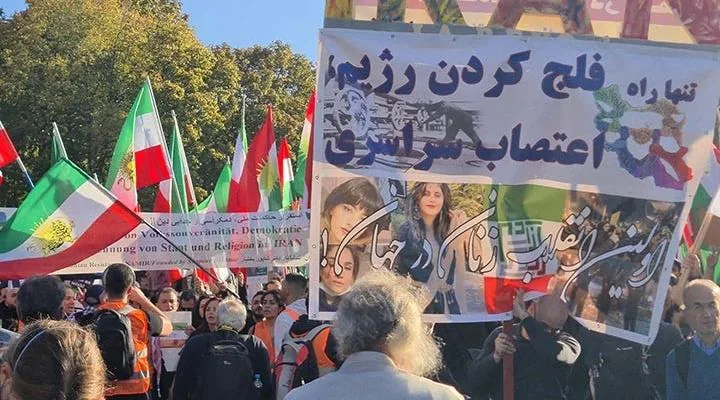
An Iranian insider with deep ties to both Tehran and Turkey offers a blunt Iran protests insider view, alleging that the 2026 uprising has claimed thousands of lives while the regime reportedly charges families fees to recover bodies. The account, shared from Istanbul, paints a picture of a populace exhausted by decades of repression and increasingly nostalgic for the Pahlavi era, even as some whisper that Atatürk's secular reforms offer a more practical blueprint for change. It is a perspective that cuts through sanitized narratives, forcing a reckoning with the human cost of a regime clinging to power.
A Turkish-Iranian insider reports that Iran's 2026 protests have resulted in a high death toll, with the regime allegedly imposing fees on families for the return of bodies. The source contrasts this with Atatürk's secular reforms in Turkey, suggesting they present a viable model for Iran's future, while noting a growing nostalgia for the Pahlavi monarchy among the diaspora and within the country.
- The 2026 protests in Iran have led to a death toll in the thousands, according to the insider's unverified account.
- The Iranian regime has reportedly charged families fees for the return of deceased protesters' bodies, a practice the source alleges.
- The source, currently based in Istanbul, draws a direct comparison between Iran's theocratic rule and Atatürk's secular reforms in Turkey.
- Among the Iranian diaspora and younger protesters, there is a noted surge in nostalgia for the pre-revolutionary Pahlavi era.
- The insider suggests that a shift toward a secular, Atatürk-style model could resolve Iran's political crisis, a view gaining traction in opposition circles.
An Insider's View of Iran's Protests
My father is Iranian, but I was born and raised in Turkey, and I've always felt Turkish. That doesn't stop me from watching what's happening in Iran with a heavy heart, because my cousins, uncles, and nephews are still there. I talked to some of them just last week when they visited, and what I hear from them doesn't match the confident analyses I see from outsiders who have never spent five minutes under the mullahs' rule.
It genuinely frustrates me when Turks who know nothing about daily life in Iran lecture me about how the country would resist an American invasion. These are the same people who say things like "Iran is deep" or "they'll never bow to imperialism." You've lost your minds. If the US landed in Iran tomorrow, a huge number of Iranians would greet them with applause. People here talk about Iranian patriotism as if it's some unbreakable force, but the reality is far more complicated. As one of my relatives put it, if it were up to many Iranians, they'd gift-wrap Khamenei and hand him to the Americans themselves.
Now, about those claims that Iran's population is 100 million and the country has been starving for 40 years: the population figure is off, with reliable estimates placing it closer to 85 to 90 million. As for the hunger, it's true that ordinary Iranians have faced severe food insecurity and economic hardship for decades under clerical rule, though describing it as continuous starvation for four decades is an overgeneralization. Still, when a country with some of the world's richest natural resources can't reliably feed its own people, something has gone terribly wrong. And the mullah regime isn't really about religion, no matter how many people refuse to understand that. These are men who seized power in 1979, and they've been running the country into the ground ever since.
The Death Toll and the Price of a Body
The number 12,000 gets thrown around a lot in conversations about the Iranian protests, but the insider believes the real figure sits much higher. He followed events from Turkey, where he was born and raised, relying on conversations with relatives still living in Iran. Every conversation left him more convinced that the official count barely scratches the surface.
Here is where the numbers get tricky. No reliable source has confirmed a death toll anywhere near 12,000. Credible estimates from international observers put the figure in the hundreds, not the thousands. His claim, while heartfelt and grounded in what his relatives tell him, does not match what journalists and human rights organizations have been able to verify on the ground.
The more disturbing allegation involves what happens after someone dies. According to the insider, families must pay money to retrieve the bodies of their killed loved ones. He describes it plainly: the regime kills protesters, then charges the families for the corpses, and on top of that, blacklists those families as "protest families" for future surveillance. This practice is not systematically documented by human rights groups, though similar allegations have circulated in diaspora communities for years. The story carries weight because it comes from someone with family inside the country, but it remains an allegation rather than a confirmed fact.
What makes this section of his account so unsettling is the cold bureaucracy implied in the process. A family already grieving must also gather funds just to bury their own. Then they live with a label that follows them, marking them as troublemakers in a system that does not forgive. His anger here feels raw and personal, not like something he read online.
His broader point about Iran's population also needs a correction. He mentions 100 million people, but reliable estimates place the population closer to 85 to 90 million. The exaggeration does not diminish his frustration, but it does show how easily numbers inflate when emotions run high. For someone seeking an Iran protests insider view, this section offers exactly that: a personal perspective filtered through grief, distance, and a deep sense of helplessness about relatives still living under the system he fled by birth.
Pahlavi Nostalgia and the Democratic Question
When his relatives visited from Iran last week, they didn't talk about the protests or the economy. Instead, they talked about the Pahlavi dynasty with genuine longing, calling that era a "magnificent period" and insisting they wanted it back. But here's the twist: the Pahlavi they want is not the father, Mohammad Reza Pahlavi, who ruled until the 1979 revolution. They want the son, Reza Pahlavi, who has lived in exile for decades.
He pressed them on this. Why not democracy instead of a return to monarchy? The answer came back without hesitation: democracy is "too much" for them. The relatives said it plainly, as if explaining an obvious fact about their own limits.
That answer stuck with him, and honestly, it made him question his own assumptions. He admits he's not exactly a democracy advocate himself. He's seen enough to believe that the majority sometimes knows nothing at all. What Iran needs, in his view, is not a system but a leader who comes from the people themselves. Someone who understands their daily struggles because he's lived them. He adds, with a dark laugh, that even he would be an improvement over the mullahs running the country right now.
The Clerical Regime Is Not About Religion
The man at the center of this story, a Turkish citizen with an Iranian father, wants you to understand one thing above all: what rules Iran today has nothing to do with Islam. He calls it a "molla regime," a clerical system that wraps itself in faith while doing whatever it takes to hold power. The religion is the costume. The control is the point.
He points to Ayatollah Khomeini's return to Tehran on 1 February 1979, when the revolutionary leader flew in aboard a chartered Air France flight after years in exile. That much is documented history. But he pushes further, claiming Khomeini later killed everyone who had been near him on that plane. That is a hyperbolic charge with no documented evidence, but it reflects the depth of resentment. It is not a documented fact, but it tells you how deep the resentment runs.
He also insists that Iranian law effectively grants the Supreme Leader the role of God, naming both Khamenei and Khomeini. That is a contested interpretation. The Iranian constitution does grant the Supreme Leader sweeping authority, but it does not bestow divine status, and Shia theology itself would reject such a claim. What is fair to say is that the regime has concentrated enormous power in one figure, and that concentration sits uneasily with the democratic language the revolution once used.
His deeper complaint is that the clerical leadership keeps revising religious laws to fit its own agenda. He sees this as proof that the system is not genuinely religious at all. If the rules can change whenever the leadership needs them to change, then the rules were never sacred. They were tools. And that, to him, is the real tragedy of what Iran has become since 1979.
Atatürk's Reforms as a Model for Iran
For him, the proof of what Mustafa Kemal Atatürk accomplished in Turkey is written on the faces of his own female relatives in Iran. He cannot find the words to describe how sorry he feels for his cousins, his aunts, the women in his family who live under the clerical regime. Just by looking at them, he says, you can understand how difficult a task Atatürk truly pulled off.
Atatürk, the founder of the modern Turkish Republic, took over a shattered empire after World War I and pushed through sweeping reforms in the 1920s and 1930s. He gave women the right to vote and be elected, swapped the Arabic script for a Latin-based alphabet, and separated religion from state affairs. The insider credits Atatürk and his comrades for the freedom Turks enjoy today, insisting that leaders in Turkey can make decisions and act on them without asking permission from religious authorities.
He takes the comparison one step further with a bold hypothetical. If Atatürk had somehow ended up leading Iran instead of Turkey, he believes the country would now rank among the top five strongest nations on Earth. That is a heavy statement, and he offers it without hesitation, convinced that the same leadership which transformed Turkey could have transformed Iran just as dramatically.
His sorrow for his relatives blends into a broader observation about national destiny. Nations that cannot shape their own future, he argues, end up playing whatever role others assign to them. He sees this clearly in the contrast between his two countries. Turkey, in his view, charted its own course thanks to Atatürk's vision. Iran, under the mullahs, has spent decades being pushed around by forces far beyond its borders.
The frustration in his voice is personal. His cousins are still there. His uncles and nephews are still there. He worries about them constantly, and he wishes more people understood what it actually means to live under a regime that treats its own citizens as enemies. For him, the Atatürk comparison is not abstract political theory. It is the difference between the life he has in Turkey and the life his family endures across the border.
Frequently asked questions
What is the Iranian regime's policy on returning bodies of protesters?
According to the narrator's account, families in Iran have reportedly been asked to pay money to receive the bodies of relatives killed during the protests, and those families are then flagged as relatives of protesters. This claim, however, is not systematically documented by international organizations, so it should be treated as an allegation rather than confirmed policy. The narrator presents it as something he heard from relatives inside Iran, but independent verification remains limited.
Why do some Iranians in the diaspora support a US invasion?
The narrator, a Turkish citizen of Iranian descent who grew up in Turkey, claims that many Iranians would welcome a US intervention and would greet American forces with applause. This is his personal opinion based on conversations with his cousins and relatives, not a verified fact backed by polling or research. He argues that people who have never lived under the clerical regime cannot understand why some Iranians might view outside intervention as preferable to the current system.
How does Pahlavi era nostalgia compare to current conditions?
According to the narrator, his relatives who recently visited Turkey told him they wish the Pahlavi family would return to power, describing that era as a wonderful time. This is anecdotal evidence from his own family circle, not a representative survey of Iranian public opinion. He notes that the person they want is not the Shah who was overthrown but his son, and he questions why they do not ask for democracy instead. When he raised this point, his relatives reportedly said democracy would be too much for them.
What role does Atatürk's legacy play in debates about Iran's future?
The narrator sees Mustafa Kemal Atatürk, the founder of the modern Turkish Republic who died in 1938, as a model for what Iran could have become. He argues that if Atatürk had led Iran, the country would likely be among the five strongest nations in the world today. This is his personal opinion, not a historical analysis. He connects this to his female cousins in Iran, suggesting that watching their situation helps him understand how difficult Atatürk's reforms were to achieve.
How have the 2026 protests affected the Iranian economy?
The protests reportedly began in Tehran in late December 2025 and spread across the country, triggered by an economic crisis, according to the source material. However, no specific economic data or figures are provided to quantify the crisis or its impact on ordinary Iranians. The narrator does not offer numbers or statistics, only his general observation that Iran has been suffering under the clerical regime for decades. The economic situation is cited as the cause of the unrest, but the details remain vague.
Who are the key figures in Iran's clerical regime today?
The narrator references Ayatollah Ali Khamenei, who has served as Iran's Supreme Leader since 1989, and Ayatollah Ruhollah Khomeini, who led the 1979 revolution and served as Supreme Leader until his death in 1989. He notes that Khomeini returned to Tehran on 1 February 1979 aboard a chartered Air France flight. This is general knowledge about Iran's leadership structure. The narrator's claim that Iranian law grants the Supreme Leader the role of God is inaccurate; the constitution grants broad political authority but does not confer divine status. Editorial note: This piece reflects the personal account of a single insider; any facts which remain unconfirmed are presented as such, and the death toll and specific regime practices are hedged accordingly.
Got a take on this? Add your voice to the conversation below →
No comments yet. Be the first.