Why Humans Lost Their Fur: Skin, Suicide, and Sex
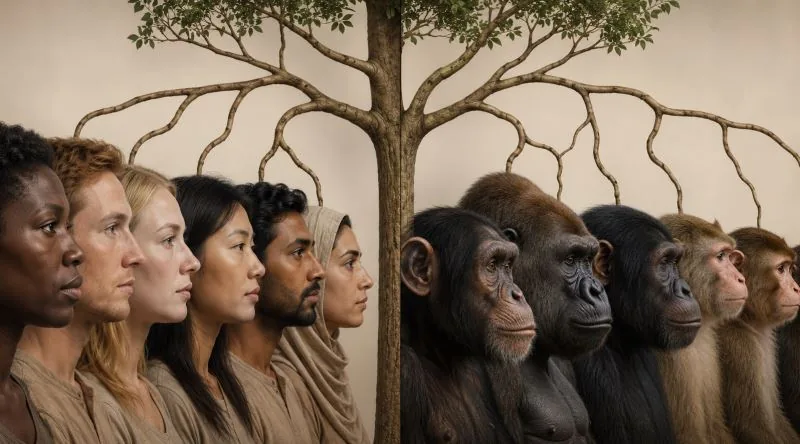
Why humans lost their fur is one of evolution's strangest puzzles, and the answer reaches back to the sun-baked savannas of Africa. Our ancestors traded a warm coat for bare, sweating skin so they could run and hunt in the heat. That single change reshaped how we look, how we love, and even how we die. It also left us with burdens no other primate carries.
Early human ancestors in Africa lost most of their body hair as sweating became a better cooling system for long hunts, and bare skin then had to balance sunlight, folate, and vitamin D, which drove darker and lighter skin tones. This same lineage became the only primates that can consciously refuse or end reproduction, and the only ones known to take their own lives.
- Fur loss in the human line is tied to a shift toward life on hot, open African savannas, where sweating helped early humans keep cool.
- Bare skin plus millions of sweat glands let early humans shed heat during sustained running, a cooling strategy most furry mammals lack.
- Skin color variation is shaped by a tradeoff between protecting folate from sunlight and making vitamin D, so populations near the equator tend to be darker and those farther away lighter.
- Humans are the only primates known to plan and carry out suicide, a behavior tied to self-awareness and future thinking, though the cognitive requirements are debated.
- Humans can also consciously choose not to reproduce, something no other primate is known to do, though the cognitive basis is debated.
Why Don't Monkeys Have Races Like Humans?
So here's the question that kicks everything off: if Homo sapiens is just another primate, why don't chimpanzees, gorillas, and orangutans come in black, white, or almond-eyed varieties? The answer sits in one evolutionary trade-off, and it begins with why humans lost their fur.
Watch a chimpanzee or a gorilla for a few minutes and you notice the obvious thing first. They are wrapped in a dense coat of hair from shoulders to ankles. That fur is a shield. It blocks the sun's ultraviolet rays before they ever reach living skin, so the skin underneath never had to build its own defense. Peel back the hair on most primates and you find something pale, often pinkish, like a newborn's skin.
Human ancestors went the other direction. On the African savanna, they hunted in unforgiving heat, and the trick that kept them going was sweat. Sweating works only if air can reach bare skin, so evolution stripped the coat away. It was a brilliant cooling system, and it left our ancestors standing naked under an equatorial sun that never lets up.
That bare skin paid a price. UV rays break down folate, the B9 vitamin your body needs for cell division and DNA repair. Lose too much of it and the damage is serious. The body's answer was melanin, a natural pigment that soaks up UV before it can do harm. In populations living near the equator, melanin production climbed, and dark skin evolved as a direct response to that relentless sunlight.
Then people walked north, into Europe and Asia, where the sun turns weak and stingy for much of the year. Now the same dark pigment became a problem. Skin needs sunlight to make vitamin D, and heavy melanin blocks the very rays that do the job. The result was bone disease, rickets among them. So in these northern latitudes, melanin production dropped, and lighter skin evolved to let more of that scarce sunlight through.
One trade-off, two opposite solutions, and the whole map of human skin color falls out of it.
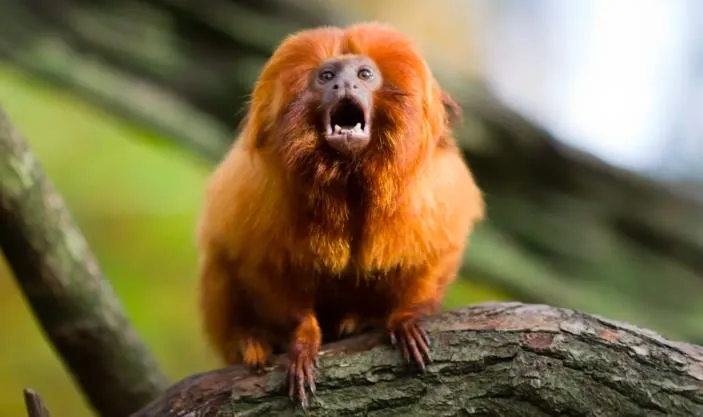
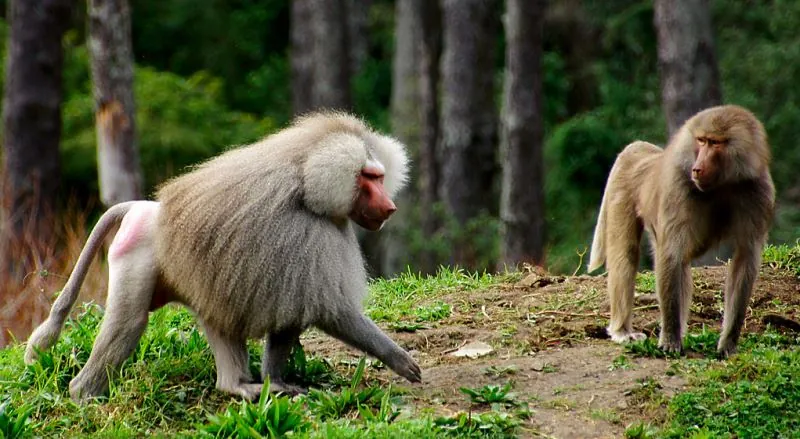
Here is the part that gets lost. Other primates do not lack variety. They simply wear it on the outside. Red-haired orangutans hang in the trees of Borneo and Sumatra. Silverback gorillas carry that famous saddle of pale fur across their backs. Mandrills flash faces painted in red and blue, and golden tamarins live up to their name. Hundreds of primate species exist, each with its own colors and build. What they never developed was human-style races, because their fur meant their skin never had to choose a color at all.
Why Do Only Humans Commit Suicide?
Losing the fur was the easy part. The harder question is what happened to the mind underneath it. Once our ancestors traded a protective coat for bare, sweating skin, they kept going, and the same big brain that came with that lineage eventually made something else possible too: the ability to imagine a future, and then to imagine ending it.
This is where the story turns philosophical. The original account lays out a claim: that suicide requires a specific set of high-level cognitive abilities, time perception that lets a creature envision the future, abstract thinking, and a high degree of self-awareness. It presents that as a requirement, though it is really a reasoned inference rather than a settled empirical fact. As the account frames it, an animal can suffer and can feel stress. But to end your own life on purpose, you would have to reason something like: I exist now, I will exist later, this pain will not improve, so I should consciously stop existing. That's a huge mental leap, and it's said to depend on a highly developed prefrontal cortex, the part of the brain that handles planning and self-control. The framing that this structure is developed only in humans to this degree is debated rather than established, and it is worth treating that way.
Here the popular version gets something wrong. The idea that other primates and animals simply live in the moment, unable to plan ahead or face an existential crisis, does not hold up. Great apes have been shown to save tools for future use, and corvids such as scrub jays cache food in ways that suggest anticipatory planning. Future projection is not a human monopoly.
What about the animals that seem to grieve themselves to death? According to the original account, some primates, dogs, or dolphins that lose an offspring or a mate have been observed slipping into severe depression, refusing food, and eventually dying from weakness. That observation is contested, and grief-driven death is not rigorously established. The account draws a sharp line here: those deaths are not planned suicide. They look more like a body collapsing under severe stress. Suicide, in this telling, is the dark side effect of our intelligence and our advanced consciousness, not a thing the grieving animal chose.
Why Do Humans Choose Not to Have Children?
Evolution never handed any living thing a conscious duty to keep its lineage going. It gives a mating drive, the sex instinct, and nothing more. That is the standard evolutionary view, and it quietly dismantles the popular idea that nature somehow orders us to reproduce.
Watch a chimpanzee or a gorilla when they're fertile. No animal, humans included, sits there thinking, "I should mate today so my genes pass to tomorrow." What happens is simpler and blunter: a biological pressure rises, the animal mates, and offspring arrive as a natural consequence. Whether animals can draw the same clean cause-and-effect line between sex and babies that we draw is, as the original account has it, a genuinely murky question. Comparative cognition has not settled it, and it is hard to test.
Humans did something else. We split the desire for sex from the outcome of having children, mentally and then technologically, through contraception. That separation is a documented historical and modern phenomenon, not a thought experiment. The machinery behind this sits in the prefrontal cortex, the brain's executive region. It runs cost-benefit analysis and impulse control. It lets us say: yes, the drive is there, but a child is economically hard, stressful, blocks a career, or the world does not feel livable enough to bring someone into. The reasoning part of the brain can override a reproductive instinct millions of years old.
The account frames this with a metaphor: the human brain evolved to the point of "hacking" its own basic instincts. That is an interpretive framing rather than a scientific term, so take it as a vivid image, not a mechanism. Read one way, it looks like evolution collapsing. Read the way the account prefers, it is the opposite: proof that evolved intelligence can outrun biology itself. The bigger brain did not just help us survive the savanna. It rewrote the rules fur once set.
Frequently asked questions
Why did humans lose their fur while other primates kept theirs?
Humans shed most of their body hair during evolution to sweat and cool down while hunting across the hot African savanna, where endurance mattered more than insulation. Other primates kept dense fur that shields their skin from ultraviolet rays, which is why the skin beneath their coats never needed its own color adaptation.
How did dark and light skin evolve in humans?
Ultraviolet rays from the sun break down folate, a vital B vitamin, so people living near the equator evolved higher melanin pigment and darker skin as natural protection. As humans migrated north into Europe and Asia, weaker sunlight made that dark pigment hinder vitamin D synthesis, raising the risk of bone diseases like rickets, so lighter skin evolved in those populations.
Why don't monkeys have different races like humans?
Their dense fur blocks ultraviolet radiation, so the skin underneath never faced the pressure that produced human skin-color variation, and it often stays pale or pinkish. Primates still show enormous variety among themselves: hundreds of species, from red-haired orangutans and silverback gorillas to colorfully faced mandrills and golden tamarins.
Why do only humans commit suicide and not other primates?
The original account argues that suicide demands future planning, abstract thinking and high self-awareness, tied to a highly developed prefrontal cortex. That is a debated proposition rather than established fact, and it sits awkwardly beside evidence that great apes and scrub jays can plan ahead and save tools for later use.
Do animals grieve themselves to death like humans?
Some primates, along with dogs and dolphins, have reportedly fallen into severe depression and refused food after losing an offspring or a mate. Death from that grief is anecdotal rather than rigorously established, and the original account stresses it is not planned suicide but a body collapsing under heavy stress.
Why do humans choose not to have children if evolution wants us to reproduce?
Evolution gives living things a mating drive, not a conscious duty to continue their lineage. Our prefrontal cortex enables cost-benefit analysis, and contraception lets us separate sex from reproduction, so a person can weigh the expense and stress of a child and override the instinct entirely.
Do other primates understand the link between sex and babies?
The original account claims animals cannot establish the cause-and-effect relationship between mating and offspring as clearly as humans do. That claim is contested and genuinely hard to test, since no one has found a way to ask a chimpanzee what it believes about where babies come from. Editorial note: Details that remain unconfirmed or debated among researchers are presented here as such, with hedging where the evidence is not settled.
Got a take on this? Add your voice to the conversation below →
No comments yet. Be the first.