Russo-Japanese War: The 1904 Blow to White Supremacy
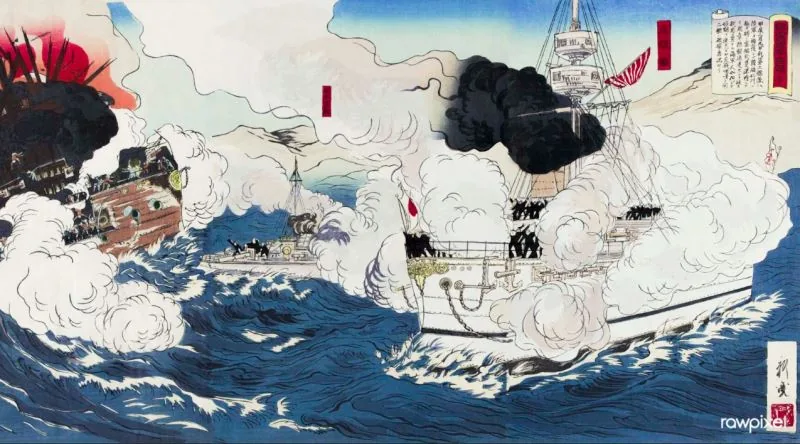
The Russo-Japanese War of 1904 to 1905 pitted Meiji Japan against the Russian Empire over Manchuria and Korea, and Japan's victory became the first time since the Industrial Revolution that a country the West recognized as its own was heavily defeated by a nation the West classified as Asian. When the guns finally fell silent, a belief that had propped up colonial rule across the globe began to crack. White supremacists had spent decades insisting that racial hierarchy was a law of nature. Japan's soldiers and sailors proved otherwise, and the world took notice.
Japan defeated the Russian Empire in the Russo-Japanese War of 1904 to 1905, fighting over control of Manchuria and Korea. It was the first time since the Industrial Revolution that a Western-recognized country was heavily defeated by an Asian-recognized one, and it undermined Social Darwinist claims of inherent white superiority.
- Japan launched a surprise attack on the Russian fleet at Port Arthur in February 1904, opening the war without a formal declaration.
- The fighting dragged on for months, with Japan winning at sea and on land and Russia losing heavily.
- The Treaty of Portsmouth, mediated by the United States in 1905, gave Japan control of the Liaodong Peninsula, Port Arthur and the Manchuria railway.
- Russia's defeat fueled unrest at home, contributing to the 1905 Revolution and weakening the tsarist regime.
- The outcome challenged Social Darwinist theories of racial hierarchy that had justified European and American colonial rule.
A War Textbooks Skip, but One That Shook the World
On February 8, 1904, Japanese torpedo boats slipped toward the Russian-held harbor of Port Arthur and struck without warning. That surprise attack opened the Russo-Japanese War, a conflict that ran from 1904 to 1905 and ended with an American-brokered peace at Portsmouth in August and September of 1905. It almost never makes it into Western classrooms.
Think about what that war actually settled. A non-white Asian nation took on one of the great European powers of the age and beat it outright, on land and at sea. For social Darwinists who had spent the nineteenth century arguing that "white" races held a categorical edge over everyone else, the result was a disaster. Their theories did not survive contact with the news.
The scramble afterward was revealing. Pseudo-anthropologists tried to patch their frameworks by debating whether the Japanese were simply an exception, or whether Russians might not count as fully white after all. Japanese writers of the same era drew the opposite lesson, claiming the victory proved their own race stood among the superior ones. Some commentators have even reached for a comparison to the Michelson-Morley experiment in physics, though that rhetorical analogy is a judgment call rather than anything scholars agree on.
There is a broader claim floating around too: that the war's sociological weight rivals that of the American War of Independence and the Turkish War of Independence. Treat that as a reported historiographical judgment, not settled fact. Still, the shock was real. European correspondents who traveled to watch the fighting wrote home about a disciplined, hardworking people who seemed nothing like the other Asian nations they thought they knew.
Some observers read the whole thing as Asia's first triumph over Europe in a very long period, the East finally getting one over on the West. Whether Russia of that moment was truly "European" is a fair question. What is not in doubt is that Meiji Japan modernized entirely along Western lines while keeping its own identity intact. And the timing matters: this all happened roughly forty years before Pearl Harbor.
How the Russo-Japanese War Began
To understand why Japan moved first, you have to look at what both empires wanted from the same patch of ground. Japan had spent years keeping a close eye on Korea, Manchuria, and northern China. Russia, meanwhile, was pouring settlers into the region, its population there growing year by year, and it was building a major railway across the territory. From Tokyo's seat, that combination looked less like development and more like a slow annexation. So Japan sent a demand: pull back. Russia ignored it.
The men planning Japan's war had already settled on one idea above all others. Naval supremacy was the key to victory, and whoever controlled the sea controlled the outcome. That conviction is what put those torpedo boats in the water off Port Arthur on the night of February 8, 1904, aimed squarely at the Russian ships moored there.
What makes the opening move worth pausing on is how deliberately it was built. A declared war, a formal ultimatum, a march of armies across a border: none of that came first. The strike came first. Japan had watched Russia's slow creep through Manchuria and decided that the only way to stop it was to hit before Russia could finish the railway and make its position in the region permanent.
The Treaty of Portsmouth: What Japan Gained
The fighting dragged on for months, and by the time it stopped, Russia had lost more than it could absorb. Japan won the Russo-Japanese War outright. What followed was not a battlefield surrender but a negotiated settlement, brokered by the United States in the late summer of 1905.
Negotiations ran through August and September, and the Treaty of Portsmouth followed. Russia handed over its lease on the Liaodong Peninsula and Port Arthur, the fortified harbor city at the tip of that peninsula. Control of the Manchuria railway also passed to Japan. On Sakhalin Island, the two sides drew a line at the 50th parallel. The southern half went to Japan, the northern half stayed Russian.
That list is short, and it is worth sitting with. Port Arthur was the same harbor Japan had struck on February 8, 1904, in the opening surprise attack of the war. Now it belonged to the attackers.
The war cost Russia far more than territory. The strain of months of fighting shook the empire badly, and holding the country stable under those conditions became very difficult. The years that followed brought strikes and disorder. How directly that line runs toward October 1917 is a matter historians still argue over. What is not in dispute is that a European power had been beaten by an Asian one, and the map of Northeast Asia had been redrawn to say so.
The Sociological Earthquake: When "White Supremacy" Theories Crumbled
When the Russo-Japanese War ended in 1905, the shock ran far beyond the battlefield. For decades, Social Darwinists had claimed a categorical superiority of the "white" race over all others, treating it as settled science. Most of those pseudo-anthropological theories built up across the 19th century collapsed with this war. It was the first time since the Industrial Revolution that a power the West recognized as its own had been heavily defeated by a nation the West classified as Asian.
Watch what the theorists did next. The self-styled anthropologists did not abandon their framework. They scrambled to patch it. Some debated whether the Japanese were simply an exception, a special case that proved the rule. Others wondered aloud whether the Russians were not fully white after all. Meanwhile, Japanese "anthropologists" read the same result the opposite way, claiming the victory proved the Japanese race belonged among the superior races. Everyone kept the ladder. They just argued about who stood on which rung.
How big was this rupture? One commentator reached for a comparison from the hard sciences, arguing that the Russo-Japanese War played roughly the role in the social sciences that the Michelson-Morley experiment played in physics. Treat that as a reported rhetorical analogy rather than anything like scholarly consensus. It is a striking image, not a settled verdict. And the broader claim that this war ranks with the American War of Independence or the Turkish War of Independence in historical significance is likewise a matter of interpretation, not established fact.
What no one could wave away was the raw result. A Western-recognized power had been beaten badly by an Asian-recognized nation, and the intellectual scaffolding of racial hierarchy suddenly looked like what it was: scaffolding.
A Turning Point for Asia and a Shockwave in Russia
European correspondents who sailed east to watch the fighting came home with the same startled sentence in their notebooks: here was a people unlike any other in Asia, disciplined, hardworking, and drawn to war. That dispatch, filed from Manchuria between 1904 and 1905, introduced much of the Western reading public to Japanese culture for the very first time. The Russo-Japanese War did not just redraw a map. It rearranged how one continent looked at another.
Some historians frame the outcome as Asia's first superiority over Europe in a very long period, the first moment the East clearly got the better of the West. It is a fair debate whether the Russia of that era counted as fully European. What is harder to argue with is the identity question on the other side. Meiji Japan rebuilt itself with Western methods, imported the technology and the institutions wholesale, and kept a distinctly Japanese core throughout. Modernization never meant becoming someone else.
The shock inside Russia ran deeper than a lost fleet. The war fed the unrest that erupted in the 1905 Revolution, and in the years that followed, strikes and disorder kept surfacing across the empire. The popular narrative holds that a straight line runs from the battlefield to October 1917, with chaos and labor stoppages continuing unbroken for twelve years. That chain oversimplifies a crowded, complicated stretch of Russian history. The war was a heavy contributor to the crisis of 1905, and the pressure it created is real, but treating it as the single fuse that reached the Bolsheviks in 1917 asks one event to carry too much weight.
What nobody can take away from the war is the rupture it made in the way the world was explained. A nation that European theory had placed at the bottom of a racial hierarchy had just beaten one placed at the top. The old certainties never quite recovered.
Frequently asked questions
What was the main cause of the Russo-Japanese War in 1904?
Japan had long eyed Korea, Manchuria and northern China. Russia, meanwhile, kept pouring settlers into the region and building a major railway there. When Japan told Russia to pull back, the Russians ignored the warning. On February 8, 1904, Japanese forces launched a surprise torpedo attack on the Russian-held Port Arthur harbor, and the war began.
How did Japan's victory challenge Social Darwinism?
For the first time since the Industrial Revolution, a country the West classified as Asian defeated a country it classified as white, and defeated it badly. Most of the supposedly scientific racial theories built up through the 19th century collapsed with that result. The idea of a categorical white superiority simply did not survive contact with the outcome.
Who mediated the peace treaty that ended the war?
The United States mediated the settlement, with negotiations in August and September 1905 producing the Treaty of Portsmouth. The deal transferred Russian leaseholds in Manchuria to Japan and ended the fighting between the two empires.
What territories did Japan gain?
The treaty handed Japan control of the Liaodong Peninsula, Port Arthur and the Manchuria railway. Half of Sakhalin Island also passed to Japanese control, divided at the 50th parallel, with the southern half ceded to Japan.
Why was the war a turning point for Asian nations?
Many read the outcome as Asia's first triumph over Europe in a very long period, proof that a modernized, Western-trained power could keep its own identity and still win. European journalists who traveled to watch the fighting wrote home about a disciplined, hardworking and warlike people unlike anything they expected from Asia.
How did the war contribute to the 1905 Russian Revolution?
Russia suffered heavy losses through months of fighting, and the strain shook the empire badly. The 1905 Revolution followed, and holding the country stable under those conditions became very difficult. The popular narrative holds that Russia then slid through years of anarchy and strikes, though drawing a straight line from this war all the way to October 1917 oversimplifies a complicated stretch of history.
Was the war a precursor to Pearl Harbor?
There is a striking symmetry here. Japan's surprise attack on Port Arthur on February 8, 1904 came roughly 40 years before the strike on Pearl Harbor, and both opened a war with the same logic: strike first, seize the advantage at sea. Editorial note: Details that remain unconfirmed or disputed are presented as such, and no claim is made beyond what the historical record supports.
Got a take on this? Add your voice to the conversation below →
No comments yet. Be the first.