Why Aspirin Is 81 mg: A 5-Grain Quirk of History
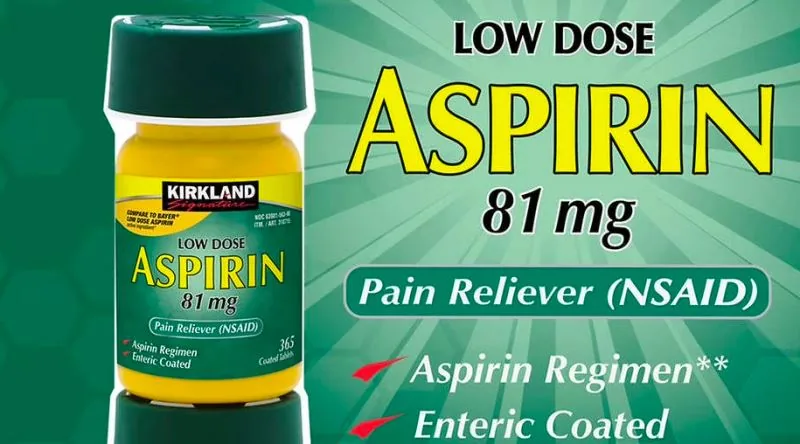
The reason aspirin is 81 mg comes down to history, not medicine: the dose descends from a five-grain tablet that was standard in the United States a century ago. If you have ever stared at that tiny pill and wondered why it is not a round 100, you are not alone. Most people assume 81 mg was chosen after years of careful trials, but the real story is stranger and more human. It involves old British measurements, a practical decision about quartering a tablet, and a dose that stuck simply because it was already there.
Aspirin is dosed at 81 mg because that amount is roughly equal to five grains, an old unit of weight once common in British and American medicine. A standard aspirin tablet was five grains, and later a quarter of that tablet became the low dose. The number survived as a matter of habit, not as a scientifically perfect target.
- A grain is an old unit of mass based on the weight of a single cereal grain, and five grains was roughly equivalent to about 325 milligrams.
- For much of the twentieth century, the standard adult aspirin tablet in the United States was five grains.
- A quarter of that standard tablet works out to about 81 milligrams, which is how the low dose came to be.
- The 81 mg figure is a historical convenience rather than a scientifically perfect number.
- Low-dose aspirin is used for certain heart and vascular conditions, and the exact dose remains a matter of medical judgment.
The 81 mg Question Nobody Ever Asks
Millions of people around the world use an 81 mg aspirin, a dose confirmed in FDA labeling for low-dose aspirin products. Yet almost nobody stops to ask why the number is 81 and not 80 or 100. The short answer to why aspirin is 81 mg is that it was never designed. It is a leftover, a measurement custom that outlived the empire that invented it.
Picture the orange bottle on the kitchen counter. The little white tablet inside may look engineered, deliberate, the product of careful science. It isn't. The dose is a historical legacy, not a scientifically "perfect number," and its story begins in Anglo-Saxon pharmacy, where aspirin was produced as 5-grain tablets of roughly 325 mg during the 19th and early 20th centuries. The grain, an old apothecary weight unit, was commonly used in that era.
Then came the discovery that heart and vascular patients did not need the full classic tablet. Lower doses were enough. Rather than invent a fresh formulation, pharmacists and physicians reached for the simplest practical move available: they quartered the old tablet. One quarter of 325 mg lands at 81 mg. That is the whole trick, a fraction of a fraction, born of convenience rather than calculation.
What makes it stranger is that the accident turned out to work remarkably well. Research has since shown that 81 mg is more than sufficient to suppress platelets, the tiny cell fragments that clump together and form clots. Higher doses do not add protection; they only raise the risk of bleeding. So the dose that survived is not the one pharmacology would have chosen from scratch. It is the one a century of habit handed down, which is why the 81 mg tablet remains the standard in the United States today.
5 Grains: The Anglo-Saxon Tablet That Started It All
Before milligrams ruled the pharmacy shelf, there was the grain. Not a speck of wheat, but a unit of weight inherited from the old apothecary system, and for decades it was the quiet ruler of every tablet counter in Britain and the United States. In the 19th and early 20th centuries, aspirin came off the line as a 5-grain tablet. Do the math and you land at roughly 325 milligrams, the number that would go on to anchor an entire century of dosing.
Five grains was not a random figure. It was the classic standard tablet size in Anglo-Saxon pharmacy, the shape and weight a pharmacist's hands simply knew. When physicians later discovered that heart and vascular patients needed far less than that full dose, nobody reinvented the tablet from scratch. They took the familiar 5-grain tablet and cut it into quarters. One quarter of 325 milligrams is 81 milligrams, and just like that, a piece of an old tradition became the dose that millions of people worldwide now use every day.
Here is the part that surprises almost everyone. The 81 mg dose is standard in the United States today, not because 81 is a scientifically perfect number, but because it is one quarter of a tablet size that pharmacists were already producing about a century ago. The grain is an old apothecary weight unit, not a metric one, and that single fact is the whole reason the number looks the way it does. The dose reflects a historical measurement system rather than a laboratory calculation.
The arithmetic behind the anchor number:
- Classic 5-grain tablet: approximately 325 mg
- One quarter of that tablet: 81 mg
- Ratio between the two: roughly 4 to 1
So when you ask why aspirin is 81 mg, the honest answer is a bit of historical arithmetic. It is a quarter of a tablet that no one makes anymore, measured in a unit most people have never heard of, kept alive by habit and by the fact that it works. The grain system faded as the metric system became standard, leaving 81 milligrams behind as a historical artifact.
The Quarter-Tablet Shortcut That Became a Standard
Picture a pharmacist in the early twentieth century, standing over a stock of aspirin tablets stamped at 5 grains. That was the classic unit of Anglo-Saxon pharmacy, and 5 grains works out to roughly 325 mg. It was the dose everyone knew, the dose that filled the shelves.
Then heart and vascular medicine shifted. Doctors found that lower amounts were enough, and the practical answer was almost comically simple: break the tablet into quarters. One quarter of 325 mg lands at about 81 mg. That arithmetic, not a laboratory breakthrough, is where the low-dose aspirin tablet came from.
So why aspirin is 81 mg comes down to division, not design. It is a quarter of an old weight measurement, carried forward because it was convenient and it worked.
What the science later confirmed is that this accidental number turned out to be well suited to its job. Research showed that 81 mg is more than enough to suppress platelets, the tiny blood cells that clump together and form clots. Push the dose higher and you do not get extra protection. You get more bleeding risk instead. The quarter-tablet was not optimized; it simply happened to be in the right range.
The grain itself is the ghost in the machine. It belongs to the apothecary system, a set of weights pharmacists used roughly a century ago, long before milligrams became the language of prescriptions. When the industry moved to metric labeling, the old 5-grain tablet did not vanish. It was relabeled as 325 mg, and its quarter became 81 mg.
That is the strange part of the story. The number on the bottle is not a scientifically perfect figure. It is a historical leftover, an old unit of weight and an old habit of compounding, passed down to modern medicine. And yet it holds. In the United States, 81 mg is the standard low-dose aspirin strength, confirmed in FDA labeling for low-dose products. Millions of people use it every day, most of them with no idea that the dose was decided by a pharmacist's knife rather than a researcher's calculation.
What the Science Actually Says About 81 mg
Here is the part that surprises people: 81 mg is not a magic threshold. It is simply more than enough. Research shows that this small amount suppresses platelets, the blood-clotting cells that can clump together and block an artery, and it does the job thoroughly. The dose works, but the number behind it was never chosen for that reason.
Meta-analyses, such as those by the Antithrombotic Trialists' Collaboration, have shown that low doses inhibit platelets effectively, while higher doses do not add any extra protective benefit. What they do add is bleeding risk. More drug, more danger, same result. So the therapeutic window turns out to be wide open at the bottom, and 81 mg sits comfortably inside it.
A quarter of the old 325 mg tablet was never designed to hit a target. It simply happened to land in a range where the drug works, and where the bleeding risk stays low.
That is the quiet punchline. The 81 mg dose is standard in the United States today. It works because even a fraction of a tablet is sufficient to quiet platelets. It does not work because someone calculated a perfect number. The historical accident, the decision to break a classic tablet into four pieces, happened to land in a therapeutically effective range.
Frequently asked questions
Why is aspirin sold in an 81 mg dose in the United States?
Because 81 mg is the predominant low-dose strength approved in U.S. FDA labeling, and it happens to be roughly one-quarter of the classic 325 mg tablet. That quartering was a practical move, not a scientific calculation, and the number simply stuck as the standard low-dose product sold across the country.
What does 5 grains mean, and how does it equal 325 mg?
The grain is an old Anglo-Saxon pharmacy unit of weight. In the 19th and early 20th centuries, aspirin was routinely produced as 5-grain tablets, which works out to approximately 325 mg. That single tablet size became the default in British and American pharmacy practice for decades.
Was 81 mg chosen because it is the scientifically perfect dose?
No. The 81 mg figure is a historical legacy rather than a pharmacological ideal. When lower doses proved sufficient for heart and vascular conditions, pharmacists and manufacturers reached for a simple shortcut: they cut the familiar 5-grain tablet into quarters. About one century later, that leftover arithmetic from an old weight system is still what you swallow.
Why is 81 mg called baby aspirin if it was never designed for children?
The nickname describes the small number rather than the intended patient. The low dose was adopted for cardiovascular use in adults, so the "baby" label is a naming habit, not a pediatric dosing recommendation.
Did researchers find that higher aspirin doses work better?
No. Meta-analyses, including the Antithrombotic Trialists' Collaboration work, show that low doses already suppress platelets effectively. Pushing the dose higher does not add benefit, but it does raise the risk of bleeding. So the answer to why aspirin is 81 mg comes down to a quarter of an old 5-grain tablet, a unit of weight nobody uses at the counter anymore, and decades of evidence confirming that the small dose was right all along. Editorial note: Details that remain unconfirmed are presented here as such, and nothing in this piece should be read as medical advice.
Got a take on this? Add your voice to the conversation below →
No comments yet. Be the first.