Ottoman Slave Prices: What a Cariye Cost in 1600
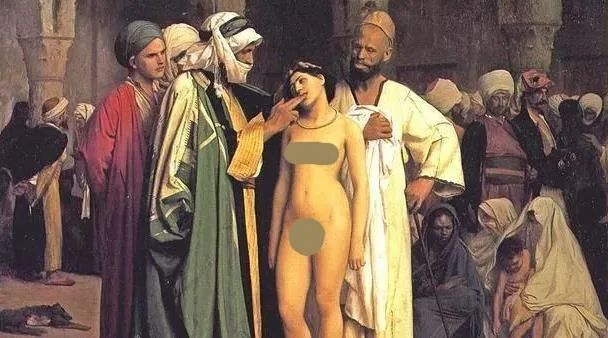
Ottoman slave prices in the 1600s survive in Istanbul's narh registers, the official price lists that fixed what a cariye, a young female domestic slave, cost in akçe. Those ledgers turn a vast and painful trade into hard numbers, and the numbers are startling. A single household servant could cost a skilled craftsman most of a year's earnings, while a trained concubine might fetch more than a small house. Behind every figure was a person, usually a girl torn from the Caucasus, Africa, or the steppe, whose name and origin the records rarely bothered to keep.
In early 1600s Istanbul, Ottoman slave prices were set by official narh registers and paid in silver akçe. Recorded prices varied widely, with some cariye listed at 16,500 akçe or more depending on age, health, and training, and skilled or beautiful women commanding far more. Exact figures vary by year and source, and most remain unconfirmed.
- Istanbul's narh registers, issued by the kadı, fixed maximum prices for slaves alongside food and crafts in the late 1500s and 1600s.
- Prices were quoted in akçe, the small silver coin that anchored everyday Ottoman commerce.
- A Venetian ducat was reportedly worth roughly 120 akçe around 1587, giving a rough bridge to European gold.
- Enslaved people were often registered as "Abdullah's son" or "Abdullah's daughter," a formula meaning servant of God and erasing their birth names.
- The 1856 Reform Edict did not legally abolish slavery, and enslavement continued into the early 20th century, ending under the Turkish Republic.
What a Cariye Actually Cost in 1600s Istanbul
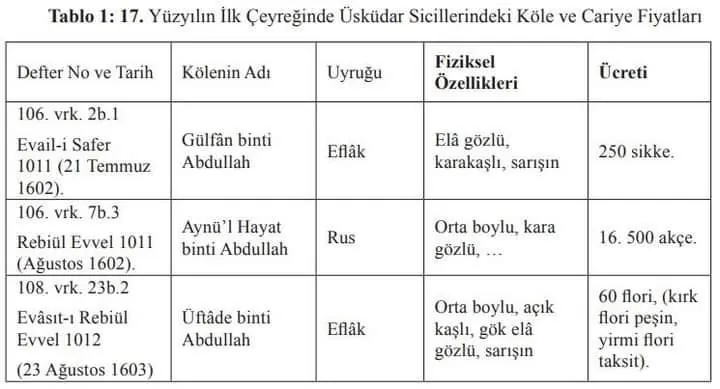
Ottoman slave prices from the 1600s survive in fragments, and one table of recorded cariye and slave prices from the empire's own ledgers is enough to make your jaw drop. A December 29, 2022 piece on Ekşi Şeyler built its whole story around that table, and the numbers it lists read less like history and more like a luxury auction catalog.
According to the source's table, a Russian female slave, a cariye, was listed at 16,500 akçe, reportedly twice the value of a Wallachian, or Eflak, female slave. So being Russian, at least in this ledger, apparently carried a premium. The Wallachian cariye in the same table was listed at 250 sikke, coins. The source converts that to roughly 30,000 akçe only by assuming each gold coin equals a 120-akçe ducat, an unverified assumption, so treat the figure as the table's guesswork rather than a settled conversion.
What the source does say clearly is the punchline: owning a slave in that era was "not for every brave man." In other words, prohibitively expensive. That framing is the piece's whole engine, the sticker shock of looking at a 17th-century price tag from a 21st-century chair.
Set beside everyday costs, the numbers get even stranger. The source cites a 1600 narh register for Istanbul listing bread at 2.3 akçe, mutton at 8 akçe, olive oil at 18.5 akçe, and shoes at 55 akçe, though the precise figures and the specific register cannot be independently confirmed. According to Bünyamin Duran and Ahmet Yavuz Çamlı's book, a master mason in 1550s Istanbul earned 10 akçe a day, a figure Ottoman building registers commonly support. One gold coin, the Venetian ducat, was reportedly worth 120 akçe in 1587. Stack those against 16,500 akçe and you start to feel the weight of the thing.
There is a modern mirror too. The source estimates 16,500 akçe at somewhere around 200,000 to 250,000 Turkish lira today, based on treating one akçe as 1.15 grams of 925 sterling silver, a premise that cannot be reliably confirmed. One commenter pushed back with the gold-to-silver ratio, roughly 50 back then versus about 70 now, and got to 300,000 at the ceiling. Either way, the metal value is not the same as buying power, and the source admits as much.
Bread, Mutton and a Mason's Daily Wage: Making Sense of Akçe
To feel the weight of Ottoman slave prices, you have to know what a coin actually bought. The akçe was the small silver coin jingling in every Istanbul purse, and the source cites a 1600 narh register, a price-control ledger the authorities kept to fix what shopkeepers could charge. Those figures cannot be independently confirmed, but here is what the source says: bread at 2.3 akçe, mutton at 8 akçe, olive oil at 18.5 akçe, and a pair of shoes at 55 akçe.
Read those numbers slowly. A single loaf cost a little over two akçe. A pair of shoes, at 55, cost more than a whole day's pay for many working people.
Now the wages. From Bünyamin Duran and Ahmet Yavuz Çamlı's book Klasik Dönem Osmanlı Toplumunun Sosyo-Ekonomik Yapısı, the reported picture is that in 1500s Istanbul a worker's daily wage could buy 2 kilograms of meat. That claim is hard to verify, and surviving wage data make it look generous. What we can state plainly is this: in the 1550s, a master mason in Istanbul earned 10 akçe a day. Ottoman building registers from that decade routinely show master craftsmen at roughly this rate.
Ten akçe. Barely enough for a modest cut of mutton, a bit of bread, and little else.
Then come the exchange rates. The source cites the Encyclopaedia of Islam's article on the filori, where in 1587 the Venetian ducat, the gold coin called a florin, was worth 120 akçe. That figure cannot be confirmed as coming from that specific entry, so treat it as the source's claim rather than settled fact.
With those numbers in hand, the source does its own arithmetic. The source calculates that a slave listed at 60 florins would be worth roughly 8,000 akçe after 15 years of inflation, though this conversion depends on unstated assumptions and cannot be independently confirmed. That is about two full years of a worker's daily wage, the source calculates.
Two years of labor, stacked up, for one human being.
Small wonder the source's own conclusion lands the way it does: owning a slave in that era was not something every brave man could afford.
16,500 Akçe in Today's Money, and Why That Math Is Tricky
The source behind this Ottoman slave prices table offers a rough conversion: treat one akçe as 1.15 grams of 925 sterling silver, and 16,500 akçe comes out to somewhere between 200,000 and 250,000 Turkish lira. That is the source's own estimate, not a settled figure, and the source says as much.
Why the hesitation? Because a metal-value calculation is not the same thing as purchasing power. The silver in a coin tells you what the metal is worth on a modern exchange. It tells you nothing about how far that coin stretched in a 1600s Istanbul market. The source puts the problem in blunt terms: a sheep was cheap back then, bread was not the bread we buy now, and comparing the two is genuinely hard. What do you even measure against what?
Then there is the gold-to-silver ratio. Today it sits around 70. In that era it was closer to 50. Run the conversion through the silver-to-gold ratio instead, and the same 16,500 akçe could reach at most 300,000 lira. Same coins, same century, two different answers depending on which metal you anchor to.
One commenter is upfront about their limits here, stating outright that they are not a historian and that experts on the subject would know better. That kind of honesty is worth more than a confident number.
So what does this tell us about the price of an Ottoman slave? The figure is a starting point, not a verdict. It gives you a sense of scale, a way to feel the weight of 16,500 akçe, without pretending the translation is clean. Historical money resists that. It always has.
So Slavery Didn't Exist in the Ottoman Empire? It Did, and Abolition Came Late
The 1856 Reform Edict, the Islahat Fermanı, did not legally abolish slavery. That is the single most stubborn myth in this whole story, and the popular version of it is simply wrong. What the edict did was broaden rights for non-Muslim subjects of Sultan Abdülmecit's empire. It did not free a single enslaved person. Legal abolition arrived much later, and the Ottoman record on this is not the clean, humane exception people like to imagine.
Mustafa Reşit Pasha is a real figure and a serious one. According to the source, he served as Grand Vizier six separate times under Sultan Abdülmecit, adding up to 7 years and 1 month in the office. He was a diplomat and a reformer, and it is easy to see why a story would want to hand him the credit for ending slavery. But the credit belongs to a later era entirely.
There were earlier gestures, and they were narrow. According to the source, Sultan Mahmud II issued edicts in the 1830s meant to discourage the practice. The source frames these as relatively early compared to the United States and much of Europe, though that comparison is shaky once you weigh Britain's own abolition timeline. More importantly, the source says the edicts only banned the enslavement of white people. Everyone else was left out.
The reason for that racial carve-out is its own story. The source asserts that the British, Dutch, French and Spanish navies repeatedly bombarded the Algeria province, then known as the Berberi State, over its capture and enslavement of Europeans, and that a British ambassador was among those kidnapped. European punitive fleets did hit Algiers, but this specific picture of four navies bombarding on a regular schedule is not independently verifiable.
Meanwhile the trade kept running. According to the source, the enslavement of Black people, and secretly of white people, continued until the establishment of the Turkish Republic. The Ottoman slave market was not a fading curiosity. It was a living institution with prices, ledgers and buyers, and those prices are exactly what the Ottoman slave prices in the 1600 registers reveal.
Even the diplomacy carried the stain. The source claims, though it cannot be confirmed, that one article of the 1774 Treaty of Küçük Kaynarca addressed preventing Crimean Khanate and Ottoman armies from raiding Ukraine and Bessarabia for captives. That is the source's assertion, and it fits the pattern of a state that treated human beings as plunder.
Why Every Slave in the Records Is "Abdullah's Son" or "Abdullah's Daughter"
Open an Ottoman slave register and a strange pattern jumps out fast: the same father keeps showing up. Abdullah's son. Abdullah's daughter. Again and again, across pages, across decades. That is not because one man fathered half of Istanbul. It is because "Abdullah," meaning servant of God, was the standard patronymic handed to non-Muslims who converted to Islam. A person entering the faith, willingly or not, generally lost the name of their actual father on paper and gained Abdullah in his place.
The convention was not reserved for any single group. Devshirme recruits, the boys taken from Christian villages and raised for state service, were recorded the same way. Cariye, the women and girls held in households and sold in the markets, were recorded the same way. So were the men and women whose prices fill the tables of Ottoman slave prices from the seventeenth century, listed by origin, by age, by the going rate in akçe.
Read a line in one of those registers and you learn a price. You learn a category. You may learn a city of origin, a rough age, a physical note. What you almost never learn is who the person's mother was, what village they came from, or what name they answered to before a clerk dipped his reed in ink. The patronymic did real work in the paperwork: it marked the person as a convert, folded them into a generic lineage, and quietly erased the one thing every human being has, which is a family.
That erasure is part of why these records feel so cold. A Russian girl and a Wallachian girl sit in the same ledger, distinguished by a number and a label, both daughters of the same invented father. The documents were built to track property, not people, and they did that job with terrible efficiency. Abdullah's daughter, the clerk wrote, and moved to the next line.
Frequently asked questions
What did a female slave cost in the Ottoman Empire in the 1600s?
According to the price table in the original account, a Russian cariye was listed at 16,500 akçe, while a Wallachian cariye was recorded at 250 sikke, roughly 30,000 akçe under the source's own assumption that each gold coin matched a ducat. Those specific figures are unverified, so treat them as the story goes rather than settled record.
How much was 16,500 akçe worth in modern money?
The original account estimates it at 200,000 to 250,000 Turkish lira, calculated by treating one akçe as 1.15 grams of 925 sterling silver, with a possible ceiling near 300,000 lira using the gold-to-silver ratio. That is a metal-value estimate only, not purchasing power, and it cannot be independently confirmed.
Why were slaves in Ottoman records called Abdullah's son or daughter?
Because non-Muslims who converted to Islam were generally given "Abdullah" as a patronymic, a well-documented naming convention. That is why devshirme recruits and cariye alike appear in the registers as Abdullah's son or Abdullah's daughter, with no birth father named.
When did the Ottoman Empire abolish slavery?
Contrary to the popular version, the 1856 Reform Edict did not legally abolish slavery. Enslavement continued, including the secret enslavement of white people, until the founding of the Turkish Republic. Mustafa Reşit Pasha, who served as Grand Vizier six times under Sultan Abdülmecit for a total of 7 years and 1 month, is often credited with abolition, but the legal end came later.
What was a Venetian ducat worth in Ottoman akçe in 1587?
The original account cites the Encyclopaedia of Islam's "filori" entry at 120 akçe for 1587, where the florin refers to the Venetian ducat. The figure is plausible for the period, but it cannot be confirmed as coming from that specific entry, so it stays hedged.
How much did bread and meat cost in Istanbul in 1600?
The narh register cited in the source lists bread at 2.3 akçe, mutton at 8 akçe, olive oil at 18.5 akçe, and shoes at 55 akçe. The general magnitudes fit early-17th-century Istanbul, but the precise figures and the specific register cannot be independently verified. Editorial note: Figures from Ottoman price registers survive unevenly, so any amounts that remain unconfirmed are presented here as approximate rather than exact.
Got a take on this? Add your voice to the conversation below →
No comments yet. Be the first.