Why Apple's Snooze Is 9 Minutes, Not 10
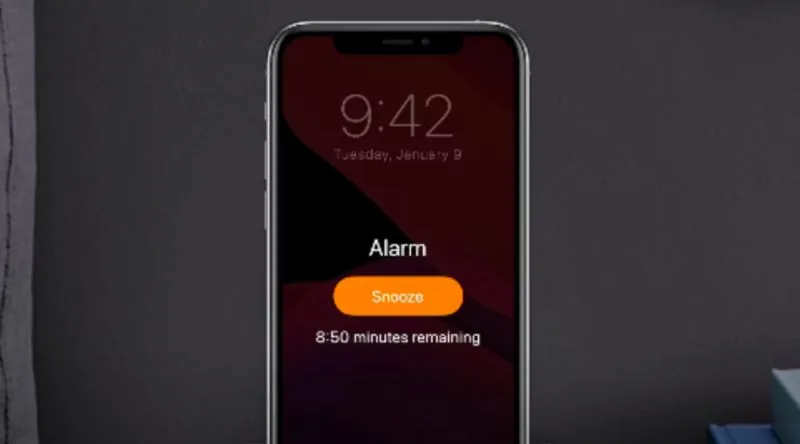
The reason why Apple snooze is 9 minutes instead of 10 traces back to a General Electric-Telechron alarm clock from the mid-1950s, often dated to 1956, the first consumer clock commonly credited with a snooze button. Popular accounts say its snooze interval came from the gearing inside the clock, and once that shorter pause took hold, the habit stuck across decades of alarm design, all the way to the iPhone in your hand. So every morning, when you tap that button for a few more minutes of sleep, you are borrowing a decision made in a mid-century American factory.
Apple's snooze runs 9 minutes because the first snooze alarm, a mid-1950s General Electric-Telechron clock, is said to have used a gear mechanism that could not easily be set to 10. Popular accounts say the 9-minute habit carried through decades of alarm clocks and into the iPhone, where Apple kept it.
- In the mid-1950s, General Electric-Telechron introduced a consumer alarm clock that let users silence the alarm briefly and have it sound again, commonly credited as the first widely sold snooze feature.
- Popular accounts say the snooze interval on that early clock was governed by a mechanical gear arrangement, and that nine minutes fit the existing parts more easily than ten.
- Over the following decades, manufacturers largely copied the 9-minute interval, so it became the unofficial standard for alarm clocks.
- Apple carried the same 9-minute interval into the iPhone's Clock app, which is why tapping snooze today gives you nine minutes, not ten.
- Other modern devices, including some Amazon Echo alarms, have also used a 9-minute snooze, echoing the same long-standing convention.
The 9-Minute Mystery on Your iPhone
You have done it a hundred times. The alarm goes off, your hand finds the phone before your eyes even open, and you tap that one word: Snooze. Then, nine minutes later, it rings again. Not ten. Nine. If you have ever squinted at the screen and wondered why Apple, a company that smooths every corner and rounds every button, ships an alarm with such a stubbornly odd number, you are far from alone. The question was put plainly on February 28, 2024, and the short answer is that this quirk is not an Apple invention at all.
The nine-minute snooze on the iPhone Clock app is widely reported to carry a much older inheritance, and the trail does not lead to Cupertino. It leads to a bedside table in the mid-1950s, to a machine with actual gears and a hammer that struck real metal. To understand why your sleek glass slab still honors a number that no designer would ever choose on purpose, you have to meet the clock that started it. That story begins with a company called General Electric-Telechron, and with a small mechanical problem its engineers could not quite solve the way they wanted.
1956: General Electric-Telechron Invents the Snooze Button
The first alarm clock with a snooze button is commonly credited to General Electric-Telechron, which put the device on the market in the mid-1950s, a date popular accounts usually pin to 1956. That clock is the reason we are still asking why Apple snooze is 9 minutes, and not a clean, round 10.
Picture the bedside table of a mid-century bedroom: a heavy case, a numbered dial, a small lever you could slap without opening your eyes. That lever was new. Until then, an alarm rang, and you either got up or you turned the whole thing off. The Snooz-Alarm, as the Telechron line was known, gave the sleeper a third option, several more minutes of half-sleep before the bell came back.
Here is where the story gets murky, and where a lot of confident internet writing gets sloppy. Popular accounts say the interval on that original model was around 9 minutes, but the exact figure cannot be confirmed from primary documentation, so take the precision with a grain of salt.
The mechanical explanation is even shakier. According to the widely repeated account, engineers reportedly had to add one extra gear to the clock's movement to make snooze work at all, and the structure of that gear reportedly left only two possible intervals: 9 minutes 3 seconds, or 10 minutes 43 seconds. A true 10 minutes was reportedly impossible. The reasoning attached to the choice is that a snooze longer than 10 minutes would drop a person back into deep sleep, so the engineers reportedly settled on the shorter option. Every piece of that gear-and-sleep-cycle story is folklore rather than documented engineering history. It gets told because it is tidy. Tidiness is not the same as evidence.
What we can say with confidence is narrower and more interesting. A company called General Electric-Telechron built the first snooze alarm, sometime in the middle of the 1950s, and the habit it created outlived the hardware that started it. Nobody uses a Telechron movement now. The nine-minute pause survived anyway, which is a strange kind of inheritance for a feature that exists purely to let you avoid the morning a little longer.
The Gear That Made 10 Minutes Impossible
Here is the version of the story that gets passed around: when engineers at General Electric-Telechron sat down to build a snooze function into their clock in the mid-1950s, they reportedly reached for the mechanism itself and added one more gear to the works. That single extra gear is said to be the reason a round number like 10 was never on the table.
According to the widely repeated account, the gear's structure reportedly left the engineers with only two options. The snooze could run for 9 minutes and 3 seconds, or it could run for 10 minutes and 43 seconds. Nothing in between, and certainly not a clean 10:00. As the story goes, the team also reportedly worried that anything longer than 10 minutes would send a sleeper back down into deep sleep, so the shorter of the two intervals won. That is how 9 minutes and 3 seconds supposedly became the number.
Worth saying plainly: this gear explanation is an anecdote, not a documented engineering record. The exact intervals and the reasoning behind them cannot be confirmed from primary sources. What the story does explain, at least in popular retellings, is why the snooze on your iPhone never lands on a tidy 10 minutes. The mechanism, in this telling, simply would not allow it.
Why Engineers Picked the Shorter Snooze
Picture the inside of that mid-1950s clock from General Electric-Telechron, the one widely credited as the first alarm clock with a snooze button. Somewhere in the gearing, the story goes, the engineers had added one more gear to make the snooze possible at all. And that gear, according to the popular explanation, would not cooperate with a clean, round number.
Instead of a tidy ten minutes, the mechanism reportedly allowed only two options: 9 minutes 3 seconds, or 10 minutes 43 seconds. Nothing in between. So the choice came down to those two figures, and the engineers, as the story is told, reached for the shorter one.
Their reasoning, in this telling, had nothing to do with round numbers and everything to do with what happens in a sleeping body. The belief was that a snooze stretching past ten minutes would let a person sink back into deep sleep, the kind you do not surface from easily. Wake someone from that stage and they feel worse than before they ever drifted off. So 10 minutes 43 seconds was out. 9 minutes 3 seconds kept the sleeper closer to the surface, light enough to rise.
It is a satisfying story, and it is worth being honest about what it is. This rationale is the popular explanation, not a set of engineering notes anyone has produced. The two exact intervals, the added gear, the worry about deep sleep: all of it is repeated widely but cannot be confirmed from primary documentation. What can be said plainly is that the first snooze-equipped alarm clock from General Electric-Telechron is often dated to 1956, and that popular accounts put its original snooze interval at roughly nine minutes. The precise figure rests on retelling, not records.
Still, this sleep-science angle is exactly what gives the number its staying power. A weird decimal like 9 minutes 3 seconds is easy to dismiss as a quirk. Attach it to a claim about deep sleep and the human body, and suddenly it sounds deliberate, almost protective. That is why the question of why Apple snooze is 9 minutes keeps circling back to a gear in a 1950s clock and a theory about how we wake up.
How the 9-Minute Snooze Survived Into the Smartphone Era
Somewhere on your nightstand, a piece of 1950s mechanical logic is still running. The iPhone Clock app is widely reported to keep a 9-minute snooze, and that number is said to trace back to the General Electric-Telechron Snooz-Alarm, the alarm clock commonly credited as the first to offer a snooze button in the mid-1950s. The gears are gone. The interval stayed.
That is the part worth sitting with. Nobody at Apple sat down in a design meeting and decided nine was the magic number for a phone. The company inherited it, the same way we inherit a family recipe nobody remembers writing down. According to the popular account, the original Telechron mechanism reportedly could not land on a clean ten minutes, and the engineers reportedly settled on roughly nine because they reportedly believed anything longer would pull a sleeper back down into deep sleep. Treat that reasoning as folklore rather than documented engineering minutes. The surviving number is the real story.
One correction is worth making, because the tidy version of this tale has hardened into internet fact. The claim that every Apple product snoozes for nine minutes is too broad. The detail is reliably attached to the iPhone Clock app, and that is where the scoping belongs. Amazon gets folded into the same sentence just as casually, and it does not hold up either: Alexa and Echo devices typically let you set your own snooze length, which makes the blanket "Apple and Amazon both use nine minutes" line unreliable. A tradition can be real and still get overextended in the retelling.
The short version
- A General Electric-Telechron alarm clock from the mid-1950s is commonly credited as the first with a snooze button.
- The iPhone Clock app is widely reported to still use a 9-minute snooze.
- Alexa and Echo devices typically allow configurable snooze durations instead.
- The tradition outlived the mechanical clocks that created it.
So the next time your thumb finds that button before your eyes are fully open, you are reaching back seven decades. You are pressing a switch that reportedly once needed an extra gear to exist, on a device that has no gears at all. The clock changed. The nine minutes did not.
Frequently asked questions
Who invented the snooze button?
General Electric-Telechron is commonly credited with the first snooze alarm clock, released in the mid-1950s and often dated to 1956. The company built the Snooz-Alarm around a mechanical gear system, and that original design is where the nine-minute interval is usually said to have begun, though the exact figure is unconfirmed.
Why is the snooze on iPhone 9 minutes instead of 10?
Because the number came from hardware, not preference. As the story goes, engineers reportedly had to add an extra gear to the clock's mechanism to make snoozing possible, and that gear reportedly allowed only two intervals: 9 minutes 3 seconds or 10 minutes 43 seconds. Exactly 10 minutes simply was not an option, so 9 minutes 3 seconds won.
Was the 9-minute snooze chosen to prevent deep sleep?
That is the popular explanation, and it is not documented reasoning. According to the widely repeated account, engineers reportedly believed a snooze longer than 10 minutes would let people fall back into deep sleep, so they picked the shorter interval. Treat this as folklore rather than a verified engineering decision.
Do Amazon devices also use 9 minutes?
No blanket claim holds here. Apple's iPhone Clock app is widely reported to use a nine-minute snooze, but Amazon's Alexa and Echo devices typically allow a configurable snooze duration, so they do not simply inherit the 1950s interval the way the iPhone does. Editorial note: Details about the original gear mechanism and the exact reasoning behind the 9-minute choice are presented as commonly reported explanations, and any points that remain unconfirmed are described as such.
Got a take on this? Add your voice to the conversation below →
No comments yet. Be the first.