Batterygate: Apple's Secret iPhone Throttling Scandal
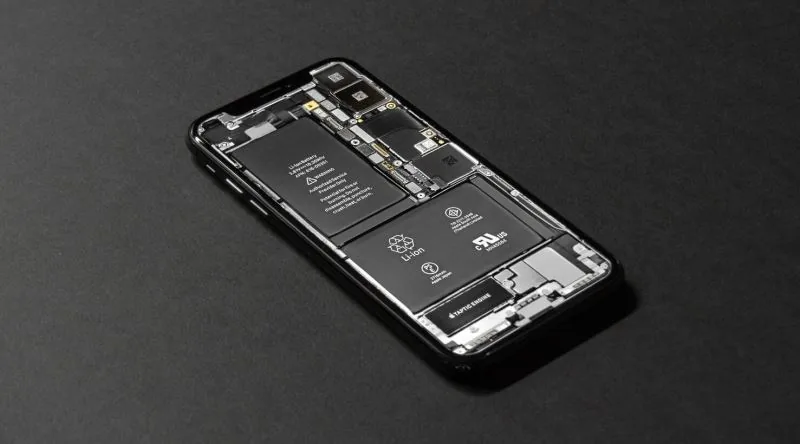
Batterygate was the 2017 controversy in which Apple admitted it had introduced a power-management feature that slowed older iPhones, without disclosing it to users at the time. The company said the throttling was meant to prevent sudden shutdowns caused by aging batteries, but millions of iPhone owners learned about it only after independent testing exposed it. What followed was a public apology, government investigations, and a class action settlement that sent small checks to affected users years later.
Batterygate centered on Apple's iOS 10.2.1 update, which quietly limited performance on certain older iPhones with degraded batteries. Apple confirmed the practice in December 2017, apologized, and later agreed to a settlement of up to $500 million. Eligible US users received payments of roughly $92 per claim.
- Apple released iOS 10.2.1 in early 2017, and independent testing later showed it reduced peak performance on some older iPhones.
- Apple confirmed in December 2017 that the update managed power to prevent unexpected shutdowns in devices with aging batteries.
- The company apologized, cut the price of out-of-warranty battery replacements, and added battery health information to iOS.
- A US class action settlement of up to $500 million was approved in 2020, with eligible claimants receiving payments around $92 in early 2024.
- Lithium-ion batteries lose capacity over time, and Apple cited a threshold of about 500 charge cycles and 80 percent capacity in explaining the slowdowns.
The Night Your iPhone Started Dying at 30%
Picture the last months of 2016. Your iPhone 6s is at 30%, a number that used to mean hours of life, and then the screen just goes black. No warning, no red battery icon, nothing. You plug it in, it wakes up, and thirty seconds later it dies again at the exact same percentage.
You are not alone, and you are not imagining it. Through late 2016, iPhone 6s owners flooded Reddit with the same story, and the Geekbench charts they started sharing showed something stranger than a dying battery: scores that swung wildly from run to run on the same phone. The pattern set the stage for what the world would soon call Batterygate.
Apple's answer, at first, was a battery replacement program for a limited batch of iPhone 6s units. That quiet fix did not explain why so many phones were dying at 30%, and it did not explain those jumping benchmark numbers. Something else was going on inside the software.
What pulled the thread was the timing. The shutdown reports clustered around a specific iOS update, and once users lined up their battery health against their benchmark scores, the picture got uncomfortable. Older iPhones were not just losing capacity. They were losing speed.
Apple would later confirm that its power management was designed to prevent unexpected shutdowns, which is a real engineering problem: a worn battery cannot deliver the sudden burst of current a demanding task asks for, so the phone cuts out to protect itself. The company's stated intent was to keep the device on. The problem was that nobody had been told.
That silence is what turned a technical workaround into a scandal with a name. Batterygate became shorthand for the gap between what a phone was doing and what its owner knew, and it is the reason a battery percentage on your screen still feels like it might be lying to you.
What Apple Actually Did With iOS 10.2.1
In 2017, Apple released iOS 10.2.1, and buried inside that update was a power-management feature that slowed down older iPhones whose batteries had already lost a step. Apple has said, plainly, that the slowdown existed to stop those phones from shutting down without warning. That is the company's stated reason, and it has never walked it back.
Here is where the popular version of the story drifts. The word everyone reaches for is "secret," as if engineers slipped a sabotage switch into the code. That framing does not hold up. What Apple shipped was an undisclosed power-management feature, not a hidden scheme. The distinction sounds like hair-splitting until you remember that the feature only kicked in on devices whose batteries were already degraded. A healthy iPhone did not slow down. A worn one did, and the owner had no idea why.
The practice picked up a name: Batterygate. It stuck because the symptoms were so easy to feel. Apps that once opened instantly started to stutter. A phone that had been fine for two years suddenly felt like it was wading through wet sand.
What made it worse was the timing. By the end of 2016, iPhone 6s owners were already complaining that their devices were dying abruptly at around 30 percent battery. Reddit threads filled up with the same story, and Geekbench charts showed performance swinging wildly from one run to the next. Apple launched a battery replacement program for the 6s. Then the update arrived, and the slowdowns began. For a lot of people, the two events clicked together only in hindsight.
So what does the record actually support? Apple's explanation about preventing unexpected shutdowns is documented and consistent. The "secret throttling" label is not, at least not in the way it gets repeated. Call it an undisclosed feature with real consequences, because that is what the timeline shows.
From Apology to $92.17 Checks: The Seven-Year Timeline
By late 2016, iPhone 6s owners were watching their phones die at around 30 percent battery, and the pattern was loud enough to show up in Reddit threads and Geekbench performance charts. Apple responded to that wave of shutdown reports with a battery replacement program. Then, in December 2017, the company published an apology letter and cut the price of an out-of-warranty battery replacement from $79 to $29 for a limited stretch. That letter was the moment Batterygate stopped being a forum complaint and became a corporate admission.
What Apple said in that apology matters. The company explained that its power management software, delivered through the iOS 10.2.1 update, was designed to prevent unexpected shutdowns. Read that framing carefully: not a scheme to push upgrades, but a throttle meant to keep a worn battery from cutting power mid-call. Whether you buy that explanation is a separate question. Either way, the slowdown was real, and users felt it in their hands before they ever read a statement about it.
Three years later, the courtroom caught up. In 2020, a US class-action settlement of up to $500 million was reached over the battery throttling issue. The money did not move fast. Claimants began receiving payments of about $92.17 per device in 2023 and 2024, with checks landing in mailboxes in early 2024. If you owned one of the affected phones and filed a claim, that was your grand total for years of a sluggish device.
Add it up and the arc runs roughly seven years, from the first shutdown reports in late 2016 to a paper check in 2024. Seven years, one apology letter, one discounted repair window, one settlement, and about ninety-two dollars per phone. The timeline is the story here. Not the chemistry, not the marketing, just the long slow distance between a phone dying at 30 percent and a check you could cash for a few coffees.
The 500-Cycle Rule and the Real Chemistry of Lithium-Ion
Open Apple's own battery support page and you will find a sentence that reads less like marketing and more like a warranty clause: iPhone 14 and earlier models are designed to hold 80% of their original capacity after 500 complete charge cycles. That is the number Apple chose to print, and it is the number that quietly shaped how millions of people think about their phones. With the iPhone 15, that ceiling doubled to 1000 cycles. Same company, same lithium-ion chemistry, a new arithmetic.
Here is the part that gets glossed over. That "80% after 500 cycles" figure is a laboratory ideal, not a promise about your pocket. It assumes gentle, linear charging between 0 and 100%, in cool conditions, with no surprises. Real life rarely cooperates. And the two forces that wreck a battery fastest are not mysterious at all.
The first is heat. Lithium-ion cells follow what researchers call an Arrhenius-type relationship with temperature, which is a fancy way of saying every +10°C increase roughly halves the battery's useful life. That is a brutal curve. Your phone sitting on a car dashboard in August is not just warm, it is aging at double speed. The second is high discharge current. Heavy gaming, the kind that turns a phone into a hand-warmer, pulls hard on the cathode and anode structures inside the cell, and those structures wear down with every hard pull.
Put those two together and the 500-cycle rule starts to look optimistic. Some reports suggest a cell that holds 80% after 500 cycles at a comfortable 25°C might hit that same 80% mark in only 250 cycles at 40°C. That specific 500-to-250 equivalence is a plausible illustration of accelerated degradation rather than a figure tied to one named study, so treat it as a rough picture of the trend, not a precise prediction for your handset.
Charging while hot gets even murkier. Some laboratory data suggest that the solid electrolyte interphase, the thin protective film that forms on the anode, grows thicker at elevated temperatures. That growth may raise internal resistance and chip away at capacity. The claim is that charging above 45°C permanently thickens that SEI layer and brings capacity loss on 10 to 15% earlier. The SEI mechanism itself is well established in battery science; the exact percentages are harder to pin to a citable source, so hold them loosely.
Then there is the habit almost everyone has: gaming while plugged in. Charging and discharging at the same time, the theory goes, raises the risk of lithium plating, where metallic lithium deposits on the anode instead of sliding neatly into it. Plating is genuinely associated with fast charging and cold temperatures, but the specific claim that gaming-while-charging increases plating risk is plausible rather than firmly established. What is not in doubt is the general principle: stress a cell from multiple directions at once and it ages faster.
So what does the 500-cycle rule actually tell you? It tells you Apple picked an average and dressed it up as a guarantee. The chemistry underneath is real, and it is indifferent to branding. That number describes a phone sitting in a cool, controlled lab. Your phone lives in your pocket, in the sun, on a charger overnight.
Apple's Other "-Gate" Franchise
Batterygate was never a one-off. Apple has run a quiet serial of scandals, each one earning its own suffix, each one ending with the same soft landing: an apology, a freebie, and a check that arrives years later.
Start with the iPhone 4 in 2010. Hold the phone a certain way and the signal bars dropped. Apple's answer, famously attributed to Steve Jobs, was that users were holding it wrong. The company then handed out free bumper cases to make the problem disappear. A decade later, the MacBook butterfly keyboard gave the company its next "-gate." The slim key mechanism jammed and double-typed for years, and in 2022 Apple agreed to a $50 million settlement. Claimants finally received checks of about $395 in 2024, a payout that landed in mailboxes long after most people had moved on.
Between those two sits Bendgate, the iPhone 6 and 6 Plus story from 2014. Owners reported that the thin aluminum bodies flexed and warped in a front pocket. Some reports claimed internal tests showed the devices were more prone to bending than the iPhone 5s, a figure said to have surfaced through 2018 court documents. That specific number and its disclosure cannot be reliably confirmed, so treat it as the popular version rather than settled fact.
And then it happens again. A flaw shows up, people complain, Apple offers a case or a discount, and the lawyers turn the anger into a check. The battery replacement bill is the same story in miniature. The source cites approximate figures for a replacement and for a brand new iPhone, but those numbers are time-sensitive and cannot be reliably confirmed. The gap they describe is the whole point, though. Fixing the old phone is cheap next to replacing it, and yet the upgrade is always the louder pitch.
Why Apple Chose the 500-Cycle Limit
Apple's own support documentation states that iPhone 14 and earlier models are designed to retain 80% of their original capacity after 500 complete charge cycles. That number is not a law of physics. It is a declared specification, and declarations can be written to serve more than one master.
Think about what a shorter stated battery life actually does inside a company like Apple. A device that promises 500 cycles before dropping to 80% sets a clean, defensible boundary for warranty claims. If a phone shuts down unexpectedly at 30% battery, the company can point to a documented threshold. If a phone holds up longer, that is a pleasant surprise, not a contractual obligation. The 500-cycle figure stabilizes supply-chain and logistics planning too: repair volumes, replacement part orders, and return rates all become easier to forecast when the expected lifespan is written down and agreed upon.
Then there is the nudge. When your phone tells you the battery health has dipped below 80%, and Apple has publicly defined that as the design endpoint, the message is subtle but clear. You can replace the battery, or you can replace the phone. The 500-cycle threshold functions as a soft prompt toward upgrade rather than repair, and it does so without Apple ever having to say "buy a new iPhone" out loud.
Battery service itself is not a loss leader. A battery replacement, a MagSafe battery case, a wireless charging pad, an AppleCare plan: these are secondary revenue streams that flow directly from the moment a battery starts to fade. The customer who walks into an Apple Store for a battery swap is also a customer standing in front of accessories and extended warranty options. The 500-cycle limit creates the foot traffic.
Batterygate showed what happens when this calculus goes wrong in public. In December 2017, Apple issued an apology and dropped out-of-warranty battery replacement from $79 to $29 for a limited period. That gesture helped contain the damage, but it did not eliminate it. A US class-action settlement of up to $500 million followed in 2020, and claimants began receiving checks of about $92.17 per device in early 2024. The apology and the discounted program limited the class-action exposure. They did not erase it.
The pattern repeats across Apple's product history. A problem surfaces, the company offers a partial remedy, and the underlying profit cycle stays intact. Sacrifice some reputation, protect the revenue engine. That is the trade.
What the Batterygate Story Actually Taught Us
Apple's battery support page still says that iPhone 14 and earlier models are designed to hold 80% of their original capacity after 500 complete charge cycles. That number gets repeated like scripture, but the word doing all the heavy lifting is "designed." It describes a lab bench, not your pocket.
Real life is fast charging on a coffee break, navigation running under a summer sun, a phone left plugged in overnight until morning. Scientific research on lithium-ion cells shows heat accelerates the damage, with every 10°C rise roughly halving battery life, and high discharge currents chew through the cathode and anode structures the same way. Some reports suggest a cell that holds 80% capacity after 500 cycles at 25°C might hit that same point in only 250 cycles at 40°C, though that specific pairing cannot be pinned to one study.
Laboratory data point to something similar above 45°C: charging at that temperature is said to permanently thicken the SEI layer, pushing internal resistance up and shaving capacity by 10-15% earlier than expected. And charging while discharging, gaming on a plugged-in phone, is reportedly linked to a higher risk of lithium plating. Treat those figures as plausible rather than settled.
So how do you actually measure battery health? Not by counting charges. Track internal resistance and the temperature profile instead, because those two tell you what the chemistry is really doing. The gap between the marketing promise and the thermodynamic reality keeps widening, which is why iPhone 15's jump to 1000 cycles reads less like a chemistry breakthrough and more like a financial amortization plan. If Apple ever updates its transparency policy instead of its battery chemistry, that might be the real revolution.
Frequently asked questions
What was Apple's Batterygate scandal?
In 2017, Apple's iOS 10.2.1 update introduced undisclosed power management that slowed older iPhones with degraded batteries. Apple said the feature was designed to prevent unexpected shutdowns. The practice became known as Batterygate after users noticed their older phones running noticeably slower.
Why did Apple secretly slow down older iPhones?
Apple stated the throttling was intended to prevent unexpected shutdowns caused by degraded batteries. The phones were shutting down abruptly at around 30 percent battery, a problem widely reported on iPhone 6s devices at the end of 2016. The framing of the move as a deliberate "secret" scheme, however, is contested.
How did the $500 million iPhone throttling settlement pay out?
A US class-action settlement of up to $500 million was reached in 2020 over the battery throttling issue. Claimants began receiving payments in 2023 and 2024. The settlement followed Apple's December 2017 apology and its offer of a discounted $29 battery replacement.
Did claimants actually receive $92.17 checks from Apple?
Yes. Claimants in the settlement began receiving payments of about $92.17 per device in early 2024. The checks arrived years after the 2020 settlement was reached, closing out a case that had stretched from the original 2017 revelations.
What does the 500 charge cycle limit mean for iPhone batteries?
Apple states that iPhone 14 and earlier models retain 80 percent of original capacity after 500 complete charge cycles. For iPhone 15, that limit was raised to 1000 cycles. The figure reflects average lithium-ion behavior under ideal conditions rather than guaranteed real-world results.
How does heat and fast charging degrade lithium-ion batteries?
Scientific research shows heat and high discharge currents accelerate degradation of lithium cathode-anode structures, with every 10°C increase roughly halving battery life. Some reports suggest a cell that holds 80 percent capacity after 500 cycles at 25°C may hit the same point in only 250 cycles at 40°C. Reportedly, charging above 45°C can thicken the SEI layer and reduce capacity earlier.
Was Apple's throttling a case of planned obsolescence?
The source argues the 500-cycle limit serves financial, marketing and supply-chain motives, while Apple framed it as technical necessity. The question remains contested. Apple has never confirmed any intent to push users toward upgrades through battery limits.
What other "-gate" controversies has Apple faced?
Antennagate hit the iPhone 4, where users were told they were "holding it wrong" and received a free bumper case. Bendgate affected the iPhone 6 and 6 Plus, with internal test figures reportedly showing greater bending susceptibility. The MacBook butterfly keyboard fiasco ended with a $50 million settlement in 2022 and $395 checks in 2024. Editorial note: Details that remain unconfirmed or disputed are presented as such, and figures reflect publicly reported information at the time of writing.
Got a take on this? Add your voice to the conversation below →
No comments yet. Be the first.