Turkey's 5,000 kWh Cap: EV vs Diesel Cost
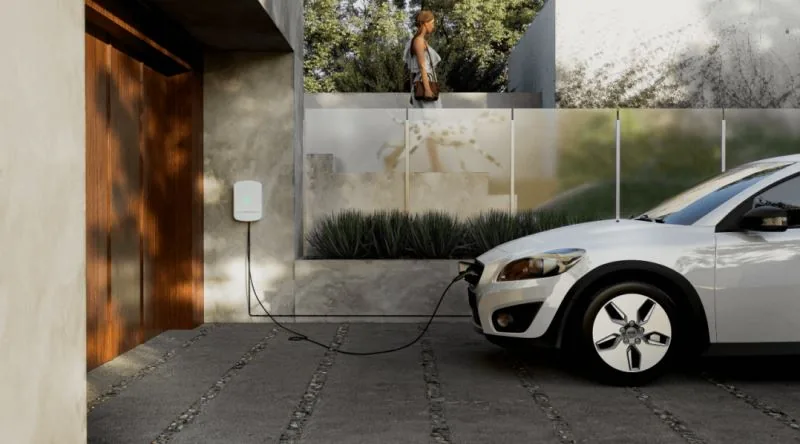
A reported 5,000 kWh annual household electricity cap, said to take effect in February 2026, could quietly reshape the math of home EV charging. For years, plugging in at home was the obvious way to beat diesel prices. Now, every kilowatt-hour above that reported threshold would cost more, and EV owners are the households most likely to cross it. The gap between electric and diesel running costs in Turkey has narrowed, but it has not closed.
A reported 2026 residential electricity rule would push households past a 5,000 kWh annual limit into a higher tariff band. Home charging appears cheaper per 100 km than diesel in most cases, but the margin shrinks once a household crosses the cap. Exact savings depend on consumption, tariff band, and charging losses.
- The reported February 2026 residential electricity framework sets a 5,000 kWh annual threshold for households, with consumption above it billed at a higher rate.
- A home-charged electric car typically needs roughly 2,000 to 3,000 kWh per year for average driving, which can push a household over the cap on its own.
- Diesel prices in Turkey are set by international fuel markets and the exchange rate, so the comparison shifts month to month.
- Charging losses and standby drain add roughly 10 to 20 percent to the electricity an EV actually draws from the wall.
- Public DC fast charging in Turkey often costs several times more per kWh than home charging, changing the economics for drivers without a garage.
How Does Turkey's Reported 5,000 kWh Cap Change the Math for EV Owners?
On 7 January 2025, a Turkish piece asked a very specific question: if household electricity gets more expensive, what happens to the running cost of an electric car? The answer, as the story goes, comes down to a single number sitting on your meter.
According to that account, a new regulation reportedly taking effect in February sets an annual consumption ceiling of 5,000 kilowatt-hours for residential subscribers. Cross that line and the price per kWh reportedly jumps sharply, to somewhere around 5 Turkish lira. None of this has been confirmed by any official source, so treat the February start date, the 5,000 kWh figure and the 5 lira price as the claims of one account, not settled policy. The same unconfirmed account also claims the per-kWh price of ordinary household electricity would climb by roughly 2.5 times, a jump that could quietly rewrite every budget in the country.
Here is where the math gets uncomfortable. A typical Turkish household burns through about 7 kWh a day, which works out to somewhere between 6 and 8 kWh depending on the season and the family. That is the baseline, the number you never really think about until someone asks you to add a car to it.
And an electric car is not a small addition. The same account estimates that EVs travel roughly 5 to 7 kilometers on a single kWh, that a parked car bleeds about 1 kWh a day on its own, and that home charging throws away another 15 percent of what you pull from the grid, lost as heat. Stack those together and a driver covering 40 km a day at home is looking at roughly 8 kWh daily on top of the household's 7.
Fifteen kWh a day. The reported cap sits at 13.7 kWh a day. You see the problem, right?
The Average Turkish Home Already Sits Near the Line
Start with the number that matters most: a typical Turkish household burns through roughly 7 kWh of electricity a day. The account itself assumes about 7 kWh daily, and that aligns with commonly cited national consumption of 2,000 to 2,500 kWh a year, which lands a normal home in the 6 to 8 kWh daily range. Call it 7 and keep it in your pocket.
Now stack the reported threshold on top. As the story goes, subscribers who push past a daily average of 13.7 kWh, which works out to 5,000 kWh across a year, would buy their electricity at a much steeper price per unit. The rumored figure floating around is somewhere near 5 Turkish lira per kWh. None of that is nailed down yet, so treat it as the version making the rounds rather than settled policy.
Here is the part that should make you sit up. A home sitting at 7 kWh a day is only about halfway to that 13.7 kWh line before a single wheel turns. There is real headroom, but it is not vast. Add an electric car to the driveway and the math changes fast.
DOGRU Electric vehicles cover about 5 to 7 km on a single kWh, depending on the car and how you drive it.
DOGRU Charging at home loses roughly 15% of the energy to heat, so you draw more than you actually store.
DOGRU A diesel car sipping 4.5 liters per 100 km, with diesel near 45 TL a liter, runs 202.5 TL per 100 km.
Run those together and a household charging an EV at home lands right around 15 kWh a day, which is past the 13.7 kWh daily average. The car alone does not tip you over. The car plus the fridge, the kettle and the washing machine does. That is the quiet squeeze built into Turkey's electricity regulation, and it is exactly why the electric-vs-diesel cost question stopped being theoretical for Turkish drivers.
What Does an EV Actually Draw From the Wall?
Start with the number everyone quotes and almost nobody checks: a real-world electric car covers about 5 to 7 kilometers on a single kilowatt-hour. That works out to 15 to 20 kWh for every 100 kilometers driven, and it is the foundation for every figure below.
Now put a driver behind the wheel for 40 kilometers a day, charging at home. The drive itself eats roughly 6 to 8 kWh. That is the easy part. The car is not done spending your electricity when you park it. Sit an EV overnight and it still bleeds about 1 kWh a day in standby drain, electronics waking up, battery management humming along. Then there is the charger. Home AC charging typically loses around 15 percent of the energy as heat, so pulling 6 kWh into the battery means drawing closer to 6.9 kWh from the socket.
A 40 km/day EV, charged at home
| Item | Daily draw |
|---|---|
| Energy for the drive | ~6 kWh |
| Charging loss (~15%) | ~0.9 kWh |
| Standby drain while parked | ~1 kWh |
| Total | ~8 kWh |
So the meter spins to about 8 kWh a day for the car alone. Add the average Turkish household, which burns through roughly 7 kWh daily, and you land at 15 kWh. The daily threshold that reportedly triggers the higher tariff sits at 13.7 kWh, the annual 5,000 kWh limit divided across the year. A single EV in the driveway can push an ordinary home straight past that line, which is exactly where the electric-vs-diesel cost question stops being theoretical and starts showing up on your bill.
Zoom out to 100 kilometers and the picture sharpens. At 15 to 20 kWh per 100 km, and a reported 5 lira per kWh, you would be paying 75 to 100 lira. Fold in that 15 percent charging loss and it climbs to about 86 to 115 lira. Call it 100 lira on average. Toss in the standby drain, another 5 lira a day, and the electric car still looks like the cheaper machine to run, at least while the plug is in your own garage.
Cost Per 100 km: Home-Charged EV vs Diesel
An electric car charged at home in Turkey comes out to about 86 to 115 Turkish lira per 100 km once you fold in charging losses, which works out to roughly 100 TL on average. A diesel car burning 4.5 liters per 100 km at about 45 TL per liter costs 202.5 TL for the same distance. So home charging lands at around half the fuel bill.
Here is how that number gets built. An EV needs somewhere between 15 and 20 kWh to cover 100 km, which is the flip side of the well-established figure that electric cars travel 5 to 7 km on a single kWh. At the reported 5 TL per kWh, that is 75 to 100 TL. Then you add the energy that never reaches the battery: home charging typically loses about 15 percent to heat, and that pushes the range to 86 to 115 TL.
There is a smaller line item too. A parked EV quietly drains roughly 1 kWh a day just sitting there, which at the reported 5 TL per kWh adds about 5 TL to the daily tally. It is not dramatic, but it is real, and it never shows up on a fuel receipt.
| Per 100 km | Home-charged EV | Diesel |
|---|---|---|
| Energy or fuel | 15-20 kWh | 4.5 L |
| Unit price | about 5 TL/kWh (reported) | 45 TL/L |
| Charging loss | ~15% | none |
| Total | 86 to 115 TL (about 100 TL) | 202.5 TL |
So under the reported 5 TL per kWh assumption, the diesel driver pays roughly double. Treat that ratio carefully, though. It leans hard on that 5 TL figure, and if your home electricity is cheaper, the gap widens in the EV's favor rather than shrinking. The comparison also assumes you charge at home. Pull into a fast DC station instead and the picture can flip, with diesel reportedly becoming the cheaper option per 100 km in some scenarios. That is not universally true, and it depends on the station and the tariff of the day.
The Catch: Public Fast Charging Can Flip the Result
That whole home-charging advantage rests on one condition: you actually charge at home. If you plug in at an external fast-DC station instead, the author's closing note is blunt. For road costs, driving a diesel car comes out cheaper.
Why the flip? Fast-DC pricing in Turkey often runs well above what you pay for household electricity, so the per-kWh figure you feed into the math is no longer the one that made the EV look cheap. The comparison is not universally true, and it depends on the station and the tariff of the day, but the direction is real enough that the author flagged it as a warning rather than a footnote.
It is also the honest limit of the whole exercise. The numbers only work for a specific scenario: a daily commute of around 40 km, a home charger, and a household bill that stays under the annual threshold. Change any one of those and the answer moves. Someone who drives 100 km a day, or who lives in an apartment with no garage socket, is playing a different game entirely.
So the piece does not end with a verdict. It ends with homework. Run your own figures, the author writes, based on your own life and the other factors that do not fit neatly into a formula. That is the real takeaway from the electric-vs-diesel cost question: the reported regulation sets the stage, but your daily routine decides who wins.
Frequently asked questions
What is Turkey's reported 5,000 kWh annual electricity limit for homes?
According to the original account, a regulation reported to take effect in February would cap residential subscribers at 5,000 kWh of annual electricity use. The exact limit and its start date remain unconfirmed, and households crossing the threshold would reportedly face a much steeper price per kWh, around 5 TL.
How does the reported February 2026 electricity regulation affect electric car owners in Turkey?
As the story goes, the rule pushes a household that already averages about 7 kWh a day past the 13.7 kWh daily mark once an EV is added. A car covering 40 km daily draws roughly 8 kWh at home, so the combined total lands near 15 kWh and reportedly triggers the higher tariff.
Is it still cheaper to charge an electric car at home than to fuel a diesel car in Turkey?
Reportedly yes, at roughly half the cost per 100 km when charged at home. The comparison rests on an assumed 5 TL per kWh, so the ratio shifts with the actual home electricity price and should be treated as an estimate rather than a fixed figure.
How much does it cost per 100 km to charge an EV at home in Turkey after the reported tariff?
An electric car needs 15 to 20 kWh per 100 km, and at a reported 5 TL per kWh that comes to 75 to 100 TL. Adding the roughly 15 percent lost as heat during charging brings the real figure to about 86 to 115 TL, averaging near 100 TL.
Why does public fast charging reportedly make diesel cheaper than electric in Turkey?
DC fast charging in Turkey is reportedly two to three times the home rate, which flips the math. The original account notes that when an electric car is charged externally at fast-DC stations rather than at home, running a diesel car becomes the cheaper option per 100 km.
What is the average daily electricity consumption of a Turkish household?
About 7 kWh per day, with the range falling between 6 and 8 kWh. That works out to roughly 2,000 to 2,500 kWh across a year, which is the baseline the reported 5,000 kWh annual limit and the 13.7 kWh daily threshold are measured against.
How much energy does an electric car use per 100 km including charging losses?
Between 15 and 20 kWh per 100 km, which corresponds to about 1 kWh for every 5 to 7 km of driving. Charging adds roughly 15 percent on top, since that energy turns into heat, and a parked car also loses about 1 kWh a day.
Did the reported regulation make diesel cars cheaper to run than electric cars in Turkey?
Only for EVs charged away from home. A diesel burning 4.5 liters per 100 km at about 45 TL per liter costs 202.5 TL per 100 km, roughly double a home-charged electric car. Home charging reportedly still wins; public fast charging reportedly does not. Editorial note: Figures that remain unconfirmed, including exact tariff rates and consumption thresholds, are presented as approximate or hedged throughout.
Got a take on this? Add your voice to the conversation below →
No comments yet. Be the first.