Euro NCAP: Touchscreen Cars Lose 5 Stars in 2026
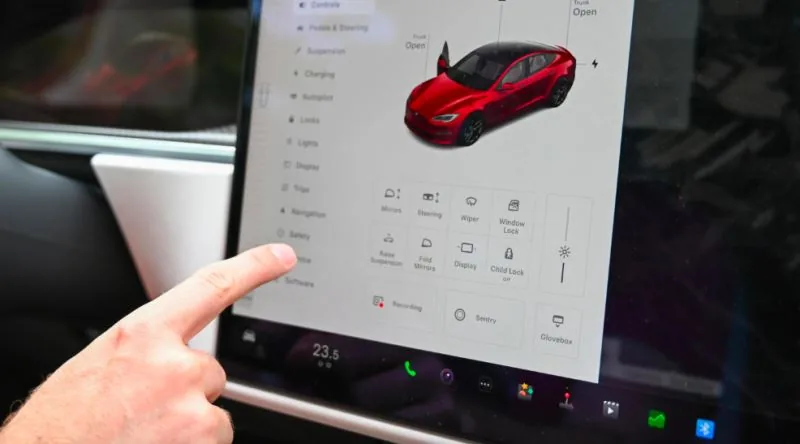
Euro NCAP touchscreen rules change in 2026, when the European safety body stops awarding five-star ratings to cars that put core functions behind a touchscreen only. From that year, functions such as indicators, wipers and hazard lights need physical controls to score top marks. It is a quiet reversal of a decade of dashboard design, and it lands hardest on the sleek, button-free interiors that have defined the modern electric car.
From 2026, Euro NCAP will not award five stars to cars that run functions such as indicators, hazard lights, wipers or fog lights only through a touchscreen. The rule is not a ban, but it makes a perfect safety score much harder to earn. Further deductions for touchscreen climate controls are reported as a possible later step, not a confirmed one.
- The change takes effect for cars rated from 2026, though the source does not give an announcement date.
- The functions named in the account are fog lights, turn signals, hazard lights and wipers.
- A car that hides these behind a touchscreen can still be sold, but it cannot reach the top five-star overall rating.
- The source reports that from 2029 deductions could extend to touchscreen-only climate and volume controls, described as planned rather than confirmed.
- The protocol applies to Euro NCAP's European ratings and does not bind US NCAP testing, which follows a separate programme.
Euro NCAP Is About to Make Touchscreen-Only Cars Pay
Euro NCAP is the safety testing authority behind the crash-test stars European car buyers have learned to trust, and it has drawn a line in the sand. Starting in 2026, a vehicle that hides basic functions like fog lights, turn signals, hazard lights or wipers behind a touchscreen alone will not earn a five-star rating. That is the heart of the new Euro NCAP touchscreen rules, and it puts every carmaker with a giant glass slab on notice.
Nothing about this is a legal ban. Euro NCAP has no power to stop a car from going on sale. What it has is something carmakers chase harder than almost anything else: that little cluster of stars on the windscreen sticker. Lose five stars, and you lose the easiest marketing line in the business. So as the protocol shifts in 2026, the expectation is that the buttons quietly come back.
Sit in a modern cabin and you know the problem. Want to switch on the rear fog lamp in heavy rain? You take your eyes off the road, hunt through a submenu, tap, and hope. Physical controls let a driver's fingers find the switch by feel, without ever looking down. That is the whole argument, and it is a simple one.
The source frames the move squarely as a strike against driver-distracting touchscreens, and the distraction numbers it cites are striking. According to that account, roughly one in four accidents happens because attention drifts inside the cabin, though that figure is worth holding loosely. One report from five years ago claimed that a driver fiddling with an Apple CarPlay menu is five times more distracted than someone driving mildly intoxicated, a multiplier that is hard to confirm. As the story goes, touchscreen use can be more distracting than texting on a phone, though the evidence there is mixed. Treat all of those figures as the case being made rather than settled science, but the direction of travel is clear.
Where does that leave the dashboard of the near future? Lighter touchscreen menus, fewer buried functions, and more knobs you can reach without thinking. Mercedes is among the manufacturers reportedly working on AI-powered systems that understand voice commands delivered in natural speech, so the car itself becomes part of the interface. The screen stays. It just stops being the only way to do anything.
By 2029, Even Climate and Volume Controls Could Cost Points
The source reports that Euro NCAP's test protocols are expected to tighten further by 2029. According to that account, the next phase under discussion would move beyond a simple star-rating barrier and into a broader point-deduction regime. The specific target reportedly includes cars that force drivers to use a touchscreen for climate controls and volume adjustments. This is described as a planned escalation, not a confirmed regulation.
Think about what that shift would mean. The 2026 protocol already withholds five-star ratings from vehicles that bury fog lights, turn signals, hazard lights or wipers behind glass. That is a pass-or-fail gate. A point-deduction system is something different, a sliding scale that follows you through the whole assessment. Under the version being floated, a car could lose ground for something as ordinary as changing the cabin temperature or nudging the stereo louder. Nothing has been ratified, and the timeline comes from reporting rather than a published rulebook. Still, the direction is consistent: the Euro NCAP touchscreen rules are moving from "you lose the top score" toward "you lose points, one function at a time."
Why Distraction Is at the Heart of the Decision
Every rule needs a reason, and this one is written in human cost. The account behind the Euro NCAP touchscreen rules reports that one in four accidents happens because a driver's attention drifted somewhere inside the cabin. That figure is worth holding loosely, since distraction estimates swing between roughly ten and thirty percent depending on who is counting, but even the low end describes a lot of wrecked cars.
The sharper claim is about what that distraction actually looks like. According to a study published about five years ago, a driver fumbling through Apple CarPlay menus was reportedly five times more distracted than someone driving slightly intoxicated. Five times. That number comes from the original account rather than a settled body of research, and the exact multiplier is hard to pin down, but the general finding has legs: Britain's TRL published work on what happens when drivers interact with Android Auto and Apple CarPlay behind the wheel, and the results were not flattering to the screens.
Then there is the comparison that stings the most. The source states that using a touchscreen is more distracting than texting on a phone. Treat that as a reported claim, not a closed case. The evidence is genuinely mixed and depends on the task, with some studies ranking touchscreens as bad or worse and others putting texting at the top of the danger list. What nobody is arguing about is that a menu buried three taps deep asks for something a physical knob never does: your eyes, off the road, for seconds at a time.
Put those pieces together and the logic of the rule stops looking like nostalgia for buttons. A fog light switch you can find by feel costs you nothing. A climate panel that demands a glance costs you distance, and distance at highway speed is measured in car lengths. That is the moral weight behind the whole push, and it explains why automakers are paying attention even though no law forces them to.
Not Mandatory, But Automakers Are Already Reacting
Nothing in the Euro NCAP touchscreen rules makes a single physical button legally required. Euro NCAP is a private safety testing body, not a government regulator, so no law forces a carmaker to bring back a knob. And yet the five-star rating it hands out is the number buyers see on the window sticker, which means the rating quietly does the work a regulation would have done. Most manufacturers care deeply about keeping that fifth star, so the return from glass slabs to real buttons looks less like a trend and more like a predictable response.
That pressure reaches all the way up to the luxury tier. Mercedes is reported to be developing AI-powered systems that understand voice commands through natural speech, a bet that drivers would rather talk than tap. According to the original account, the thinking runs the other way too: the sheer weight of touchscreens and the menu clutter they drag along should shrink, not grow. Fewer buried settings, fewer nested screens, more of the cabin handled by a sentence or a fingertip on a button you can find without looking down.
The context for all this is a market that spent the last decade treating the biggest possible display as a badge of modernity. The source frames the shift as a correction rather than a reversal, and a note attached to it points at a wider gap: Euro NCAP and its American counterpart US NCAP run on different standards, and the call for consistency between them has gone largely unanswered. As the story goes, US NCAP cannot easily dock safety points the way Europe does, possibly because of Tesla's outsized presence in that market, though that part is unverified. A procedural application about the Euro NCAP decision reportedly reached the European Parliament, and the response was said to be that no such regulation is currently under consideration. So the turn back toward buttons will not arrive by decree. It will arrive because a voluntary rating, applied one star at a time, is often more persuasive than a rulebook.
What Euro NCAP Is Not, and How It Differs from US NCAP
Euro NCAP is not a government body, and it never has been. It is a private testing organization, which means its star ratings carry no legal force. No car is banned from sale for skipping a physical button. No driver gets fined. The whole mechanism works on reputation: automakers chase those five stars because shoppers trust them, and that trust is the only lever Euro NCAP actually holds. So the Euro NCAP touchscreen rules are less a law than a very loud public scorecard.
That distinction matters, because people keep asking why Brussels doesn't just mandate buttons. According to the original account, an application was reportedly submitted to the European Parliament about Euro NCAP's decision, and the answer that came back was that no such regulation is currently being considered. Treat that as reported and unconfirmed, but it fits the structure of the thing: a private tester can change its scoring overnight, while an actual EU regulation would take years and a completely different process.
The Atlantic gap
Then there's the American side. Euro NCAP and US NCAP are genuinely separate programs, run by different organizations, scoring different things on different scales. A car that sails through one can stumble in the other, and a five-star result on one continent tells you surprisingly little about the other. Calls for consistency between the two have been made, and they keep being made, because a global car industry would love a single yardstick.
Here the story gets murkier. It has been stated that US NCAP cannot easily deduct safety points, with speculation pointing at Tesla's influence as the reason. That last part is unverified, so hold it loosely. What is solid is the asymmetry itself: two programs, two philosophies, and no shared rulebook.
Why this matters for the button comeback
Put the pieces together and the picture sharpens. Euro NCAP can penalize a touchscreen-only cabin without passing a single law. US NCAP, as the story goes, has a harder time doing the same. One side of the Atlantic has a sharp tool for nudging designers back toward knobs and stalks. The other, reportedly, does not.
Frequently asked questions
What is Euro NCAP's new touchscreen rule starting in 2026?
Starting in 2026, Euro NCAP will not hand out its five-star rating to any vehicle that runs functions like fog lights, turn signals, hazard lights or wipers only through a touchscreen. The rule does not ban touchscreens outright. It simply makes a perfect safety score far harder to earn.
Why is Euro NCAP penalizing cars that rely only on touchscreens?
Because eyes on a screen are eyes off the road. Euro NCAP, Europe's independent crash-test authority, treats this as a driver-distraction problem, and its 2026 protocol is built around pulling attention back to physical controls. The organization's ratings carry real weight, so its stance nudges the entire industry.
Does Euro NCAP make physical buttons mandatory in cars?
No. Euro NCAP is not a regulator and cannot mandate anything. It is a private testing body that awards stars, and its five-star rating is voluntary to pursue. Automakers chase it anyway, so the practical effect may be a return to physical buttons even without a legal requirement.
How are automakers like Mercedes responding to the new Euro NCAP rules?
Mercedes is among the manufacturers reportedly working on AI-powered systems that understand voice commands through natural speech, so drivers can keep their hands off the glass entirely. Whether through buttons or better voice control, the menu clutter and screen weight inside new cars look set to shrink.
What is the difference between Euro NCAP and US NCAP?
They are two separate programs on two continents. According to the original account, consistency between them has been called for, but US NCAP reportedly cannot easily deduct safety points, possibly because of Tesla's influence. Euro NCAP, by contrast, is willing to withhold stars. Editorial note: Details that remain unconfirmed, including the precise wording of future protocol revisions and the 2029 timeline, are presented here as reported and hedged accordingly.
Got a take on this? Add your voice to the conversation below →
No comments yet. Be the first.