Planck's Constant: The 1900 Guess That Broke Physics
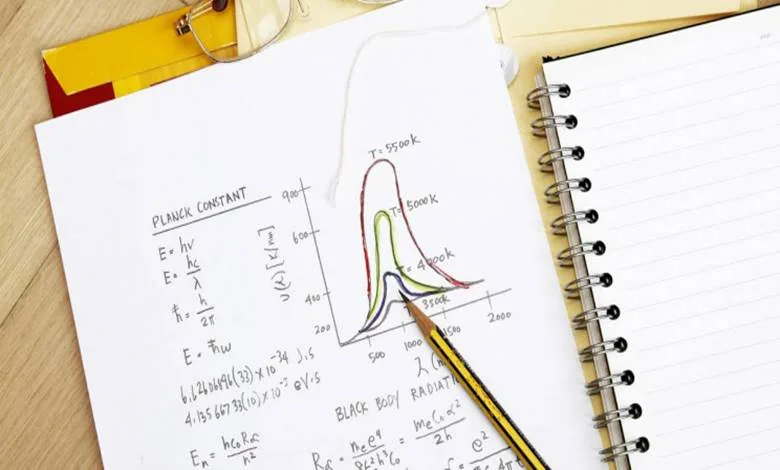
Planck's constant was born in 1900, when Max Planck found that the only way to explain how hot objects glow was to assume energy comes in tiny indivisible packets. He saw the idea as a mathematical method rather than a feature of nature. It refused to go away. Within three decades it had rewritten physics, and today the same number, known as h, helps define the kilogram and sets the limit on how precisely we can ever know the world.
In 1900, Max Planck found that black body radiation could only be explained if energy is emitted in discrete packets, each carrying an amount proportional to its frequency. The proportionality factor, h, became a fundamental constant of nature and now anchors the modern definition of the kilogram.
- In 1900, Max Planck introduced the idea that energy is absorbed and emitted in discrete quanta, and with it he resolved the stubborn black-body spectrum.
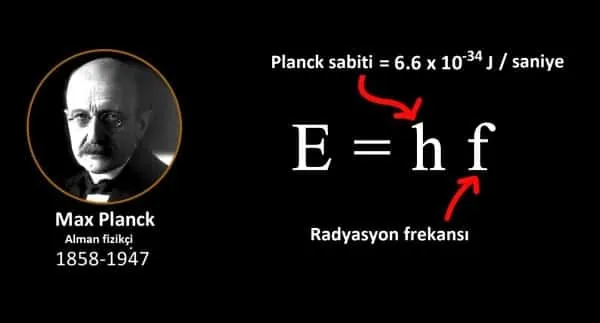
- Planck's constant, written h, relates the energy of a single quantum to the frequency of the radiation through the equation E = h times nu.
- Albert Einstein extended the idea in 1905, arguing that light itself arrives in particle-like quanta, later called photons.
- In 2019, the international system of units redefined the kilogram by fixing the numerical value of Planck's constant.
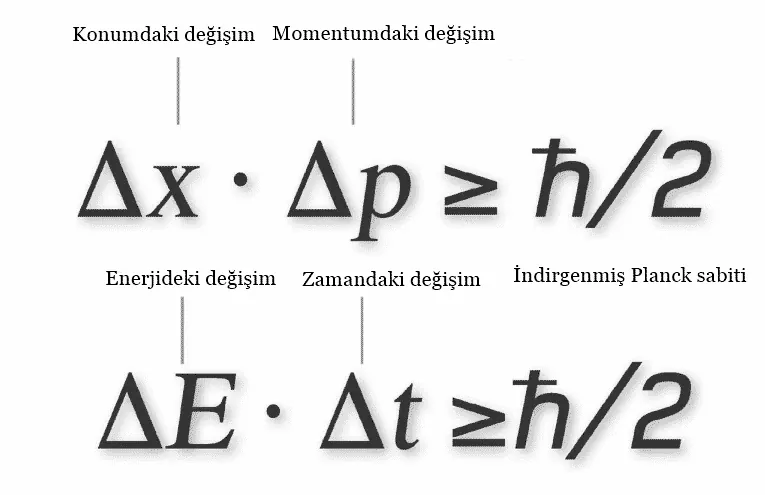
- Planck's constant also appears in the Heisenberg uncertainty principle, which limits how precisely certain paired quantities, such as position and momentum, can be known at the same time.
The Problem That Wouldn't Cooperate
By the late 1800s, physicists had a puzzle they could not talk their way out of. Heat any object and it glows. Push the temperature higher and the glow changes color. The numbers coming off their instruments refused to match the numbers coming off their chalkboards, and the gap only widened as they looked at shorter wavelengths.
To study this cleanly, they leaned on an ideal model called a black body. Picture a sealed box with its inner walls blackened, plus one tiny hole punched through the side. Any radiation that slips in through that hole bounces around and gets swallowed, and whatever the box re-emits leaks back out through the same opening. It was as close to a perfect radiator as a laboratory could build.
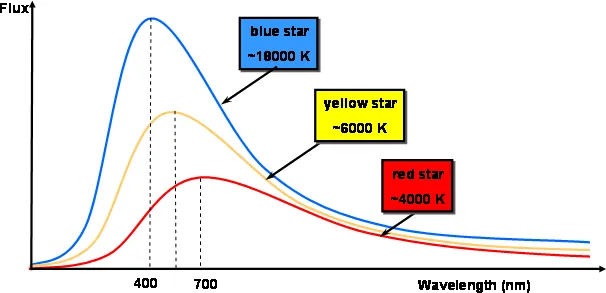
What they measured inside that glow was a pattern, not a mess. Intensity climbed as temperature rose, and the brightest part of the spectrum slid toward shorter wavelengths. That shift explains why heated metal glows dull red first, then yellowish, then almost white. The curve always rose to a peak and fell away on either side.
Here is where the classical physics of the day fell apart. Its equations predicted that radiated energy at high frequencies should keep climbing without limit, a runaway result later nicknamed the ultraviolet catastrophe. The experiments showed the opposite. Past a certain point, intensity dropped. Theory said the curve went up forever; the instruments said it turned down. Nobody could reconcile the two with the tools they had, and that standoff is exactly where Max Planck walked in during 1900.
Planck's 1900 Guess: Energy Comes in Packets
In 1900, Max Planck made a strange assumption to fix a broken theory. He proposed that the walls of a black body do not exchange energy in smooth, continuous amounts. Instead, they trade it in discrete packets. He did not believe this was how nature actually worked. He thought he had found a mathematical method, a useful device to make the numbers match the experiments. It turned out to be real physics.
The problem he was wrestling with was black-body radiation. Classical physics predicted that a hot object should radiate ever more energy at higher frequencies, without limit. Experiments showed the opposite: the intensity rose to a peak and then fell off. The theory blew up where the data calmed down. Planck's packets tamed the calculation. He found that the size of each energy packet is set by a new constant, written as h. We now call it Planck's constant, and its approximate value is 6.62607015 × 10⁻³⁴ joule-seconds.
That number is almost unimaginably small. A single packet of visible light carries only a sliver of energy, which is why we never notice the graininess of light in daily life. But the idea did more than patch a formula. It cracked open a door. If energy comes in packets, then the smooth, continuous world of classical physics is only an approximation. Beneath it lies something jumpy and strange.
Planck himself was uneasy about where this led. He had built the assumption to explain the experimental results, not to describe nature at its foundations. But the genie was already out. By 1905, Albert Einstein pushed the thought further, arguing that light itself is made of discrete energy packets. We now call those packets photons. The reluctant method had become the foundation of a whole new physics.
From a Trick to Light Itself: E = h·ν
In 1905, Albert Einstein took Max Planck's mathematical device and turned it into a statement about the nature of light itself. Einstein proposed that light does not merely get emitted and absorbed in discrete packets. Light is those packets. We call them photons today.
This was a bigger leap than it sounds. Planck had used quantization as a bookkeeping device, a way to make the black-body equations behave. He did not initially treat it as a fundamental feature of nature. Einstein did. And once you accept that light arrives in lumps, you need a rule that tells you how big each lump is.
That rule is the Planck-Einstein relation:
E = h·ν
The energy of a photon equals Planck's constant multiplied by its frequency.
Here ν (the Greek letter nu) is the frequency of the light, and h is Planck's constant. The equation is almost insultingly simple, but it carries a strange consequence. The energy of a single photon is set by its frequency. Not by how bright the light is, not by how long it has been shining. Just the frequency.
So a photon of blue light carries more energy than a photon of red light, because blue light oscillates faster. A photon of ultraviolet light carries more still. The higher you climb in frequency, the more energy each photon delivers.
Planck's constant is the bridge in that relationship. It converts a wave property, frequency, into an energy. The number itself is tiny: roughly 6.62607015 × 10⁻³⁴ joule-seconds. That smallness is why we never notice photons in daily life. The energy carried by a single photon of visible light is minuscule.
But the constant does not care about our comfort. It sits in the equation, setting the exchange rate between a wave's rhythm and the energy it delivers. Every photon in the universe obeys the same conversion, whether it left a candle on your desk or a star a thousand light-years away.
What started as a patch for a stubborn experimental curve had become a claim about what light actually is. And Einstein was not finished. The same constant would soon show up in places nobody expected, in the rotation of atoms, in the blurry limits of measurement, and eventually in the definition of the kilogram itself.
Where Planck's Constant Rules: Spin, Waves and Uncertainty
Quantum mechanics grew up in the early decades of the twentieth century, and every time physicists turned a corner, Planck's constant was already standing there waiting for them. Not just in light. In rotation, in motion, and in the hard limits of what anyone can ever measure.
Take angular momentum. Spin a bicycle wheel and you assume you can slow it down by any amount you like, smoothly, continuously. At the scale of an atom, that assumption collapses. Angular momentum there comes only in certain quantized values, and Planck's constant sets the size of those steps. The reason you have never noticed this is simple: h is extraordinarily small, so quantum effects only become visible at atomic and subatomic scales. A spinning top on your desk obeys classical rules. An electron does not.
The constant also governs matter itself. A moving body carries a matter-wave, and its wavelength is given by the de Broglie relation, λ = h / p, where p is the body's momentum. Notice what sits in the numerator. The same number that fixes the color of light fixes the wavelength of a moving body, even if that wavelength is far too tiny to ever detect.
Then comes the strangest appearance of all. Heisenberg's uncertainty principle states that a particle's position and momentum cannot both be known with unlimited precision. Pin down where something is, and the uncertainty in its momentum grows. Pin down its momentum instead, and its position blurs. The reduced Planck constant, written ħ, is Planck's constant divided by 2π, and it appears in that relation. You cannot cheat it. You can only choose which half of the picture you want sharp.
Planck's constant, in other words, does not merely describe energy. It also sets the boundary on what can be known about a particle's motion.
Why Atoms Glow in Specific Colors
Electrons do not circle the nucleus the way planets circle the Sun. That familiar picture, the little solar system inside every atom, does not hold up. Instead, an electron can only exist in certain allowed quantum states, each one tied to a specific energy level. And those levels are what give an element its colors.
Here is the payoff of everything h does. When an electron drops from a higher energy level to a lower one, the atom emits a photon. When it climbs the other way, the atom absorbs one. The energy of that photon equals the gap between the two levels, written as ΔE = h·ν, where ν is the light's frequency. Because h is a fixed number, the frequency is locked to the size of the jump. Nothing in between, no sliding scale, no half measures.
That single relation explains a fact about spectra that had puzzled researchers for a long time. Atoms do not emit or absorb light at every frequency. They interact only with the specific frequencies that match the differences between their own energy levels. Each element carries its own set of allowed jumps, and so each one writes its own signature into the light.
Heat a pure element in a flame or a discharge tube, split its glow through a prism, and you do not get a smooth rainbow. You get sharp bright lines at exact positions. Those lines are the energy-level gaps of that element, translated into frequency by Planck's constant.
Astronomers use exactly this to read stars they will never visit. A dark line in a star's spectrum tells them which element is sitting in the outer layers, absorbing light on its way out. The pattern of lines identifies the element.
So the same tiny number that fixes the size of an energy packet also sets which frequencies an atom can emit. Every glowing sign, every neon tube, every distant star announcing its composition across light-years is running the arithmetic ΔE = h·ν. Planck's constant is not just a quantity physicists look up in a table. It is the reason each element's light carries a signature of its own.
A Number We Can't Derive, and Now Can't Live Without
Here is the strangest thing about Planck's constant: nobody can explain why it has the value it has. No current physical theory can calculate that number from deeper principles. It is not the output of some grand equation. It is simply a fact about our universe, the way the speed of light is a fact, and we measure it rather than derive it.
That gap has never closed. Physicists can tell you what Planck's constant does, how it sets the scale at which quantum effects become visible, but not why it lands at 6.62607015 × 10⁻³⁴ joule-seconds and not somewhere else. No theory predicts it. It just sits there, measured, unexplained.
And then something remarkable happened on May 20, 2019. On that date, the definition of the kilogram stopped being tied to a physical object and started being tied to Planck's constant. The International System of Units fixed the numerical value of h, and the kilogram's definition is now based on that fixed number. The constant that Planck introduced in 1900 to patch a hole in black-body radiation theory now sits at the heart of how we measure mass on Earth.
Think about the inversion. For a century, the kilogram was defined by a physical standard object. Planck's constant was the mysterious quantum number. Since May 20, 2019, the roles have flipped. That physical standard is now a historical reference point. Planck's constant is the anchor, and the kilogram's definition rests on it.
So Planck's constant matters twice over. It governs how light carries energy, how matter waves ripple, how atoms jump between levels, how precisely we can know a particle's position and momentum at once. And it now underlies the definition of the kilogram itself. The deepest constant of the quantum world turns out to be one of the most practical numbers in the metrology lab.
The open question remains. We have based our unit of mass on a number we cannot derive from first principles. We know its value to extraordinary precision, we have made it the definition of the kilogram, and we still cannot say why it is what it is. That is not a failure of physics. It is an honest description of where physics stands.
Frequently asked questions
What is Planck's constant and what does it measure?
Planck's constant, written as h, sets the size of the energy packets that light and matter exchange. Its value is approximately 6.62607015 × 10⁻³⁴ joule-seconds. In plain terms, it fixes the scale at which quantum effects become noticeable, linking a wave's frequency to the energy it carries.
How did Planck arrive at it in 1900?
Max Planck introduced the idea in 1900 while tackling black-body radiation, the glow emitted by heated objects. Classical physics predicted energy would climb without limit at high frequencies, which experiments contradicted. Planck assumed the walls of a black body exchange energy in discrete packets rather than continuously, and the fit worked.
Why did Planck think it was just a mathematical trick?
Planck did not originally believe he had uncovered a feature of nature. According to the original account, he saw the quantization assumption as a mathematical method to match the observed spectrum, a convenient device rather than a fundamental truth. That idea went on to open the door to quantum physics.
How does h relate photon energy to frequency?
The energy of a photon with frequency ν is given by E = h·ν, known as the Planck, Einstein relation. Albert Einstein proposed in 1905 that light itself consists of discrete energy packets, later called photons. So the higher a light wave's frequency, the more energy each of its photons carries.
What role does h play in Heisenberg's uncertainty principle?
Heisenberg's uncertainty principle states that a particle's position and momentum cannot both be known with unlimited precision at the same time. Planck's constant sets that limit. The reduced constant ħ, equal to h divided by 2π, appears in the relation, so pinning down position more tightly loosens what you can know about momentum.
Why don't we notice quantum effects daily?
Because Planck's constant is extraordinarily small. Quantum effects only become visible at atomic and subatomic scales, where energies and momenta are tiny. For everyday objects, the quantization is so fine that motion looks perfectly continuous, which is why classical physics works so well in daily life.
How is the kilogram defined using h since May 20, 2019?
Since May 20, 2019, the kilogram has been defined in terms of Planck's constant. The SI redefinition fixed the numerical value of h, which in turn anchors the unit of mass. So this constant now underpins not just physical theory but the very foundation of our measurement system.
Why can't physicists derive h from first principles?
No current physical theory can calculate the value of Planck's constant from fundamental principles. Its value is measured, and since 2019 fixed by definition, rather than derived. Why it holds exactly this value remains an open question, one that sits at the edge of what physics can currently explain. Editorial note: details that remain unconfirmed or are matters of historical interpretation are presented here as such, and no numerical values are invented.
Got a take on this? Add your voice to the conversation below →
No comments yet. Be the first.