Stopped Clock Illusion: Why Seconds Seem to Freeze
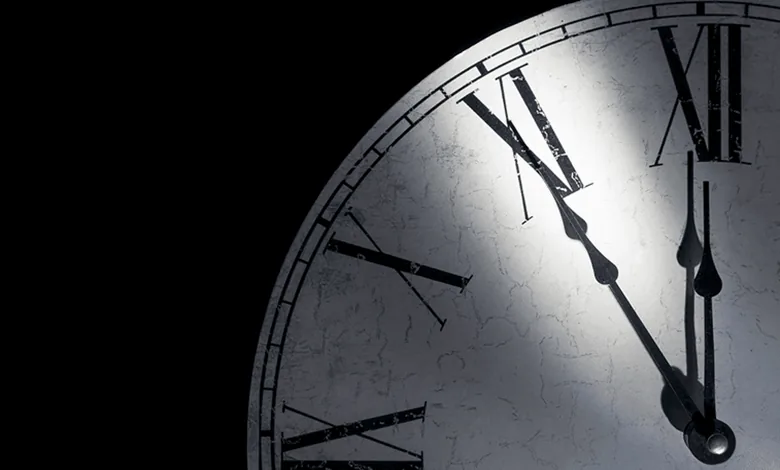
The stopped clock illusion is the odd phenomenon where a clock's second hand appears to freeze for a split second the moment you first look at it, a quirk of visual perception that has fascinated people for over a century. It happens because your brain edits out the blurry motion of your own eye movements and then smooths over that missing moment, making the first clear image feel like it lasted longer than it actually did. That tiny trick of the mind is why time itself seems to hiccup, and understanding it reveals just how much of what you see is actually a construction your brain builds on the fly.
The stopped clock illusion occurs when your eyes make a rapid movement called a saccade, and your brain suppresses the blurry visual information during that motion. When you then look at a clock, the first image arrives in your brain with a time stamp that feels longer than it really is, so the second hand seems to pause before ticking again.
- Your eyes make rapid jumping movements called saccades about three times every second while you scan a scene.
- During each saccade, your brain actively suppresses visual input, leaving you effectively blind for a tiny fraction of a second per jump.
- When you look at a clock, your brain stretches the first clear image backward in time to fill the gap left by the suppressed motion, so the second hand seems frozen.
- Research published in Nature in 2001 suggests the effect comes from temporal backdating rather than simple gap filling.
- The same kind of time distortion can happen with hearing, such as when you switch a phone between your ears.
You Look at a Clock and the Second Hand Freezes, Here's Why
You know that moment. You are rushing through a hectic day, you glance at the analog clock on the wall or the one strapped to your wrist, and for a split second, the second hand appears completely frozen. Then, just as quickly, it resumes its steady tick as if nothing happened. You blink, wonder if your eyes are playing tricks, and move on with your day.
Here is the good news: you are not alone, and your eyes are not broken. This strange experience has a name. Researchers call it the stopped clock illusion, and it is something nearly everyone encounters at some point. The phenomenon is so common that you can test it yourself. Next time you are sitting in a boring meeting or waiting for a class to end, let your eyes drift to the clock face. Wait a few seconds, look away, then look back. Chances are, that second hand will seem to pause for just a heartbeat before continuing its journey around the dial.
The illusion is more than a quirky trick of perception. It reveals something profound about how your brain constructs reality. Even something as fundamental as your sense of time is not a direct recording of the world around you. Instead, your brain is constantly building a story, filling in gaps, and making educated guesses about what you should be seeing. The stopped clock illusion is one of the clearest windows into that hidden process.
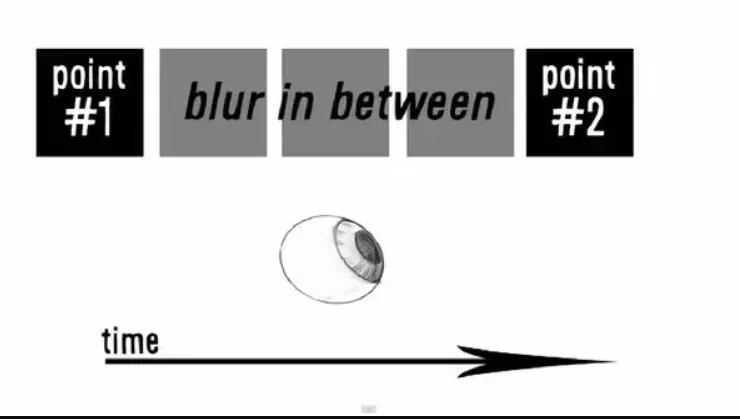
To understand why it happens, you need to know a little about how your eyes actually move. They are never still. Your gaze jumps rapidly from one point of focus to another in quick, darting movements. These are called saccadic eye movements, and they happen roughly three times every second. When your eyes snap to a new target, the world shifts across your retina in a blur. That blur is useless to your brain, so your visual system simply shuts down during the jump. You are effectively blind for those tiny fractions of a second, dozens of times each minute.
Your brain hates gaps. When the visual feed cuts out, it does not just leave a blank space in your experience. Instead, it works backward, taking the new image you see after the saccade and using it to fill in what you missed. This process is called temporal backdating. The brain essentially rewrites your perception of the past, deciding that the second hand was already in its new position before you actually saw it there. The result is that the clock appears to hold still for a moment, even though it never actually stopped.
This illusion is not limited to vision. You can trigger a similar effect with your ears. Try this: hold your phone to one ear and listen to a ringing tone, then switch it to your other ear. Do this a few times. You will likely notice that the pause between rings feels strangely long right after you switch ears. Your brain is doing the same trick, masking a gap in auditory attention instead of a gap in vision. The mechanism is the same, only the sense is different.
What makes this illusion so fascinating is what it says about everyday perception. You assume you are seeing the world as it truly is, second by second. But your brain is not a passive camera. It is an active storyteller, editing, predicting, and sometimes inventing details to keep your experience smooth and continuous. The stopped clock illusion is just one small moment where you catch it in the act.
The Brain's Quick Fix: Saccades and the Stopped Clock Illusion
Your eyes are moving right now, roughly three times every second, in quick jumps called saccades. These rapid movements between fixation points are how your gaze hops from one word to the next on this page. But here is the catch: during each jump, your visual system briefly shuts down to avoid smearing the world into an unreadable blur.
That shutdown creates a tiny gap in what you see. Your brain hates gaps, so it does something clever. It predicts what the next scene should look like and fills the missing moment with that prediction, using the most recent visual information it has. When you glance at a clock, the brain replaces that lost instant with the new view of the second hand. The result is the stopped clock illusion, that eerie moment when the ticking hand seems to freeze before moving again.
Here is where the story gets more interesting. The popular explanation says the brain simply fills in the gap, but researchers who study this phenomenon have a different take. A 2001 paper in Nature by Yarrow and colleagues suggests the illusion actually comes from temporal backdating. Your brain takes the new image of the clock and works backward, assigning it a moment slightly earlier than it actually occurred. So the second hand appears to linger because your mind postdates what it saw.
As the story goes, those tiny gaps add up. Some accounts claim that saccades cost us about 40 minutes of visual time each day, though that figure is not firmly established. What is certain is that your eyes make these jumps constantly, and each one carries a small price in perceptual continuity.
The illusion is not limited to vision either. Try switching a phone from one ear to the other while listening to a ringing tone. You will notice the pause before the next ring feels unusually long. That is the same mechanism at work, but this time your brain is masking a gap in hearing rather than sight, a phenomenon documented in Current Biology.
So the next time a second hand seems to stall, remember: your brain is not showing you the world as it is. It is showing you a story it has stitched together, complete with a few invented moments.
It's Not Just Your Eyes: The Illusion Works with Sound Too
The stopped clock illusion doesn't actually require your eyes to move at all. Shifting your attention is enough to trigger the same temporal distortion, and researchers confirmed this in a Current Biology study that looked at how our brains handle gaps in hearing. The effect is so reliable that you can test it yourself with nothing more than a ringing phone.
Here's the experiment. Hold your phone to your left ear and listen to a ringtone. Now switch it to your right ear. Do this a few times, and you'll notice something strange: right after you swap ears, the pause before the next ring feels unusually long. It's as if time itself stretched out for a moment. But nothing about the ringtone actually changed. Your brain simply masked a gap in your auditory experience, just like it masks the visual gaps during saccadic eye movements.
This is auditory chronostasis, the hearing counterpart to the visual version. When you move your attention from one ear to the other, your brain briefly loses track of continuous auditory input. To keep your perception of the world seamless, it fills that tiny gap by backdating what you hear next. The result is that the interval between rings seems to stretch, even though it's perfectly normal.
What's remarkable is that this happens without any eye movement whatsoever. Your eyes can stay fixed on a single point, and the distortion still occurs. That tells us the stopped clock illusion isn't really about vision at all. It's about how your brain constructs a continuous story of the world from discontinuous sensory data. Whether the gap comes from a saccade or an attention shift between ears, the brain applies the same trick: it smooths over the missing moment and presents you with a seamless, edited version of reality.
So the next time you switch your phone between ears and feel that odd pause, you're not imagining things. Your brain is busy patching over a hole in your perception, and the illusion is just the visible seam of its handiwork.
What This Means for Your Daily Life
Your eyes jump about three times every second, and each jump carries a tiny blind spot. Those micro-gaps stack up, and by the end of a waking day, the accumulated visual quiet reportedly adds up to roughly 40 minutes of time when your eyes are not really taking in a clean image. The exact number is debated, but the scale of it is worth sitting with: a meaningful slice of your day is being edited on the fly.
You never notice these gaps, and that is the whole trick. The brain does not show you the blurry smear that happens when your eyes whip from one point to another. Instead, it quietly patches the missing moment with what it expects to see next. When you glance at a clock, the second hand appears frozen because your brain has stitched the new image over the old one, and only then does the hand resume its normal march.
This is why the stopped clock illusion is not just a party trick. It is a window into how your sense of time is built. You are not a passive recorder of seconds ticking by. Your perception is a construction, assembled moment to moment from guesses, memories, and expectations. The same editing process shows up when you switch a phone from one ear to the other, as the brain masks an auditory gap the same way it masks a visual one.
So the next time you catch a frozen second hand, know that your brain is busy editing. It is not a glitch. It is the cost of a seamless, continuous story of the world, and you are the one telling it to yourself.


Frequently asked questions
What is the stopped clock illusion?
The stopped clock illusion is the strange moment when you glance at an analog clock and its second hand appears to freeze in place for a brief instant before ticking normally again. It happens almost every time you look at a clock, yet most people never notice it until someone points it out. You have probably experienced this without realizing it. You glance at the clock on the wall during a boring meeting, and for a split second, the second hand seems stuck. Then it moves again, as if nothing happened. This tiny perceptual glitch has a name, and researchers have been studying it for years to understand why our brains play this trick on us.
Why does the second hand seem to freeze?
The freezing effect happens because your eyes make rapid movements called saccades about three times per second, and your brain edits out the blurry visual information during those movements. When you look at a clock, your brain predicts where the second hand should be and fills in the gap with that prediction. Here is the fascinating part. Contrary to what many popular explanations claim, the illusion is not caused by your brain filling in a visual gap. Research published in Nature in 2001 by Yarrow and colleagues showed that the effect actually comes from a process called temporal backdating. Your brain takes the image you see after the eye movement and pushes it backward in time, making it seem like you saw the clock earlier than you actually did. The second hand appears frozen because your brain is stretching the moment you first saw it.
Does the illusion affect everyone?
Yes, this is a universal experience. Experiments have confirmed that people across different ages and backgrounds all report the same effect when they look at clocks. Nobody is immune to it, which makes sense because it comes from the basic mechanics of how human vision works. The illusion happens so quickly that you might wonder how researchers even measure it. They use controlled experiments where participants watch clocks or timers and report what they perceive. The results consistently show the same pattern. Your brain is not broken, and your eyes are not failing. This is just how perception works for every single person.
Can it happen with sounds?
Yes, and the phone-ear example makes this easy to test. Hold your phone to one ear and listen to a ringing tone, then switch it to your other ear. Do this a few times, and you will notice that the pause before the next ring seems unusually long right after you switch ears. This is the same underlying effect, but it involves your auditory system instead of your visual system. Your brain masks a gap in hearing rather than a gap in seeing. The important thing is shifting your attention, not just moving your eyes. Whenever your brain has to stitch together a continuous experience from separate moments, these little time distortions can appear.
Does time actually slow down?
No, time itself does not change at all. The stopped clock illusion is purely a perceptual effect, not a physical one. The clock keeps ticking at exactly the same rate, and your experience of time continues normally. Only your perception of that first moment is altered. What makes this so interesting is what it reveals about your brain. You are not a passive recorder of reality. Your brain actively constructs your experience of every moment, filling in details, making predictions, and sometimes editing the timeline. The stopped clock illusion is just one small window into that invisible process happening behind the scenes all day long. Editorial note: Any facts which remain unconfirmed are presented as such, hedged with appropriate qualifiers throughout this piece.
Got a take on this? Add your voice to the conversation below →
No comments yet. Be the first.