Airline Overbooking: The Math Behind Bumped Passengers
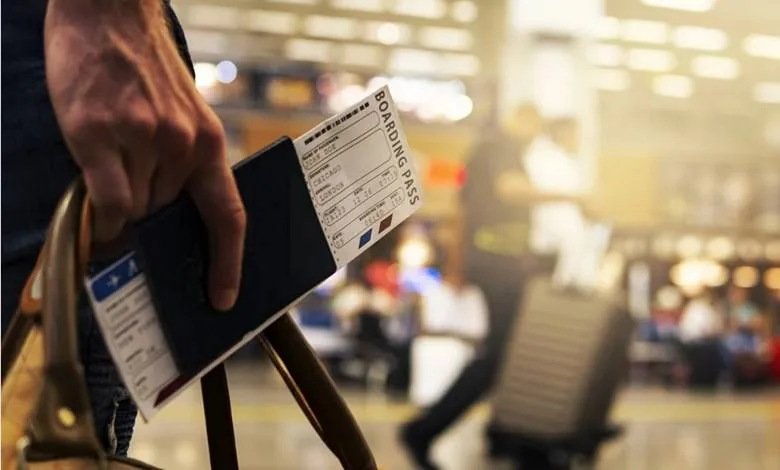
Airlines intentionally sell more tickets than seats on nearly every flight, and the math behind that decision is a calculated bet that some passengers won't show up, a practice that leads to roughly 50,000 travelers being bumped from flights each year in the United States. This system, known as airline overbooking, is not a glitch but a carefully tuned revenue strategy that has been refined over decades. Understanding the probability behind it can help you see why that boarding pass sometimes comes with a voucher instead of a seat.
Airlines overbook flights because they know from historical data that a predictable percentage of ticketed passengers will not show up. They use probability models to sell a few extra seats, balancing the risk of an empty seat against the cost of bumping a passenger. If you get bumped, you may be entitled to compensation under federal rules.
- Airlines have used overbooking as a standard revenue management practice for decades.
- Airlines are generally expected to ask for volunteers before involuntarily bumping anyone.
- Involuntarily bumped passengers may receive compensation, with the exact amount depending on the delay length and the airline's policy.
- The probability of being bumped varies widely depending on the route and season, rising on oversold flights to popular destinations.
- Overbooking also applies to hotels, which use the same math to account for late cancellations and no-shows.
Why Your Boarding Pass Isn't a Guarantee
You've paid for your ticket, checked your bags, and made it through security. Then comes the announcement that changes everything: the flight is full, and you've been bumped. It feels personal, almost like a mistake. But here's the uncomfortable truth: airline overbooking is not an error. It's a calculated, deliberate strategy built on probability and profit margins, and it happens far more often than most travelers realize.
Overbooking means selling more tickets than there are seats on the plane. Airlines do this because they know from years of historical data that not every single person who buys a ticket will actually show up. People miss connections, get sick, change plans, or simply oversleep. If the airline sold exactly 200 tickets for a 200-seat aircraft, they'd risk taking off with empty seats, which means flying at a loss. So they sell 220 tickets for those 200 seats, betting that a predictable number of passengers won't make it.
The same logic applies beyond airplanes. Hotels routinely overbook their rooms for the same reason, hoping that a few no-shows will keep them from losing revenue on empty beds. It's a numbers game played across the travel industry, and the stakes are real. Estimates vary from year to year and depend on how the count is done, but air travel consumer reports suggest that tens of thousands of people are denied boarding annually despite holding valid tickets.
Here's how the math works out in practice. Imagine a flight with 200 seats and a ticket price of $200. If the airline sells exactly 200 tickets, they earn $40,000. But if they sell 220 tickets and 15 passengers don't show up, that's 205 people arriving for 200 seats. Five passengers get bumped, and the airline compensates them, say $500 each, which costs $2,500. But they collected $44,000 in ticket sales. Take away the compensation, and they're still ahead by $1,500 compared to selling just 200 tickets. That's the core of airline overbooking: a small number of unhappy passengers is cheaper than a plane full of empty seats.
To make this work, airlines lean heavily on statistics. They track show-up rates meticulously, and a commonly cited average is that each ticketed passenger has about a 90% chance of arriving for their flight. That figure shifts with route, time of day, and season, but it gives the airlines a solid starting point for their calculations. They're not guessing. They're running probabilities on every single departure.
The Simple Math Behind Selling 220 Seats on a 200-Seat Plane
Picture a 200-seat airplane and an airline that sells 220 tickets at $200 each. If 185 passengers actually show up, the airline collects 220 times $200, which comes to $44,000 in revenue. That is the core arithmetic that makes airline overbooking so attractive.
Now compare that with the conservative approach. If the airline had sold exactly 200 tickets, the math would give 200 times $200, or $40,000. The difference between those two numbers is $4,000. That is the money the airline would leave on the table by playing it safe, assuming some passengers never board.
But what happens when too many people do show up? Imagine 205 passengers arrive for those 220 booked seats. Five of them get bumped. If compensation for each bumped passenger runs $500, the airline spends 5 times $500, or $2,500, to make things right. Subtract that from the $4,000 gain and the airline still walks away with $1,500 in extra profit.
The logic holds together because no-shows are not rare. Travelers cancel, miss connections, or simply change their minds. An airline that refuses to account for that reality flies with empty seats, and an empty seat generates zero revenue. Paying a few passengers to take a later flight often costs far less than the money lost on vacant rows.
This is why the practice exists in the first place. Airlines are not gambling blindly; they are running the numbers. The $1,500 net gain in this example comes straight from the gap between what overbooking captures and what compensation eats away. It is a calculated trade, and the arithmetic checks out under these assumptions.
How Airlines Decide How Many Extra Tickets to Sell
Airlines lean on a branch of mathematics called the binomial distribution to figure out exactly how many extra seats they can safely sell. The core idea is simple: each ticketed passenger is a trial, and showing up for the flight counts as a success. By modeling thousands of passengers this way, carriers can predict with surprising precision how many people will actually walk through the boarding gate.
The whole system rests on historical data. A commonly cited average is that each ticketed passenger has roughly a 90% chance of showing up for their flight, though that number shifts with routes, seasons, and fare types. An airline selling 220 tickets on a 200-seat plane knows that, on average, about 15 to 20 people won't make it. The trick is figuring out the odds that more than 200 will show up, because that's when things get expensive.
This is where the binomial distribution earns its keep. It calculates the probability of getting a specific number of successes across a fixed number of trials. For a 100-seat aircraft with a 5% cancellation rate, the math gets very concrete. Selling 101 tickets gives only a 0.56% chance of overcapacity. Bump that to 102 tickets and the probability rises to 3.40%, still comfortably below the 5% threshold most airlines use as their comfort zone. Go one step further to 103 tickets, though, and the risk jumps to 10.65%. That single extra ticket nearly triples the chance of having to bump someone.
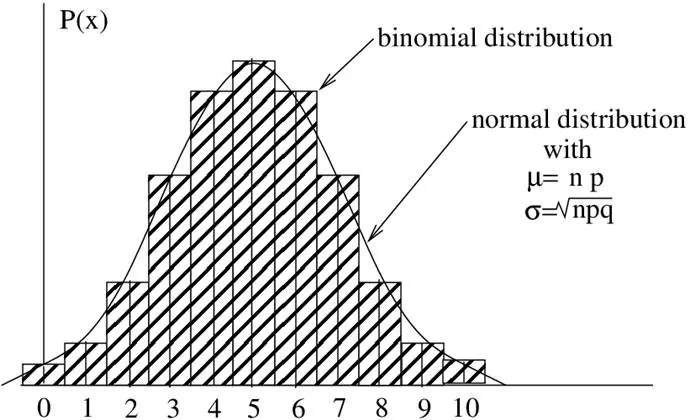
The foundation for all this was laid in the 18th century by a statistician named Abraham de Moivre. He noticed something remarkable while working on gambling problems: as the number of trials grows, the binomial distribution starts to take the shape of a smooth, symmetrical curve. That curve is what we now call the normal curve, or the bell curve, and it became the backbone of modern probability theory.
A coin flip makes the concept intuitive. Flip a coin ten times and the most likely outcome is five heads, represented by the tallest bar on the distribution chart. Four or six heads are nearly as likely, while zero or ten heads are extremely rare. The same logic applies to a flight full of passengers. Most will show up, a few won't, and the airline just needs to know where the risk of overcapacity starts to outweigh the profit from selling one more ticket.
The 102-Ticket Sweet Spot: A Step-by-Step Calculation
Let's make this concrete. Imagine a 100-seat aircraft and a 5% cancellation rate, meaning p = 0.05. The airline's goal is to keep the probability of overcapacity below 5%. Selling 102 tickets does exactly that, with a 3.40% chance of having more passengers than seats.
Here's how the math actually plays out, ticket by ticket. If the airline sells 101 tickets, the probability that more than 100 people show up is just 0.56%. That's remarkably safe, but it also leaves money on the table. Bump it to 102 tickets and the risk rises to 3.40%, still comfortably under the 5% threshold. Push to 103 tickets and the probability jumps to 10.65%, blowing past the limit. The optimal number for this flight is 102 tickets.
The pattern becomes clearer when you see the full range. Selling 104 tickets brings a 23.08% chance of overcapacity. At 105 tickets, it's 39.24%. The probabilities climb steeply from there: 106 tickets at 56.22%, 107 at 71.21%, 108 at 82.67%, 109 at 90.40%, and 110 tickets at a staggering 95.08%. Each additional ticket adds significant risk once you cross that sweet spot.
| Tickets Sold | Probability of Overcapacity |
|---|---|
| 101 | 0.56% |
| 102 | 3.40% |
| 103 | 10.65% |
| 104 | 23.08% |
| 105 | 39.24% |
| 106 | 56.22% |
| 107 | 71.21% |
| 108 | 82.67% |
| 109 | 90.40% |
| 110 | 95.08% |
This simple model gives you the core idea behind airline overbooking, but real-world decisions get more complicated. Advanced approaches factor in the cost of bumping a passenger. If compensating denied boarding passengers becomes too expensive, the airline overbooking strategy stops being worth it. The financial risk simply outweighs the benefit of filling more seats, and the airline's reputation takes a hit on top of the monetary loss.
Frequently asked questions
Why do airlines overbook?
Airlines overbook because empty seats mean lost money, and statistics show that not every passenger who buys a ticket will actually show up. In a hypothetical example with 220 tickets sold at $200 each on a 200-seat plane, the airline collects $44,000. Selling only 200 tickets would bring in $40,000. Even after paying $500 compensation to 5 bumped passengers, the airline still comes out $1,500 ahead.
How do airlines decide how many extra tickets to sell?
Airlines rely on historical show-up rates and a mathematical tool called the binomial distribution. With a 5% cancellation rate on a 100-seat aircraft, selling 101 tickets gives only a 0.56% chance of overcapacity. Selling 102 tickets raises that probability to 3.40%, still safely under the 5% threshold. But selling 103 tickets jumps the risk to 10.65%, which most airlines would consider too risky.
What is the probability of being bumped?
The chance of being denied boarding depends entirely on how many tickets the airline sold. In the worked example with 100 seats and a 5% cancellation rate, selling 102 tickets creates a 3.40% probability that more passengers show up than there are seats. That works out to roughly 3 or 4 bumped passengers for every 100 flights under those conditions.
How does the binomial distribution apply?
Think of each ticketed passenger as a single trial with two possible outcomes: they show up or they do not. The binomial distribution calculates the probability that a certain number of passengers will appear, given the total tickets sold and the historical show-up rate. Airlines plug in their numbers, find the point where the risk of overcapacity stays acceptable, and sell tickets right up to that limit.
Who was Abraham de Moivre?
Abraham de Moivre was an 18th-century statistician who discovered that the binomial distribution takes the shape of a smooth curve as the number of trials grows. That curve is now known as the normal distribution, and it became a cornerstone of probability theory. His insight in the 1700s laid the groundwork for the very calculations airlines use today to manage overbooking.
What compensation are you entitled to if denied boarding?
The example used in the original account assumes $500 as full compensation for a bumped passenger, but that figure is hypothetical. Actual compensation rules vary by country, airline, and circumstances, and the source does not detail them. If you are denied boarding, check the airline's policy and the regulations of the departure country to know what you can claim.
Do hotels also overbook?
Yes, the same practice happens in the hospitality industry. Hotels can sell more rooms than they physically have, betting that some guests will cancel or simply not check in. When too many guests arrive, the hotel must find alternative accommodations, often at another property, and cover the cost. The math behind hotel overbooking works much the same way as it does for airlines. Editorial note: Any facts which remain unconfirmed are presented as such, hedged to reflect the current public record.
Got a take on this? Add your voice to the conversation below →
No comments yet. Be the first.