Stomachion: Archimedes' Ancient 14-Piece Puzzle
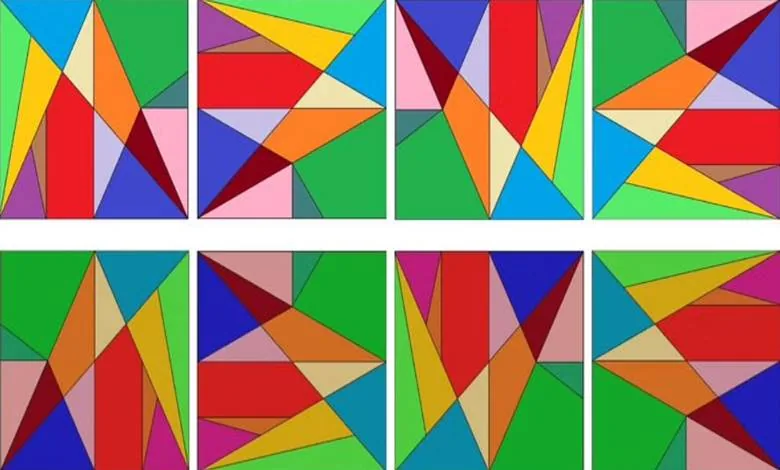
The Stomachion puzzle, an ancient 14-piece geometric dissection game attributed to Archimedes of Syracuse, was rediscovered in the Archimedes Palimpsest, revealing 536 unique solutions and reshaping our understanding of combinatorics in ancient Greece. This is the story of how a lost manuscript page, scraped clean and reused for prayers, quietly held the blueprint for the world's oldest mathematical puzzle for nearly a thousand years, waiting for modern imaging technology to bring it back to light.
The Stomachion is a 14-piece square dissection puzzle created by Archimedes around the third century BCE. Its only surviving description was found in the Archimedes Palimpsest. Modern analysis showed the puzzle has 536 distinct solutions, making it an early study in combinatorics. The pieces can form a square, and the puzzle is widely considered the oldest mathematical puzzle in the world.
- The Stomachion puzzle consists of 14 flat pieces that fit together to form a perfect square.
- The only surviving copy of Archimedes' treatise on the Stomachion was found in the Archimedes Palimpsest, a manuscript that was overwritten with prayers in the 13th century.
- Researchers using X-ray and infrared imaging successfully revealed the hidden text beneath the prayers.
- Mathematicians determined that the 14 pieces can be arranged into a square in exactly 536 different ways, accounting for rotations and reflections.
- The puzzle is often called the Ostomachion or the Archimedes box puzzle, and it predates the Tangram by over a thousand years.
The 2,200-Year-Old Puzzle Hidden in a Prayer Book
Somewhere inside a medieval prayer book, written over and hidden beneath layers of religious text, lies one of the oldest mathematical puzzles ever created. The Stomachion puzzle, attributed to the great Greek mathematician Archimedes, was discovered in a manuscript called the Archimedes Palimpsest. Scientists spent years carefully revealing this hidden treasure after it remained concealed for roughly a thousand years.
Archimedes lived from 287 BC to 212 BC in Syracuse, a Greek city on the island of Sicily. He is remembered as one of history's greatest mathematical minds, known for discoveries in geometry, physics, and engineering. His fame has even reached modern pop culture, though the popular version of his story sometimes stretches the truth.
Contrary to what some might have heard, Archimedes does not appear as a character in the film Indiana Jones and the Dial of Destiny. The movie features a fictional artifact inspired by his scientific legacy, but the man himself never shows up on screen.
The story of how his works survived is nearly as remarkable as the mathematics itself. Some accounts suggest the earliest known compilation of Archimedes' writings appeared around 530 AD, roughly 750 years after his death, possibly based on an earlier manuscript connected to Isidore of Miletus, the architect of Hagia Sophia. However, historians have not firmly established these details, and the dating remains uncertain.
What is certain is that his texts were later copied onto parchment during the Byzantine period. At some point, someone scraped off the old writing and reused the pages for a prayer book. That recycling, which created what we now call a palimpsest, accidentally preserved a mathematical treasure for centuries.
The Archimedes Palimpsest contains seven important works by Archimedes, including On the Equilibrium of Planes, On the Measurement of the Circle, On Spirals, On Floating Bodies, On the Sphere and Cylinder, The Method of Mechanical Theorems, and the Ostomachion. Two of these works, The Method of Mechanical Theorems and the Ostomachion, survive only through this single manuscript. The original Greek text of On Floating Bodies also exists nowhere else.
Modern technology has been essential to unlocking what the palimpsest conceals. Researchers have used X-rays and infrared imaging to peer through the later prayer text and reveal the Greek mathematics underneath. The manuscript currently sits in a private collection, still yielding secrets to those patient enough to look.
Who Was Archimedes, the Man Behind the Stomachion?
Archimedes of Syracuse lived from 287 BC to 212 BC, and he is widely regarded as one of history's greatest mathematicians. His scientific discoveries and technological inventions made him a legend in his own time, and that reputation has only grown over the centuries. The Stomachion puzzle is just one piece of his remarkable legacy, but understanding the man helps us appreciate why this ancient brain-teaser matters so much.
Born in the Greek city-state of Syracuse on the island of Sicily, Archimedes was a thinker who seemed to live centuries ahead of his era. He worked out principles of buoyancy, designed ingenious war machines, and calculated the value of pi with astonishing accuracy. His name carries so much weight that popular culture has tried to claim him, though not always accurately. Contrary to what some might have heard, Archimedes does not actually appear as a character in the film Indiana Jones and the Dial of Destiny. The movie draws inspiration from his scientific legacy, but the man himself never shows up on screen.
What makes Archimedes even more fascinating is how close we came to losing his work entirely. His writings did not circulate widely during his lifetime. Some accounts suggest the earliest known compilation of his works appeared around 530 AD, roughly 750 years after his death. That collection is said to have been based on an earlier manuscript prepared by Isidore of Miletus, the architect behind the Hagia Sophia in Constantinople. Scholars treat these details with caution since the evidence is thin, but the timeline helps explain why so few of his texts survived.
The story gets even more precarious from there. Those texts were later copied onto parchment during the Byzantine period, gathered into a collection of Archimedes' works. At some point, someone scraped the writing off those pages and reused them for a prayer book. That act of recycling created what we now call the Archimedes Palimpsest, a fragile manuscript that spent roughly a thousand years hidden in plain sight. Scientists spent years using X-rays and infrared imaging to reveal the erased text beneath the prayers, and their painstaking work brought the Stomachion puzzle back into the world.
What Is the Archimedes Palimpsest?
The Archimedes Palimpsest is a medieval parchment manuscript that holds the only surviving copy of Archimedes' "Method of Mechanical Theorems," along with six other treatises by the great Greek mathematician who lived from 287 BC to 212 BC in Syracuse. It is, quite simply, one of the most important mathematical artifacts ever discovered.
The word "palimpsest" describes parchment that has been scraped clean and written over. In this case, a Byzantine scribe around the 13th century erased Archimedes' Greek text to reuse the expensive animal skin for a prayer book. For centuries, the brilliant mathematics hidden underneath went completely unnoticed.
What makes this particular palimpsest so extraordinary is what lies beneath those prayers. It contains seven significant works: "On the Equilibrium of Planes," "On the Measurement of the Circle," "On Spirals," "On Floating Bodies," "On the Sphere and Cylinder," "The Method of Mechanical Theorems," and the Stomachion puzzle. The last two survive nowhere else on Earth, and the original Greek text of "On Floating Bodies" exists only in these pages. Every other copy of that work came from Latin translations.
Today the manuscript sits in a private collection, and researchers study it using modern imaging techniques like X-rays and infrared photography. These tools reveal what the naked eye cannot see: the ghostly Greek letters hiding beneath the medieval prayers, and with them, the deepest mathematical thinking of antiquity.
The Stomachion Puzzle: 14 Pieces, 536 True Solutions
Archimedes' Stomachion puzzle is deceptively simple on the surface, yet it hides a mathematical depth that took modern computers to fully unlock. The challenge is straightforward: take 14 flat pieces and arrange them back into a perfect square. But here is where the trouble begins. Doing that by hand, with no reference image and no hints, turns out to be surprisingly difficult.
The name itself carries a curious history. "Stomachion" comes from the Greek word for stomach, and today people often call it Archimedes' box. The puzzle is a dissection of a square into 14 irregular polygons, each one a triangle or quadrilateral of varying shapes and sizes. You might think that once you see the pieces, fitting them back together would be obvious. It is not. The pieces interlock in ways that defy intuition, and the square refuses to reveal itself without patience and a good spatial imagination.
What makes the Stomachion puzzle truly remarkable is not just the challenge of solving it once, but the sheer number of ways it can be solved. Mathematicians have spent considerable effort counting the possibilities. After long study, they determined that the puzzle has 17,152 total different arrangements that form a square. That staggering number, however, includes many that are essentially the same. If you take one valid square and mirror it, or rotate it by 90 degrees, you get a different-looking arrangement that is really just a reflection or a turn of the original. When you eliminate those repeats, the count drops dramatically. The true number of essentially different solutions is 536.
That number, 536, is what separates the Stomachion from an ordinary pastime. A puzzle with a handful of solutions is a neat diversion. A puzzle with 536 genuinely distinct solutions is something else entirely. It belongs to the realm of combinatorics, the branch of mathematics concerned with counting and arranging. Whether Archimedes deliberately approached this puzzle with a combinatorial mindset is not certain. But the work is widely considered an early example of combinatorial thinking, and given how far ahead of his time he was in so many other areas, it would hardly be surprising if he had such an idea in mind.
Frequently asked questions
What is the Stomachion puzzle?
The Stomachion puzzle is an ancient geometric dissection puzzle attributed to Archimedes of Syracuse (287 BC, 212 BC), consisting of 14 pieces that fit together to form a square. It is considered one of the world's oldest known mathematical puzzles, surviving today through the Archimedes Palimpsest, a manuscript rediscovered in the 20th century.
How many solutions does the Stomachion puzzle have?
The Stomachion puzzle has 17,152 total arrangements when counting every rotation and mirror image. However, when mathematicians eliminated those duplicates, they found only 536 essentially different solutions. This count was established through computer enumeration and represents genuinely distinct ways to reassemble the 14 pieces into a square.
Where was the Stomachion discovered?
The Stomachion was discovered in the Archimedes Palimpsest, a parchment manuscript where Archimedes' original Greek texts had been scraped off and overwritten with a Byzantine prayer book. The palimpsest resurfaced in the 20th century, and modern imaging techniques like X-rays and infrared photography revealed the hidden mathematical treatises beneath.
Who wrote the Stomachion?
The Stomachion is attributed to Archimedes of Syracuse, the Greek mathematician and inventor who lived from 287 BC to 212 BC in the city of Syracuse on the island of Sicily. He is widely regarded as one of the greatest mathematicians in history, known for his work on geometry, physics, and engineering.
What is the Archimedes Palimpsest?
The Archimedes Palimpsest is a parchment manuscript created when a scribe scraped off Archimedes' mathematical texts and wrote a Christian prayer book over them, likely in the 13th century. The hidden original texts were later recovered using modern imaging technology, revealing seven important Archimedean treatises including the only known copy of his "Method of Mechanical Theorems."
Why is the Stomachion important in mathematics?
The Stomachion is important because it represents an early example of combinatorics, the branch of mathematics concerned with counting possible arrangements. Archimedes appears to have been interested in how many different ways the 14 pieces could be rearranged to form a square, a question that anticipates combinatorial thinking by nearly two millennia.
Was the Stomachion used for combinatorics?
It is believed to be an early instance of combinatorial mathematics, though whether Archimedes deliberately intended it as such remains uncertain. The text "Ostomachion" in the palimpsest describes the puzzle and its arrangements, and given Archimedes' mathematical sophistication, the possibility that he consciously explored counting problems is plausible, but not definitively proven.
What did Archimedes write about the Stomachion?
Archimedes wrote a treatise called "Ostomachion" that describes the puzzle and its possible arrangements. The word itself derives from Greek roots meaning "stomach," and the work is today sometimes called Archimedes' Box. This treatise survives only through the Archimedes Palimpsest, making it one of the rarest surviving pieces of ancient Greek mathematics.
Got a take on this? Add your voice to the conversation below →
No comments yet. Be the first.