Spontaneous Human Combustion: The Wick Effect Explained
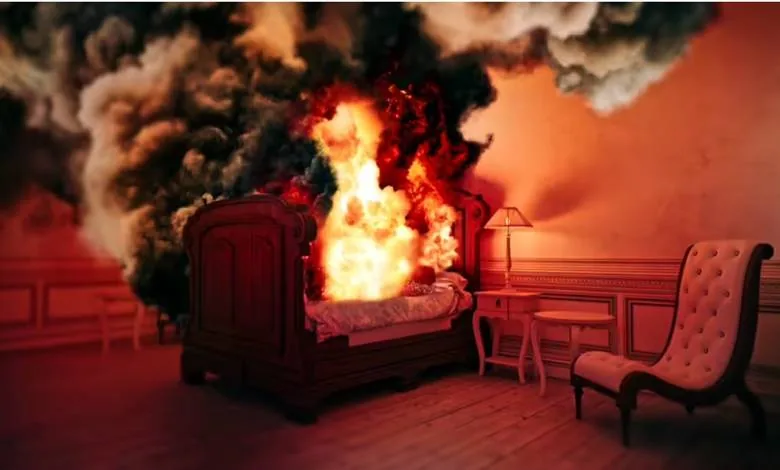
Spontaneous human combustion is a rare and terrifying phenomenon where a person appears to catch fire without an obvious external ignition source, and the leading scientific explanation is the wick effect, a process demonstrated in cases like Michael Faherty's 2010 death in Ireland. The idea that a human being can simply burst into flames has haunted our imagination for centuries, blending equal parts horror and fascination. Yet behind the mystery lies a cold, physical mechanism that explains how a body can be almost entirely consumed while the surrounding room remains largely untouched, a detail that makes these cases so deeply unsettling.
Spontaneous human combustion is a rare phenomenon where a person's body catches fire with no clear external source. The wick effect, where clothing acts as a wick and body fat as fuel, is the leading scientific explanation. Michael Faherty's 2010 death in Ireland is one of the most recent documented cases.
- Michael Faherty, aged 76, was found dead in his living room in Galway, Ireland, in December 2010, with his body severely burned but his surroundings largely intact.
- The wick effect explains that a small external flame, like a cigarette or candle, can ignite clothing, which then wicks melted body fat to sustain a slow, intense burn.
- The Mary Reeser case of 1951 in Florida remains one of the most famous spontaneous human combustion examples, where her body was almost entirely consumed while her apartment showed minimal fire damage.
- Scientific reviews, including a 2012 analysis of historical cases, consistently point to the wick effect rather than any supernatural or unexplained internal combustion.
- Spontaneous human combustion has appeared in literature for over 150 years, most notably in Charles Dickens's novel "Bleak House," which helped popularize the concept.
The Mystery of Spontaneous Human Combustion
On December 22, 2010, in Galway, Ireland, a 76-year-old man named Michael Faherty was found dead in his home with a large part of his body burned, and investigators could not identify any definitive cause for the fire. The case became one of the most frequently cited examples in the long and strange history of spontaneous human combustion. Faherty's death, with its unanswered questions, continues to fuel the debate over whether a human being can truly burst into flames without any external source of ignition.
The idea itself is simple and terrifying: a person, sitting quietly at home, suddenly catches fire with no match, no spark, no explanation. Reports of such events stretch back centuries, weaving through medical texts, newspapers, and even literature. While the scientific community remains deeply skeptical, the stories persist, and the Faherty case in Galway is often the first one mentioned. It happened in a modern city, in a modern home, and yet the fire that consumed him left no clear trace of how it began.
The earliest known scientific publication devoted entirely to this phenomenon appeared in 1673. Titled De Incendiis Corporis Humani Spontaneis, it was a collection of case reports compiled by a scholar named Jonas Dupont. That work helped cement the concept in the European medical imagination, and by the 19th century, the idea had crossed over into popular culture. Charles Dickens featured a death by spontaneous human combustion in his novel Bleak House, which brought the phenomenon to a wide audience and sparked considerable public discussion.
Historical Cases and Literary Fame
Before the Galway case made headlines in 2010, the story of spontaneous human combustion had already been circulating for centuries, carried along by a handful of strange reports and a very famous novel. Two earlier accounts still get mentioned whenever the topic comes up, though neither one has ever been properly verified. According to the original account, in March 1970 an 89-year-old woman in Ireland reportedly burst into flames with only her lower legs left behind. Then in 1980, as the story goes, a 73-year-old man in Scotland was found almost completely reduced to ash, with just his left leg unburned. These cases are often repeated in popular retellings, but no reliable documentation has ever surfaced to confirm them.
The idea itself is far older than any of these modern reports. The first dedicated scientific treatise on the subject appeared in 1673, when a physician named Jonas Dupont compiled a collection of case studies under the Latin title De Incendiis Corporis Humani Spontaneis. That work gave the phenomenon a name and a place in medical literature, but it took a novelist to make it truly famous. Charles Dickens included a scene of spontaneous human combustion in his 1853 novel Bleak House, where the character Krook dies in exactly that manner. Dickens even defended the portrayal in his preface, insisting the phenomenon was real. That single fictional death did more to spread awareness of the concept than any medical paper ever could, and it cemented the term in the public imagination for generations to come.
What Is Spontaneous Human Combustion?
Spontaneous combustion is absolutely real, but it happens to materials like oily rags and grain dust, not to people. A pile of rags soaked in gasoline, kerosene, or paint thinner can generate enough heat on its own to burst into flames, and grain silos can explode when fine dust particles ignite. But the human body simply cannot catch fire through an internal chemical reaction alone, no matter what the legends suggest.
The confusion makes sense, though. When investigators arrive at the scene of a suspected spontaneous human combustion case, they keep finding the same eerie pattern. The victim's body is almost entirely consumed, reduced to ash and charred bone, while the room around them shows surprisingly little fire damage. The hands, feet, and lower legs often remain intact, untouched by the flames that destroyed everything else. A sweet, smoky smell lingers in the air.
That pattern has fueled all kinds of theories over the centuries. One older idea suggested that methane gas building up in the intestines could somehow ignite, with enzymes in the body triggering the combustion. But scientists have never found solid evidence to support that explanation. The math simply doesn't work: the human body is mostly water, and it takes an enormous amount of energy to burn through that much tissue.
What actually explains these cases is something called the wick effect, and it starts with a small external flame. A dropped cigarette, a spark from a fireplace, a pipe left burning. The fire catches the victim's clothing, and as the heat builds, the fat beneath the skin begins to melt. That melted fat soaks into the clothing and surrounding fabric, which then acts like a candle wick, slowly feeding the flame for hours. The body burns gradually, which is why the torso and head suffer the worst damage while the extremities, with less fat to fuel the fire, survive.
So the wick effect explains the strange aftermath of these cases, but it does not explain spontaneous human combustion as a supernatural event. Every documented instance still requires an outside ignition source. The body itself never just lights up on its own.
The Wick Effect: A Scientific Explanation
The leading forensic explanation for these baffling cases is called the wick effect, and it starts with something as ordinary as a candle. Think about how a candle works: the flame isn't just burning the wick itself. The heat melts the wax, the wick soaks up that liquid wax, and the wax fuels the flame, allowing it to burn slowly for hours. The wick effect proposes that the human body can behave in eerily similar fashion.
According to this explanation, the process begins with a small external ignition source. A dropped cigarette, a lit pipe, a spark from a fireplace, any tiny flame could catch a person's clothing on fire. As that clothing burns, the heat begins to melt the fat stored beneath the skin. That melted fat seeps into the fabric, and the clothing, now soaked with liquid fat, acts like a candle wick. The fire doesn't need to roar into a massive blaze. Instead, the body can burn slowly and steadily over the course of hours, fueled by its own fat reserves.
This mechanism neatly explains why the pattern of damage looks so strange in these cases. The torso and head, areas rich in fat, are often almost completely consumed, reduced to ash and charred bone. The extremities, like hands, feet, and lower legs, which have far less fat to fuel the fire, frequently survive with relatively little damage. The surrounding room, meanwhile, often escapes with only minor fire damage, because the fire is contained to the body itself, burning at a low, steady temperature.
It is crucial to understand, however, that the wick effect does not prove that spontaneous human combustion occurs. It does not suggest that a person can simply burst into flames without any outside trigger. In fact, the wick effect demonstrates the opposite: an external ignition source is always required to start the process. The body, once ignited, can sustain a fire, but it cannot start one on its own. This explanation grounds the mystery in physics and chemistry, rather than the supernatural, while still leaving a chilling image of a body burning slowly, like a candle, in an otherwise untouched room.
Frequently asked questions
Is spontaneous human combustion real?
No, science says it is not. The human body cannot suddenly ignite on its own through internal chemical reactions. Every documented case has an external ignition source, and the leading forensic explanation is the wick effect, where clothing and melted body fat allow a small fire to burn slowly for hours.
Who was Michael Faherty?
Michael Faherty was a 76-year-old man found dead in his home in Galway, Ireland, on December 22, 2010. A large part of his body had burned, but investigators could not identify any definitive source for the fire. His case was officially recorded as spontaneous human combustion, though no cause was ever confirmed.
What is the wick effect?
The wick effect explains how a body can burn extensively while the surrounding room barely catches fire. Clothing absorbs melted fat from beneath the skin, acting like a candle wick. The fire burns slowly over hours, consuming fat-rich areas like the torso and head while leaving extremities relatively intact.
Did Charles Dickens write about SHC?
Yes, Charles Dickens featured spontaneous human combustion in his 1853 novel "Bleak House." The character Krook dies by SHC, and Dickens defended the depiction in his preface to the book. His literary treatment helped bring the concept to a wide Victorian audience.
Why do extremities remain unburned?
Extremities like hands, feet, and lower legs survive because they contain less fat than the torso and head, and they sit farther from the ignition source. The wick effect consumes fatty tissue preferentially, which is why the trunk suffers severe damage while lower limbs often remain recognizable.
Got a take on this? Add your voice to the conversation below →
No comments yet. Be the first.