Hitler's Antisemitism: Vienna Roots Revealed
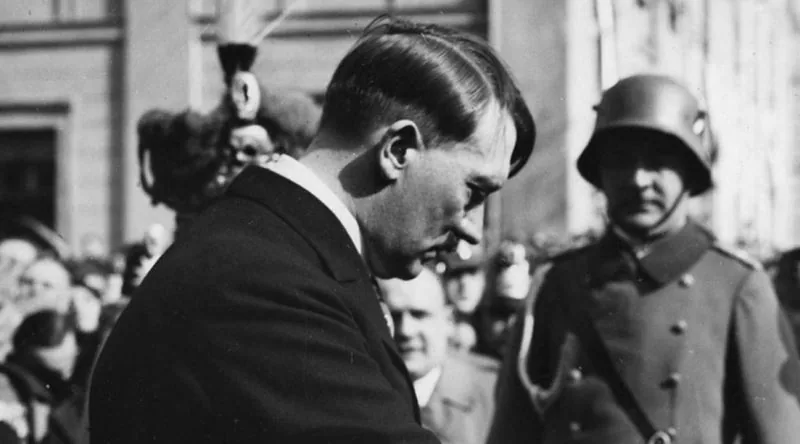
Hitler's antisemitism took shape during his impoverished Vienna years from 1908 to 1913, where personal failure, political scapegoating, and deep-seated historical prejudice fused into a murderous worldview. The young failed artist arrived in the Austrian capital full of ambition, only to find himself homeless, penniless, and seething with resentment, a toxic mix that would eventually fuel the Holocaust. Understanding how a struggling painter became history's most notorious genocidaire requires walking the cobblestone streets of pre-war Vienna, where every rejection seemed to confirm the antisemitic propaganda swirling around him.
Hitler's antisemitism crystallized during his years of poverty in Vienna between 1908 and 1913, where he absorbed the city's entrenched political antisemitism and redirected his personal failures onto Jewish scapegoats. This period transformed vague prejudice into a conspiracy-laden ideology that later became the foundation of Nazi genocide.
- Hitler moved to Vienna in 1908 at age nineteen to pursue his dream of becoming an artist, but was rejected twice by the Academy of Fine Arts.
- He lived in men's shelters and flophouses during his Vienna years, experiencing grinding poverty that he later blamed on Jewish financiers and Marxists.
- Vienna's mayor Karl Lueger, a notorious antisemite, shaped Hitler's belief that anti-Jewish politics could be a winning electoral strategy.
- Hitler left Vienna for Munich in 1913, carrying with him the antisemitic worldview he would later detail in Mein Kampf during his 1924 imprisonment.
The Making of a Scapegoat: Hitler's Vienna Years
Adolf Hitler arrived in Vienna in 1908 as a young man with artistic ambitions, and he left in 1913 carrying something far darker than failed dreams. Those five years in the Austro-Hungarian capital became the crucible where his antisemitism took shape, transforming personal disappointment into a poisonous worldview that would eventually consume a continent.
The rejection came twice. In 1907 and again in 1908, the Academy of Fine Arts Vienna turned him away, shattering his hopes of becoming a painter. Suddenly the young man from Linz found himself adrift in a sprawling, multilingual metropolis with no income, no prospects, and no place to call home. He slept in homeless shelters, ate meals scavenged from garbage bins, and wandered the streets in threadbare clothes that marked him as one of the city's forgotten souls.
Vienna in those years was the glittering capital of the Austro-Hungarian Empire, a city of coffeehouses, grand boulevards, and intellectual ferment. Jews held prominent positions in trade, law, and medicine, and many had achieved the kind of success that remained painfully out of reach for Hitler. As he scraped by in poverty, watching others thrive, resentment began to curdle into something more systematic.
The city offered him a ready-made vocabulary for his bitterness. Vienna's mayor, Karl Lueger, who held office from 1897 to 1910, was a master of antisemitic rhetoric, though he pragmatically maintained working relationships with Jewish bankers behind the scenes. Hitler absorbed Lueger's words without the nuance. Then there was Georg Ritter von Schönerer, a pan-German nationalist who framed Jews as an existential threat to the German race, a message that landed on fertile ground.
Newspapers, posters, and street gossip all reinforced the same refrain. Hitler didn't just hear these ideas; he internalized them, stitching together fragments from Lueger, Schönerer, and the antisemitic press into a coherent narrative. In that narrative, his own failures weren't his fault. The Jews, successful and visible, became the convenient explanation for everything he lacked, the scapegoat onto which he could project his humiliation and rage.
Mein Kampf: The Blueprint of Hatred
In 1924, behind the walls of Landsberg Prison, Adolf Hitler dictated the book that would become his chilling calling card to Rudolf Hess. Mein Kampf, or "My Struggle," was never meant to be a simple autobiography. It was an ideological manifesto, a written declaration of war against everyone he deemed an enemy of the German people.
Within its pages, Hitler's language turned venomous and clinical all at once. He described Jews as "parasites" and a "germ" rotting the German nation from the inside out. In his telling, they were cunning invaders who produced nothing themselves but siphoned the lifeblood from the society that hosted them. He blamed them for what he called "cultural decline," pointing at modern art, cabarets, sexual freedom, and non-traditional gender identities as evidence of Jewish corruption seeping into German life.
His worldview drew heavily on social Darwinism, the grim notion that the strong must survive and the weak must be eliminated. In Hitler's twisted logic, Jews were not weak at all. They were a sly virus, dangerous precisely because of their perceived intelligence and adaptability. He argued that eradicating them was not just necessary for Germany's salvation, but a natural cleansing for all of humanity. His contempt extended beyond Jews as well. He viewed mentally disabled people as a burden, a drain on the national body that deserved removal.
The book gave structure to the hatred that had been festering in Hitler's mind since his Vienna years. It transformed raw resentment into a systematic philosophy, complete with enemies, justifications, and a twisted moral framework. What emerged from that prison cell was not merely a memoir of a failed artist, but a blueprint for genocide, written in cold prose and handed to the world with terrifying clarity.
The 'Inner Enemy': Jews as the Eternal Outsider
For Hitler, Jews were never just a religious minority. He cast them as a hidden "super-intelligence" pulling the world's strings, with Jewish bankers, media moguls, politicians, and artists all part of one invisible network. This wasn't a private obsession; it was a theory circulating widely across Europe at the time, and Hitler seized on it to build his political career.
The image worked because it played on a real historical tension. Jewish communities had spent centuries both integrating into European societies and being pushed out of them. They lived in separate quarters, kept their own legal systems, and often didn't fully assimilate, which made neighbors view them as "not one of us." Yet at the same time, Jews were visible and active in trade, finance, and law, sometimes even in royal courts. They occupied both roles at once: insider and foreigner.
Hitler weaponized that duality. In his telling, Jews were Germans who weren't really German, soldiers and doctors and businessmen who still didn't belong. The danger, he argued, was precisely that they were unrecognizable. An enemy you can see is manageable; an enemy hiding in plain sight is insidious. By labeling Jews an "inner enemy," Hitler made every Jewish neighbor, colleague, or shopkeeper a potential threat. The invisibility itself became proof of the conspiracy.
This framing wasn't original to him. The idea that Jews operated as a covert force had deep roots in European history, and the specifics were easy to find. England expelled its Jewish population in 1290, France followed in 1394, and Spain in 1492. During Spain's Reconquista, Christians grew so suspicious that even converted Jews faced accusations of being "crypto-Jews," a paranoia that helped fuel the Inquisition. Each expulsion and accusation reinforced the same narrative: Jews were untrustworthy outsiders, no matter how integrated they appeared.
Hitler took that centuries-old suspicion and gave it a modern, systematic form. He didn't invent antisemitism; he distilled it, sharpened it, and turned it into a political weapon. By presenting Jews as an omnipresent, hidden enemy, he gave frustrated Germans someone to blame and a reason to rally behind him. The theory was false, but it was also effective, and that effectiveness had everything to do with how long Europeans had already been primed to believe it.
Centuries of Prejudice: The Roots of European Antisemitism
Long before Hitler ever set foot in a Viennese coffeehouse, Europe had spent centuries perfecting the art of Jewish exclusion. The soil for Hitler's hatred was tilled by generations of economic jealousy, religious condemnation, and plain old fear of the unfamiliar.
Walk through any medieval European town and you would notice the pattern. Jews lived in their own quarters, ran their own courts, spoke their own languages. They were visible, active, and everywhere in the spaces that mattered: trade, finance, law, even royal courts. But visibility cuts both ways. When Christians declared charging interest a sin, it was Jewish moneylenders who filled the gap, lending to nobles and peasants alike. That made them useful. It also made them hated.
The stereotype of the "usurer" took root fast. Economic resentment wrapped itself in a religious cloak, and suddenly the moneylender was also the "Christ-killer." Two accusations, one target. The pattern repeated across the map with brutal efficiency: England expelled its Jews in 1290, France followed in 1394, and Spain, in 1492, gave its Jewish population an ultimatum that ended in mass exile.
Spain deserves a closer look. During the Reconquista, the centuries-long Christian campaign to reclaim the Iberian Peninsula from Muslim rule, suspicion of Jews ran hot. Even those who converted to Christianity weren't trusted. The accusation of being "crypto-Jews," secretly practicing Judaism while pretending to convert, spread so wildly that it birthed the Spanish Inquisition, a church court built specifically to root out hidden believers. The message was clear: you could change your faith, but you could never really belong.
This was the inheritance Hitler drew upon. The pattern of separateness, of visible success met with resentment, of religious difference weaponized into political danger, was already ancient by the time he was born. He didn't invent the template. He just found it waiting, perfectly preserved, and ready to be sharpened into something far more deadly.
From Defeat to Dictatorship: Post-WWI Germany and the Stab-in-the-Back Myth
The Treaty of Versailles, signed in 1919, didn't just end World War I; it crushed Germany's economy, setting the stage for hyperinflation so severe that people carried wheelbarrows of cash just to buy a loaf of bread. While ordinary Germans waited in desperate bread lines, some Jewish-owned shops in Berlin stayed brightly lit, their windows glowing with goods most people could no longer afford. That contrast was a spark, and it ignited something dangerous.
The short-lived Weimar Republic, established in 1919, allowed some Jewish figures to take visible roles in politics and the arts. For many struggling Germans, this visibility stoked resentment rather than admiration. Far-right voices seized on the moment, promoting what became known as the "stab-in-the-back" myth: the claim that Germany hadn't lost the war on the battlefield, but had been betrayed from within by Jewish officers and politicians. It was a lie, but it was a useful one.
Hitler added another layer to this poison. He claimed communism was a Jewish invention, pointing to figures like Leon Trotsky, who was Jewish and played a key role in the Bolshevik Revolution in Russia in 1917. Yet in the same breath, he accused Jewish bankers of running capitalism. Jews were thus branded both communists and bourgeois capitalists, enemies no matter what they did. This wasn't just hatred; it was a systematic ideology, designed to give angry, desperate people a single target for every frustration. That, more than anything, is what turned Hitler's antisemitism from a personal prejudice into a political weapon.
Frequently asked questions
What experiences in Vienna shaped Hitler's antisemitism?
Between 1908 and 1913, a young Adolf Hitler lived in Vienna, the capital of the Austro-Hungarian Empire, where he first had serious contact with antisemitic ideas. He arrived hoping to become an artist, but the Academy of Fine Arts rejected him twice, in 1907 and 1908. Penniless, he lived in homeless shelters and collected scraps of food, all while watching successful Jewish professionals thrive in trade, law, and medicine. His failures gnawed at him. Vienna's streets were plastered with antisemitic posters, and newspapers pushed the same message. His bitterness found a target: he began blaming Jews for his own misfortune, transforming personal frustration into a worldview that labeled them as a racial enemy rather than just a religious minority.
How did Karl Lueger influence Hitler's views on Jews?
Karl Lueger, who served as Vienna's mayor from 1897 to 1910, was a master of antisemitic rhetoric, and Hitler absorbed his words completely. Lueger was pragmatic, maintaining working relationships with Jewish bankers even as he stirred public resentment against them. Hitler, however, took the mayor's speeches at face value, internalizing the hatred without the political calculation. Another influential figure was Georg Ritter von Schönerer, a pan-German nationalist who framed Jews as a danger to the German race. Hitler did not merely hear these ideas; he absorbed them deeply, and they became the foundation of his emerging ideology.
Why did Hitler blame Jews for Germany's defeat in WWI?
After World War I, Germany faced economic devastation under the Treaty of Versailles, with hyperinflation and hardship gripping the nation. Far-right figures promoted the "stab-in-the-back" myth, claiming that Jewish officers' betrayal had caused Germany's defeat on the battlefield. This narrative gave humiliated Germans a scapegoat for their suffering. Hitler seized on this story and weaponized it. He pointed to visible Jewish-owned shops thriving while ordinary citizens queued for bread, asking how they could prosper while the nation starved. The myth was false, but it was politically powerful, and Hitler used it to channel public anger toward Jews.
What role did 'Mein Kampf' play in systematizing Hitler's hatred?
In 1924, while imprisoned, Hitler dictated the first volume of Mein Kampf to Rudolf Hess, transforming his scattered prejudices into a coherent ideological manifesto. The book described Jews as parasites and a germ rotting the German nation from within, framing them as an existential threat rather than a mere social problem. He blamed Jews for communism, capitalism, modern art, and moral decay, weaving every grievance into a single conspiracy theory. The book also incorporated social Darwinism, the belief that the strong must survive and the weak must be eliminated. In Hitler's eyes, Jews were not weak; they were a cunning virus that needed to be eradicated for the health of Germany and humanity. What had been personal resentment became a systematic program for destruction.
How did historical antisemitism in Europe contribute to Hitler's ideology?
Anti-Jewish sentiment had deep roots in Europe long before Hitler. England expelled its Jewish population in 1290, France followed in 1394, and Spain in 1492. During the Spanish Reconquista, Christians viewed Jews as untrustworthy, and even those who converted were accused of being "crypto-Jews," leading to the establishment of the Inquisition to root them out. Medieval Christians also condemned usury as sinful, leaving money-lending to Jewish bankers who grew wealthy lending to nobles. This economic resentment blended with religious prejudice, and Jews were branded as the people who killed Jesus. Hitler drew on this centuries-old legacy, presenting himself as the culmination of a long tradition of suspicion and hatred.
Did Hitler's personal failures drive his antisemitism?
Hitler's personal failures certainly fueled his hatred, but they did not create it alone. His rejection from art school in Vienna, his poverty, and his sense of being an outsider made him vulnerable to the antisemitic ideas swirling around him. He channeled his bitterness into a political tool, using Jews as a scapegoat for his own disappointments. Yet his ideology was also a calculated strategy. He claimed communism was a Jewish invention, citing figures like Trotsky in the Bolshevik Revolution, while simultaneously branding Jews as capitalists. By blaming Jews for both ends of the political spectrum, he created a flexible enemy that could explain any grievance and unite disparate groups under his banner.
How did the Treaty of Versailles fuel antisemitism in Germany?
The Treaty of Versailles, signed in 1919, imposed harsh reparations and territorial losses on Germany, wrecking its economy and humiliating its people. Hyperinflation wiped out savings, and unemployment soared while some Jewish businesses appeared to thrive. This visible disparity fueled resentment and made the stab-in-the-back myth more believable to ordinary Germans. Hitler used this economic desperation to his advantage, positioning Jews as the hidden force behind both the treaty's punishments and the supposed betrayal on the battlefield. The treaty did not create Hitler's antisemitism, but it gave him the perfect conditions to spread it, turning a personal obsession into a national catastrophe.
Got a take on this? Add your voice to the conversation below →
No comments yet. Be the first.