Victorian Doctors: Reading Novels Drove Women Insane
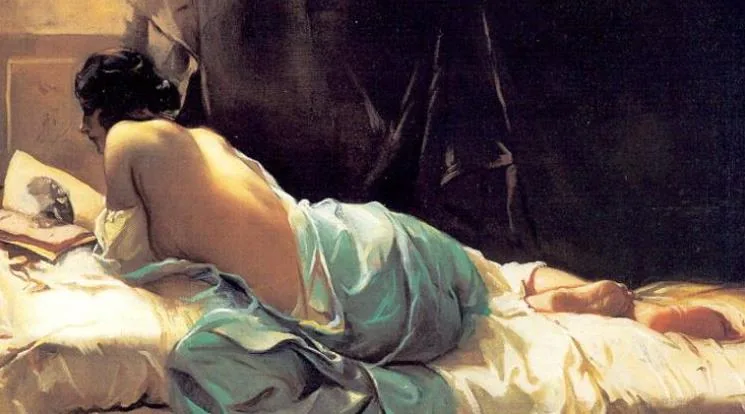
In the 19th century, Victorian doctors linked women's insanity to reading novels, claiming the habit caused incurable madness and damaged reproductive health. This medical fear, promoted by prominent physicians like Dr. John Harvey Kellogg, turned a beloved pastime into a diagnosed danger for women across England and America.
During the Victorian era, physicians in Britain and the United States warned that reading novels could drive women insane and harm their reproductive systems. Medical authorities argued that the emotional stimulation of fiction overworked delicate female minds, leading to diagnoses of hysteria and nervous exhaustion.
- An article from the late 1700s warned that reading fiction led to female immorality and mental instability.
- Dr. Edward Clarke of Harvard argued in 1873 that female education, including novel reading, diverted energy from reproductive development.
- Dr. John Harvey Kellogg, a prominent American physician, reportedly claimed novels caused "mental insanity" in women during the late 1800s.
- Charlotte Mason, a British educator, cautioned in the 1880s that novel reading overstimulated girls' nervous systems.
- By the early 1900s, medical opposition to women reading novels had largely faded as psychological understanding advanced.
The Victorian Panic Over Women and Novels
Yes, Victorian doctors genuinely believed that reading novels could drive women incurably insane. This wasn't a fringe opinion held by a few eccentrics; it was embraced by the medical establishment of the era, and it shaped how society viewed women, their minds, and their bodies for decades.
The fear was that a woman absorbed in a novel wasn't just enjoying a story; she was actively endangering herself. According to the original account, Charlotte Mason, a pioneer of home education, reportedly wrote that a girl reading for hours could damage her eyes, brain, and general nervous system. The very act of sitting still with a book was framed as a kind of self-inflicted wound, a slow poisoning of the faculties that were supposed to make a woman a good wife and mother.
This belief was so widespread that it crossed into the realm of medical orthodoxy. Doctors didn't just warn against novels; they pathologized them. The idea took hold that the emotional stimulation of a gripping plot could literally unbalance a woman's delicate constitution, leaving her mentally and physically broken. It was a panic that turned a quiet, solitary pleasure into a public health crisis, and it said far more about Victorian anxieties regarding female autonomy than it ever did about the act of reading itself.
Dr. Kellogg's Warning: Reading as Addiction
Dr. John Harvey Kellogg, the physician remembered for inventing cornflakes alongside his brother, reportedly called reading one of the most harmful habits a young woman could form. According to the original account, he compared it directly to alcohol or opium addiction, claiming that once the habit took hold, it became just as chronic. The exact quote is hard to verify, but it captures how seriously some Victorian doctors took the pastime.
Kellogg's name is often tied to the idea that he created cornflakes to stop people from masturbating, but that story does not hold up. The cereal was actually developed as a bland, digestible breakfast food, not as a tool against self-pleasure. Still, his alleged warning about reading fits a broader pattern among medical men of the era, who viewed novels as a dangerous stimulant for young women's minds and bodies.
The fear was not just about wasted hours or idle fancy. Reading, in this extreme medical view, was a vice that could grip a woman as tightly as any drug. Kellogg's reported words, whether accurate or not, reflect a time when doctors saw the act of turning pages as a slippery slope toward moral and physical ruin.
The 1797 Article That Started It All
Somewhere in the murky history of this peculiar panic sits a single magazine article, reportedly published in an English periodical in 1797, with a title that leaves little to the imagination: "Book reading is a cause of female immorality." If that date and title sound suspiciously specific, they should, because no surviving archive has ever confirmed this exact publication exists. According to the original account, however, this was the spark that lit the fire.
The article supposedly included a chilling confession from its author, who claimed to have witnessed the wreckage reading leaves behind. "I have seen poor parents, victims of their daughters' dishonor, descend early to the grave," the passage reads, "and the peace of a family broken beyond repair." When a gentle reader asks whether reading was truly to blame, the author answers without hesitation: "Yes, I replied."
Whether or not that 1797 article actually saw print, the sentiment it captured became a cornerstone of the Victorian doctors reading novels women insanity debate. The fear did not emerge from nowhere, and it did not die quickly. It simply evolved, trading one justification for another as the decades rolled on. What began as a moral worry about female virtue would soon be dressed up in the language of medicine, science, and reproductive health, giving it a veneer of authority that made it all the harder to dislodge.
Doctors, Reproduction, and the Fear of Overstimulation
By 1899, the warnings had reached a fever pitch, and some of the loudest voices belonged to women in medicine. Dr. Mary Wood Allen, in her self-help book What a Young Woman Ought to Know, cautioned future mothers about the physical dangers lurking between the pages of a novel, claiming that romantic reading could excite a girl's bodily organs and trigger premature physical development.
Literature scholar Catherine Golden, in her 2012 book Images of the Woman Reader in Victorian British and American Fiction, captured the prevailing medical mood: reading was condemned because it was thought to harm the female nervous system and reproductive health. Medical authorities tied excessive, unregulated reading to a whole cluster of female reproductive disorders, madness, and early death.
Some physicians argued the opposite direction entirely. In 1873, Dr. Edward H. Clarke published Sex in Education, insisting that too much intellectual effort diverted energy away from a girl's reproductive system. The result, he warned, was a generation of women left with "undeveloped ovaries." Whether a girl read too much or studied too hard, her body was apparently in peril either way.
Even the doctors who were supposed to understand women best lined up behind these theories. The idea of the novel as a physical threat was so entrenched that it crossed professional boundaries, uniting male and female physicians in a shared campaign against the printed word. A quiet afternoon with a book, by this logic, was not a harmless pleasure but a medical emergency waiting to happen.
The Madness Narrative and Bedlam
According to a story that reportedly first appeared in 1852 in Middlebrook's New England Almanac, reading novels could drive women directly insane. The tale, repeated often enough to take on a life of its own, claimed that the simple act of turning pages could unhinge a woman's mind completely. As the story goes, countless women supposedly ended their days in Bedlam, the infamous London asylum whose very name became a synonym for chaos and confusion.
The fear of female madness from reading had real teeth in the Victorian era. Literary scholar Catherine Golden, who wrote Images of the Woman Reader in Victorian British and American Fiction (published by University Press of Florida in 2012), documented how medical authorities linked excessive, unchecked reading to a cascade of female reproductive ailments, insanity, and early death. Reading was cursed, she wrote, because people believed it damaged a woman's nervous system and her reproductive health. The novel, once a harmless entertainment, had been recast as a kind of slow poison.
This particular fear of Victorian doctors reading novels women insanity reached its most extreme expression in the Bedlam narrative. The asylum, formally known as Bethlehem Royal Hospital, had been housing the mentally ill since the 1400s, and by the 1800s it had become a cultural symbol of society's darkest fears about the female mind. The almanac story tapped into something deep: the terror that a woman alone with a book might lose herself entirely, that the boundary between imagination and madness was thinner than anyone wanted to admit.
Yet for all the alarm, a quieter voice offered a different vision. The philosopher René Descartes once wrote that reading good books is like having a conversation with the finest minds of past centuries. Where the Victorian doctors saw danger, Descartes saw dialogue. Where they predicted insanity, he promised intellectual companionship across time. The women who kept reading despite the warnings were not losing their minds; they were finding them, one page at a time.
Frequently asked questions
Why did Victorian physicians think reading caused female insanity?
Physicians in the Victorian era argued that reading novels overstimulated a woman's nervous system and redirected energy away from her reproductive organs. They believed the female body had a finite energy supply, and any energy spent on intellectual activity was energy stolen from the womb, leading to physical and mental breakdowns.
Who was Dr John Harvey Kellogg and what did he say about women reading?
Dr. John Harvey Kellogg was a physician and health reformer in the late 1800s, a name many associate with breakfast cereal. According to the original account, he reportedly compared a young woman's reading habit to alcohol or opium addiction, calling it one of the most harmful habits she could form. However, no reliable source verifies this exact quote, so treat it as anecdotal rather than documented fact.
How did the 1797 magazine article link reading to female immorality?
According to the original account, an English magazine article published in 1797 titled "Book reading is a cause of female immorality" claimed that reading led young women to dishonor and family ruin. The piece described parents driven to early graves by their daughters' disgrace, with reading blamed as the root cause. No reliable evidence confirms this specific article or its date, so this remains an unverified story.
What did Dr Edward H Clarke claim about education and women's reproductive health?
In 1873, Dr. Edward H. Clarke, an American physician, published a book arguing that too much education diverted energy from girls' reproductive systems, leaving them with what he called "undeveloped ovaries." Clarke's work, Sex in Education , became a touchstone for those opposing women's higher education during the Victorian period.
Did female doctors also support the idea that reading was harmful to women?
Yes. Dr. Mary Wood Allen, a physician, wrote a self-help book in 1899 titled What a Young Woman Ought to Know . In it, she warned future mothers to guard their daughters against what she called "the evils of reading," arguing that romantic novels excited bodily organs and caused girls to mature physically far too early.
What was the role of Bedlam in the Victorian fear of women reading?
Bedlam, the infamous London asylum officially known as Bethlem Royal Hospital, was cited in the period's warnings as a destination for women supposedly driven insane by reading. The threat of ending up in Bedlam served as a cautionary image, reinforcing the medical belief that novel-reading could literally unhinge a woman's mind.
How did Descartes' quote relate to the Victorian anti-reading movement?
Philosopher René Descartes offered a striking counterpoint to the anti-reading panic. His famous observation that reading a good book is like conversing with the finest minds of past centuries directly challenged the Victorian medical establishment's fear of women reading novels. Descartes celebrated reading as intellectual conversation, the very opposite of the dangerous, corrupting activity doctors described.
Got a take on this? Add your voice to the conversation below →
No comments yet. Be the first.