Peacock Spider Courtship Dance: Dance or Be Eaten
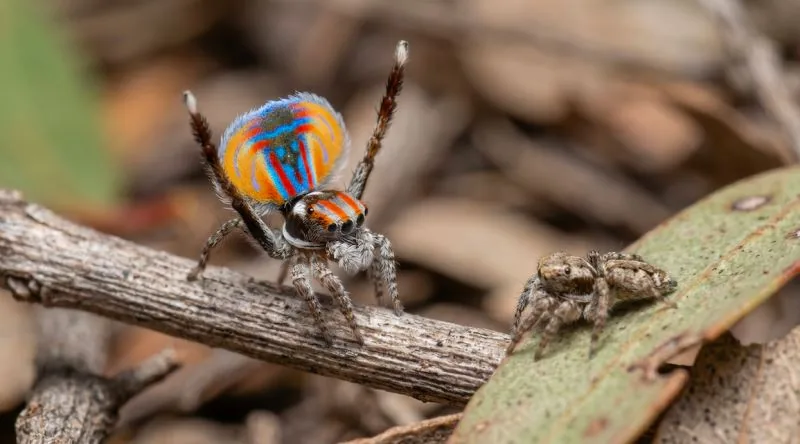
Male peacock spiders perform an elaborate courtship dance involving vibrant color displays and rhythmic vibrations to win over females, a high-stakes ritual where a misstep means being eaten. This tiny arachnid's dramatic performance is one of nature's most captivating spectacles, blending beauty with brutal consequence. Watching these miniature dancers is both heartwarming and tense, as each move could mean the difference between passing on genes or becoming a quick meal.
Male peacock spiders use a colorful abdominal fan and rapid leg vibrations to court females. The female decides the outcome in seconds. If she is impressed, mating occurs. If not, she may attack and consume the male, making this dance a literal matter of life and death.
- Peacock spiders are found primarily in Australia.
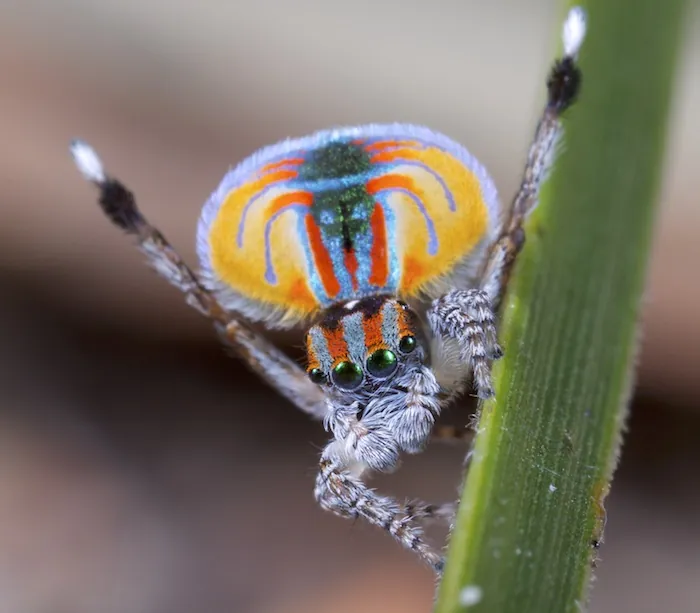
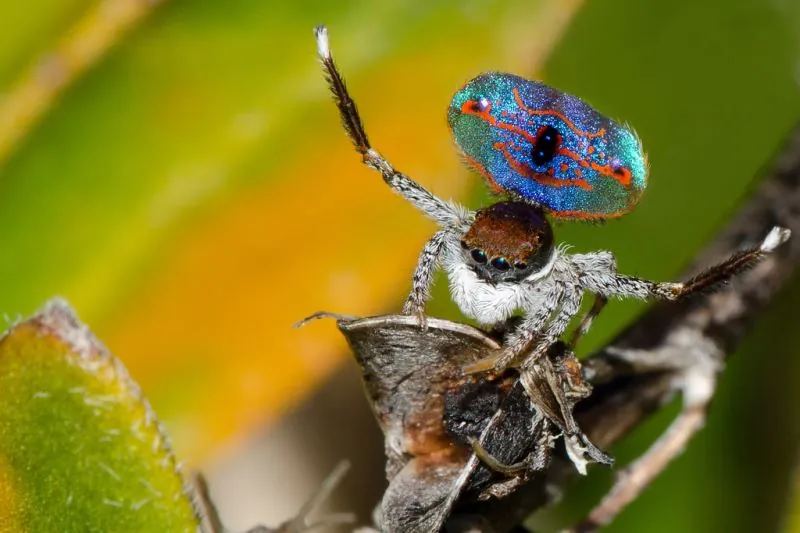
- The male raises his brightly colored abdomen like a fan, displaying iridescent blues, reds, and oranges to the female.
- Males produce vibrations by tapping their legs and abdomen on leaves, creating a rhythmic signal the female feels through the ground.
- A female peacock spider signals rejection with a sideways shake of her abdomen, at which point the male must retreat quickly to avoid being eaten.
- Researchers have identified a distinct "stop signal" from females, which halts the dance and often precedes an attack.
The Dance That Can End in Dinner
For a male peacock spider, courtship is not a gentle game of chance. It is a literal life-or-death performance, because the female he is trying to impress is extremely aggressive and highly selective. If his dance fails to move her, she will not simply turn him away; she will kill him and eat him on the spot.
This is the reality of the peacock spider courtship dance, a high-stakes ritual where the male puts absolutely everything on the line. Before the main event even begins, he performs what researchers call a "pre-courtship" ritual. He produces low, rumbling vibrations through the ground, a kind of signal that announces his presence and, crucially, works to calm the female down. It is his way of saying he is there to mate, not to become her next meal.
If she tolerates his approach, the real show starts. He tries to win her over with three things: his spectacular colors, his choreographed dance, and those vibrations. The colors themselves are a marvel of nature. They are not pigment-based at all. Instead, they are structural, created when light reflects off microscopic scales on his abdomen, producing those vivid, almost neon hues that make him look like a tiny jewel.
Even with all that effort, the danger never fully passes. The female has a clear "stop" signal, a sideways shake of her abdomen that tells him she is not interested. Males who ignore that warning and keep pushing their luck dramatically increase their chances of being cannibalized. It is a brutal system, but for the male peacock spider, the risk of rejection has always been part of the dance.
The Pre-Dance Ritual: Vibrations to Calm a Killer
Before the peacock spider courtship dance can even begin, the male has to solve a serious problem: how to approach a female who might decide he looks more like lunch than a lover. Female peacock spiders are famously aggressive and selective, and if a male's performance falls flat, she won't just reject him politely. She will kill him and eat him. So the male starts with what scientists call a "pre-courtship" ritual, and it is all about sending the right message through the ground beneath their feet.
He produces vibrations, low rumbles that travel through the surface they are standing on, to announce his presence before he ever gets close enough to be seen clearly. These signals tell the female, "I am here to mate, not to be your next meal." It is a clever first move, a way to calm her aggression and soften her mood before the visual spectacle begins. The vibrations buy him a moment of peace, a tiny window where she knows he is coming and what he wants. It is not a guarantee of safety, not even close. But it is the essential opening step, the quiet knock on the door before the full peacock spider courtship dance unfolds in all its color and motion.
Three-Part Seduction: Color, Dance, and Vibration
Once the male peacock spider gets the female's attention with his opening vibrations, he shifts into a three-part performance built around color, dance, and rhythmic movement. Each element matters, because a single misstep can turn a romantic encounter into a final meal.
The most dazzling part of the show is the color, and it is not what it seems. Those electric blues, fiery oranges, and iridescent reds are not made from pigments. Instead, they come from microscopic scales on the spider's abdomen that reflect and scatter light, bending it like a tiny prism. The effect shifts as he moves, which makes his dance all the more hypnotic to watch.
He pairs that visual display with a careful choreography of leg raises, body tilts, and side-to-side shimmies. All the while, he keeps producing vibrations through the surface beneath them. The female reads these signals together, judging his quality as a mate in real time.
The idea that evolution consistently favors males with the brightest and most vivid displays sounds clean, but the science is more complicated. Researchers who study sexual selection point out that female preferences do not always push toward maximum brightness. Predation risk and other environmental pressures can balance things out, meaning a moderate display sometimes wins the day. So while flashy colors certainly help in many cases, the notion that evolution always rewards the most brilliant males is not supported by research.
What is not contested is the danger that comes with his brilliance. The male's bright colors are sometimes said to make him a target for predators when he is not courting, though direct evidence for that outside of mating contexts remains thin. And the claim that only the healthiest, best-fed males survive long enough to dance at all, which would mean the best genes pass on, is also questionable. Survival to adulthood does not automatically signal genetic superiority, and condition-dependent traits are not fully proven.
Danger on Two Fronts: Predators and the Female's 'Stop' Signal
For a male peacock spider, the peacock spider courtship dance is literally a matter of life and death, and the danger comes from two directions at once. If his performance fails to impress the female, she won't just send him away. She will kill him and eat him on the spot.
But that vivid, spectacular display carries another risk. Those brilliant colors that are meant to catch a female's eye might also catch the eye of something else. It has been suggested that his bright coloring could make him a target for predators like birds or wasps when he is not busy courting. It is an intriguing idea that the very thing that helps him find a mate could also get him killed, though direct evidence for this specific danger outside of courtship remains an open question.
There is also a popular notion that only the strongest, best-fed males survive long enough to even attempt the dance. The claim suggests this natural filter guarantees that only the finest genes get passed to the next generation. But this appears to be a neat story rather than a proven fact. Survival to adulthood does not automatically mean a male carries superior genes, and researchers have not confirmed that only the healthiest specimens get their moment to show off.
What researchers have confirmed is that the female has a clear way to say "no." She performs a distinct signal: a sideways shake of her abdomen. It is an unmistakable gesture of disinterest, a final warning before things turn violent. Males that ignore this clear stop signal dramatically increase their chances of being cannibalized. The ones that read the room, turn around, and live to dance another day are the ones that respect the lady's boundaries.
Frequently asked questions
What is the peacock spider courtship dance?
The peacock spider courtship dance is a high-stakes performance where the male combines his vivid abdominal colors, rhythmic leg movements, and substrate vibrations to impress a female. If she is not won over by his display, she may kill and eat him on the spot. It is nature's most colorful gamble.
Why does the female sometimes eat the male?
Female peacock spiders are aggressive and highly selective partners. When a male's dance fails to impress her, she does not simply reject him with a wave and send him on his way. She kills him and consumes him instead. The male puts everything into his performance because his life quite literally depends on it.
How do male peacock spiders produce their bright colors?
Male peacock spiders do not rely on pigments for their striking appearance. Their brilliant colors come from microscopic scales on their abdomen that reflect and diffract light, creating an iridescent effect. These structural colors are what make the males so visually spectacular during their peacock spider courtship dance.
What is the female's stop signal?
The female peacock spider has a clear way of communicating disinterest: she shakes her abdomen sideways. This "stop" signal tells the male she is not impressed and wants the courtship to end. Males who ignore this warning dramatically increase their chances of being eaten. Editorial note: Any facts which remain unconfirmed are presented as such, hedged appropriately to reflect ongoing scientific observation.
Got a take on this? Add your voice to the conversation below →
No comments yet. Be the first.