1960 Turkish Coup: The Night Democracy Was Suspended
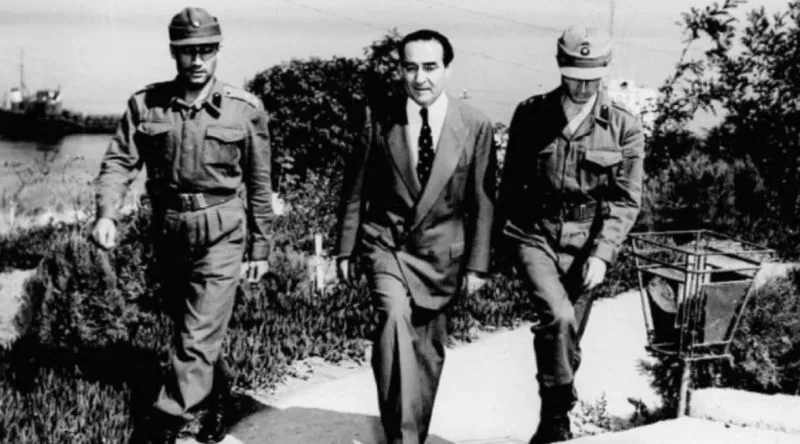
The 1960 Turkish coup was a swift military takeover on May 27, 1960, when a group of mid-ranking officers arrested Prime Minister Adnan Menderes and President Celal Bayar, suspending democracy in Turkey. It ended with the execution of Menderes a year later, a trauma that still shapes how the nation views military intervention in politics. For those who lived through it, the night felt like a thunderclap: one moment the country had an elected government, the next it was under martial law with tanks on the bridges of Istanbul.
On May 27, 1960, a faction of Turkish military officers staged a coup, arresting Prime Minister Adnan Menderes and President Celal Bayar. The officers cited authoritarian rule and economic turmoil as justification. Menderes was tried on charges including constitutional violations and executed, despite international appeals for clemency. Alparslan Türkeş read the first communiqué on the radio announcing the takeover.
- The coup began before dawn on May 27, 1960, with coordinated military actions in Ankara and Istanbul.
- Prime Minister Adnan Menderes was arrested in Kütahya while trying to reach friendly military units.
- President Celal Bayar surrendered to the officers and was held during the subsequent trials.
- The National Unity Committee, a 38-member junta led by General Cemal Gürsel, governed Turkey after the coup.
- Menderes was executed, becoming the only Turkish prime minister ever put to death.
The Night Democracy Was Suspended
Just before dawn on May 27, 1960, a voice crackled across Ankara Radio with words that would change Turkey forever: "Sevgili vatandaşlar!" The speaker was Alparslan Türkeş, and he was announcing that the Turkish Armed Forces had taken control of the country. Prime Minister Adnan Menderes and President Celal Bayar were about to be arrested in their beds. Democracy in Turkey was being switched off like a light.
The coup had been brewing for months among mid-ranking officers, colonels and captains who believed the country was slipping away. They operated entirely outside the military chain of command, a fact that made the takeover both swift and deeply unsettling to the established order. The Democrat Party, which had swept into power in 1950 with the slogan "Yeter! Söz milletin!" (Enough! The nation has the word!), had grown increasingly authoritarian, even going so far as to stone opposition leader İsmet İnönü during a visit to Uşak.
When the tanks finally rolled, they moved through a sleeping Ankara with almost no bloodshed. Menderes was captured in Kütahya while trying to reach Konya, and was taken to the War Academy where he faced not just detention but physical violence. Interior Minister Namık Gedik died after jumping from a window while in custody, and to this day it remains unclear whether it was suicide or murder.
The shock of waking up to a military government, of seeing elected leaders dragged from their homes, left a wound in Turkish civilian politics that would take decades to heal. The 1960 Turkish coup was not just a change of government. It was a dark milestone, the moment the republic's young democracy learned that it could be suspended at any time by men with guns and a radio announcement.
Why Turkey Was Ready to Boil Over
The Democrat Party swept into power in 1950 on the strength of a promise that still rings through Turkish political memory: "Yeter! Söz milletin!" which translates to "Enough! The word belongs to the nation!" It was a genuine democratic wave, a repudiation of the old guard that had governed since the republic's founding in 1923. But the victory carried the seeds of its own undoing. By 1954, something had curdled. The party that rode to power on the rhetoric of popular sovereignty began treating that sovereignty as its private property. Opposition voices were muzzled. Newspapers that printed the wrong headlines found themselves shut down. Universities, once proud bastions of independent thought, came under relentless pressure to fall in line with the government's line. The most telling symbol of this authoritarian turn was the Tahkikat Komisyonu, the Investigation Commission, a body that effectively censored the Turkish Grand National Assembly itself. Parliament, the very institution where the nation's word was supposed to be spoken, was now being policed by the party that claimed to represent it. The tension turned physical. The opposition leader, İsmet İnönü, a hero of the War of Independence and a former president, was stoned by a mob in the western city of Uşak. The man who had helped found the republic was being pelted with rocks in the street. That image, of an aging statesman under attack, crystallized just how far the country had drifted from its democratic ideals. Meanwhile, the economy was quietly unraveling. The early 1950s had been kind to Turkey. Agricultural exports were booming, and American aid through the Marshall Plan was still flowing. But the good times did not last. Foreign debt climbed to dizzying heights. Hard currency reserves evaporated. Imports ground to a halt, leaving factories without raw materials and shops without goods. Inflation ate away at wages, and black markets sprouted in every city as people scrambled for basics that had vanished from official shelves. The inequality was glaring. A small circle of businessmen with government connections grew spectacularly rich, while urban workers and rural farmers struggled to put food on the table. Students watched their professors being silenced and their futures narrowing. Every grievance, political and economic, piled onto the same heap of resentment. The country was not just unhappy; it was primed for a rupture.The Colonels and Captains Who Planned in the Shadows
This was not a coup dreamed up in the gilded offices of the general staff. The men who actually built the 1960 Turkish coup were mid-ranking officers, colonels and captains, who worked outside the official chain of command and kept their plans hidden from their own superiors until the very last moment.
The trigger that pushed these officers into action was the Harp Okulu Davası, the Military Academy trial, a tense episode that convinced young soldiers the government would crush anyone in uniform who showed independent spirit. The Democrat Party, which had swept into power in 1950 on the promise of "Yeter! Söz milletin!" (Enough! The nation speaks!), had begun interfering with the army in ways that felt deeply personal to these men. Generals were pushed into early retirement. Others were sidelined into dead-end posts, their careers quietly strangled.
This meddling struck at something sacred. The Turkish military had long carried a self-image as the guardians of the republic, the institution that would protect Atatürk's legacy if civilian politicians ever strayed. By the late 1950s, with the economy in tatters and the government silencing newspapers and universities, that guardian instinct flared into open conspiracy. Small cells of officers began meeting in secret, swapping grievances and testing each other's loyalty over endless cups of tea.
What made this plot unusual was its bottom-up structure. There was no single towering figure giving orders from above. Instead, a network of committed mid-level officers coordinated through coded messages and whispered conversations, each man knowing only as much as he needed to. They were young enough to feel invincible, idealistic enough to believe they could save the nation, and angry enough at the forced retirements of their mentors to take enormous risks.
These were not men seeking power for its own sake. They genuinely believed the republic was slipping away and that only they could pull it back from the edge. That conviction, forged in the humiliation of the Military Academy trial and sharpened by the government's heavy hand, turned a scattered group of angry officers into a shadow organization ready to move when the moment came.
Inside the Operation: From Tanks to Radio Broadcasts
The 1960 Turkish coup unfolded in the dead of night with a precision that surprised even its own architects. According to the original account, the operation kicked off around 03:15 when infantry and cavalry units began moving through Ankara, with tanks following roughly 15 minutes behind, though the exact timeline remains a matter of dispute among historians.
In the early hours, the radio crackled to life with a voice that would define the morning. Alparslan Türkeş, a young officer who would later become a controversial political figure in his own right, read the first communiqué declaring that the Turkish Armed Forces had taken control of the country "as of midnight." The broadcast was measured, almost calm, promising that the takeover was bloodless and orderly. And for the most part, that promise held.
Brigadier General Yusuf Demirdağ became the first senior officer taken into custody. Refik Koraltan, the Speaker of Parliament, followed shortly after. Then came the most delicate arrest of all. President Celal Bayar, the man who had won the 1950 election with the slogan "Enough! The nation speaks!", reportedly resisted with a gun pressed to his temple. Those around him intervened before anything turned tragic, and he was taken into custody without bloodshed.
The chaos of that morning produced at least one absurd moment. Osman Köksal, a member of the coup committee itself, was accidentally detained by his own comrades. Rather than make a scene, the officers reportedly shrugged and set him aside until the confusion cleared.
General Cemal Gürsel, the figurehead the plotters had chosen to lead them, was still at his home in Karşıyaka, İzmir when the operation began. As the story goes, he was flown to Ankara aboard a transport aircraft and addressed the nation that afternoon. The aircraft type and the exact hour of his speech remain contested details, but his role as the public face of the coup is not in question. General Cemal Madanoğlu worked behind the scenes to calm tensions among the officer corps, repeatedly stressing that Gürsel stood at the head of the movement to give it legitimacy.
Prime Minister Adnan Menderes, the man who had dominated Turkish politics for a decade, was captured in Kütahya province while trying to reach Konya. He was taken to the War Academy in Ankara, where the treatment was rough. The most tragic casualty of the day was Interior Minister Namık Gedik, who died after falling from a window while in detention. The official verdict was suicide, but suspicion of murder has never fully faded.
The National Unity Committee and the "Martyrs of Freedom"
The morning of May 27, 1960, brought more than a change of government. A body called the National Unity Committee, known as the MBK, formed from 38 officers who simply absorbed every power the Turkish Grand National Assembly had held. Parliament was gone. In its place stood a committee issuing communiqués from a position of absolute authority. Communiqué No. 3 landed first, banning political parties and public meetings outright. Then came the language meant to justify it all. Communiqué No. 6 framed the takeover as a patriotic rescue: the Turkish army had found itself facing a historic duty, saving the country from ambitious politicians who wanted to drag it into crisis and ruin. Communiqués No. 13 and No. 32 doubled down with flowery reasoning about preventing brother-against-brother conflict and restoring the rights of peasants and workers. Then the committee started making claims that stretched credibility. Word went out that Democrat Party members fleeing the country had been caught with 12 planes loaded with gold and jewelry. That story never held up to scrutiny, and no credible record supports it. The MBK also alleged that hundreds of young people had been killed between April 28 and May 27, with some bodies ground up in machines and turned into animal feed. That grotesque claim has no documentary backing either. No bodies ever surfaced. Yet at some point, as the story goes, remains of a few young people were moved to a cemetery called the "Martyrs of Freedom." The date itself is contested, and the details remain murky. The committee's own membership list came out later, reportedly. Some secret members, like Talat Aydemir, supposedly did not appear on that list, though that too is unverified. What is certain is that the MBK did not wait around. Constitutional work began immediately. On the very morning of May 27, a team led by S. Sami Onar flew from Istanbul to Ankara. This group, known as the Onar Commission, started drafting a new constitution that very day, setting the legal groundwork for what would follow the 1960 Turkish coup.Frequently asked questions
What triggered the 1960 Turkish military coup?
The 1960 Turkish coup, which took place on May 27, 1960, was triggered by the growing authoritarianism of the Democrat Party, which had governed since winning the 1950 election with the slogan "Yeter! Söz milletin!" (Enough! The nation has the floor!). The party suppressed opposition, pressured the press and universities, and faced a severe economic crisis with rising inflation and foreign debt by the late 1950s. Mid-ranking officers, feeling the military was being sidelined, organized outside the chain of command to seize control.
Who was Adnan Menderes and what happened to him?
Adnan Menderes was Turkey's Prime Minister and leader of the Democrat Party when the military struck on May 27, 1960. While trying to reach Konya, he was captured in Kütahya and taken to the War Academy in Ankara. The coup ultimately ended with executions, though the specific details of his trial and sentencing fall outside this account. His arrest marked the end of a decade-long political era in Turkey.
How did the 1960 coup affect Turkish democracy?
The 1960 Turkish coup suspended democracy and wounded civilian politics for years to come. The National Unity Committee dissolved parliament and assumed all its powers, banning political parties and gatherings through official communiqués. A new constitution was drafted by the Onar Commission, led by S. Sami Onar, which began work on the very morning of May 27, 1960. The coup became a milestone that reshaped Turkish political life, though it ultimately failed to prevent future interventions.
Why were some officers called 'martyrs of freedom'?
The National Unity Committee used the term "martyrs of freedom" in connection with its claims about young people killed before the coup. According to the committee's unverified assertions, hundreds of young people were supposedly killed between April 28 and May 27, 1960, with some bodies allegedly ground into animal feed. No bodies were ever found to support these claims. The term served as propaganda for the coup's legitimacy rather than reflecting documented events.
What was the National Unity Committee?
The National Unity Committee, known as MBK, was a governing body of 38 officers that assumed all powers of the Turkish Grand National Assembly after the May 27, 1960 coup. It dissolved parliament, banned political parties, and ruled by issuing numbered communiqués. The committee's stated mission, as announced in its sixth communiqué, was to rescue the country from "ambitious politicians" who were allegedly dragging it toward crisis and disaster.
Did the 1960 coup have popular support?
The Republican People's Party (CHP) gave its full support to the 1960 Turkish coup, and a general mood of relief spread among many civilians who had grown weary of Democrat Party rule. However, this initial enthusiasm masked the long-term damage to democratic institutions. While some welcomed the military as saviors, the coup's legacy of suspending democracy and executing political leaders left wounds that would affect Turkish politics for decades. Editorial note: Any facts which remain unconfirmed are presented as such, hedged carefully within the narrative.
Got a take on this? Add your voice to the conversation below →
No comments yet. Be the first.