Outlet Sparks When Plugging In? When to Worry
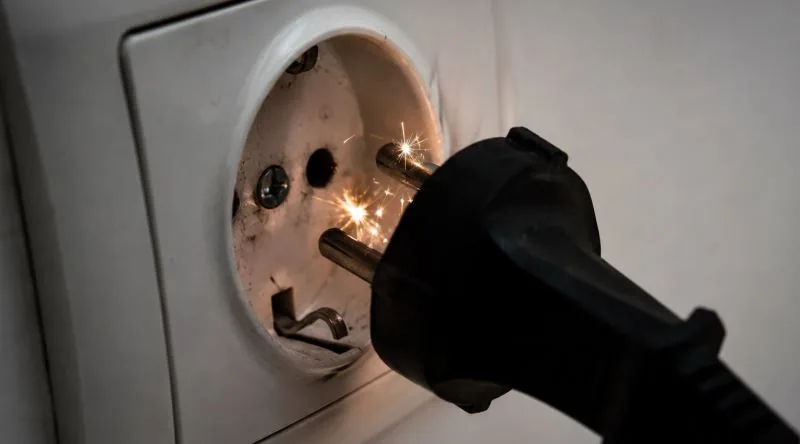
A small, brief spark when plugging in a device is often a normal electrical reaction, but if your outlet sparks when plugging in repeatedly, with heat, smoke, or a burning smell, it signals a dangerous fault that needs immediate professional attention. That moment of hesitation at the wall, when you pause and wonder if that flash was harmless, is your intuition asking a fair question, and knowing the difference between a routine snap and a warning sign can protect your home and your peace of mind.
A tiny spark on plug-in is typically normal as electricity jumps the gap, but frequent, loud, or lingering sparks with heat or odor indicate a wiring problem. Turn off the circuit, stop using the outlet, and call a licensed electrician to inspect and repair it safely.
- A single faint spark at the moment of plug-in is a common occurrence in most households and is generally not a cause for concern.
- Repeated sparks, especially with a visible flash or loud pop, point to an underlying electrical fault that requires inspection.
- Heat, discoloration, or a burning smell around the outlet are serious warning signs that demand immediate action.
- If the outlet sparks and the breaker trips, do not reset it until a qualified electrician has examined the circuit.
- High-draw appliances like vacuums or space heaters are more likely to produce a visible spark, but persistent sparking still warrants a professional check.
The Tiny Spark That Makes You Freeze
You slide the plug toward the socket, and right as it seats into place, there it is: a quick tick, a blink-sized blue flicker, and then nothing. It lasts less than a second, but in that sliver of time a whole cascade of questions fires through your head. Is this normal? Did I just break the outlet? Is the wiring about to catch fire?
It always seems to happen with the devices that matter most. The kettle right before your tea, the iron mid-laundry, the vacuum cleaner you dragged out of the closet, or the phone charger you plug in every single night. One moment you're going about your evening, the next you're staring at a wall socket wondering if you've just become the protagonist of an electrical fire story.
The panic is understandable. Electricity doesn't work like food, where you can sniff something suspicious and decide it'll probably be fine. It's invisible, mostly silent, and when it goes wrong, the consequences are heavy. But here's the thing worth knowing: not every spark you see when plugging in a device is a disaster signal.
That tiny flash is often just physics doing its thing. As the metal prongs of the plug approach the contacts inside the outlet, a brief electrical arc can form before full contact is made. This happens more readily when the device is switched on or contains capacitors that demand an initial surge of current the moment they connect. The result is a small, one-time flicker that disappears as quickly as it came.
So when does an outlet sparks when plugging in moment cross the line from harmless to hazardous? That's the question this whole story is about: distinguishing the normal arc of contact from the warning signs of a real problem. The answer comes down to how the spark behaves, what accompanies it, and whether it repeats. And those details make all the difference.
Why Outlet Sparks When Plugging In Can Be Totally Normal
That tiny flash you see when pushing a plug into an outlet is usually just a brief electrical arc, a well-documented phenomenon that happens in the split second before the metal prongs make full contact. In most cases, it is completely harmless. The key is learning to tell the difference between a normal spark and a warning sign.
Think of it this way: electricity wants to flow the instant it gets close enough. As the plug's metal prongs approach the outlet's contacts, the voltage in your home's wiring can ionize the tiny air gap between them. That ionization creates a momentary bridge for current to jump across, producing that quick blue-white flicker. It is over in a blink, often accompanied by a soft "tick" sound.
The spark becomes more noticeable when the device you are plugging in is already switched on. A vacuum cleaner left in the "on" position, a kettle with its switch still pressed, or an iron ready to heat all demand power immediately upon contact. Many devices also contain capacitors, small components that store electrical charge and create an initial surge of current when first connected. That inrush of power sustains the arc just a fraction longer, making the spark more visible.
Here is what a normal, harmless spark looks like: it is tiny, blue or blue-white in color, and happens just once. The outlet does not get warm to the touch. There is no burning smell, no crackling sound that continues, and your circuit breaker does not trip. The plug fits snugly and stays put. This momentary flash is simply the physics of making an electrical connection, and it is not a cause for panic.
Contrast that with the dangerous version. A spark that is large, yellow-orange, continuous, or accompanied by crackling noises, a burning odor, heat, or blackening around the outlet is a completely different story. Those characteristics point to high-energy arcing or overheating, which means a loose connection, worn-out outlet, or faulty wiring. That is when you need to stop using the outlet and call an electrician.
So the next time you see a small blue flicker while plugging in your phone charger, take a breath. Your house is not on fire. That spark is just the electricity saying hello before settling into its proper path.
The Spark That's Actually a Scream for Help
That tiny blue flicker you sometimes see when plugging in a phone charger? That's one thing. But a big, yellow-orange spark that crackles, smells like burning plastic, or leaves dark marks on the outlet? That's your electrical system shouting at you, not whispering. The difference between a harmless blink and a genuine warning sign comes down to size, color, sound, and smell.
A dangerous spark is hard to miss. It's large, often yellow-orange rather than pale blue, and it doesn't stop the moment the plug seats into the outlet. It crackles or hisses like bacon in a pan. It might leave scorch marks on the prongs or the outlet face. And it often brings a distinctive odor, that acrid, chemical smell of melting insulation or overheated metal. That's not a show you want to watch twice.
So how do you know when to stop shrugging and start paying attention? Watch for these red flags. If the spark happens every single time you plug something in, that's a pattern, not a coincidence. If you hear crackling or hissing sounds coming from behind the outlet cover, something's arcing in there. A plug that sits loose, wobbling in the socket, means the metal contacts inside have worn out their grip. An outlet cover that feels warm to the touch is conducting heat it shouldn't be. Discoloration, darkening, or burn marks around the holes are scars from past electrical trauma. Frequent breaker trips tell you the circuit is struggling. And lights that flicker on the same circuit while you're plugging something in? That's the whole system complaining at once.
These signs point to loose connections, worn-out outlets, overloaded circuits, or faulty wiring underneath the surface. None of these are "wait and see" situations. When your outlet sparks when plugging in and shows any of these symptoms, the friendly neighborhood DIY fix isn't the answer either. This is the moment to call a licensed electrician, not to grab a screwdriver and a YouTube tutorial. Electricity doesn't negotiate, and it doesn't give second chances.
Power Strips, High-Wattage Appliances, and the 'Switched-On' Mistake
Walk into almost any home and you will find the same little chaos nest: one wall outlet holding a three-way adapter, which holds a power strip, which now feeds a computer, a modem, phone chargers, a desk fan, and, on cold evenings, a space heater. It is a tower of convenience that quietly ignores the laws of electrical engineering, and it is exactly the setup that turns a routine plug-in into a moment of panic.
The problem is not the strip itself, it is what you hang off it. High-power appliances like kettles, irons, heaters, and toasters draw serious current, far more than a phone charger ever will. When you plug one of those into a cheap, old, or loose extension cord, you are asking cheap plastic and thin wire to carry a load they were never built for. The standard safety recommendation is simple: these high-wattage devices belong directly in a wall outlet, not in a multi-plug adapter or an extension cord.
There is also a quieter habit that makes sparks more likely, and it has nothing to do with the outlet at all. Think about the vacuum cleaner with its switch still in the "on" position, or the kettle whose button is already pressed down, or the iron that is ready to heat. The moment the plug makes contact, the device instantly demands current. That sudden demand creates a longer, more visible arc at the point of contact, which is why you see that flash. Turning the device off before plugging it in is a cleaner, safer habit, because it lets the connection settle before any real power flows.
The physical explanation is straightforward. When the metal prongs approach the outlet, a brief electrical arc can form just before full contact is made. This is a documented phenomenon in standard electrical engineering, and it is especially likely when the device is switched on or contains capacitors that draw an initial surge of current. That is the small, blue-ish, one-time flicker you might see, the kind that is gone in a blink and leaves no heat, no smell, and no repeated crackling.
But when the spark turns yellow-orange, grows large, crackles continuously, or comes with the smell of burning plastic, that is not normal arcing. That is a warning. And if your outlet sparks when plugging in the same device every single time, or the outlet cover feels warm, or the lights on that circuit flicker, or the breaker trips repeatedly, the polite explanation is over. Those symptoms point to loose connections, worn outlets, or overloaded circuits, and they deserve a professional electrician, not another adapter.
Don't Be a YouTube Electrician – When to Call a Pro
That one-time, tiny blue flash when you plug something in? That's usually fine. But if outlet sparks when plugging in come with heat, a burning smell, or repeat performances, you're not dealing with a quirk anymore. You're dealing with a warning, and that's the moment to put down the screwdriver and call a licensed electrician.
Here's the honest truth: this is not a "watch two videos and become an expert" situation. Electrical work doesn't forgive guesswork the way a slightly-off omelet does. You can't smell a wire and decide it'll probably be fine. When a problem is real, the consequences aren't a ruined breakfast. They're a ruined wall, or worse.
So when exactly do you stop shrugging and start dialing? Persistent sparks that happen every single time you plug something in. Old outlets that have seen a decade or two of hard pulling. Burn marks, blackening, or any discoloration around the socket. And especially sparks that show up when you're plugging in high-power devices like kettles, irons, or space heaters. Those appliances pull serious current, and if the connection point is weak, it will let you know with a show you shouldn't ignore.
Here's the thing about high-power appliances: they don't behave like small phone chargers. A kettle or an iron draws real current, and it deserves a solid wall outlet. Don't chain them through cheap multi-plug adapters or extension cords that have been dragged across floors for years. That's not convenience, that's a gamble.
And one more habit worth breaking: plugging things in while the device is switched on. If your vacuum's button is still pressed or your kettle's switch is down, the moment the plug makes contact, the device immediately demands power. That instant draw is exactly what makes a spark bigger and more visible. Switching the device off before plugging in takes two seconds and costs you nothing.
So let's summarize the takeaway. A small, one-time spark when you plug something in? That's just the brief electrical arc that happens before full contact, especially if the device is ready to draw power. It comes, it goes, it's done. The outlet doesn't warm up, there's no smell, the breaker doesn't trip. That's not a fire hazard, that's physics.
But a spark that grows, repeats, crackles, smells, heats up, or leaves black marks? That's not a light show. That's a fault talking, and electricity doesn't negotiate. If the spark comes with a warm outlet cover, flickering lights on the same circuit, or breakers that trip more often than they should, you've got a serious issue that needs professional eyes.
The real problem isn't the spark. It's ignoring the outlet's warnings. That little flash is the socket trying to tell you something, and pretending it's just decoration is how small problems become big ones.
Frequently asked questions
Why does my outlet spark when I plug something in?
That tiny flash is usually a brief electrical arc. When the metal prongs of your plug approach the outlet, electricity can jump across the gap before full contact happens. This is especially common if the device is switched on or contains capacitors that draw a sudden burst of current on startup.
Is it normal for an outlet to spark occasionally?
Yes, a small, momentary blue spark is often perfectly normal. It happens once, lasts less than a blink, and leaves no heat, smell, or sound behind. However, if the spark is large, happens every time, or comes with crackling noises, that is not normal and needs attention.
Why does my outlet spark and smell like burning?
A burning smell paired with sparks is a serious red flag. It points to overheating wires, a loose connection, or faulty insulation melting inside the wall. This is not something to troubleshoot yourself. Turn off power to that outlet at the breaker and call a licensed electrician immediately.
What should I do if my outlet sparks and trips the breaker?
Stop using that outlet right away and do not keep resetting the breaker. Repeated tripping means the circuit is overloaded or there is a short somewhere in the wiring. Leave the breaker off and have a professional electrician inspect the circuit before you use it again.
Can a sparking outlet cause a fire?
Yes, it absolutely can. A dangerous spark that comes with heat, a burning odor, or black charring around the outlet can ignite nearby materials. Electrical failures are tracked as a leading cause of home fires, so a sparking outlet with those warning signs is a genuine fire hazard.
When should I call an electrician for a sparking outlet?
Call a professional if you see large yellow-orange sparks, if sparking happens every time you plug something in, or if it comes with heat, a burning smell, or breaker trips. Also call if the plug sits loose in the outlet or if you notice black scorch marks around the plate. These are signs of a serious fault, not a normal arc.
How can I prevent outlet sparks when plugging in devices?
The simplest habit is to turn the device off before you plug it in. A switched-off appliance draws no current at the moment of contact, so there is nothing to arc. For high-wattage appliances like kettles, irons, and space heaters, plug them directly into a wall outlet rather than a power strip or multi-plug adapter, which can overheat under heavy loads.
Got a take on this? Add your voice to the conversation below →
No comments yet. Be the first.