Aşık Veysel's Bold Poem Against Menderes' Divisive Politics
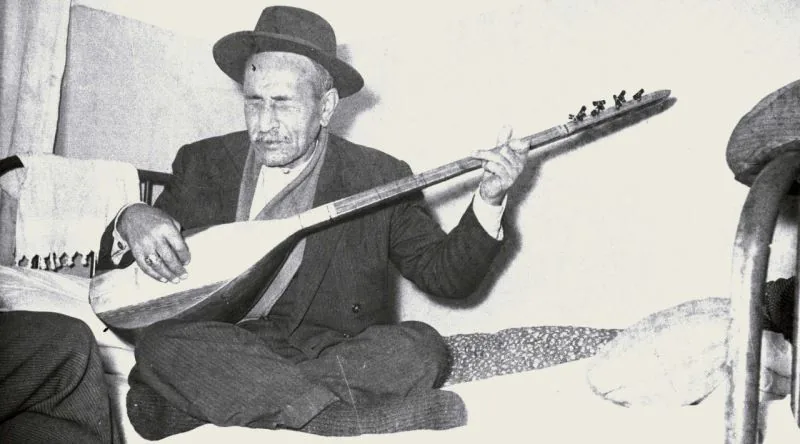
In 1958, blind folk poet Aşık Veysel used his saz to condemn Prime Minister Adnan Menderes' divisive Vatan Cephesi, a political front that split Turkish villages and families. This Aşık Veysel poem protest against the country's polarization became a quiet but powerful defense of democracy, delivered in the heartfelt language of the Turkish minstrel tradition. His words still resonate today as a reminder that art can stand firm against political pressure.
In 1958, Aşık Veysel, Turkey's revered blind folk poet, composed a poem criticizing the Vatan Cephesi, a political initiative by Prime Minister Adnan Menderes that deepened social divisions. Through his saz, Veysel urged unity and warned against the dangers of political polarization, defending democratic values in a time of intense partisan conflict.
- Aşık Veysel wrote his critical poem in 1958, during the height of the Vatan Cephesi campaign led by Prime Minister Adnan Menderes.
- The poem was composed in Sivrialan, his home village in Sivas Province, where he lived and worked as a farmer and minstrel.
- The Vatan Cephesi, or Homeland Front, was created by Menderes to rally supporters and pressure opponents, often pitting neighbors and relatives against each other.
- Veysel's response was a plea for national unity, delivered through the traditional medium of the Turkish minstrel tradition, rather than through political pamphlets or speeches.
- The poem is remembered as a rare and courageous act of artistic protest by a folk poet who was otherwise known for his gentle, apolitical themes of love and nature.
The Blind Poet Who Saw Clearly
Most people know Aşık Veysel as the gentle soul of Turkish folk music, the man whose melancholic songs about the land and longing still echo through village coffeehouses. What far fewer know is that this blind poet, born in 1894 in the village of Sivrialan, carried a spine of steel beneath his soft-spoken demeanor. In the late 1950s, when Turkey's political climate turned poisonous, Veysel picked up his saz and wrote a protest poem that cut straight to the bone of power.
Here is the contrast that still stuns: a man who could not see with his eyes, yet saw the country's fractures more clearly than most sighted politicians of his era. The year was 1958, and Prime Minister Adnan Menderes had launched the Vatan Cephesi, the Homeland Front. On paper, it was a movement to rally citizens around the government. In practice, it tore neighborhoods apart, sorting people into "us" and "them," turning old friends into political enemies overnight.
The state radio, then the dominant mass communication tool reaching into nearly every Anatolian home, became the government's megaphone. Day after day, it broadcast the names of citizens who had joined the Front, a public roll call that functioned as a loyalty test. Neighbors heard who had signed up and who had not. The air itself felt heavy with suspicion.
Veysel could not read the newspapers. He could not watch the newsreels. But he listened, and what he heard made him reach for his instrument. His response was the Aşık Veysel poem protest, a direct address to Menderes that refused to look away. "Radyo denilen milletin malı," he wrote, "the thing called radio is the nation's property." The line was a quiet thunderclap, a reminder that state resources belonged to the people, not to any party's campaign.
He did not stop there. "Maksat Menderes'in seçim dalgası," he continued, naming the electoral calculation behind the whole spectacle. "Hiçbir parti ebediyen kalamaz," he warned, no party lasts forever. And then the refrain that still stings: "Böyle değildir bu demokrasi." This is not what democracy is.
For a man who spent his life singing of love and loss, these words carried an unusual weight. Veysel was not a politician. He was a village poet who had lost his eyesight to smallpox as a child, who had wandered the countryside with his saz, who had known poverty and grief. When such a man speaks truth to power, the words land differently. They come from the soil, from the people, from a place no ministry can control.
Menderes' 'Homeland Front' and the Weaponized Radio
In 1958, Prime Minister Adnan Menderes launched the Vatan Cephesi, or Homeland Front, a political initiative that sliced Turkish society into two camps: those loyal to his Democrat Party and everyone else. The campaign was designed to rally supporters against the opposition, but its real effect was to turn neighbors, coworkers, and even relatives into political enemies. Menderes's government didn't stop at rhetoric. It turned the state radio, then the dominant mass communication tool in Turkey, into a megaphone for the Front, broadcasting the names of citizens who had signed up to join. If your name was read aloud, everyone knew where you stood.
The radio wasn't the only mass medium in the late 1950s, since newspapers existed, but they were heavily controlled and censored. State radio, by contrast, reached into nearly every home and coffeehouse, making it the most powerful weapon in the government's propaganda arsenal. The broadcasts didn't just celebrate Front members. They effectively blacklisted those who stayed away, creating a climate where silence itself was suspicious. This was the charged atmosphere that provoked Aşık Veysel, the blind folk poet already beloved across Anatolia, to pick up his saz and answer with an Aşık Veysel poem protest that would outlive the Prime Minister's career. The Homeland Front's artificial division and the misuse of state resources for partisan gain were, for Veysel, a betrayal of the democracy he believed in, and he said so in verses that still sting today.
The Poem: A Direct Rebuke in Verse
The most powerful answer Aşık Veysel gave to Adnan Menderes came not through interviews or public speeches, but through his saz and his voice. In the late 1950s, the blind folk poet composed a poem that cut straight to the heart of the matter, a documented act of protest that survives to this day as a lesson in civic courage.
The verses are unsparing. "Radyo denilen milletin malı," he wrote, reminding the prime minister that the radio belongs to the nation, not to any single party. "Neşriyatlar tarafsızca olmalı," the broadcasts must be impartial. He saw what was happening: the state radio, the dominant mass communication tool of that era, was being used to read out lists of citizens who had joined the Vatan Cephesi, publicly branding people as either loyal or suspect.
Then came the accusation that stung the most. "Maksat Menderes'in seçim dalgası," the real aim is Menderes's election wave. The poet understood that the manufactured division between "us and them" was not about ideology, it was about votes. And he warned against political arrogance with a line that rings even truer today: "Hiçbir parti ebediyen kalamaz," no party can last forever.
The poem builds to its final, devastating judgment. "Böyle değildir bu demokrasi," this is not what democracy is. With those words, Aşık Veysel, a man who could not see the world with his eyes, saw more clearly than most of his contemporaries. He refused to accept that a government which branded its critics as traitors could call itself democratic, and he had the courage to say so out loud, in verse, directly to the most powerful man in the country. The poem remains a remarkable example of the Aşık Veysel poem protest tradition, proof that art can speak truth to power even when the artist has everything to lose.
Why the Saz Spoke Louder Than Sight
In the late 1950s, as Adnan Menderes's government pushed its divisive Vatan Cephesi campaign, Aşık Veysel picked up his saz and answered with a poem that still stings. The blind folk poet saw more clearly than most sighted politicians of his day, and his verses became a landmark moment in Turkish cultural history. The Aşık Veysel poem protest endures because it was never just about one man or one election, it was about what happens when power forgets who it serves.
Menderes had swept into office promising democracy and freedom, but by 1958 his Homeland Front initiative was splitting the country into "us and them." State radio, then the dominant mass medium, read out names of citizens who joined the front, turning neighbors into informants and friends into suspects. One politician dreamed of a "Little America" while concentrating power in his own hands. The other, a blind bard from Sivas, simply listened to the country and heard what the dream was costing it.
Veysel's poem cut straight to the bone. "The thing called radio is the nation's property," he wrote, reminding Menderes that public resources do not belong to any party. "The aim is Menderes's election wave," he charged, naming the electoral motive behind the manufactured crisis. And then the line that still lands like a hammer: "No party can last forever." For a man who could not see, he had an unerring eye for what was temporary and what was not.
The poem's refrain, "This is not what democracy is," was the sharpest rebuke of all. Veysel was not a politician or an academic, he was a folk poet who carried the people's voice in his songs. When he sang that "those who tell the truth are called rebels," he was describing a pattern that would repeat itself in Turkish politics for decades. His protest was not an outlier but the latest chapter in a long tradition of Anatolian bards who spoke truth to power, from the wandering ozans of the Ottoman era to the village poets who kept their communities honest.
What makes the lesson stick is how little has changed in its essentials. The tools grow fancier, the names on the ballot papers shift, but the temptation to weaponize state institutions against critics remains. Veysel's saz did not topple a government or rewrite a constitution. It did something quieter and more durable: it gave ordinary people a way to say that they recognized the wrong, that they were not fooled, and that democracy means more than winning an election.
The poet died in 1973, long after Menderes was hanged in 1961 following the coup that ended his rule. But the verses outlived both men. Every time a citizen hears a public official claim that criticism is treason, or that opposition is betrayal, Veysel's words come back like a familiar tune. The blind man from Sivas saw the pattern before most of the country did, and he left behind a protest that still reads as a warning and a comfort all at once.
Frequently asked questions
What was the Vatan Cephesi in Turkey?
The Vatan Cephesi, or Homeland Front, was a political initiative launched in 1958 by Prime Minister Adnan Menderes and his Democrat Party to rally public support against the opposition. The campaign encouraged citizens to publicly declare their allegiance, effectively dividing Turkish society into "us and them" and deepening political polarization during the late 1950s.
Why did Aşık Veysel write a poem against Adnan Menderes?
Aşık Veysel, the renowned blind folk poet, composed his protest poem in the late 1950s because he was disturbed by the Vatan Cephesi's divisive policies and the government's misuse of state power. He watched as Menderes's administration weaponized public resources for partisan gain, and the poet felt compelled to respond with his saz and his voice against what he saw as an attack on democracy itself.
How did Aşık Veysel criticize the government in his poem?
Veysel's criticism was direct and unflinching. He declared that state radio belonged to the nation, not to any party, and that broadcasts must remain impartial. He called the Vatan Cephesi "meaningless and illogical," accused Menderes of chasing election waves, and warned that no political party lasts forever. His refrain "this is not what democracy is" cut to the heart of the government's authoritarian drift.
What role did state radio play in 1950s Turkish politics?
In the late 1950s, state radio was Turkey's dominant mass communication tool, and the Menderes government used it heavily for propaganda. The administration read out lists of citizens who joined the Vatan Cephesi over the airwaves, effectively creating public loyalty registers. Veysel's line "the thing called radio is the nation's property" directly challenged this partisan hijacking of a public institution.
Got a take on this? Add your voice to the conversation below →
No comments yet. Be the first.