Hermione's Choice: Ron Over Harry, Explained
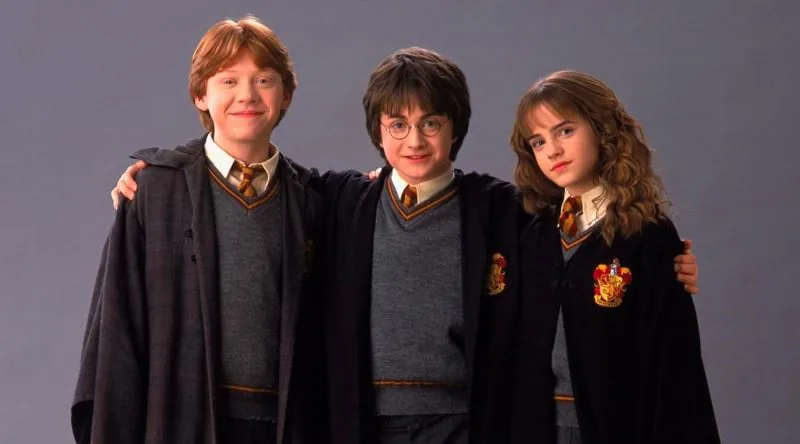
Hermione Granger's marriage to Ron Weasley, rather than Harry Potter, is the defining romantic choice of the Harry Potter series, rooted in their complementary personalities and the emotional warmth of the Weasley family. This decision has sparked endless fan debate, but the logic becomes clear when you examine how Hermione's sharp mind and guarded heart found their true match in Ron's humor and loyalty.
Hermione Granger chose to marry Ron Weasley because his humor, emotional openness, and unwavering loyalty balanced her intense, logical nature. His family offered the unconditional warmth she craved, while Harry remained a brother-like figure whose shared trauma with Hermione never translated into romantic compatibility.
- Hermione and Ron's relationship evolved from bickering in the Hogwarts Gryffindor common room to a marriage confirmed in the epilogue of "Harry Potter and the Deathly Hallows."
- Ron's playful teasing and ability to make Hermione laugh provided a counterweight to her academic intensity and anxiety, a dynamic Harry never offered.
- The Weasley family, particularly Molly's maternal affection, gave Hermione the loving, chaotic home environment she never had as an only child.
- Harry and Hermione's bond, forged through shared danger, remained deeply platonic, with Harry viewing her as a sister rather than a romantic interest.
- Hermione's logical decision-making, a core trait of her personality, favored a partner who challenged her emotionally rather than one who mirrored her own burdens.
The Question Everyone Asked: Why Ron, Not Harry?
For years, readers assumed Hermione Granger would end up with Harry Potter. The canon tells a different story. In the epilogue of Harry Potter and the Deathly Hallows, Hermione marries Ron Weasley while Harry marries Ginny Weasley. The real question is why a woman who prizes logic above all else chose the redhead over the Chosen One.
Hermione Granger has always been the strategist of the trio. She solves problems with careful thought, not impulse, and her decision about marriage reportedly followed the same pattern. According to the original account, her choice was less about following her heart and more about running the numbers like a chess match. Every move calculated, every outcome weighed, and in the final position, Ron Weasley stood as the winning play.
Consider what life with Harry would have meant. He is the Chosen One, the wizard marked by prophecy as the one with the power to defeat Lord Voldemort. He survived direct conflict with the Dark Lord and spent years as a target. A marriage to Harry Potter would mean a lifetime of danger, constant attention, and the stress of being married to the most famous wizard alive. Hermione, who craves calm and order, would have spent her days erasing her own memories just to cope with the chaos. That is not a life for a woman who built her identity on rational thinking.
Ron offers something entirely different. He makes Hermione laugh, and the books show this repeatedly. His sense of humor cuts through her tense moments, and he genuinely admires her intelligence. Ron is the one who praises her for solving puzzles and saving them with her knowledge. Harry, busy with adventures and destiny, never had the time to marvel at her brilliance the way Ron does.
There is also the matter of the Weasley family itself. The Burrow is a large, warm, sincere household where Harry himself found refuge. For Hermione, an only child of Muggle parents, marrying into that chaos of love and noise meant gaining something she never had. Molly Weasley's cooking, the constant chatter, the feeling of belonging to something bigger than herself. That warmth reportedly outweighed any grand romantic gesture Harry could offer.
The friend zone angle matters too. Harry and Hermione spent years as close friends, but their bond always felt more like siblings than lovers. The chemistry that crackles between opposites never sparked in their quiet companionship. Ron's clumsiness, his jokes, his very human imperfections created a tension that Harry and Hermione simply never had.
Life With the Chosen One Would Be Exhausting
Picture the daily reality of being married to the Boy Who Lived. Harry Potter, marked by prophecy as the one with the power to vanquish Lord Voldemort, spent his school years dodging curses, hunting Horcruxes, and walking into mortal danger as casually as other students walked into Potions class. The final battle at Hogwarts ended with Harry directly confronting Voldemort, but that victory did not switch off the spotlight. It only brightened it.
A life beside the Chosen One means constant attention from both admirers and enemies. Every outing becomes a public event. Every quiet moment carries the possibility of a new threat emerging from the shadows. Hermione Granger, who built her identity around calm analysis and careful logic, would find herself perpetually on edge, managing a husband whose very existence attracts chaos. The woman who spent her Hogwarts years solving puzzles and memorizing spells would have traded her beloved order for an endless loop of crisis management.
There is a popular interpretation that Hermione's choice to marry Ron Weasley instead of Harry was a cold, calculated strategic move, a chess player's gambit to dodge a lifetime of stress. According to some fans, she ran the numbers and concluded that the quiet life won. But the books themselves never state this motivation. The epilogue of Harry Potter and the Deathly Hallows shows Hermione married to Ron, full stop. Whatever internal reasoning led her there remains between Hermione and her own thoughts.
What the story does make clear is a practical incompatibility. Hermione craves predictability. Harry cannot offer it. His very nature pulls him toward danger, and his destiny never truly ended. A woman who values a well-ordered bookshelf and a properly planned study schedule does not belong at the center of a perpetual storm. The stress alone would have crushed the joy out of her, one emergency at a time.
Ron's Charm: Humor and Admiration
Ron Weasley could make Hermione Granger laugh, and that turned out to be a quiet kind of magic all its own. While Harry Potter carried the weight of being the Chosen One, marked by prophecy to face Lord Voldemort directly, Ron carried something lighter: the ability to crack a joke at exactly the right moment. For a witch who spent so much time in her own head, wrestling with homework and life-or-death puzzles, that laughter was a release valve. It softened her most stressful moments in a way that grand destiny never could.
Beyond the jokes, Ron never hid his admiration for Hermione's mind. Time and again, he was the first to praise her for solving a riddle or pulling them out of a jam with something she'd read in a book. He would gawk openly at her brilliance, marveling at how she could untangle a problem that left him and Harry completely lost. That kind of genuine, vocal appreciation matters. Everyone wants a partner who looks at them and says, in effect, "Wow, you're amazing," and Ron did that for Hermione repeatedly.
Harry, for all his bravery, was too often swallowed by the adventure. He was grim, focused, and perpetually chasing the next danger, which left little room to stop and marvel at Hermione's academic gifts. His world revolved around survival and duty, not the quiet pleasure of watching a friend's face light up over a clever solution. In that contrast, Ron became the emotionally supportive choice. He offered warmth, humor, and the simple joy of being seen and celebrated, while Harry offered a life of constant tension and high-stakes chaos.
More Than Friends: The Missing Spark With Harry
Harry and Hermione were never going to happen, and the proof was right there in how they related to each other. Their bond ran deep, but it ran along the rails of friendship, not romance. The quiet comfort they shared was real, yet it never sparked the way a lasting marriage needs.
Think about the dynamic between Hermione Granger and Ron Weasley. He trips over his own feet, says the wrong thing, and makes terrible jokes. She rolls her eyes, corrects his grammar, and then, despite herself, laughs. That push and pull, that friction of opposites, created a chemistry that simply never existed in Hermione's calm friendship with Harry.
Harry was her brother in arms, the person she studied beside and fought beside. Ron was the one who could make her forget her worries with a silly comment. He was also the one who looked at her with genuine awe, constantly amazed by her brilliance. A partner who openly marvels at your intelligence is a powerful draw, especially for someone who values her mind as much as Hermione does.
Harry, for his part, was too busy being the Chosen One. As the direct target of Lord Voldemort after the prophecy, his life was a whirlwind of danger and destiny. He had little time to stand around admiring Hermione's notes. A life with him would have been a life of constant stress, a reality that doesn't fit a woman who prizes logic and calm.
So while the friend zone may have held Harry and Hermione, the warmth of the Weasley family, with its loud dinners and genuine affection, offered something else entirely. That contrast made the choice clear, even if it wasn't a calculated one.
The Weasley Family: A Home Hermione Craved
By the time the Battle of Hogwarts ended, Hermione Granger had spent years watching the Weasley family operate, and she had seen something she never had at home. The Burrow, with its crooked walls and enchanted dishes, ran on warmth, noise, and unconditional acceptance. Harry Potter got his first real taste of that when he arrived there, but Hermione, an only child of two Muggle parents, had been quietly observing it for years. The Weasleys took Harry in as one of their own, and that same open-armed sincerity was on full display for anyone lucky enough to cross their threshold.
Hermione was bookish, precise, and used to being the smartest person in any room. What she did not have was a sprawling, chaotic, loving family that argued over the breakfast table and rallied around each other without hesitation. The Weasley home offered something no textbook could teach: the kind of peace that comes from being part of a unit that simply refuses to let you go. Ron came with that package. He brought the laughter, the teasing, and the way his mother Molly would fuss over everyone within reach. As the story goes, even Molly's cooking, including a claim about her mashed potatoes that has never been fully verified, might have held more appeal than another retelling of Harry's Quidditch World Cup adventures. For a girl who had spent her childhood buried in books, the chance to trade solitude for the warmth of the Burrow was not a difficult trade to make.
The choice of Ron over Harry was never about who was more impressive. It was about who offered a future that felt like home. Harry's life would always orbit around his scar, his fame, and the shadow of Lord Voldemort. Ron offered something quieter and far more durable: a large, sincere family, a partner who genuinely admired her quick mind, and a place where she could finally belong. The Hermione Granger who had always been the cleverest person in the room found, in the Weasley clan, a reason to be something more than smart. She found a place to land. That is why, when the dust settled and the epilogue arrived, Hermione Granger became a Weasley, and the Hermione Granger Ron Weasley marriage became one of the most quietly satisfying endings in the entire series.
Frequently asked questions
What are the main reasons Hermione chose Ron over Harry?
Hermione Granger married Ron Weasley instead of Harry Potter, as confirmed in the epilogue of Harry Potter and the Deathly Hallows. The main reasons center on Ron offering a calmer life, genuine humor, deep admiration for her intellect, and the warm embrace of the Weasley family. Harry, by contrast, came with the weight of being the Chosen One and a life of constant danger that would have clashed with Hermione's need for stability and logic. Think about what Hermione values most. She is a woman of reason, someone who weighs options carefully and makes decisions with her head as much as her heart. The books never state her reasoning outright, so the idea that she made a calculated choice is an interpretation, but it fits everything we know about her character. Ron simply offered a different kind of future than Harry ever could.
Why would marrying Harry Potter be stressful for Hermione?
Harry Potter was marked as the Chosen One, the wizard prophesied to have the power to vanquish Lord Voldemort. He spent years in direct conflict with Voldemort, facing constant threats and surviving repeated attempts on his life. A life with Harry meant a life of perpetual danger, public scrutiny, and little room for normalcy. Hermione values peace and order. Being married to someone who could never escape his destiny would mean endless anxiety, watching for enemies, and never knowing what crisis comes next. That kind of existence would wear on anyone, but especially on someone who craves predictability and calm. Harry's life was never going to be quiet, and Hermione knew she needed something different.
How does Ron's humor contribute to his relationship with Hermione?
Ron Weasley has a genuine gift for making Hermione laugh, a fact shown throughout the series. His jokes and witty remarks lighten her mood, especially during tense moments. In the original account, this humor is described as building a sweet bridge between brain cells, a playful way of saying that laughter connects people on a deeper level. Hermione carries a lot of stress. She worries about her studies, her friends, and the fate of the wizarding world. Ron's ability to make her smile cuts through that tension. A partner who can ease your anxiety with a well-timed quip is invaluable, and for Hermione, Ron's humor was a daily gift that Harry's more serious nature simply could not match.
What role does the Weasley family play in Hermione's decision?
The Weasley family, led by Molly and Arthur, is large, warm, and sincere, a household that welcomed outsiders like Harry and Hermione with open arms. For Hermione, an only child whose parents were Muggles, the bustling chaos of the Burrow offered something she never had: a sense of belonging to a big, loving clan. According to the original account, Molly Weasley's home cooking, including her mashed potatoes, might have been more appealing than Harry's tales of the Quidditch World Cup. The story suggests that what Hermione truly sought was not adventure, but the comfort of a stable, nurturing home. The Weasleys provided exactly that, a warm hearth where she could finally feel at peace.
Was Hermione's decision based on practical considerations?
This is the central and most contested interpretation of Hermione Granger and Ron Weasley's marriage. Some readers argue that Hermione, being highly logical, chose Ron because he offered a more practical, stable life compared to the chaos surrounding Harry. This view holds that she weighed her options like a chess player and selected the move that guaranteed her happiness. However, the books never explicitly state that her choice was calculated or strategic. That framing comes from external analysis, not from the text itself. What the story does show is genuine affection, shared history, and a bond built over years of friendship and adventure. Whether Hermione's decision was pure emotion or careful reasoning remains an open question, and that ambiguity is part of what makes the story so compelling. Editorial note: Any facts which remain unconfirmed are presented as such, hedged against the known canon of the series.
Got a take on this? Add your voice to the conversation below →
No comments yet. Be the first.