Martingale Betting System: Why Casanova Lost Everything
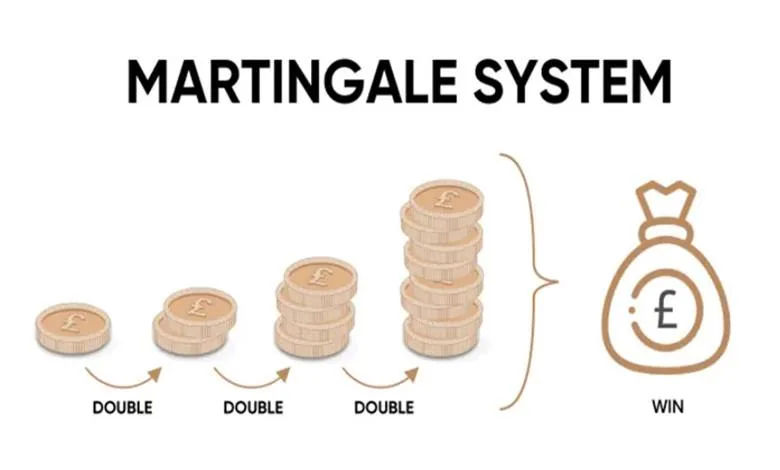
The Martingale betting system is the oldest and most seductive idea in gambling: double your bet after every loss, and one win will erase all your losses. It sounds like a loophole. It is not. The French mathematician Paul Pierre Lévy made major contributions to probability theory, and his name became tangled up with this staking plan, though he never invented it. Long before him, the Venetian adventurer Giacomo Casanova was already losing his money at the tables, doubling and redoubling until his purse ran dry.
The Martingale betting system tells players to double their wager after every loss so a single win recovers everything. It cannot beat a game with a house edge, and the math shows why. Giacomo Casanova's gambling losses in the 1700s, as he told them in his memoirs, made the same point in practice.
- The Martingale betting system requires doubling your stake after each loss, so a single win returns your original bet plus one unit of profit.
- Paul Pierre Lévy, a French mathematician, made major contributions to probability theory, though he did not invent the Martingale system.
- Giacomo Casanova, the Venetian adventurer and memoirist, described heavy gambling losses in the 1700s, chasing his bets as he went.
- In games where each round is independent, no staking system can beat the casino over time.
- The Kelly criterion, developed at Bell Labs in the 1950s, takes the opposite approach by sizing bets to bankroll and edge.
The Bet That Keeps Coming Back
Picture a roulette table in 18th-century France. A player loses a bet, then doubles it. Loses again, doubles again. The chips climb: 1, 2, 4, 8, 16. Then one win lands, and suddenly every loss is erased. That is the Martingale betting system, and it has been pulling players back to the table for roughly three centuries.
The logic is almost insultingly simple. You keep playing until you win, and after every loss you double your stake. When the win finally arrives, it covers everything you dropped before it and leaves a small profit on top. The system was especially popular in the 18th century, and it still seduces players today for exactly the reason it worked back then: anyone can learn it in ten seconds.
Here is the catch, and it is a big one. In games like roulette or dice, where each round is independent, no betting system can beat the casino in the long run. The wheel has no memory. It does not know you just lost four times, and it does not care. Every spin starts fresh, so switching strategies changes nothing about the underlying odds.
And yet the Martingale keeps coming back. It gets rediscovered, tested, abandoned, and rediscovered again by a new generation of players who are sure they have found the loophole. The math has been settled for a very long time. The hope, apparently, has not.
How the Martingale Betting System Works, Step by Step
The Martingale betting system is one of the simplest ideas ever devised at a roulette table. You pick an even-money bet, like red or black. You start with one unit. Every time you lose, you double the next wager. Every time you win, you pocket the profit and reset to one unit. That is the whole machine.
The ladder looks like this: 1, 2, 4, 8, 16, and onward. Picture a dollar table. You put down 1 dollar on red and lose. Now 2 dollars on red, and you lose again. Now 4 dollars, and red finally comes up. You collected 4 dollars on that winning spin, but you had already dropped 3 dollars across the first two spins. Your net gain is 1 dollar.
Push the same sequence one rung higher and nothing changes. Lose 1, lose 2, lose 4, then win 8 dollars. You are out 7 dollars and up 8, so you walk away with 1 dollar again. The pattern always lands in the same place: the moment a bet wins, your net gain equals whatever you staked on the very first spin. Nothing more, nothing less.
This is why Martingale is usually bolted onto even-money wagers, the kind that pay roughly one to one. Red or black on a roulette wheel is the classic home for it. But the system does not actually require those bets. Any wager that pays even money can carry the doubling ladder, which is part of why the idea keeps resurfacing in new forms.
| Spin | Bet | Result | Running total |
|---|---|---|---|
| 1 | 1 dollar | Lose | −1 dollar |
| 2 | 2 dollars | Lose | −3 dollars |
| 3 | 4 dollars | Win | +1 dollar |
Notice what the table hides. The third spin returned 4 dollars, which sounds like a win, yet the only reason you are ahead is that the payout swallowed two earlier losses. The size of the reward never grows. What grows is the amount of money sitting on the felt before that reward arrives.
If 1 dollar feels too small to bother with, the logic scales without complaint. Start at 1,000 dollars instead, and a single winning round hands you 1,000 dollars in profit. The arithmetic is identical. So is the exposure, except now every rung of the ladder is a thousand times heavier, and the money you must be willing to lose is a thousand times larger too.
That is the entire mechanism. A small, fixed prize, wrapped around a bet that doubles every time it fails. For a while, it feels like a machine that only prints profit.
Why Casanova's Bad Luck Wasn't Really Bad Luck
Giacomo Casanova, the 18th-century Venetian adventurer whose memoirs turned him into history's most famous gambler, reportedly blamed his ruin on a run of terrible luck. In his own account, as the story goes, he kept feeding money into the Martingale betting system and lost everything. That framing is convenient. It is also almost certainly wrong.
Luck had nothing to do with the arithmetic. The system was built to fail, and Casanova was simply one of the many players it caught.
The 7-Dollar Trap
Picture the setup with real numbers. You have 7 dollars and you want to walk out with 8. You stake 1, then 2, then 4, doubling after each loss. Three straight losses cost you all 7 dollars. The odds of that happening are one in eight, because each independent even-money bet loses with probability 1/2, and (1/2)³ = 1/8. The other seven times out of eight, you pocket exactly 1 dollar.
Run the expected value and the trick collapses:
| Outcome | Probability | Result | Weighted value |
|---|---|---|---|
| Three losses in a row | 1/8 | Lose $7 | −1/8 × 7 = −0.875 |
| Win before that | 7/8 | Win $1 | 7/8 × 1 = +0.875 |
| Expected value | 0 | ||
Zero. Not a small edge, not a modest profit. A coin flip dressed up in a spreadsheet. And this holds no matter how much you start with, because the math scales with your bankroll.
The Two Walls You Cannot Climb
The Martingale betting system assumes two things that do not exist: unlimited money and unlimited time.
Money first. The bets double every round, so the ladder climbs fast: 1, 2, 4, 8, 16, and onward. A short losing streak demands an enormous stake just to stay in the game. Real bankrolls are finite. When the ladder outruns your wallet, you are done, and you lose everything you put in.
Time is the second wall. Probability theory says you will eventually win, if you can keep doubling forever. But forever is not on offer. Even with infinite money, you could die before that "eventually" arrives.
Casinos close the loophole from the other side too. Tables cap the maximum bet, which snaps the doubling ladder before it can recover your losses. The house does not need luck. It just needs a ceiling and a finite player.
What Casanova Actually Proved
The system did not fail because of bad luck. It failed because it was never a system at all.
Casanova's story is not a cautionary tale about a cursed gambler. It is a cautionary tale about a fair coin wearing a guarantee's clothing. The math was always going to catch up with him.
Enter Kelly: A Formula for How Much to Risk
Most betting arguments are about timing: when to press, when to walk. John L. Kelly Jr., an engineer at Bell Labs, asked a different question entirely, and he answered it with a formula. While working there, he built the Kelly criterion, a rule for sizing a bet when you already know the odds are in your favor. The Martingale betting system tells you to keep doubling until you win. Kelly tells you how much of your money should be on the table in the first place, and it grounds that answer in information theory rather than in nerve.
Start with the cleanest case imaginable. You flip a coin where heads and tails each come up half the time, but you hold a piece of inside knowledge: the next toss will land tails, guaranteed. Your edge is total. Kelly's answer is blunt. Risk 100 percent of your capital, because there is no downside left to hedge against.
Now soften the edge. Say your information gives tails a 60 percent chance and heads a 40 percent chance. Your advantage is 20 points, and the simple Kelly approach says to stake roughly 20 percent of your capital. Not everything, not nothing. The size of the bet tracks the size of the edge.
The general form is compact enough to fit on a napkin:
F = Pw − Pl/W
- F is the fraction of your capital to put at risk
- W is the net odds, what you win per unit staked
- Pw is the probability of winning
- Pl is the probability of losing
Notice what the formula refuses to promise. It does not chase the biggest possible score on a single bet. Its target is compounded growth over time, which is a quieter and far more durable goal. That shift is why Kelly did not stay in the casino. Investors and traders use it to decide how much of a portfolio to commit to a position, and professional blackjack card counters lean on it to scale their bets up when the deck turns favorable.
Economists do point out that Kelly is not flawless. The formula assumes you know your win probability correctly, and in markets that assumption gets shaky fast. Still, when the odds genuinely favor you, sizing by Kelly beats doubling into the dark.
Where Kelly Actually Earns Its Keep, and Where It Doesn't
Walk into a casino in Las Vegas or Macau and count cards at a blackjack table, and you are almost certainly watching the Kelly criterion at work. Professional card counters size their bets in proportion to their edge, and Kelly is the standard theoretical basis for that sizing. When the deck turns favorable, they push more chips forward. When it doesn't, they pull back. That is Kelly in its natural habitat: a game where the odds are known, the rounds are repeated, and the edge is real.
The same mathematics shows up far from the felt. Kelly betting and log-optimal growth are standard tools in quantitative finance, used for portfolio choice and position sizing across sequential trades. The goal is not a single big score but compounding wealth steadily over time. John L. Kelly Jr., working as an engineer at Bell Labs when he developed the criterion, built a formula that does exactly that: F = Pw − Pl/W, where F is the fraction of capital to bet, W is the net odds, Pw is the win probability and Pl is the loss probability.
But economists are quick to point out that Kelly is not flawless. Its central assumption is that you know your win probability correctly. In blackjack, that assumption can hold, because the deck composition is trackable and the probabilities are calculable. In stock markets, it weakens considerably. Nobody truly knows the probability that a given trade will work out. Feed Kelly a wrong number and it will happily tell you to bet too much.
Here is the part that stings. That same overconfidence is exactly what feeds the Martingale betting system. Martingale tells you to keep doubling after every loss because you are certain a win is coming. Kelly tells you to size your bet according to your edge. Both require you to know something about the future. The difference is that Kelly asks how much you actually know, while Martingale simply assumes you know enough.
When the odds are genuinely in your favor, Kelly beats Martingale every time. But no system creates an edge that isn't there.
That is the bottom line. Kelly is a tool for managing an advantage you already have, not a machine for manufacturing one. In games with independent rounds and a house edge, neither Kelly nor Martingale nor anything else will beat the casino in the long run. In domains where a real, measurable edge exists, Kelly gives you a disciplined way to exploit it without betting the farm. The math rewards humility about what you know, and punishes the assumption that you know more than you do.

Frequently asked questions
What is the Martingale betting system?
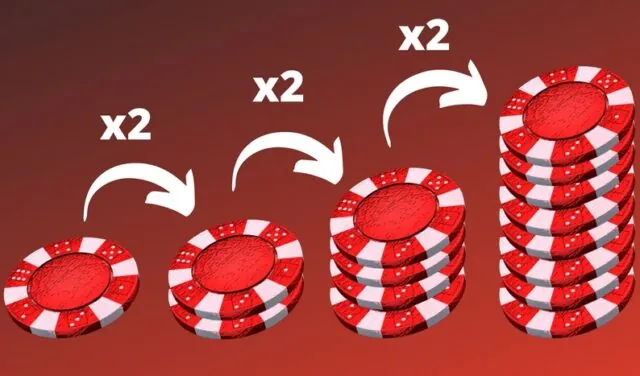
The Martingale betting system is a staking plan in which you double your bet after every loss. A single win then recovers all previous losses plus one starting unit. A player begins with a small wager, say 1 dollar, and keeps doubling on each loss: 1, 2, 4, 8, 16, and so on, until a win resets the cycle.
Why doesn't the Martingale betting system beat roulette?
Because roulette rounds are independent and each carries a negative expected value. No staking system can change the long-run expectation of a game whose outcomes ignore past results. In 18th-century France the method was wildly popular, yet the mathematics stayed the same: the house edge survives every pattern of bets.
Who invented the Martingale betting system?
The system predates Paul Pierre Lévy, the French mathematician who made major contributions to probability theory. Contrary to a popular version, he did not invent it. The Martingale betting system was already widely used in 18th-century France, long before Lévy was born.
Did Casanova really lose his money using it?
Giacomo Casanova's memoirs do discuss gambling and heavy losses, and according to the original account he described playing Martingale and blaming bad luck for losing everything. That exact wording is reported rather than confirmed, so treat the quote as part of the legend, not as a documented fact.
What is the Kelly criterion?
The Kelly criterion is a bet-sizing formula: F = P w − P l /W, where F is the fraction of capital to wager, P w the win probability, P l the loss probability, and W the net odds. With a 60 percent chance of winning and 40 percent of losing, the simple Kelly approach suggests risking about 20 percent of your capital.
How did Kelly develop it?
John L. Kelly Jr. was an engineer at Bell Labs when he developed the criterion. He framed it as a way to grow wealth exponentially over a sequence of bets rather than to maximize any single win. The idea later became one of the fundamental tools of quantitative finance.
Do card counters use Kelly?
Yes. Professional blackjack card counters size their bets by their edge, and Kelly betting is the standard theoretical basis for that scaling. When the deck turns favorable, they raise their wagers in proportion to the advantage, which is exactly what the formula prescribes.
Why does doubling after every loss bankrupt you?
Your bankroll is finite, your time is finite, and the table has a maximum bet. Stakes grow exponentially while your capital does not, so a losing streak eventually forces you to stop. The rare disaster wipes out the many small wins, and the average outcome across players settles at zero. Editorial note: Details that remain unconfirmed are presented as such, and no specific figures are asserted where the historical record is uncertain.
Got a take on this? Add your voice to the conversation below →
No comments yet. Be the first.