Calico Jack Rackham: The Pirate Who Gave Us the Jolly Roger
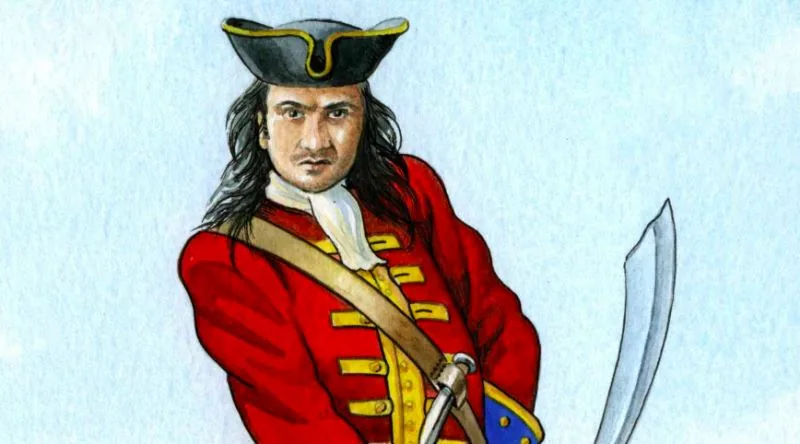
Calico Jack Rackham was an English pirate captain who sailed the Caribbean in the early 1700s, and he is remembered for two things above all: a skull-and-crossed-swords flag tied to the modern Jolly Roger, and his crewmates Anne Bonny and Mary Read, two of the most famous women in pirate history. His story runs from the Bahamas to Jamaica, where his luck ran out in 1720. He was a small-time operator compared to Blackbeard, yet his flag and his love life have kept him famous for three centuries. His tale mixes mutiny, romance, and a trial that ended at the gallows.
Calico Jack Rackham was an English pirate active in the Caribbean in the early 18th century. He sailed with Anne Bonny and Mary Read, and a skull-and-crossed-swords design is credited to him. He was captured in 1720 off Jamaica, tried, and hanged at Port Royal.
- Rackham earned the nickname "Calico Jack" from the calico clothing he favored, and he operated in the Bahamas and Caribbean during the early 1700s.
- In 1718 he led a mutiny against Captain Charles Vane, taking over Vane's ship after Vane refused to engage a British warship.
- His crew included Anne Bonny and Mary Read, two women who fought alongside the men and became famous in their own right.
- Rackham was captured off Jamaica in 1720, tried, and hanged at Port Royal.
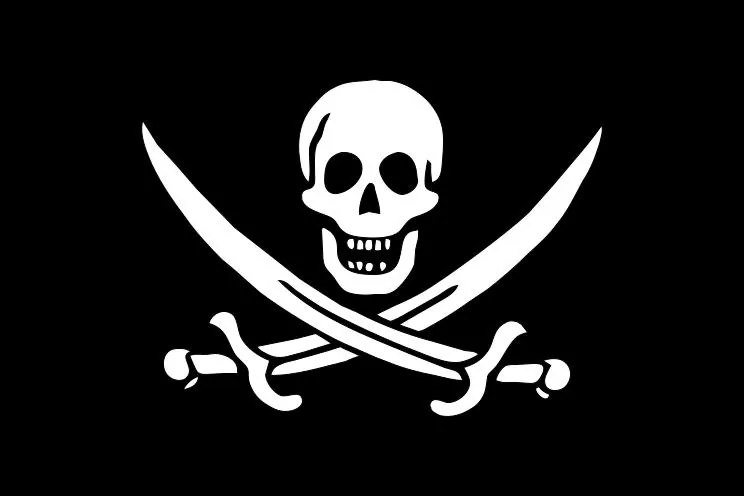
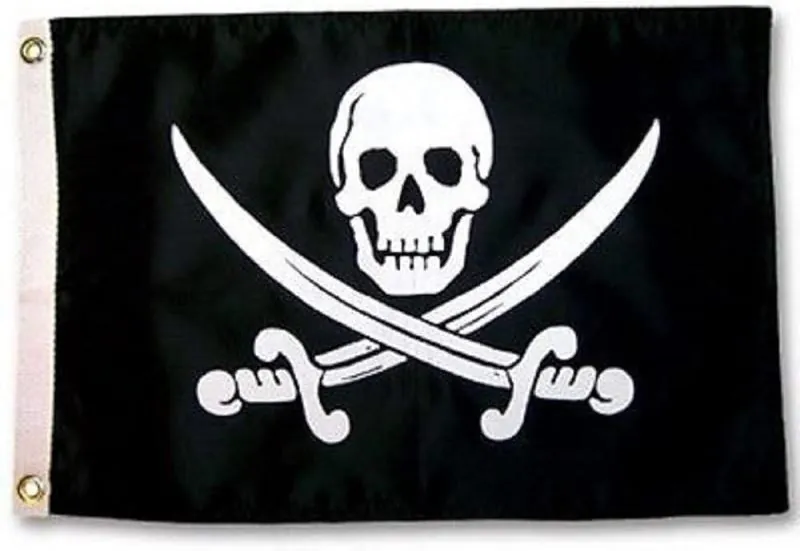
- A skull above crossed swords is credited to him, and it is often named as an ancestor of the classic Jolly Roger.
The Pirate Who Gave Us the Jolly Roger
Calico Jack Rackham was one of the most famous pirates of the 18th century, and he earned that fame twice over: once with a cutlass, and once with a piece of cloth. The Jolly Roger, the skull flag a pirate ship hoisted when it was about to attack, is the single most recognizable image piracy ever produced. Pop culture says Rackham flew the skull-and-crossed-swords version we all know. Historians are not so sure. No document actually ties that exact design to his ship, so treat the attribution as tradition rather than documented fact.
What we can say with confidence is that Rackham was no mere butcher. He was known for cunning and a taste for showmanship, a captain who knew that a fearsome name could win a fight before the first cutlass was drawn. His piracy career began under Charles Vane, a leader considered dangerous and untrustworthy even among pirates. That apprenticeship ended in November 1718, when a British warship appeared and Vane chose flight over fight. The crew called it cowardice, rose in mutiny, and elected Rackham captain in his place. Vane was put into a small boat and set adrift.
Rackham's own origins are murkier. Tradition holds that he was born in England in 1682, though the year and the place rest on custom rather than firm records, and almost nothing survives about his life before the sea.
From Charles Vane's Crew to Captain of His Own Ship
His entry into piracy is far better documented. Rackham signed on under Charles Vane, a captain considered dangerous and untrustworthy even by the standards of his fellow pirates. Serving in Vane's crew gave Rackham his apprenticeship in the trade, and it also put him in the right place at the right moment.
That moment arrived in 1718, when Vane's ship encountered a British warship. Vane chose flight over fight. The crew did not take it well. They read his decision as cowardice, and a large part of the men turned on him. Rackham gathered the crew's support, took the captaincy from Vane, and had him set adrift in a small boat. By the time the boat drifted out of sight, Rackham was standing on the quarterdeck with the crew's votes behind him.
A pirate captain's authority rested on consent, not rank. Vane learned that the hard way: the same men who had followed him could vote him into a rowboat the moment he stopped looking like a leader.
Small Raids, Big Freedom, and Two Women in the Crew
Once he had the captain's chair, Calico Jack Rackham worked the Caribbean his own way. He had no appetite for the grand, bloody sea battle. What he wanted were small, fast raids on small merchant ships: dart in, take the goods, and leave the crew unharmed. For Rackham, piracy was never about the killing. It was the freedom and the luxury that came with the life, and he chased both with a showman's flair.
Then he did something the pirate world had rarely seen. He brought two women into his crew, and they became the most famous female pirates in history: Anne Bonny and Mary Read. Both sailed among his men in the early 1720s, disguised as men.
Anne's story is the stranger one. She had married a man named James Bonny and then left him for Rackham. As the old accounts tell it, her husband is described variously as a soldier, a sailor, or an informant, so that detail stays fuzzy. What is not fuzzy is her nerve. Anne was braver than some of the men on deck and fought in many of the crew's raids herself. Rackham did not treat her as a lover tucked away below. He saw her as a true pirate comrade, an equal on the deck.
That partnership is a big part of why the name Calico Jack still carries so much color. A captain who would rather plunder a merchant's hold than slaughter its sailors, and who sailed with two women at his side, made for a legend that outlived the man himself.
The Night Off Jamaica: How Calico Jack Rackham Was Finally Caught
Calico Jack Rackham's luck ran out in 1720, off the coast of Jamaica, when a British warship caught him and his crew in a surprise raid. Most of the men had spent the night drinking heavily, and almost none of them put up a real fight. Only Anne Bonny and Mary Read stood their ground, fighting to the last, while Rackham and the rest were taken without much trouble.
By that point, Britain had stopped treating Caribbean piracy as a nuisance to be tolerated. A serious cleanup was underway across the region, and even though piracy was still living through its so-called golden age, the great naval powers had clearly decided they were done looking the other way. Rackham had spent his captaincy favoring quick, small raids over grand battles, but no amount of cleverness could outrun a warship that had him cornered.
He paid for it in Jamaica. On 18 November 1720, Calico Jack was executed there, hanged at Port Royal, the harbor town he had once sailed from. The trial and the gallows closed the book on a man who, by every account, had preferred a good time to a hard fight.
As the story goes, Anne Bonny had one last thing to say to him before the end. According to the traditional account, she told him that if he had fought like a man, he would not be hanged like a dog. The line is widely repeated, but its exact wording and whether she truly said it are not reliably documented. What is certain is the image it leaves behind: the two women who fought when the men would not, and a captain who met his end not in a blaze of cannon fire, but quietly, on a rope, in the town he had once called home port.
Frequently asked questions
Who was Calico Jack Rackham and why is he famous?
Calico Jack Rackham was an eighteenth-century pirate who became one of the most colorful figures of the Golden Age of Piracy. He is remembered for two things above all: a skull-and-crossed-swords flag associated with him, and for sailing with the famous women pirates Anne Bonny and Mary Read.
Did Calico Jack create the Jolly Roger flag?
Rackham is credited with the most recognized version of the Jolly Roger, the skull-and-crossed-swords design. As the story goes, his version became the best-known of the many flags pirates flew, though the idea that it is the definitive or most authentic one rests on popular tradition rather than documented fact.
What was the relationship between Calico Jack and Anne Bonny?
Anne Bonny left her husband and ran away with Rackham, and their partnership was unusual for the pirate world. Rackham treated her as a true pirate comrade rather than just a companion, and she proved braver than some of the men in his crew, fighting in many raids herself.
How did Calico Jack Rackham capture Captain Charles Vane's ship?
Rackham's piracy career began under Charles Vane, a leader considered unreliable even among pirates. In 1718, when a British warship appeared, Vane chose to flee rather than fight. The crew mutinied, elected Rackham captain, and set Vane adrift in a small boat.
How was Calico Jack Rackham captured and executed?
A British warship surprised Rackham and his crew off Jamaica in 1720 while most of the men were drunk and unprepared. Only Anne Bonny and Mary Read put up serious resistance. Rackham was taken, tried, and hanged in Jamaica on 18 November 1720.
What happened to Anne Bonny and Mary Read after Calico Jack's death?
During the capture off Jamaica in 1720, Anne Bonny and Mary Read fought to the last while the rest of the crew offered little resistance. Both women were taken with Rackham, though the surviving account does not state what became of them afterward. Editorial note: Details that remain unconfirmed by reliable records, including some particulars of Rackham's early life and certain trial accounts, are presented here as hedged and open to question.
Got a take on this? Add your voice to the conversation below →
No comments yet. Be the first.