Leonid Kantorovich: The Soviet Genius of Linear Programming
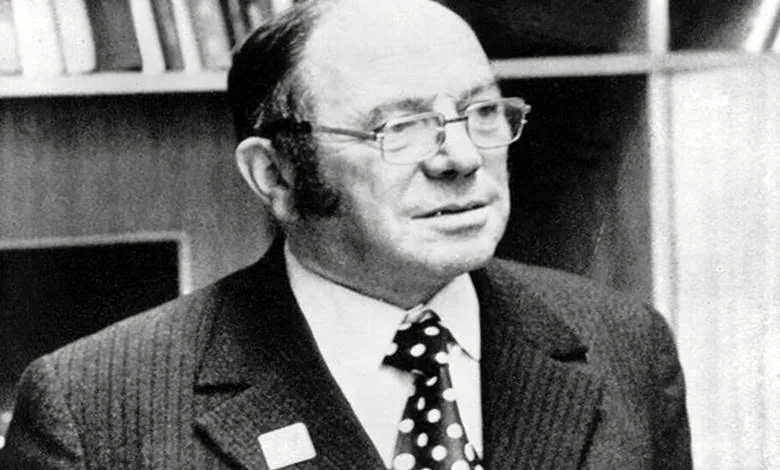
Soviet mathematician Leonid Kantorovich invented linear programming in 1939 while solving a plywood production problem, faced decades of Soviet rejection, and won the 1975 Nobel Prize in Economics for his groundbreaking work. His story is one of a brilliant mind battling ideology, where a mathematical tool designed to optimize industry was initially dismissed as bourgeois pseudo-science before reshaping global economics.
Leonid Kantorovich developed the mathematical method of linear programming in Leningrad in 1939 to help a plywood factory optimize output. Soviet authorities rejected his work for decades as ideologically incompatible with central planning, but he persisted and ultimately shared the 1975 Nobel Prize in Economics for his contributions to the theory of optimal allocation of resources.
- In 1939, Leonid Kantorovich formulated the mathematical foundations of linear programming while working on a plywood production problem in Leningrad.
- The Soviet government suppressed and rejected Kantorovich's work, viewing it as contradicting Marxist economic theory and the Gosplan central planning system.
- Kantorovich published his complete book on linear programming, "The Best Use of Economic Resources," in 1959, two decades after his initial discovery.
- He received the 1975 Nobel Prize in Economics, sharing the award with Dutch-American economist Tjalling Koopmans.
- American mathematician George Dantzig independently developed the simplex algorithm for linear programming in 1947, without knowledge of Kantorovich's earlier work.
The Soviet Boom That Wasn't What It Seemed
In 1957, the Soviet Union's GDP was growing faster than nearly every other country on Earth, including the United States. Official figures painted a picture of a nation surging ahead, with citizens moving into new apartments and snapping up consumer goods that had been scarce just a decade earlier. The numbers looked spectacular, and the Communist Party was happy to broadcast them to the world.
But behind the triumphant statistics, a different reality was taking shape. Soviet managers and planners knew the economy was deeply troubled, that the impressive growth masked inefficiencies that were quietly eating away at the system's foundations. The central planners at Gosplan, the state agency responsible for turning political goals into concrete national plans, faced an impossible puzzle: without a market to balance supply and demand, how could anyone set sensible targets and prices?
One mathematician held what he believed was the answer. His name was Leonid Kantorovich, and in 1912 he was born in St. Petersburg, his earliest memories forming against the backdrop of the Bolshevik Revolution. A prodigy by any measure, he was admitted to Leningrad State University's mathematics program at just fourteen years old. By 1934, at age twenty-two, he was already a professor.
Kantorovich had spent his career in abstract mathematics, but in 1937, with fascism rising across Europe, he turned his attention to practical problems. When the plywood industry came asking how they could boost productivity, he was eager to help. The plywood manufacturers wanted a way to set production targets while accounting for every variable, the transport of raw materials, the number of workers needed, the limits of machinery. What they got was something far bigger than anyone expected.
Kantorovich developed a method that applied geometric analysis to problems with multiple variables, finding the optimal strategy by visualizing the problem as a multi-dimensional shape where each dimension represented a different variable. The best solution, he discovered, always sat at the corners of that shape. He called it linear programming, and he knew immediately it wasn't just for plywood. It could transform any industry, even the entire economy.
In 1939, he published his ideas in a booklet titled Mathematical Method of Production Planning and Organization and sent his recommendations to Gosplan. The institution ignored him completely. But Kantorovich didn't stop. During the war years, he kept working on what he called "my ideas in economics," eventually expanding his work into a full book. After the war, he applied his methods at the Leningrad Carriage Works to optimize the use of steel plates, proudly reporting the raw material savings he achieved. Still, the authorities kept their distance. They had a solution in their hands, and they didn't want to hear it.
A Prodigy from St. Petersburg
Leonid Kantorovich was born in 1912 in St. Petersburg, Russia, and his earliest memories were shaped by the chaos of the Bolshevik Revolution. The city around him was transforming, and so was the world he would grow up to study. By the time he was fourteen, in 1926, he had already been admitted to Leningrad State University's mathematics program, a startlingly young age for any university student, let alone one entering one of the Soviet Union's most rigorous academic institutions.
He didn't just keep up with his older classmates; he outpaced them. Within two years of enrolling, Kantorovich published his first research paper, a sign of the restless mathematical mind that would eventually reshape economic theory. In 1934, at just twenty-two years old, he was appointed professor at Leningrad State University. That meteoric rise from teenage student to full professor in eight years was remarkable even by Soviet standards, and it set the stage for a career that would bridge pure mathematics and the messiest problems of industrial planning.
The Plywood Factory Problem That Changed Math
In 1937, with fascism spreading across Europe, Leonid Kantorovich made a deliberate pivot away from pure theory and toward practical problems. The 25-year-old professor at Leningrad State University had already earned his chair three years earlier, at age twenty-two, but he wanted his mathematics to matter in the real world. When the plywood industry came asking how to boost productivity, he said yes.
The plywood manufacturers faced a puzzle that sounds mundane but was actually devilishly complex. They needed to figure out how to allocate raw materials, transportation, and labor all at once, with dozens of variables interacting in ways no one had ever systematically untangled. Kantorovich looked at the problem and saw geometry where others saw chaos.
His insight was to imagine the problem as a multi-dimensional shape, where every variable occupied its own axis. The constraints, the limits of materials and manpower, formed the boundaries of that shape. And the optimal solution, the best possible use of resources, always sat at a corner point of the figure. By visualizing the problem this way, he turned an overwhelming tangle of numbers into something concrete and solvable.
Kantorovich quickly realized his method was not just about plywood. He understood that any problem with multiple variables and constraints, from factory scheduling to national economic planning, could benefit from the same geometric approach. In 1939, he published his findings in a booklet titled Mathematical Method of Production Planning and Organization and sent his proposals to Gosplan, the Soviet state agency responsible for central economic planning.
Gosplan never took him seriously. The bureaucrats who ran the planned economy from Moscow were not interested in a mathematician's elegant formulas, no matter how sound the logic. But Kantorovich refused to give up. He kept refining his ideas through the war years, and after the fighting ended, he applied his methods at the Leningrad Carriage Works, where he optimized the cutting of steel plates to minimize waste. He proudly reported the raw material savings, yet the authorities remained cold to his work.
Rejected at Home, Embraced in the West
While the war raged, Leonid Kantorovich kept nurturing what he called his "economic thoughts," steadily turning his 1939 breakthrough into a full-length book. The plywood factory problem that had sparked his method was just the beginning, and he knew it. Even as Soviet officials ignored him, the young mathematician was already seeing the universal shape of the solution, a way to optimize any process with multiple variables.
After the fighting ended, Kantorovich finally got a chance to prove his ideas in practice. At the Leningrad Carriage Works, he applied his methods to a stubborn industrial headache: how to cut steel plates with minimal waste. The results were impressive. He proudly reported the raw material savings to his superiors, expecting recognition. Instead, the officials remained distant, unimpressed by this mathematical approach to production. They could not see what he saw.
The irony is that his work had already been published back in 1939 in a booklet called Mathematical Method of Production Planning and Organization, but the state planning agency Gosplan had shrugged it off. For twenty years, the idea sat in relative obscurity in the Soviet Union. It took until 1960 for the booklet to be translated into English and published in the West, finally reaching a wider audience.
Meanwhile, across the Atlantic, a different story was unfolding. American mathematician George Dantzig, working for the U.S. Air Force, had independently stumbled upon the same fundamental insight. But he pushed it further. In 1947, Dantzig transformed the concept into the simplex algorithm, a simple yet powerful set of mathematical instructions that could solve optimization problems efficiently.
The contrast in reception could not be starker. Where Soviet planners had been cold, capitalist industrialists were eager. Gulf Oil became one of the first companies to embrace the algorithm, using it to find the ideal blend for high-octane aviation fuels. The innovation that had been dismissed in its homeland was being put to work immediately in the West, proving that the value of an idea sometimes depends entirely on who is listening.
Vindication: The 1975 Nobel Prize
Leonid Kantorovich's contribution was not overlooked. In 1975, he was awarded a share of the Nobel Prize in Economics for his pioneering work on linear programming, the mathematical method he had developed decades earlier in the Soviet Union. It was a meaningful reward for a scientist who had always believed his ideas could actually function in the real world.
The recognition came nearly four decades after he first sketched out his revolutionary approach. Back in 1939, when he published his booklet on the mathematical method of production planning, Soviet authorities had largely ignored him. Gosplan, the state planning agency, showed little interest in what this young mathematician had to say. But Kantorovich never stopped believing in the power of his work. He kept refining his ideas, applying them wherever he could, even as officials remained distant.
When the Nobel committee finally called his name in 1975, it validated a lifetime of persistence. The prize recognized what Kantorovich had known all along: that his mathematical framework for optimizing resources was not just theoretical elegance, but a practical tool with the power to transform how economies function. For a man who had watched his own government dismiss his insights for years, the honor carried a particular sweetness.
Frequently asked questions
Who was Leonid Kantorovich?
Leonid Kantorovich was a Soviet mathematician and economist born on January 19, 1912, in St. Petersburg, Russia. He is widely recognized as the founder of linear programming, a mathematical method for finding the best possible outcome in complex problems with multiple variables. He died in 1986.
What is linear programming?
Linear programming is a mathematical technique that helps find the optimal solution to a problem with multiple variables and constraints. Kantorovich developed this method in 1939 while solving a plywood production efficiency problem. He visualized each variable as a dimension in a geometric shape, then located the best value at the corners of that shape.
Who invented the simplex algorithm?
American mathematician George Dantzig invented the simplex algorithm in 1947 while working for the U.S. Air Force. He transformed linear programming into a simple set of mathematical instructions. Gulf Oil became one of the first companies to use it for blending high-octane aviation fuels.
Why was Kantorovich's work initially rejected in the Soviet Union?
Kantorovich presented his 1939 booklet to Gosplan, the Soviet state planning agency, but officials ignored his proposals. The rejection stemmed from his methods conflicting with orthodox Marxist economic theory. His work only gained Western recognition in 1960 when it was translated into English, even though he had applied it successfully at the Leningrad Carriage Works.
When did Kantorovich win the Nobel Prize in Economics?
Kantorovich won the Nobel Prize in Economics in 1975, sharing the award for his contributions to optimal resource allocation. The prize recognized his pioneering work on linear programming, which he had developed decades earlier. By then, his methods had already transformed industrial planning and logistics worldwide.
Got a take on this? Add your voice to the conversation below →
No comments yet. Be the first.