Why Constantine Chose Byzantium: 15 Smart Reasons
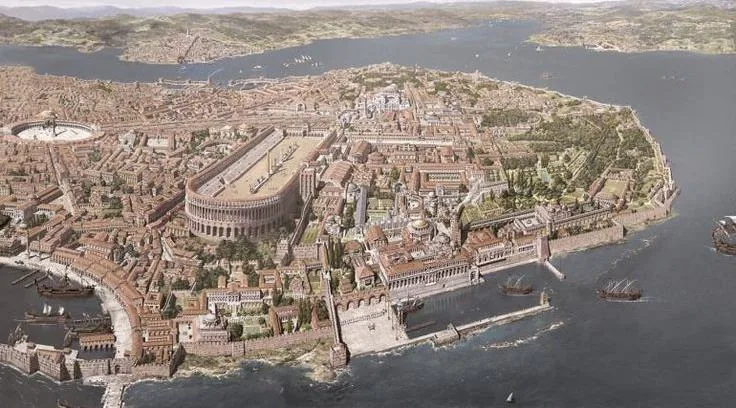
Constantine the Great chose Byzantium as his new Roman capital because its unmatched geography offered natural defense, control of vital trade routes, and a strategic position that no other city could rival. The decision reshaped history, birthing an empire that would endure for over a thousand years after Rome itself fell.
Constantine the Great selected Byzantium as his new capital, replacing Rome. He was drawn by its strategic location on the Bosphorus, natural defensive barriers, thriving trade networks, and symbolic ties to ancient Greek heritage. The city, renamed Constantinople, became the heart of the Eastern Roman Empire for over a millennium.
- Constantine the Great founded Constantinople on the site of the ancient Greek city of Byzantium.
- The city's location on a peninsula between the Sea of Marmara and the Golden Horn provided natural defenses against land and sea attacks.
- Constantinople sat at the crossroads of major trade routes linking Europe and Asia, controlling the vital Bosphorus strait.
- The new capital was dedicated in 330 AD, becoming the seat of the Eastern Roman Empire for more than a thousand years.
- Constantine's choice was influenced by Byzantium's proximity to his military victories over Licinius and its distance from Rome's political instability.
The Emperor Who Wanted a Fresh Start
Constantine the Great wasn't just looking for a new city. He was looking for a clean break, a place where he could build something entirely his own. The old system, the Tetrarchy, where four emperors shared power, felt broken to him, and he wanted out. He wanted a capital that belonged to him and his dynasty alone.
His path to this decision ran through a siege. While fighting Licinius, the emperor of the East, Constantine had surrounded the small town of Byzantium. He was reportedly struck by how easily the place could be defended. It wasn't the easiest victory, but he eventually got what he wanted, and he never forgot what he saw on those shores. The decisive battles that ended Licinius's rule took place at Adrianople and Chrysopolis, not within the walls of Byzantium itself, but the town's remarkable defensibility left a lasting impression on him.
Rome itself had fallen out of favor. By the mid-3rd century, emperors simply didn't want to live there anymore. In the West, they preferred Mediolanum, which we know as Milan. In the East, they chose Nicomedia, modern-day Izmit. Rome was the old seat of power, but it had become a city rulers avoided, a place of tangled tradition and, for Constantine, a city too deeply tied to the old gods.
That last point mattered more than anything. Constantine was embracing Christianity, a faith that couldn't take root in Rome, the "city of the gods," where every corner was crowded with ancient temples and pagan rituals. He needed a canvas that wasn't already painted. He needed a place where his new religion, and his new vision, could grow without fighting centuries of baggage. Byzantium, that defensible little town he had besieged, offered exactly that. It was the perfect spot for a fresh start.
A Fortress at the Crossroads of Three Seas
The old Greek fishing town of Byzantium, which Constantine would transform into his new capital, sat at the meeting point of three great bodies of water: the Black Sea (Pontus Euxinus), the Sea of Marmara (Propontis), and the Mediterranean (Mediterraneum). This was no accidental geography. The narrow Bosphorus strait that links the Black Sea to the Marmara functioned as a natural moat, a watery barrier that made a land invasion from the east nearly impossible.
Defenders could build fortresses at the strait's narrowest points, or even stretch a heavy chain across the water to block enemy ships. The city's own harbor, the Golden Horn, was already famous as a safe anchorage in antiquity, praised by the geographers Strabo and Pliny long before Constantine ever set his sights on it. That deep, sheltered inlet drew merchant vessels from Egypt, Italy, and even India, keeping trade alive in every season.
Positioned here, an emperor could respond quickly to a barbarian incursion from the Balkans in the west or a Sassanid threat from the east, without losing weeks traveling from distant Rome. The location also put the city close to the forests of the Black Sea coast for timber and to Proconnesus, Marmara Island, where marble was quarried for grand building projects. While some accounts describe Byzantium as sitting at the empire's geographic center, the city was actually chosen for its strategic and commercial advantages, not for any mathematical centrality. Its real power lay not in being the middle of the map, but in commanding the crossroads where continents and seas collided.
Trade, Fish, and Fresh Water: The Economic Engine
Byzantium's harbor, the Golden Horn, was already famous as a safe anchorage long before Constantine ever set his sights on it. Ancient writers like Strabo and Pliny had described its sheltered waters, and that reputation meant the city could pull in goods from Egypt, Italy, and even India, keeping trade alive through every season. The position at the crossroads of the Black Sea, the Sea of Marmara, and the Mediterranean meant merchant ships could move freely between three bodies of water, and the straits themselves served as a natural barrier against invaders.
The city's practical advantages ran deeper than commerce. Africa's fertile provinces could send grain by sea in case of famine, a safety net that Rome itself could not always count on. Black Sea currents swept fish into the Bosphorus's warmer waters, and the prized bonito, called palamut, was said to taste so good that people sang its praises even back then. The climate stayed mild, the soil stayed fertile, and being close to Thrace and Bithynia meant help could arrive quickly from either direction. As for fresh water, the Lycus River, known today as Kağıthane, was too minor a stream to supply the city on its own. The real answer lay in the aqueducts and cisterns that would come later.
Marble, Timber, and a Nod to Troy
When Constantine the Great began planning his new capital, he wasn't just looking at maps and military strategy. He was also looking at what the land itself could offer. The Black Sea coast, known in antiquity as Pontus Euxinus, was lined with dense forests that could feed the massive construction programs he had in mind. Timber for scaffolding, beams, and ships would be plentiful, and it could float right down to the building sites.
The stone was just as impressive. Off the coast lay Proconnesus, today's Marmara Island, whose quarries produced a striking white-and-blue banded marble that builders across the empire prized. The original account calls it "as valuable as gold," which is a stretch. But the marble was genuinely famous, shipped to temples and palaces from Rome to the eastern provinces, and Constantine could tap that supply line directly. With the sea routes open, hauling material from every corner of the empire was surprisingly easy. Columns, statues, and carved reliefs could be loaded onto ships and delivered to the city's docks without the grueling overland hauls that plagued other projects.
The location also carried a mythological weight that Constantine found appealing. The city sat near the ancient Greek world, and not far away stood the legendary site of Troy. According to the original account, this proximity mattered to the emperor as he sought to place his new city within a grand historical and symbolic mission. Whether it created a "mystical environment" is speculation, but the pull of that heritage was real. Two mountains flanked the region: Ida Mountain, known today as Kaz Dağı, and Olympus, now called Uludağ. Both were steeped in myth, adding to the sense that this corner of the world was touched by the gods. For an emperor building a city to outshine Rome, that backdrop was a gift.
The City That Outlived Rome
In AD 410, the unthinkable happened. The Gothic leader Alaric and his warriors poured through the gates of Rome, sacking the city that had once ruled the known world. And where was the Western Roman emperor while his capital burned? Stuck in Ravenna, a marshy city in northern Italy, utterly helpless. Rome had fallen, but the Roman Empire did not die that day. It lived on, centered on a city Constantine the Great had founded nearly a century earlier on the shores of the Bosporus.
That city, Constantinople, would carry the Roman name forward for more than a thousand years after Alaric's sack. When the Western Empire crumbled and its emperors faded into history, the Eastern Empire endured. The walls that Constantine's successors built held firm against wave after wave of invaders. The city's position, commanding the narrow strait between the Black Sea and the Mediterranean, made it nearly impossible to starve or storm. It was a fortress that happened to be a capital.
The payoff of Constantine's choice became clear century after century. While Rome was sacked again and again, Constantinople stood. It survived sieges from the Avars, the Arabs, the Bulgars, and the Rus. Its emperors continued the Roman tradition, calling themselves Roman emperors, preserving Roman law, Roman titles, and Roman ambitions. The city's trade networks stretched from Egypt to Italy to India, keeping it wealthy while the West descended into fragmentation.
That longevity was no accident. Constantine had studied the geography, the climate, the harbor, and the defenses before committing his empire to this spot. He understood that a capital needed more than prestige; it needed to survive. Rome, for all its glory, sat far from the frontiers where danger brewed. Constantinople sat at the crossroads where the empire's fate would actually be decided.
The city finally fell in 1453, when Mehmed the Conqueror breached its legendary walls with cannon. But by then, Rome had been a shadow for a millennium. The empire Constantine built at Byzantium had outlived its western twin by nearly a thousand years. That is the measure of his choice, a decision made in the fourth century that shaped the fate of the Mediterranean until the Ottoman conquest. The strategic wisdom of that single selection kept the Roman idea alive long after the original Rome had become a memory.
Frequently asked questions
What were the main reasons Constantine chose Byzantium as the new Roman capital?
Constantine the Great chose Byzantium for its extraordinary defensive position, its command of vital trade routes connecting the Black Sea, Sea of Marmara, and Mediterranean, and its proximity to the empire's most vulnerable frontiers. The city sat at the crossroads of Europe and Asia, letting the emperor respond quickly to threats from both the Balkans and the Sassanid East. Its natural harbor, the Golden Horn, was already famed as a safe anchorage long before Constantine arrived.
How did Constantinople's geography make it easier to defend than Rome?
Constantinople sat on a triangular peninsula flanked by water on two sides, with the Bosporus strait acting as a natural moat. The strait's narrow points could be fortified with castles or fortresses, and a heavy chain could be stretched across the water to block enemy ships entirely. By contrast, Rome lay exposed on the Italian plain, reachable by land from any direction. Constantinople's seven hills and mild climate added further natural protection.
Why was Constantinople better positioned for trade than Rome?
Constantinople stood at the meeting point of three seas: the Black Sea, the Sea of Marmara, and the Mediterranean. Ships from Egypt, Italy, and even India could dock at its harbor, making it a clearinghouse for goods from across the known world. The Golden Horn, already recognized as a harbor in ancient times, offered sheltered anchorage that Rome simply could not match. This position kept commerce flowing year-round.
What role did Edward Gibbon play in shaping views on Constantinople's founding?
The historian Edward Gibbon, writing in the eighteenth century, framed Constantinople's founding as a turning point in Roman history. He emphasized the city's strategic advantages over Rome and argued that Constantine's choice reflected careful calculation rather than mere ambition. Gibbon's influential account helped cement the idea that the new capital was a deliberate masterstroke. His perspective still shapes how historians discuss the decision today.
How did the choice of Constantinople help prolong the Roman Empire?
Constantinople's defenses and position allowed the Eastern Roman Empire to survive for over a millennium after Rome itself fell. When the Gothic leader Alaric sacked Rome in 410, the Western emperor remained helpless in Ravenna, while Constantinople stood secure behind its walls and waters. The city anchored an empire that endured until the Ottoman conquest by Mehmed the Conqueror in 1453. Without this eastern capital, the Roman state would likely have collapsed far earlier.
Why did Constantine want a new capital instead of using Rome?
By the mid-third century, emperors had largely abandoned Rome as a residence, preferring Mediolanum (Milan) in the West and Nicomedia (Izmit) in the East, where imperial palaces already stood. Rome's pagan traditions also made it an awkward home for Constantine, who embraced Christianity and wanted a city where the new faith could flourish. He sought a fresh start, a city he could shape entirely to his own vision and dynasty.
What natural resources made Constantinople attractive to Constantine?
The Black Sea's forests supplied timber for construction, while the island of Proconnesus (Marmara Island) yielded prized marble for grand buildings. The Lycus River, though a minor stream, provided some fresh water, and the Bosporus's currents drew fish into the strait's warmer waters, ensuring a steady food supply. The surrounding lands of Thrace and Bithynia offered fertile soil and easy access to resources.
How did the proximity to ancient Greek sites influence Constantine's decision?
Byzantium sat near the legendary city of Troy, and according to the original account, Constantine sought to link his new capital to a grand historical mission. The nearby mountains of Ida (Kaz Dağı) and Olympus (Uludağ) carried deep mythological weight, adding to the site's symbolic power. Though Constantine was Christian, he was no zealot, and the pull of these ancient places reportedly called to him. The city's position at the edge of the ancient Greek world only strengthened its appeal.
Got a take on this? Add your voice to the conversation below →
No comments yet. Be the first.