IQ Tests: What a Childhood Score Really Predicts

IQ tests measure a narrow band of cognitive skills, and when a child sits for one, the resulting number can follow them for years. Parents still ask what that number means, and the honest answer is both more modest and more interesting than the headlines suggest. The story of how these tests work, and how much a single score really tells us about a future, is where things get interesting.
IQ tests estimate reasoning and problem-solving speed relative to peers, and they predict school performance reasonably well. They do not capture creativity, motivation, or character. A childhood score is a snapshot, not a destiny, and its stability varies widely across individuals.
- The first practical IQ test was developed in 1905 by Alfred Binet and Theodore Simon in Paris to identify students needing extra help.
- The Study of Mathematically Precocious Youth followed adolescents who scored at the very top of a standard ability test at age 13.
- Longitudinal research has tracked gifted participants from adolescence well into midlife.
- Correlations between childhood IQ and adult outcomes are statistically significant but far from perfect.
- Psychologists generally agree that non-cognitive traits such as conscientiousness influence achievement independently of IQ.
The Mozart Effect: How a 1993 Study Became a Parenting Industry
In 1993, three researchers named Rauscher, Shaw and Ky published a short paper in the journal Nature, and within a few years it had turned into one of the strangest self-help empires of the decade. Their finding was modest: college students who listened to a Mozart sonata did a little better on a spatial reasoning task than students who sat in silence.
That was the entire finding. The boost lasted roughly ten to fifteen minutes. The people in the study were undergraduates, not babies. Nobody had claimed that music builds a smarter brain.
It did not matter. The phrase "the Mozart effect" escaped the lab and went shopping. Books appeared promising that a few minutes of the right sonata could raise a child's intelligence. Educational programs sold the same promise. Recordings of Mozart, packaged for infants with soft covers and round corners, lined the shelves of toy stores. Parents who had never read a psychology paper suddenly believed that the right CD at the right hour could give their kid an edge.
Then the science caught up, and it was not kind. In 1999, Christopher Chabris pulled the replication studies together and found the effect was tiny at best. A 2010 meta-analysis by Pietschnig and colleagues went further: across the accumulated evidence, there was little to no sign that listening to Mozart makes children smarter. Whatever small bump showed up in the lab looked more like arousal or mood, the same lift you might get from a strong coffee or a favorite song, rather than any change in actual ability.
So why did the myth travel so fast? Because it landed on ground that had already been prepared. The Mozart effect did not create the hunger for a shortcut to a smarter child. It fed a hunger that was already there, and it fed it with something parents could buy.
That hunger has a longer history, and a much more serious tool behind it: the IQ test. IQ tests are the instrument we reach for when we want to put a number on a mind, and the story of how they work, what they actually measure, and how much a childhood score really tells us about a future is where this gets interesting.
What Do IQ Tests Actually Measure?
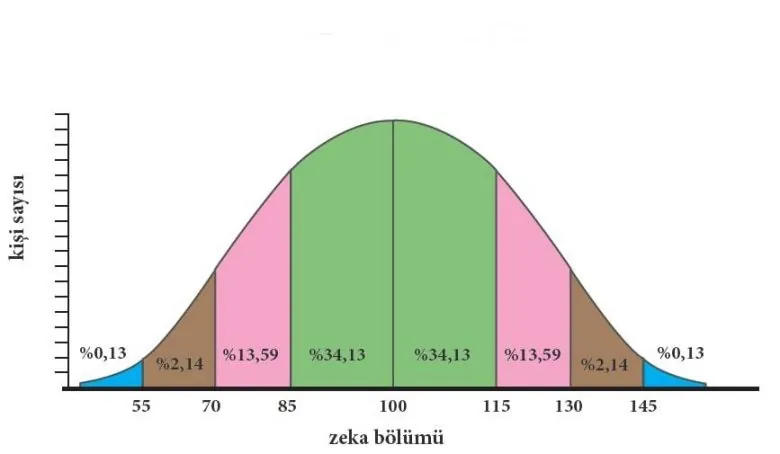
An IQ score of 100 is not a grade, a ranking, or a destiny. On the modern Wechsler and Stanford-Binet scales, IQ tests are deliberately constructed so that the average score lands at 100, with a standard deviation of 15. That means most people cluster close to the middle, and a score only tells you where someone sits relative to a large sample of their own age group.
The number on the page is not a single, unified measure of intelligence. IQ tests assess specific cognitive domains: verbal comprehension, numerical reasoning, working memory, processing speed, and visual-spatial thinking. A child might breeze through the verbal sections and stall on the timed puzzles, and the final score flattens all of that into one figure. That figure is useful precisely because it is comparative. It answers a narrow question, how does this person's performance stack up against peers of the same age, and nothing more.
This is where the score gets slippery. Language, education history, the test environment, physical health, and anxiety can all nudge performance up or down. A child who slept badly, speaks a different language at home, or freezes under time pressure is not less capable. They are simply having a worse testing day. This is exactly why experts interpret IQ scores alongside other observations and assessments, never in isolation. The number is one data point in a much larger picture, and treating it as a verdict on a person's mind is a category error.
Think of it this way: an IQ test is a snapshot taken through a particular lens. It captures certain angles of reasoning sharply and leaves whole landscapes, curiosity, persistence, creativity, out of frame entirely.
Can a Childhood IQ Score Predict Future Success? The SMPY Story
One of the longest running attempts to answer that question began with teenagers who had already done something extraordinary. The Study of Mathematically Precocious Youth, known as SMPY, tracked young people who scored in the top 1 percent on a standard ability test at age 13. The reported figure is more than 1,600 participants, followed for decades, though that number could not be independently verified and should be treated as approximate.
What the follow-ups did show is striking. According to the published findings of David Lubinski and Camilla Benbow, a portion of these participants went on to land academic positions, earn patents, publish research, and build careers in technology and business. If you want evidence that early cognitive talent shows up somewhere later, this is the study people cite.
Now the part that gets lost. SMPY did not test a random sample of children. It tested a hand-picked group who were already performing at an exceptional level in adolescence. That design makes the results far narrower than they sound. A single IQ score taken in early childhood does not reliably predict anyone's future, because the study never set out to test that claim in the first place.
There is a broader pattern underneath this. IQ scores do connect to school achievement, but the link is weaker than most people assume, and it is weakest in the early years. A child's cognitive abilities shift constantly during development, which means their standing among peers can move a great deal over time.
Age changes the picture. Cognitive abilities are highly variable in childhood, grow steadier through adolescence, and settle into something close to fixed around age 20. Even so, real score swings still happen during the teenage years. That is why one test on one morning in elementary school says very little about how a child will do in school later on.
What IQ Tests Cannot Measure: Non-Cognitive Skills and the Binet Warning
Alfred Binet and Théodore Simon built the first practical intelligence test in 1905, and they were clear about its limits from the start. Intelligence alone, they argued, does not carry a person through life. Attention, willpower and character matter just as much. That caution came from the very people who designed the tool, which makes it worth sitting with.
Here is where a popular version of the story goes wrong. Contrary to the common retelling, the 1916 Stanford revision of that test was not the work of Binet and Simon. It was produced by Lewis Terman, who adapted the French instrument for American schools. Binet and Simon's own warnings about character and willpower tend to get lost in that handoff, and they are exactly the part that still holds up.
Modern research keeps confirming them. Children who manage their emotions, hold onto their motivation, focus their attention and control their impulses tend to do better in school, and they do so independently of how they score on cognitive ability. Researchers file these traits under one broad label: non-cognitive skills. Curiosity, creativity, motivation and self-confidence all shape school performance on top of whatever cognitive abilities explain.
A UK study that followed children born in England and Wales from age 7 to 16 reportedly found that non-cognitive skills grow more important with age. That specific cohort figure could not be independently confirmed, so the finding is best treated as reported rather than settled. The direction of the result, at least, lines up with what teachers see every year.
An IQ score tells you something real about how a child reasons and thinks. It does not measure attention, perseverance, creativity, curiosity or the willingness to sit down and do the work. In classrooms and in life, success usually depends on those traits operating together.
Frequently asked questions
What do IQ tests actually measure?
IQ tests do not capture intelligence as a whole. They measure specific cognitive skills: verbal comprehension, numerical reasoning, working memory, processing speed, and visual-spatial thinking. Scores are scaled so the average sits at 100 with a standard deviation of 15, which means most people cluster fairly close to the middle of the bell curve.
Can a childhood IQ score predict future success?
It correlates with school achievement, but that link is weaker than most people assume, especially in the early childhood years. A single score taken on a single day in primary school says little about how a child will perform later, because cognitive abilities shift considerably as children develop.
What was the Study of Mathematically Precocious Youth and what did it find?
The Study of Mathematically Precocious Youth tracked young people who scored at the very top of a standard ability test at age 13, following them for decades. Some went on to notable success in academia, technology, and business. The group is often described as numbering more than 1,600, though that count could not be independently verified. Either way, researchers were watching an already exceptional, hand-picked group, so the findings cannot be stretched into a promise about any one child's future.
Does the Mozart effect really make children smarter?
No. The 1993 study that started it all tested college students, not children, and the boost in spatial reasoning lasted only ten to fifteen minutes. Later research found little to no evidence that listening to Mozart raises intelligence in children. The small effects that did show up are usually chalked up to mood or arousal, not a smarter brain.
How stable is a person's IQ from childhood to adulthood?
It moves a lot in childhood, settles into a steadier pattern through adolescence, and becomes largely fixed around age 20. Even the teenage years bring significant shifts, which is exactly why one test result from the early school years should never be read as a verdict on a child's future.
What do IQ tests fail to measure?
Attention, perseverance, creativity, curiosity, motivation, and self-control all sit outside the score. Children who manage their emotions, hold their focus, and control their impulses tend to do better in school regardless of raw cognitive ability, and researchers group these traits under the umbrella of non-cognitive skills.
Who created the first IQ test and what did they warn about it?
Alfred Binet and Théodore Simon built the first practical intelligence test in 1905. They stressed that intelligence alone is not enough, pointing to attention, willpower, and character as equally important for success. Contrary to the popular version, the 1916 revision associated with that warning came from Lewis Terman at Stanford, not from Binet and Simon themselves. Editorial note: Details that remain unconfirmed or vary by study are presented here as such, and readers should treat specific figures as approximate.
Got a take on this? Add your voice to the conversation below →
No comments yet. Be the first.