Rise of Empires: Ottoman — What Netflix Got Wrong
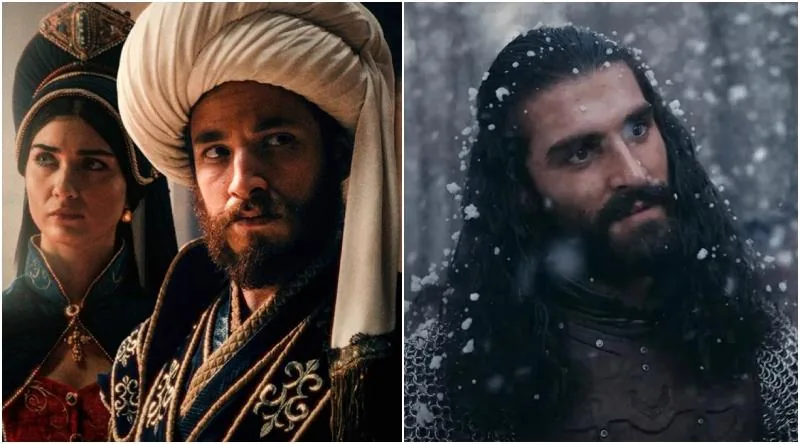
Netflix's docudrama Rise of Empires: Ottoman turned the war between Sultan Mehmed II and Vlad the Impaler into prestige television, and its second season drew a huge audience. The show sells itself as a history lesson wrapped in drama, complete with a narrator who walks through the corridors of power. That framing invites a fair question about Rise of Empires: Ottoman historical accuracy, because the line between documented fact and invented scene-setting matters when real people lived and died in this conflict. The series gets the broad strokes right and some of the details wrong, and knowing which is which changes how you watch it.
Rise of Empires: Ottoman is a dramatized docudrama, not a documentary. It accurately frames the conflict between Mehmed II and Vlad the Impaler as a real war over Wallachia, but it compresses timelines, invents dialogue and scenes, and simplifies motives for television. Viewers should treat the spectacle as dramatization and the broad political conflict as grounded in history.
- Sultan Mehmed II of the Ottoman Empire and Vlad III of Wallachia fought a campaign that forms the season's central conflict.
- Vlad the Impaler spent years as a hostage in Ottoman captivity during his youth, a period the show references to explain his knowledge of Ottoman court politics.
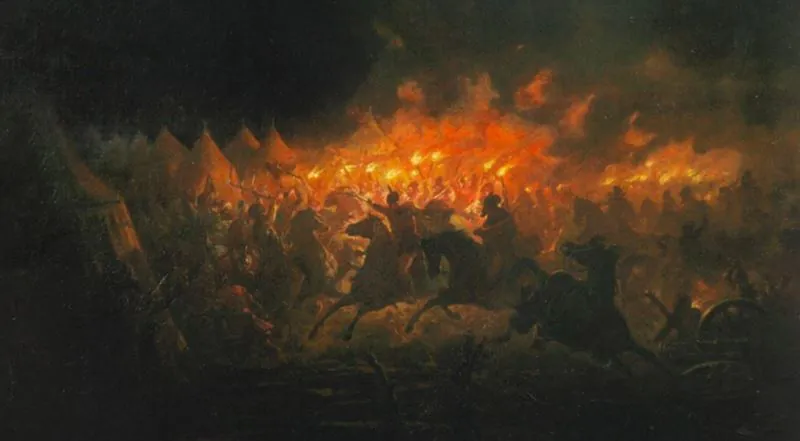
- The Targoviste night attack was a real event in which Vlad's forces struck the Ottoman camp.
- The docudrama mixes historian interviews and narration with scripted battle scenes and invented dialogue, a format that blurs fact and fiction.
- The series was produced for Netflix, with a second season focused on Vlad and Mehmed.
Netflix's Mehmed vs. Vlad and the Question of Historical Accuracy
Netflix released the second season of its Turkish docudrama Rise of Empires: Ottoman under the title Mehmed vs. Vlad, and a Turkish-language critique published on December 30, 2022, took the series to task for how freely it bends the historical record. The author's central complaint is not that the show invents things, docudramas do that, but that it inflates Vlad the Impaler into a genuine rival of Mehmed II while shrinking the Ottoman sultan into a bit player in his own conquest. That framing question, how much of the Rise of Empires: Ottoman historical accuracy actually holds up, runs through the whole review.
The series sets up a personal duel between two men who, in reality, barely shared a childhood. Mehmed II was sancakbeyi of Manisa before his father Murad II briefly placed him on the throne in 1444, set him aside in 1446, and sent him back to Manisa until 1451. Vlad's own time under Ottoman protection is usually described as roughly four to five years, though the exact duration is debated and some sources stretch it to five or six. The claim that the Dracul brothers were held at the Doğrugöz fortress in Konya rests on chronicle traditions that mention an Anatolian fortress, though the precise location and spelling vary and Konya specifically cannot be confidently confirmed. So the long, scheming, co-raised rivalry the show builds simply has no room to exist.
The author grants that docudrama conventions allow invention for entertainment, and admits the series is genuinely enjoyable to watch. What he refuses to accept is a distortion of the power balance itself. The Ottoman army of that era was the strongest in the world, but Vlad did score real successes such as the Night Attack at Târgoviște, making the campaign costly and difficult rather than a one-sided march. The show's talking heads reportedly suggest Vlad could have won outright if he had slipped into the Ottoman camp and killed the sultan, a counterfactual the author dismisses with a blunt Turkish proverb about hypotheticals and uncles. Mehmed, for his part, was a genuine intellectual who reportedly knew several languages and admired Alexander the Great, having read through his campaigns, and his strategic reputation does not need the series' help.
One moment the review lingers on is Târgoviște itself, which Ottoman sources describe the Ottomans entering largely empty, a scene the author compares to Napoleon finding Moscow abandoned by the Russians, though he is careful to note that story ended differently. The comparison is his own reading, not a documented fact. He also flags what the series leaves out entirely: Vlad's later years, his return to the Wallachian throne with Moldovan backing and a march on Bucharest, and his death around 1476 to 1477 in battle against the Ottomans. Ending on a severed head on a stake, in his view, wasted screen time the show could have spent on the real ending.
Was Vlad the Impaler Really Mehmed's Childhood Rival?
No, the two almost certainly did not grow up together as playmates. Mehmed II spent his youth as sancakbeyi of Manisa, was placed on the throne by his father Murad II in 1444, set aside in 1446, and sent back to Manisa until 1451. Vlad, meanwhile, was held under Ottoman protection for only a limited stretch. The timeline simply does not leave room for the long shared childhood the series imagines.
How long was Vlad actually in Ottoman hands? The popular figure floats around four to five years, but the sources are not unanimous. Some suggest five to six. So the number is plausible, not firmly established. Treat it as an approximation rather than a settled fact.
Where were the Dracul brothers kept? Ottoman chronicles reportedly place them at Doğrugöz fortress in the Kütahya region of Anatolia. The series and many retellings say Konya specifically. That location cannot be confidently confirmed. The chronicles mention an Anatolian fortress, but the exact spelling and placement shift from source to source.
Mehmed's own record is clearer. He governed Manisa as a young prince. Murad II brought him to the throne in 1444, then set him aside in 1446. Mehmed returned to Manisa and stayed there until his father's death in 1451. That is a documented sequence, not a dramatic invention.
Put the two timelines side by side and the picture sharpens. Vlad's time under Ottoman protection overlaps only loosely with Mehmed's Manisa years. The two were not in the same place at the same time for long. The series leans on the idea of shared boyhood games and rivalry. The record does not support it.
This matters for anyone weighing the Rise of Empires: Ottoman historical accuracy. The show is a docu-drama, and docu-dramas compress, rearrange and invent. Some of that is harmless. Some of it rewrites the basic facts of who knew whom, and when.
Was Ottoman Defeat Ever Possible in the Wallachian Campaign?
The claim that Mehmed II's army had no chance of losing the Wallachian campaign does not hold up. Vlad III, voivode of Wallachia, inflicted real and notable defeats on Ottoman forces, most famously the Night Attack at Târgoviște. The campaign was costly and difficult, not the one-sided march the popular version suggests.
Where the series' historians go further, speculating that Vlad could have won the war outright by raiding the Ottoman camp and killing the Sultan, they are trading in pure counterfactual. It is the historical equivalent of "if my aunt had wheels, she'd be a wagon." Mehmed's army was the strongest military force of its era, and Vlad's forces were a small guerrilla band fighting with hit-and-run tactics. What made them historically memorable was the sheer cruelty of their massacres, which spared neither women nor children. That asymmetry is real, and it is exactly why the "versus" framing sells so well on screen.
Vlad was a remarkable figure in his own right, and the tension between two such personalities makes for genuinely good television. But the gap in scale matters. The series repeatedly credits Ottoman victory to Mehmed's brilliance as a commander and his quick intelligence, framing the army as an outnumbered underdog saved by clever maneuvers. Admiring Mehmed's mind is fair. He conquered Constantinople, after all. Yet the Ottoman army did not need a genius to win that campaign. Even a mediocre commander would have won it. Outside the night raid, there was barely a pitched battle to speak of.
What the show does capture, as the story goes, is the strange emptiness of Târgoviște. According to the original account, Ottoman sources describe Mehmed entering a largely deserted city and finding the "forest of the impaled." The comparison to Napoleon taking an abandoned Moscow is interpretive rather than documented, though the parallel is hard to resist. That story, of course, ended differently.
Hamza Bey, Mara Sultan, and the Series' Invented Details
The envoy Mehmed II sent into Wallachia to capture Vlad was indeed named Hamza Bey, and that part of the Netflix series holds up. What does not hold up is the family tree the show hangs around his neck. In Rise of Empires: Ottoman, Hamza Bey is presented as the father of Gülbahar Hatun, the mother of Şehzade Bayezid II and one of Mehmed's wives. No historical record supports that link. Several men named Hamza Bey lived in this period, and Gülbahar Hatun's father's identity is disputed, so the specific identification cannot be confidently confirmed or denied. Her father appears in some Ottoman records under the name Abdullah, a patronymic that often signals a convert or an unclear line of descent. Treat the series version as invention rather than history.
Mara Sultan gets a similar upgrade. She was influential in diplomacy, and Mehmed leaned on her political weight and her family's influence in Serbia for his contacts on that frontier. After her husband Murad II died, she asked Mehmed's permission and returned to Serbia. But her direct personal role in his court is generally considered more limited than dramatic portrayals suggest, and the series inflates it for screen time. That verdict is solid: influential in diplomacy, yes, central to every scene the way the show frames her, no.
Then there is the tax incident in episode one, where Vlad's court is said to have applied a tariff to Ottoman envoys. The familiar telling assigns it to those envoys. Radu R. Florescu and Raymond T. McNally, in Dracula or the Impaler Voivode, page 120, reportedly write that the tariff was applied to a Genoese delegation instead. That specific detail cannot be reliably confirmed without the text in hand, so the popular version may be pointing at the wrong men entirely.
Who Was the Real Vlad the Impaler: Strategist or Savage?
Start with the man on the other side of the hill. Mehmed II, who took Constantinople, was a genuine intellectual. He reportedly knew several languages. He admired Alexander the Great and had read accounts of all his campaigns. That is the sultan who marched north into Wallachia to deal with a vassal who had stopped behaving like one.
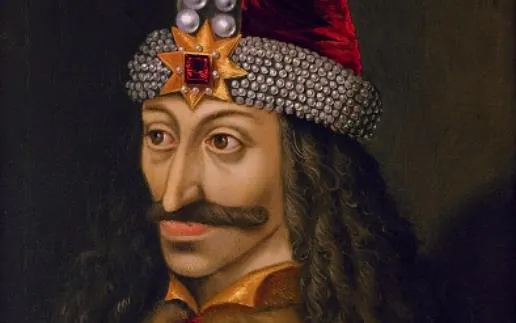
Vlad III was that vassal. His father had handed him to the Ottomans as a boy, a living guarantee of loyalty, and he was raised and educated inside the palace. Then the Ottomans made him voivode of Wallachia. He initially paid tribute, then later stopped paying, attacked Ottoman positions, and openly rebelled. That break is what drew the campaign down on him, and it is the plain historical spine of the whole story.
Was Vlad the Impaler really a strategist?
Yes, and the popular version that dismisses him as a bloodthirsty bungler gets him wrong. Most historians credit Vlad with real strategic skill: guerrilla tactics, scorched earth, and the Night Attack at Târgoviște, when he hit the Ottoman camp in the dark. He was dangerous precisely because he understood how to fight a larger army.
The savagery was real too. Impalement was his method, and he used it to terrify. But calling him a "mentally ill savage" is a modern label, a retrospective diagnosis that the evidence does not support. He was brutal by the standards of a brutal era, and calculating at the same time. Those two things sat in the same man.
What the series does with him is another matter. It hands him screen time as a near-equal of the sultan, a rival genius trading blows with the conqueror of Istanbul. The real gap between them was enormous, and that gap is where the drama quietly rewrites the record.
What the Series Leaves Out, and the Romance It Invents
For a show built on the rivalry between two men, Rise of Empires: Ottoman historical accuracy gets thinnest exactly where the drama peaks. The biggest invention is emotional, not military. The series does depict an implied intimate tension between Vlad and Mehmed, a creative dramatization not supported by historical evidence. Two boys who shared an Ottoman household became, on screen, something closer to star-crossed lovers. They did not.
Then there is the ending. As the story goes, the series shows Vlad killed and his head displayed on a stake. Historically, his head was reportedly sent to Constantinople and put on display there, so the image is not pure fantasy, but whether the series depicts that exact detail cannot be confirmed from the episodes alone. What is clear is the larger error: contrary to the popular version, Vlad was not killed by Mehmed. He died around 1476 to 1477 in battle against the Ottomans, after he had regained the Wallachian throne.
And that is the part the cameras skip entirely. Vlad's later years go untold: his years of captivity, his return to Bucharest with Moldovan backing to reclaim the throne, and Mehmed's renewed campaign against him. The series spends its screen time on invented childhood memories instead, then cuts to a head on a stake and calls it an ending. A viewer who never opens a history book would come away thinking Vlad lost a duel to Mehmed. He did not. He outlived the campaign, took his throne back, and died fighting the Ottomans years afterward.
The romance, at least, is honestly invented. The omission is the quieter problem. Rise of Empires: Ottoman historical accuracy is strongest in its battles and weakest in its silences, and what it leaves out is often the most interesting chapter of the story.
Frequently asked questions
What does Rise of Empires: Ottoman get wrong about Vlad the Impaler?
The series invents an implied romantic tension between Vlad and Mehmed that no historical source supports, and it inflates Vlad's odds against the Ottoman war machine far beyond what the record shows. It also misattributes the envoy Hamza Bey as Gülbahar Hatun's father, a link that appears in no chronicle.
How long was Vlad the Impaler actually held captive by the Ottomans?
The show's framing suggests around four to five years, and that figure is plausible but not firmly established. Historians debate the exact span, and several sources point toward roughly five to six years instead. What is certain is that Vlad spent his youth at the Ottoman court as a hostage left by his father, where he received a solid education.
Who was Hamza Bey, and why did Vlad impale him?
Hamza Bey was the high-ranking palace pasha Mehmed II sent to Wallachia as an envoy, and Vlad had him killed by impalement. The identity of this Hamza Bey is debated, since several men of that name lived in the period, and the claim that he was Gülbahar Hatun's father cannot be confirmed.
Did Vlad the Impaler ever have a chance of defeating Mehmed II?
No, and contrary to the popular version that dismisses Vlad as a mere raider, he did inflict real damage. His guerrilla tactics and the Night Attack at Târgoviște made the campaign costly and difficult for the Ottomans. The claim that the Ottoman army had no chance of losing overstates the case.
Was the Târgoviște night attack a real Ottoman defeat?
Ottoman sources describe Mehmed's army reaching Târgoviște and finding it largely deserted, with the notorious forest of the impaled outside its walls. The comparison to Napoleon entering an empty Moscow is an interpretive analogy rather than documented fact, so treat that framing with caution.
Why does the Netflix series invent a romance between Mehmed and Vlad?
It is pure creative dramatization. The two men did grow up in the same Ottoman court orbit, which gives the writers a hook, but the intimate tension the show implies has no basis in historical evidence. Docu-dramas routinely trade accuracy for viewer engagement. Editorial note: Details that remain unconfirmed by surviving records are presented as such and hedged accordingly.
Got a take on this? Add your voice to the conversation below →
No comments yet. Be the first.