Hulk Origin: How Frankenstein and a Printing Error Made Him Green
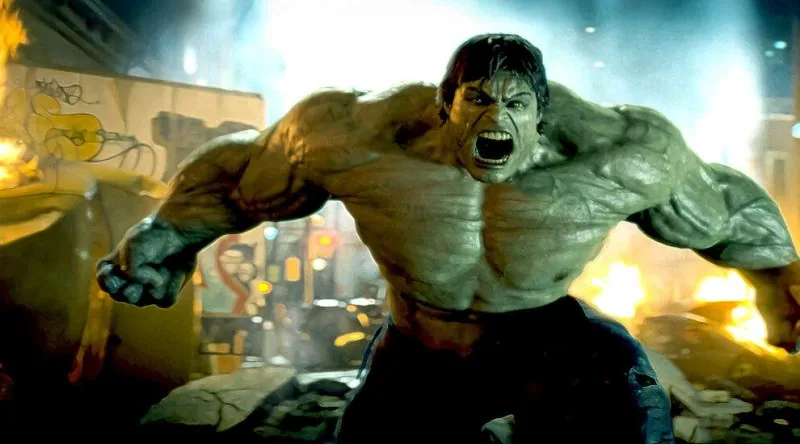
The Hulk origin story began in 1962 when Stan Lee and Jack Kirby created a gray-skinned monster for Marvel's The Incredible Hulk #1, drawing on Frankenstein and Dr. Jekyll and Mr. Hyde. A printing problem pushed him toward green in later issues, and one of comics' most famous heroes has been green ever since. What started as a horror-flavored experiment became a founding pillar of the Marvel Universe.
Stan Lee and Jack Kirby created the Hulk in 1962, blending Frankenstein and Dr. Jekyll and Mr. Hyde into a scientist who transforms into a monster after gamma radiation exposure. The Hulk first appeared gray in The Incredible Hulk #1, then turned green in later issues because of a printing inconsistency.
- The Hulk debuted in The Incredible Hulk #1, published by Marvel in 1962, created by writer Stan Lee and artist Jack Kirby.
- The character's origin involves scientist Bruce Banner being caught in a gamma radiation blast and transforming into the Hulk.
- Lee and Kirby drew inspiration from Frankenstein's monster and Robert Louis Stevenson's Dr. Jekyll and Mr. Hyde.
- The Hulk appeared with gray skin in his first issue but was changed to green in later issues.
- The transformation from gray to green is widely attributed to printing limitations that made the gray shade inconsistent.
A Very Angry, Very Green... Accident
You know the picture before you even close your eyes: a mountain of muscle, skin the color of a traffic light, teeth bared, fists the size of engine blocks. That is the Hulk, and he looks like the simplest superhero ever drawn. He gets mad, he gets big, things break. Except the Hulk origin story is not simple at all. It begins on a comic book cover dated May 1962, when Stan Lee and Jack Kirby put The Incredible Hulk #1 on the stands, and it runs straight through two dusty volumes of nineteenth-century gothic fiction.
Lee has said, more than once, where the creature came from. First, Mary Shelley's Frankenstein: a monster whose face sends people running, who is hated on sight, and who wants only to be understood. Second, Robert Louis Stevenson's Dr. Jekyll and Mr. Hyde: the good man and the brute sharing one body, one fighting the other for control. Stack those two ideas and you get a scientist with a rage problem living inside his own skin. As the standard account of the character's beginnings goes, that is the whole blueprint, and it explains why the Hulk feels less like a power fantasy and more like a warning label.
The Monster
Frankenstein gave the Hulk his loneliness. A frightening outside hiding a soul that just wants a fair hearing.
The Duality
Jekyll and Hyde gave him his split self. One man, two natures, and no clean way to keep them apart.
The Debut
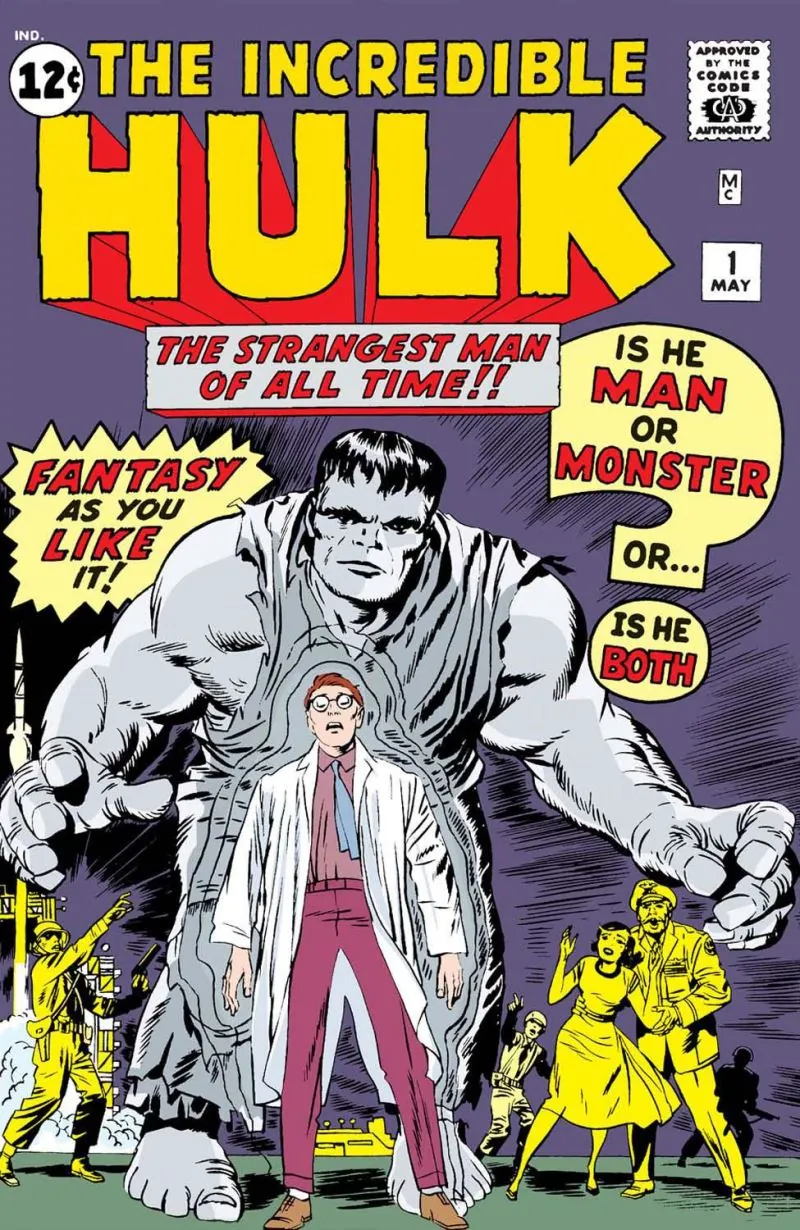
The Incredible Hulk #1, cover-dated May 1962, by Stan Lee and Jack Kirby.
So the green giant did not fall out of the sky. He was assembled out of old books, and the men doing the assembling were two New York comic creators cranking out stories at a pace that would eventually trip one of them up. That part of the tale belongs a little further along. For now, hold onto the image: a rampaging monster who is really a nineteenth-century novel in a torn shirt.
The Gamma Bomb, the Trench, and the Boy Named Rick Jones
Picture a desert test range. Dr. Bruce Banner, a mild-mannered government scientist, is running a gamma bomb test for the army when a teenager wanders onto the blast site. That kid is Rick Jones. Banner does the only thing he can: he shoves the boy into a trench and takes the full force of the detonation himself.
By every law of physics and biology, that should be the end of him. A dose of lethal gamma radiation at point-blank range doesn't leave a man standing. It melts him. Instead, something stranger happens. The energy doesn't destroy Banner; it rewrites him. The anger that had always simmered quietly under his calm surface suddenly has a body of its own, and the Hulk is born.
That is the hinge of the whole Hulk origin story, and it's worth sitting with for a second. Banner isn't a hero who chose power. He's a man who chose a child's life over his own and got punished for it with a curse. The sacrifice is real, and so is the tragedy.
A scientist saves a boy, absorbs a killing dose of radiation, and survives as something he never asked to become. The rage doesn't come from nowhere. It comes from him.
That's why the character lands the way it does. He's victimized by his own technology, a brilliant man undone by the very experiment he built to serve his country. The monster and the maker are the same person, and no amount of lab work can separate them. It's one of the most tragic figures in comic book history, and it all starts with a boy in a trench and a scientist who wouldn't let him die.
Why "Hulk"? An Old Word for Big, Crude, and Abandoned
Say the name out loud. It lands like a dropped anvil, doesn't it? "Hulk" is not a smooth word, not a name that rolls off the tongue with any elegance. And that was the whole point. The word itself is old English, used for huge, crude, bulky beings, and it also described the abandoned hulls of large ships left to rot. Stan Lee picked it on purpose, so that readers would feel the character's size and roughness right there in the name, before they ever turned a page.
Think about what it does to your mouth. The hard consonant at the front, the dull thud at the end. It sounds like something heavy hitting the ground. That bluntness is the character in miniature: no poetry, no cleverness, just mass and force. Lee wanted the sound of the word to carry the weight of the thing it named.
It is a small, deliberate choice buried inside a much bigger creation. The man who dreamed up the Hulk was already pulling from heavy literary material, and a name that thuds like a fist fits that inheritance perfectly.
So the next time you say "Hulk," you are saying a word older than the comic, a word for something enormous and unpolished and left behind. Lee just gave it a heartbeat.
Gray, Not Green: The Printing Error That Made an Icon
When The Incredible Hulk #1 hit stands in May 1962, its star was not green. Stan Lee wanted him gray, and the reason was deliberate: a gray monster belongs to no ethnic group. The blank, colorless skin was meant to make him universal, a creature anyone could read as an outsider.
Then the presses got involved. The printing technology of that era could not lay down gray tones with any consistency. Page to page, panel to panel, every shade of gray came out different, so the same character looked like a different character depending on where you opened the book. Marvel had a color problem on its hands, and it had nothing to do with art.
The fix was pure pragmatism. Marvel switched him to green to solve the technical problem. Green printed clean and stayed stable, so the color stuck. And that is the strange part of this Hulk origin story: the single most recognizable thing about the character, the reason kids reach for a green crayon when they draw him, was never a design choice at all. It was a workaround for a 1960s printing limitation. Nobody at the time could have guessed that a color chosen to dodge a mechanical headache would become the character's defining feature.
Bob Banner, Robert Bruce Banner, and a Very Busy Stan Lee
For a stretch of early issues, Bruce Banner had the wrong name. Stan Lee, already buried under a pile of Marvel characters he was writing and editing at once, slipped and typed "Bob Banner" instead of Robert Bruce Banner. It was a workload mistake, plain and simple.
Readers were not about to let it slide. Letters started pouring into the Marvel office, enough of them that the error was impossible to ignore. Lee did the graceful thing: he owned it. The official name was locked in as the three-part Robert Bruce Banner, and that is how the scientist at the heart of the Hulk origin story has been known ever since.
There is a small irony tucked into the slip. This was a character whose whole identity turns on a divided self, the careful doctor and the raging thing he cannot control, and the paperwork around him briefly had two first names fighting for the same body.
A mailbag full of complaints, one honest admission, and a canon name that stuck. That is how a typo becomes history.
The Hulk Wasn't Always a Savage: He Used to Talk
Picture the Hulk in your head and you probably hear a roar, not a sentence. But the green giant who debuted in The Incredible Hulk #1 in May 1962 was a very different creature: in those first issues he spoke in full sentences, thought things through, and even schemed. The childlike savage came later.
Flip through The Incredible Hulk #1 through #6, all from 1962, and the difference jumps off the page. This Hulk was more talkative, more intelligent, and more calculating than the figure most people know today. He didn't just smash first and grunt later. He planned.
Part of that makes sense when you remember who was under the skin. Bruce Banner was a scientist, and the earliest stories carried that brain into the transformation. The monster still had a mind in there, and the writers let it show.
Over time, that changed. Writers began pushing the wild, primitive side forward, tilting the character closer to the split Stan Lee had drawn on from the start: the good doctor and the raging thing inside him, the same tug of war at the heart of Robert Louis Stevenson's Dr. Jekyll and Mr. Hyde. Bit by bit, the cunning talker gave way to the furious green force of nature.
So the Hulk you meet in the movies, the one who answers a god with a single word and a devastating slam, is the end product of a long rewrite. The Hulk origin story isn't just about a gamma bomb. It's also about a personality that got stripped down, issue by issue, until only the anger was left standing.
Frequently asked questions
Who created the Hulk, and when did he first appear?
Stan Lee and Jack Kirby created the Hulk, and he debuted in The Incredible Hulk #1 from Marvel Comics, cover-dated May 1962. That single issue introduced the scientist Bruce Banner, the gamma blast that changed him, and the gray-skinned giant who would become one of pop culture's most recognizable figures.
Why was the Hulk gray in his first appearance instead of green?
Stan Lee wanted a color that represented no particular group, so he chose gray. The printing technology of the era could not hold gray tones consistently, and the shading shifted from page to page. Marvel switched the character to green to solve the technical problem, and that green eventually became his signature look.
What inspired Stan Lee to create the Hulk?
Lee drew on classic literature. Mary Shelley's Frankenstein gave him the idea of a monstrous figure shunned by society but longing to be understood. Robert Louis Stevenson's Dr. Jekyll and Mr. Hyde supplied the inner battle between good and evil, the split at the heart of Banner's transformation.
How did Bruce Banner become the Hulk?
During a gamma bomb test for the army, Banner saw a young boy, Rick Jones, caught in the blast zone. He pushed the boy into a trench and took the deadly radiation himself. Instead of killing him, the energy transformed his body, and the Hulk was born from his rage.
Why is the character named Robert Bruce Banner?
Lee, juggling dozens of characters at Marvel, slipped and wrote "Bob Banner" in early issues. Readers noticed and flooded the office with letters. Lee owned the mistake and settled on the official three-part name: Robert Bruce Banner, with "Bruce" as the name everyone uses.
Was the Hulk a hero or a villain at first?
Neither, exactly. In the earliest stories the Hulk spoke in full sentences, showed cunning, and calculated his moves, a far cry from the childlike savage readers know today. Over time writers pushed his wild, primitive side to the surface, turning him into the raging green figure of later decades. Editorial note: Details that remain unconfirmed, including the exact cause of the original color change, are presented here as reported accounts rather than settled fact.
Got a take on this? Add your voice to the conversation below →
No comments yet. Be the first.