Matrix Character Names: Hidden Meanings of Morpheus, Neo, Trinity
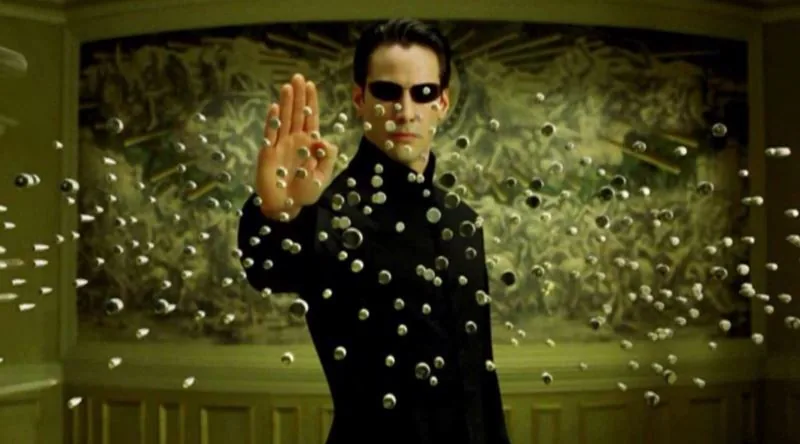
In 1999, The Wachowskis released The Matrix, and the Matrix character names meaning runs far deeper than sci-fi cool; Morpheus, Neo, and Trinity each pull from Greek mythology, the Bible, and philosophy to tell the story of a digital prison and the people fighting to escape it. These names are not random labels, they are the keys to understanding the entire film's message about reality, faith, and self-discovery. Once you see what each name means, you will never watch the movie the same way again.
The Matrix uses character names as deliberate clues. Neo means "new" and is an anagram for "One," Trinity reflects the Christian concept of three-in-one, and Morpheus is the Greek god of dreams. Each name connects directly to the character's role in the story, revealing themes of prophecy, reality, and choice that define the film's philosophy.
- Neo's name is an anagram for "One," referencing his role as the prophesied savior of humanity.
- Morpheus takes his name from the Greek god of dreams, fitting for a man who guides others out of an illusory world.
- Trinity's name evokes the Christian Holy Trinity, symbolizing the union of mind, body, and spirit needed to defeat the machines.
- The ship Nebuchadnezzar is named after the biblical king who had prophetic dreams, mirroring Morpheus's mission.
- Cypher's name is a play on "decipher" but also sounds like "Lucifer," the fallen angel, reflecting his betrayal of the crew.
The Matrix: A Name Is Never Just a Name
When the Wachowskis launched The Matrix in 1999, they packed more meaning into character names than most films fit into an entire script. Morpheus, Neo, Trinity, Zion. These were never random choices. They are deliberate clues, little breadcrumbs leading straight to the movie's deepest questions about reality, free will, and destiny.
Think about it. Every time a character opens their mouth, their name is already telling you something. The Greek god of dreams shows up to wake people from a digital nightmare. A word meaning "new" turns out to be an anagram for "one." A Christian theological term becomes the name of the woman who completes the chosen one. The Matrix character names meaning runs deeper than you might expect.
The Wachowskis did not just pick cool-sounding names from a hat. They reached into mythology, scripture, and history, pulling out references that reward careful attention. The series asks you to question what is real. The names ask you to question what you are really watching.
Take Morpheus, for instance. In Greek mythology, he is the god who shapes dreams and delivers messages through them. In the film, he is the one who pulls Neo out of the machine-made dream world. He hands out red pills and blue pills. He delivers the message that reality is not what it seems.
This is not coincidence. This is design. The names are a map, and once you start reading them, the whole story opens up in a new way. A name is never just a name in this universe.
Morpheus: The God of Dreams Who Wakes Us Up
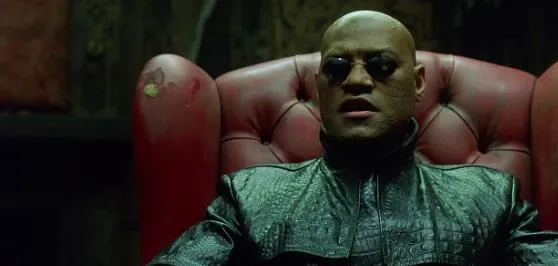
Long before Laurence Fishburne ever slipped into those sunglasses and that flowing black coat, the name Morpheus belonged to someone else entirely. In Greek mythology, Morpheus was the god of dreams, the one who shaped the human figures that appeared in sleeping minds and carried messages through the night. That ancient deity is the exact source for the character's name, and the connection runs far deeper than a simple tribute.
Morpheus in The Matrix, which launched the series in 1999, does something remarkable with that mythological inheritance. The Matrix itself is essentially a dream world, a simulated reality that machines have constructed to keep humanity docile while their bodies are harvested for energy. People live their entire lives inside this dream, never knowing it is one. Morpheus is the one who wakes them up. He delivers the message that the dream is a cage, and he does it the way his namesake once did: through visions, through revelation, through shattering the comfortable illusion.
His most famous moment captures this perfectly. When he offers Neo the red pill and the blue pill, he is doing what the Greek god of dreams always did, forcing a confrontation with truth. The blue pill means staying asleep, remaining in the comfortable dream where nothing is real but everything feels safe. The red pill means waking up, seeing the world as it actually is, and accepting the terrifying responsibility that comes with that knowledge. The choice is awakening and liberation wrapped into one small capsule, and Morpheus stands there holding both options in his hands.
In this way, Morpheus acts as a sort of modern prophet, a messenger figure who guides Neo toward self-discovery. His words are packed with metaphors of waking and freedom, because that is his entire purpose. He is the dream breaker, the one who refuses to let people sleep through their own lives. The name, drawn from a god who shaped dreams, belongs to a man whose entire mission is to end the greatest dream of all.
Neo: The New One, Born From Doubt
Before he was The One, he was Thomas Anderson, a name that quietly spelled out his entire struggle. The Wachowskis, who launched this saga in 1999, packed that ordinary alias with meaning: Thomas points straight to Doubting Thomas, the apostle who refused to believe in the resurrection until he could touch the wounds himself. Anderson, according to some readings, carries a heavier weight, supposedly rooted in Greek and meaning "son of man." That interpretation gets murky, though. The surname is actually a patronymic, tracing back to "son of Andrew," so treat the grander claim with a grain of salt. What matters is the arc: a man defined by skepticism sheds that identity and becomes someone else entirely.
That someone else is Neo, and the name does double duty. It pulls from the Greek "neos," meaning new, which fits a character reborn into a brutal truth. But shuffle the letters and you get "one," the title he grows into across the trilogy. The shift from Thomas to Neo is the whole story in miniature: doubt gives way to certainty, the ordinary man becomes the chosen one. He doesn't just accept the role, he has to earn it, and the name change marks the moment he starts believing he can. For anyone digging into Matrix character names meaning, this is the clearest example of how the filmmakers used naming as a roadmap for the entire journey.
Trinity: Faith, Love, and the Holy Trio
Trinity's name comes straight from the Christian Holy Trinity: the Father, the Son, and the Holy Spirit. In the 1999 film The Matrix, she embodies that same idea of unity, completion, and pure faith, especially when it comes to Neo. She is the force that holds the trio of Morpheus, the Oracle, and Neo together, and her belief in him is so absolute that it literally brings him back from the dead.
That resurrection scene is where her name really earns its weight. Agent Smith has just killed Neo, and the crew believes it's over. But Trinity kneels beside him and speaks with total conviction, telling him that the Oracle once said she would fall in love with a man, and that man was him. She declares he cannot die because she loves him, and with those words, Neo's heart starts beating again. It's not a hack or a trick. It's faith, pure and simple, and the film presents it as the most powerful force in the entire simulation.
Beyond that single moment, Trinity works as what mythologists would call the "wise woman" archetype. Morpheus provides the leadership and the grand vision, and the Oracle offers cryptic prophecies that shape the journey. Trinity sits between them, grounding Neo in something more human. She doesn't just guide him physically through the Matrix's dangers; she supports him spiritually, acting as the balance that keeps the mission from becoming cold ideology. While Morpheus preaches destiny and the Oracle hints at choices, Trinity simply loves, and that love becomes the quiet engine of the whole story.
Nebuchadnezzar: The Ship That Sails Through Dreams
The hovercraft that carries Morpheus and his crew through the ruined tunnels of the real world is named after Nebuchadnezzar II, the Babylonian king. That historical figure is famous in the Book of Daniel for having dreams he could not understand, dreams that the prophet Daniel interpreted as messages about the future. The ship's name is no accident, and it ties directly into the film's central theme of waking people from the dream world they mistake for reality.
In the Bible, Nebuchadnezzar's dreams were cryptic visions that needed a wise interpreter to decode them. Daniel stepped into that role, revealing what the king could not see on his own. The ship in The Matrix works the same way. It is the vessel that carries the crew between the false dream world of the Matrix and the harsh truth of the real world. Morpheus and his team act like modern-day Daniels, showing people the nature of their captivity and offering them a way out. The ship is the literal bridge between those two realities, and its name reminds us that the Matrix itself is just a dream, one that can be interpreted, challenged, and ultimately escaped.
The Oracle: Prophecy With a Twist of Free Will
The Oracle, that cookie-baking grandmother of the Matrix universe, is a direct nod to the ancient Greek oracles, most famously the Oracle of Delphi. In ancient Greece, these were the wise figures who spoke prophecies about what was to come. But here's the clever part: the Oracle's predictions in the film are never straightforward. They always leave room for the person hearing them to make their own choice.
When Neo finally meets her, she doesn't hand him a clear destiny. Instead, she tells him something far more unsettling: "You didn't come here to make the choice. You've already made it. You're here to try to understand why you made it." That single line captures the entire tension at the heart of the series. Is Neo the One because fate decided so, or because he chose to believe it? The Oracle's genius is that she makes the question impossible to answer cleanly.
Her prophecies work like gentle nudges rather than iron commands. She told Trinity she would fall in love with the One, and that belief gave Trinity the strength to resurrect Neo with a kiss. The Oracle didn't force that moment. She simply planted a seed and let human will do the rest. That's the real magic of her character, and it's why the Matrix character names meaning runs so deep. She embodies the ancient Greek understanding that a prophecy is not a cage, but a mirror held up to the person who hears it.
Cypher: The Betrayer Who Chooses the Comfortable Lie
Cypher's name is a double-edged confession. In English, "cipher" means both a secret code and a zero, a nothing, a blank space. That second meaning is the one that defines him. He looks at himself in the real world and sees only emptiness, a man who amounts to nothing, and he would rather live a beautiful lie than endure an ugly truth.
The choice he makes cuts to the heart of what makes him such a chilling figure. He has seen the real world, the scorched earth, the metal sky, the bland protein goop that passes for food. He has felt the cold and the hunger and the fear. And he decides he wants none of it. The Matrix, for all its falseness, offers him steak that tastes like steak, wine that tastes like wine, a life of comfort and ease. He trades his crewmates for that comfort, selling out Morpheus to Agent Smith in exchange for a return to the simulation.
His betrayal carries a weight that feels almost biblical, because it is. The writers modeled him on Judas Iscariot, the disciple who handed Jesus over to the authorities for thirty pieces of silver. Cypher's price is different, but the shape of the sin is identical. He sits across from Agent Smith, savoring a virtual steak, and makes his deal. He knows what he is doing. He knows who he is betraying. And he does it anyway, because the lie tastes better than the truth.
Agent Smith: The Enforcer With a Smith's Craft
When you hear the surname Smith, you might think of a common last name, but in The Matrix, it carries the weight of an old English trade. The name comes from "smite," meaning to strike, and it belonged to blacksmiths, armorers, and metalworkers who shaped raw materials into tools of protection and war. That meaning fits Agent Smith perfectly: he is the specialist who maintains the system, striking down anything that threatens the simulation.
In the 1999 film, Smith operates as a program within the Matrix's security architecture. He is not a rogue virus or a random glitch. He is a skilled worker doing his job, hunting down rebels who try to break the rules of the simulated world. His precision feels mechanical, his patience endless, and his methods relentless. He is the armorer of the system, forging order out of chaos, one interrogation at a time.
You might have noticed that there are always three agents on screen. That number is not an accident. In programming, decision structures often rely on a three-way branch, something like an "if-else-if" statement, which evaluates conditions in sequence. The three agents could be a visual nod to that logic, a way of showing that the system thinks in controlled, predictable patterns.
Some fans have also drawn a parallel between the trio and the Moirai, the three Fates from Greek mythology who spin, measure, and cut the thread of life. According to that reading, the agents decide who lives and who dies inside the Matrix, acting as arbiters of destiny. But that connection is speculative. There is no explicit confirmation from the filmmakers that the agents were meant to mirror the Fates, so it remains an interesting theory rather than a verified detail.
What is certain is that Smith, like his surname suggests, is a craftsman of enforcement. He does not improvise. He follows protocol, adapts when necessary, and never stops until the threat is neutralized. That is what makes him so unsettling. He is not a villain with a grand plan. He is a function, a tool, doing exactly what he was built to do.
Zion: The Last Sanctuary of the Free
Zion is the last human city in the Matrix universe, and its name carries a weight that goes far beyond science fiction. The word comes straight from the Jewish-Christian tradition, where Zion refers to a sacred place intimately tied to Jerusalem. In the Old Testament, Zion appears as the promised holy ground for God's people, a symbol of refuge and divine protection. The Wachowskis, who launched this entire saga in 1999, reached back thousands of years to find a name that would signal hope.
When you watch the humans huddled in that underground cavern, the biblical resonance is hard to miss. It sits deep beneath the Earth's surface, a literal stronghold carved out of rock, sheltering the last free-born humans in existence. The contrast could not be sharper: above ground, the machine world runs its cold, orderly simulation, while below, humanity scrapes together warmth, music, celebration, and resistance.
What makes this naming so fitting is how it frames the entire conflict. The machines control everything on the surface, but they cannot reach Zion. It stands as the one place where the Matrix's influence does not extend, where people can speak freely, love openly, and plan their rebellion without fear of deletion. The filmmakers took a name hallowed by centuries of religious meaning and planted it at the heart of a story about technological enslavement. That choice tells you everything about how they saw this war: not as a battle for territory or resources, but as a fight for something sacred, for the very soul of what it means to be human.
The Merovingian: A Devil in the Details
The Merovingian enters the story in The Matrix Reloaded and The Matrix Revolutions. He runs a nightclub where exiled programs go to hide from deletion. With his expensive suits, his French accent, and his habit of cursing like poetry, he steals every scene he touches.
His name carries serious historical weight. The Merovingian dynasty ruled the Franks, the people who would become France, from the 5th to the 8th centuries. That alone would be a fine reference for a powerful character. But the Wachowskis were reaching for something deeper. Popular esoteric texts claim the Merovingian bloodline descended directly from Jesus Christ and Mary Magdalene. That claim has been debated endlessly, but the filmmakers clearly leaned into it. The Merovingian in the films acts like a man who believes he carries divine blood. He treats everyone else as lesser beings.
Watch him work and you will see the Faust pattern immediately. In the old German legend, Faust makes a deal with the devil Mephistopheles, trading his soul for knowledge and power. The Merovingian runs the same kind of operation. He makes deals, offers promises, and collects favors. When Neo and his crew come looking for the Keymaker, the Merovingian does not simply help them. He demands something in return. He is a tempter, a negotiator, and a manipulator all at once.
His own words reveal the philosophy. He explains that he manages a process, that he does nothing without a cause, that reason and consequence are the only things keeping him alive. That is the logic of a devil who has been around for centuries. He does not act out of malice or kindness. He acts out of calculation. Every favor is a debt. Every kindness has a price.
What makes him so memorable is the contrast. He is the most openly theatrical character in a franchise full of solemn prophets and grim rebels. He is ridiculous and terrifying in equal measure. That combination, a historical name, a mystical bloodline, and a Faustian personality, makes him one of the richest Matrix character names meaning layers in the whole series.
What Do These Names Really Tell Us?
When you step back and look at the whole cast of The Matrix, something remarkable emerges: every single name is a carefully chosen key that unlocks a deeper layer of the story. Morpheus, Neo, Trinity, Zion, even the ship they travel on, each one pulls from mythology, theology, and real history to build a world that rewards close attention. The series that began in 1999 is not just a sci-fi action franchise. It is a philosophical journey dressed up in leather coats and bullet time, and the names are the first clue that the Wachowskis were aiming for something far more ambitious than a typical blockbuster.
What ties all of these names together is a single thread: the questioning of reality itself. Morpheus, named for the Greek god of dreams who shapes and delivers messages, wakes people from the illusion of the Matrix. Neo, from the Greek "neos" meaning new, is also an anagram of "one," marking him as the chosen figure. Trinity brings the Christian concept of Father, Son, and Holy Spirit into the story, embodying faith and completion. The ship Nebuchadnezzar references the Babylonian king whose dreams were interpreted by Daniel in the Bible, a fitting name for a vessel that carries people between worlds. Even Zion, the last human city, borrows its name from the sacred hill in Jerusalem, a place of promise and deliverance in Jewish-Christian tradition.
These names work together like a web. They draw from Greek mythology, biblical stories, and European history to create a layered narrative about free will, destiny, and the courage to see through falsehood. The Matrix asks its audience to look at the world with fresh eyes, and the names embedded throughout the films are an invitation to do exactly that. They remind us that the story is not simply about fighting machines. It is about awakening, about choosing truth over comfort, and about the human capacity to question everything we have been told.


Frequently asked questions
What does Morpheus's name mean in The Matrix?
Morpheus takes his name from the Greek god of dreams, the figure in mythology who shaped the images sleeping people saw and delivered messages through those visions. In the film series that began in 1999, Morpheus serves the same function. He wakes people from the dreamlike simulation the machines built, guiding them toward the real world with his words and his famous red pill, blue pill choice.
Where does Neo's name come from and what does it mean?
Neo comes from the Greek word "neos," which means "new," and his name is also an anagram of "one," pointing directly to his role as the prophesied chosen one. Before his transformation, he goes by Thomas Anderson in the Matrix. Thomas references Doubting Thomas, the apostle who needed proof before believing, which mirrors Neo's initial skepticism about his own destiny.
What does Trinity's name symbolize in The Matrix?
Trinity is named after the Christian concept of the Holy Trinity: the Father, the Son, and the Holy Spirit as one unified whole. Her name carries ideas of unity, completion, and pure faith. That faith shows most clearly when she refuses to accept Neo's death, declaring that the Oracle told her she would fall in love with a specific man, and that man could not die.
Why is the ship called the Nebuchadnezzar?
The Nebuchadnezzar, Morpheus's ship, takes its name from the Babylonian king Nebuchadnezzar II, a ruler known in the Bible for having dreams he could not interpret. The prophet Daniel decoded those dreams, which symbolized the future. In the film, the ship carries its crew toward the truth about reality, much like the king's dreams carried messages about what was to come.
What inspired the Oracle character in The Matrix?
The Oracle draws inspiration from the oracles of ancient Greece, the wise figures who made prophecies about the future. Unlike straightforward fortune tellers, the Greek oracles spoke in riddles, and the Matrix's Oracle follows that tradition. Her predictions leave room for free will, telling Neo that he did not come to make a choice but to understand the choice he already made.
What does Cypher's name mean in The Matrix?
Cypher's name means "cipher" or "zero" in English, and both meanings fit him perfectly. A cipher is a code, something hidden, and zero represents nothingness. He sees himself as having no originality in the real world, trapped in a void he wants to escape. His betrayal of the crew also parallels Judas Iscariot's betrayal of Jesus, trading loyalty for personal comfort.
Why are there three agents in The Matrix?
The three agents serve as the Matrix's security system, and their number likely reflects the program's own logic, where the number three appears in decision structures like if-else-if chains. Some viewers compare them to the three Moirai, the Fates of Greek mythology who controlled destiny. That connection is speculative, with no explicit confirmation from the filmmakers that it was intended.
What does Zion mean in The Matrix?
Zion is the last free human city in the series, and its name comes from the Jewish-Christian concept of Zion, a sacred place associated with Jerusalem. In the Bible, Zion represents the promised holy land for God's people. The film's Zion serves the same symbolic role, a sanctuary where humans live free from machine control, a fortress and a promised future all in one. Editorial note: Any facts which remain unconfirmed are presented as such, with interpretations clearly separated from verified details about the film's production and release.
Got a take on this? Add your voice to the conversation below →
No comments yet. Be the first.