Inter-universal Teichmüller Theory: Math's Alien Language
Inter-universal Teichmüller Theory is a sprawling mathematical framework that Shinichi Mochizuki introduced in 2012 in Kyoto, Japan, as the engine of a claimed proof of the abc conjecture. The idea landed like a message from another planet: a proof running past 2,000 pages, written in a private vocabulary that Mochizuki largely built from scratch. More than a decade later, most of the world's number theorists still cannot read it. A small circle says the proof holds, a larger group says the central step has never been made clear, and the disagreement has hardened into one of the strangest standoffs in modern mathematics.
Inter-universal Teichmüller Theory is a mathematical framework Shinichi Mochizuki released in 2012 in Kyoto, Japan, which he says proves the abc conjecture. The proof runs past 2,000 pages in a self-built vocabulary, and reportedly only a small number of mathematicians claim to understand even parts of it.
- Shinichi Mochizuki of Kyoto University released his Inter-universal Teichmüller Theory papers in August 2012, claiming a proof of the abc conjecture.
- The proof runs past 2,000 pages and introduces terminology that appears nowhere else in mathematics.
- Some researchers have examined parts of the theory and expressed partial support for Mochizuki's claims.
- The theory has still not passed comprehensive peer review, and the mathematical community has not reached consensus.
- The abc conjecture remains widely treated as unproven, and the theory's status is still contested.
The Message Nobody Can Read
Picture a radio telescope picking up a signal from deep space. The pattern is unmistakably deliberate. Something intelligent sent it. And nobody on Earth can read a word of it.
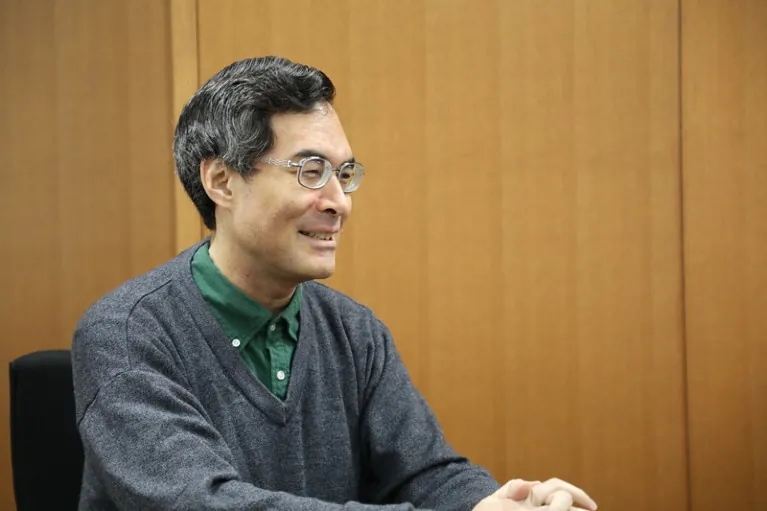
That is roughly how most mathematicians describe Inter-universal Teichmüller Theory, or IUT. Experts have called it an "alien language," and the label stuck because it fits so well: the theory is clearly built with purpose, yet the vast majority of people trained to read mathematics cannot decode it. Shinichi Mochizuki, a Japanese mathematician born on March 29, 1969, and a professor at Kyoto University's Research Institute for Mathematical Sciences, spent years building this language before releasing it to the world. In August 2012, he published IUT as four preprints. The proof runs past 2,000 pages, and Mochizuki asserts it solves the abc conjecture, one of number theory's most stubborn open problems.
More than a decade later, the message still sits there, mostly untranslated. Reportedly, only around 20 mathematicians worldwide claim to understand even parts of it, though that number circulates as an informal estimate rather than a verified count. Think about the scale of that. A proof this long, this technical, this carefully constructed, and the audience capable of checking it fits in a single lecture hall.
Mochizuki did not simply prove a theorem. He invented a vocabulary to do it. IUT introduces concepts and symbols that appear nowhere else in mathematics, which is precisely why reading it feels less like studying a paper and more like deciphering a transmission from another world. The theory has baffled the field for over a decade, and the bafflement is not a sign of laziness or bad faith. It is what happens when one mind builds an entire private universe of reasoning and hands the key to everyone at once.
So the question hanging over all of it is simple. Is this a genuine breakthrough that the rest of mathematics has not yet caught up to? Or is it a message no one will ever truly read? Either way, the transmission arrived in 2012, and it is still waiting.
What Is Inter-universal Teichmüller Theory, and Who Built It?
Inter-universal Teichmüller Theory is a body of mathematics built by the Japanese mathematician Shinichi Mochizuki, who was born on March 29, 1969, and works as a professor at the Research Institute for Mathematical Sciences (RIMS) at Kyoto University. He developed the theory in the early 2000s and released it to the world as four preprints in 2012. The proof runs to more than 2,000 pages, and in it Mochizuki claims to have solved the abc conjecture, one of the most stubborn open problems in number theory.
One point worth clearing up right away: Mochizuki is a mathematician. His research sits in number theory and arithmetic geometry, including anabelian geometry, and that is the ground from which Inter-universal Teichmüller Theory grew.
What he built does not look like the mathematics most people meet in school. IUT introduces concepts and symbols that had no prior home in the field. Mochizuki essentially assembled his own mathematical language, with terms like "inter-universal," "Hodge theaters" and "theta links" doing work that ordinary notation could not. Mathematicians who have tried to read it describe the experience in blunt terms. According to media coverage, experts have called it an "alien language," and the comparison is not meant as a joke. As the story goes, only about 20 mathematicians worldwide claim even partial understanding of the theory, though that figure is an informal estimate that has circulated in journalism rather than a rigorously verified count.
The scale alone explains some of the reaction. A proof of over 2,000 pages, written in a private vocabulary, arriving in 2012 from a single author, is not something the mathematical community can absorb in an afternoon. And the IUT papers have not yet passed comprehensive peer review or earned consensus verification, which leaves the claim about the abc conjecture in an unusual position: asserted with full confidence by its author, still unsettled by the wider field.
The abc Conjecture, Explained Without the Jargon
Strip away the alien vocabulary and the abc conjecture starts with something a schoolkid could write on a napkin: take two natural numbers, a and b, add them, and call the result c. That is the whole equation, a + b = c. The reason this tiny statement carries so much weight is what it quietly asks you to notice about the numbers themselves.
In number theory, prime factors sit at the center of almost everything. A prime factor is a prime number that divides another number cleanly, and every natural number can be rewritten as a product of its own prime factors. Fifteen is 3 × 5. Three hundred twenty-four is 2² × 3⁴. The account this story comes from calls numbers like 324 "rich," because some of their primes show up more than once. Worth flagging: "rich" is that account's informal shorthand, not a standard term. Mathematicians usually reach for a different tool, the radical, which multiplies together only the distinct primes of a number and throws away the repeats.
Here is where the conjecture earns its reputation. Numbers stuffed with repeated prime factors are rare to begin with, and two such numbers adding up to a third one of the same kind is rarer still. The abc conjecture examines exactly that unusual situation. It combines the addition side of arithmetic, where a + b = c, with the multiplication side, where prime factorizations live, inside a single equation. That marriage of two normally separate worlds is the source of its power.
Which brings us to Fermat's Last Theorem, the statement that aⁿ + bⁿ = cⁿ has no solutions in positive whole numbers once n is greater than 2. It took Andrew Wiles more than three hundred years of accumulated mathematics and a famously long, technical proof to settle it. If the abc conjecture is true, Fermat's Last Theorem follows far more simply, as a short consequence rather than a monumental campaign. Pair the conjecture with elliptic curves, the smooth curves studied in Diophantine geometry, and it turns into one of the most potent tools in the field.
That is the prize sitting behind Inter-universal Teichmüller Theory. Not a curiosity, but a single key that could unlock a whole ring of locked doors at once.
The Engineer Who Walked Back Into Pure Mathematics
In 2025, a preprint appeared on arXiv with the identifier arXiv:2503.14510, credited to Zhou Zhongpeng and titled around Inter-universal Teichmüller Theory and new Diophantine results over the rational numbers. Reports describe Zhou as a Chinese software engineer, and as the story goes, he was 28 years old at the time. His exact age cannot be reliably confirmed.
What makes the paper interesting is not a university chair or a research institute. Reports suggest Zhou left academia before completing his degree and went to work as a software engineer, though the details of that path are not firmly established. There is also no reliable information confirming graph theory as his doctoral focus. What the accounts do agree on is that he reportedly never let go of pure mathematics, and that Inter-universal Teichmüller Theory in particular pulled him back in.
A paper attributed to him on IUT-related ideas has been discussed online, but its status and content are not well-established. One claim that has circulated alongside the preprint is that, if correct, Zhou's work proves a large part of Fermat's Last Theorem using IUT principles. That claim is not accepted. There is no verified result showing any such proof, and it should be read as a contested assertion rather than a settled outcome.
So the turn here is not a breakthrough announcement. It is the image of an engineer outside the academic system, working alone on a theory that has resisted a decade of collective effort, and producing something the mathematical community has not yet sorted into true or false.
Why Inter-universal Teichmüller Theory Still Hasn't Passed Peer Review
More than a decade after Shinichi Mochizuki released his four preprints in August 2012, Inter-universal Teichmüller Theory has still not cleared comprehensive peer review. The mathematical community has not reached consensus on whether the claimed proof of the abc conjecture holds. The theory remains, in the blunt phrase used by mathematicians in media coverage, an "alien language."
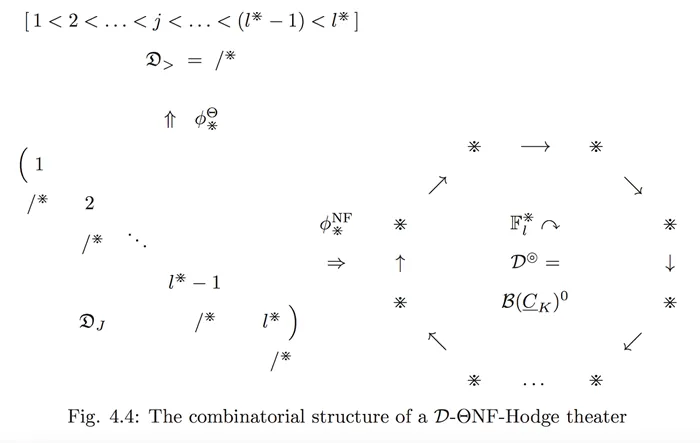
Part of the problem is that Mochizuki did not simply prove a theorem. He built a vocabulary. Terms like "inter-universal," "Hodge theaters," and "theta links" appear nowhere else in number theory, because he invented them for this work. A Hodge theater is an abstract structure that connects different mathematical worlds, worlds that can be linked to each other even though they are not the same. One of the central goals of the theory is to move information from one of those worlds into another without distorting it along the way.
That machinery is what makes reading the papers so hard. Reportedly, only a small circle of mathematicians, a figure of roughly twenty has circulated in journalism, claims even partial understanding of the theory, though that figure is an informal estimate rather than a verified count. A few researchers have examined portions of it and expressed partial support for Mochizuki's claims, but how deep that support runs, and how independent it is from Mochizuki's own group, is disputed. Even sympathetic commentators concede that some parts of Inter-universal Teichmüller Theory remain extremely complex.
So what would have to happen before any of this matters outside a narrow circle? Other researchers would have to understand it. Not skim it, not take it on trust, but actually work through the 2,000-plus pages and rebuild the argument in their own hands. Given the theory's complexity and the slow pace of verification, full understanding would likely take years.
Until then, the more dramatic claims stay firmly in the realm of speculation. Talk of applications in cryptography, in quantum computing, or in a deeper grasp of space-time is not established anywhere in the literature. Those possibilities are interesting to imagine, but they carry no weight until the underlying theory is understood and verified by people other than its author.
Frequently asked questions
What is Inter-universal Teichmüller Theory in simple terms?
Inter-universal Teichmüller Theory is a body of mathematics that Shinichi Mochizuki built over years before releasing it as four preprints in August 2012. The proof runs well past 2,000 pages, and it is written almost entirely in a formalism Mochizuki invented himself, with terms like "inter-universal," "Hodge theaters" and "theta links" that appear nowhere else in the field.
Who is Shinichi Mochizuki and what did he claim to prove?
Shinichi Mochizuki, born March 29, 1969, is a Japanese mathematician and professor at the Research Institute for Mathematical Sciences (RIMS) at Kyoto University, known for work in number theory and arithmetic geometry. He claims his Inter-universal Teichmüller Theory proves the abc conjecture, a long-standing problem about the relationship between a number and its prime factors.
Why is IUT called an alien language?
Mathematicians reached for the phrase "alien language" because IUT reads like a message from somewhere else: the symbols, the vocabulary and the logic are all Mochizuki's own. As the story goes, only around 20 mathematicians worldwide claim to understand even parts of it, though that count is an informal estimate rather than a verified figure.
Was the abc conjecture ever verified through peer review?
No. Mochizuki's IUT papers have not passed comprehensive peer review, and the mathematical community has not reached consensus on the claimed proof of the abc conjecture. Largely because so few researchers can work fluently inside the theory well enough to check it, the status of the claim remains unresolved.
Did Zhou Zhongpeng prove Fermat's Last Theorem using IUT?
No accepted result shows that. Reports describe Zhou Zhongpeng as a Chinese software engineer who left academia before finishing his doctorate and kept up an interest in pure mathematics, and a paper attributed to him on IUT-related ideas has circulated online. Contrary to the popular version, that work does not prove a large part of Fermat's Last Theorem.
How does the abc conjecture connect to Fermat's Last Theorem?
The abc conjecture links the additive equation a + b = c to the multiplicative structure of prime factors, and that link reaches Fermat's Last Theorem, which concerns equations of the form aⁿ + bⁿ = cⁿ. If abc is true, Fermat's Last Theorem follows for sufficiently large exponents, giving a far shorter route than the classical proof. Editorial note: Details that remain unconfirmed, including the number of mathematicians who claim command of the theory, are presented as claims rather than settled facts.
Got a take on this? Add your voice to the conversation below →
No comments yet. Be the first.