Ouija Board: The 1890 Patent and Its Strange History
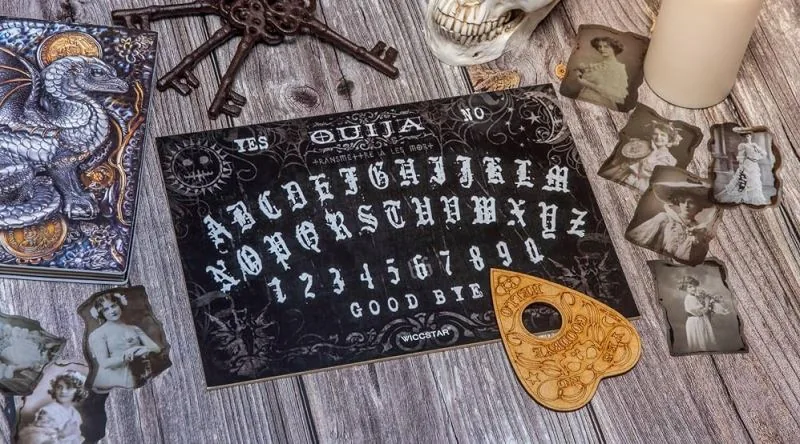
The Ouija board was patented in 1890 by Elijah Bond, with Charles Kennard's Kennard Novelty Company selling it as a parlor amusement. What began as a genteel Victorian pastime became the most feared board game in the world, and the reason has as much to do with Hollywood as with anything that happens on the board itself.
The Ouija board was patented in 1890 by Elijah Bond for Charles Kennard's company, which marketed it as a harmless parlor game. It later became a Parker Brothers product and, after a memorable role in the 1973 film The Exorcist, one of the most feared objects in popular culture.
- The Ouija board received its US patent in 1890, credited to Elijah Bond.
- It was first sold by the Kennard Novelty Company.
- According to company lore, the board's name was supplied by the board itself, with Helen Peters credited as the source of the spelling.
- Parker Brothers acquired the rights in 1966, and Hasbro later took over the brand.
- The 1973 film The Exorcist is widely credited with cementing the board's reputation as something dangerous.
A Board That Answers, and the Name Nobody Can Agree On
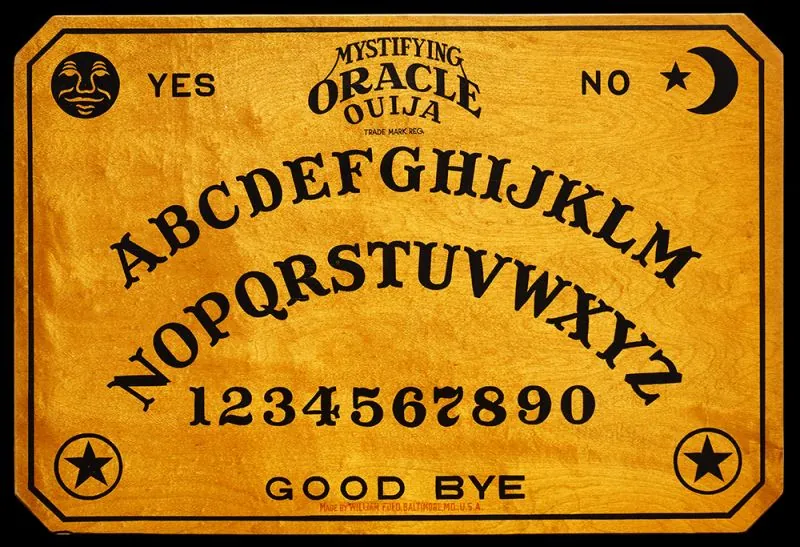
The Ouija board is a flat wooden surface printed with the alphabet, the numbers zero through nine, and the words yes, no, and goodbye. A small heart-shaped pointer called a planchette rests on top. Two people touch it lightly, ask a question out loud, and wait for it to slide toward an answer. That is the whole machine. It has no batteries, no wires, no moving parts beyond the glide of fingertips on a smooth board, and yet it has convinced millions of people that something on the other side is listening.
Today most of us meet it as a game, a Halloween prop, a party trick that ends with someone shrieking and pulling their hands away. But the object itself was born out of grief, seances, and a genuine hunger to reach the dead. Its history runs from patent offices to horror movie marquees, and it starts with a question the board was asked about its own name.
Where the Word "Ouija" Comes From
Ask ten people what Ouija means and several will tell you it is a mashup of the French oui and the German ja, two words that both mean "yes." It is a tidy story, and it is widely repeated. According to the original account, though, it does not hold up.
The documented version is stranger. In 1890, a medium named Helen Peters Nosworthy sat in a seance and put a question to the board itself: what do you want to be called? The board kept spelling out the same letters, over and over, until the name stuck. That name, Ouija, went onto the patent paperwork. Whether you believe a spirit chose it or a room full of people quietly agreed on it, the letters came from the board, not from a French-German dictionary.
The Men Who Took the Credit
Also in 1890, Charles Kennard, founder of the Kennard Novelty Company, claimed he had invented the board together with his business partner Elijah Bond. Bond's name went on the patent. Kennard's company marketed the thing as a magical device for talking to the dead, and the timing could not have been better. The late 1800s were thick with mediums and spiritualist enthusiasm, and a board you could buy in a shop offered the same thrill as a seance without needing a medium in the room.
Popularity climbed fast through the 19th century and into the early 20th. What began as a serious tool for contacting spirits drifted steadily toward parlor entertainment, which is roughly where it sits today.
A board with no moving parts, no power source, and a name it supposedly chose for itself.
That contradiction, a toy that people swear answers back, is exactly what kept the Ouija board alive for more than a century.
Before the Board: Planchette Writing in Ancient China
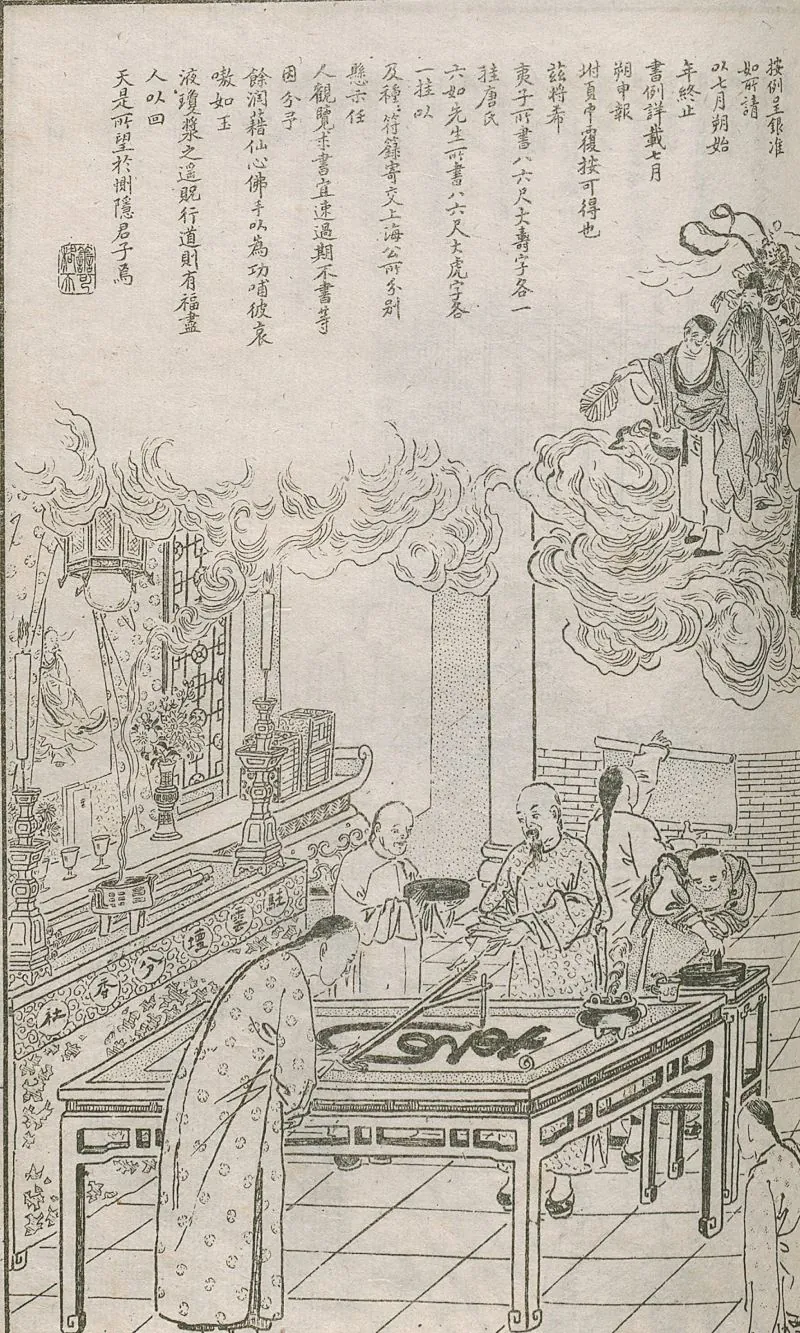
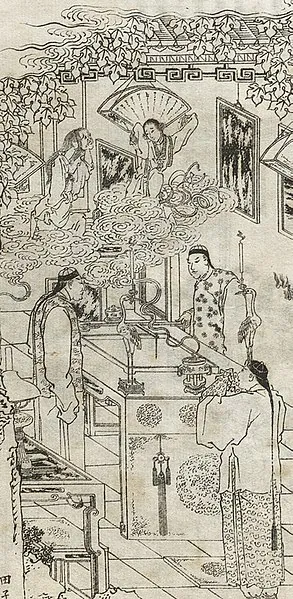
Long before anyone in America trademarked a talking board, people in China were already asking the spirits to write. The earliest methods resembling what we now call the Ouija board show up in Chinese historical records from roughly 420 to 479 AD. That practice had a name: fuji, or planchette writing.
You may see that era labeled as the Song dynasty, and plenty of retellings repeat it. The dates do not cooperate. The years 420 to 479 AD belong to the Liu Song period of the Southern Dynasties, not the Song dynasty that ran from 960 to 1279. Two different eras, centuries apart, one confusingly similar name.
The mechanics were simple and oddly intimate. Two or three people would hold a single stick between them. At its tip sat a pen, a brush, or sometimes just a nail. Together they dragged it across paper, sand, or whatever surface they had on hand, and then they read the marks for meaning. The writing came from the group, not from one hand, which is exactly what made it feel like someone else was guiding the stick.
That is the whole ancestor of the modern board: a shared grip, a marking tool, and a surface. No letters printed in an arc, no heart-shaped pointer, no glow of candlelight required. Just people holding on and waiting to see what their own hands would spell out.
1890: A Patent, a Business Partner, and a Spiritualist Boom
By the 1880s, the dead had become fashionable again. After decades in which planchette writing and table rapping had faded toward the edges of respectable drawing rooms, interest in the supernatural came roaring back, and mediums seemed to sprout on every street corner. Into that crowded, credulous market stepped Charles Kennard, founder of the Kennard Novelty Company, who in 1890 claimed to have invented the board alongside his business partner, Elijah Bond. The patent paperwork filed that same year carried Bond's name, so the claim left a paper trail rather than just a story told at seances.
What Kennard and Bond sold was not a parlor game. They marketed the thing they called "Ouija" as a magical instrument, a device that could put the living in touch with the dead. The timing could hardly have been better. With mediums multiplying and Spiritualist circles drawing curious crowds, the Ouija board's popularity climbed fast through the late 19th century and on into the early 20th, riding a movement that treated contact with the other side as a genuine possibility.
Even the name arrived by way of the board itself. As the story goes, the medium Helen Peters Nosworthy sat down to a seance in 1890 and asked the board what it wished to be called. It answered, over and over, with the same string of letters: O-U-I-J-A. That reply is the one the patent adopted, which makes the board, in a strange literal sense, partly responsible for its own christening.
The familiar explanation that "Ouija" simply fuses the French oui and the German ja, two words for "yes," is a widely repeated belief rather than a documented fact. It sounds tidy, and tidy is exactly why it travels.
A detail worth holding onto: the name came out of a seance in 1890, and the men who filed the patent were selling contact with the dead, not a novelty for rainy afternoons.
How Horror Films Turned a Parlor Tool Into a Doorway to Evil
By the 1960s and 1970s, the Ouija board had stopped being a parlor curiosity and started appearing on movie screens as something far darker. The cultural turn was swift: a device that had been marketed for talking to the dead became, in the popular imagination, a door that should never be opened.
Directors loved it because it needed no explanation. Everyone already knew what it was, and everyone already knew someone who knew someone whose cousin had a story. The board was cheap to put on screen, instantly recognizable, and loaded with dread. In a darkened theater, all you needed was a candle, a few nervous fingers on the planchette, and the audience did the rest.
According to the popular account, films such as The Exorcist and Witchboard depicted the board as a doorway to evil forces, and that reputation stuck. The reality is a little more tangled. Witchboard does center on a Ouija-like board as the engine of its evil. The Exorcist features a Ouija scene, but it does not treat the board itself as the primary gateway to demonic forces. The two films get lumped together anyway, and the board absorbed the blame for both.
What is not in dispute is the corporate paper trail. Parker Brothers purchased the patent in 1966, right in the middle of that horror boom, and the product later began being produced by Hasbro, which owns Parker Brothers. So the same decades that made the Ouija board a horror icon also made it a mass-market toy sitting on shelves in the same stores that sold the movies' tie-in merchandise.
That double life is the strange part. A board can be a family game and a demonic portal at the same time, depending on who is holding the planchette and what they expect to happen. Horror films did not invent that tension. They just turned the volume all the way up.
What Science Says: The Ideomotor Effect
Scientists explain the movement of the planchette on the Ouija board through the ideomotor effect, a psychological phenomenon where people make involuntary movements based on conscious thoughts. When you rest your fingertips on that little heart-shaped pointer, your hands are not waiting for a ghost. They are already moving, just too faintly for you to notice.
Here is how it works. The ideomotor effect describes the way a conscious thought can trigger an involuntary muscular response, the kind of tiny motion that happens in the fine muscles of the hand and wrist. Place your fingers on the planchette and you will unconsciously apply pressure or make slight shifts that you never register as your own doing. Those small, usually unnoticed actions are what send the planchette sliding across the board.
Then comes the part that fools almost everyone. Your brain, wired to find patterns, takes the movement and tries to make meaningful sense of it. Because you have no awareness of your own role in producing that motion, the whole thing feels external. You think something is answering you. A name gets spelled out, a date lands under the pointer, and the room goes quiet.
This is why the effect is so persuasive at a Ouija board session. The answer arrives without any felt effort, so it carries the weight of something outside yourself. It also explains why two people with their fingers on the same planchette can produce a coherent word neither of them believes they spelled. Each person contributes a fraction of the motion, and neither notices their share.
So the board does not need a spirit to move. It needs a hand, a thought, and a brain that would rather believe in a visitor than in its own quiet muscles.
Frequently asked questions
Who invented the Ouija board and when was it patented?
Charles Kennard, founder of the Kennard Novelty Company, claimed to have invented the board with his business partner Elijah Bond, and the patent dates to 1890. That same year the device went to market as a magical instrument for reaching the dead.
How did the Ouija board get its name?
In 1890, medium Helen Peters Nosworthy asked the board what it wanted to be called, and it repeatedly spelled out "Ouija." The familiar story that the word blends the French "oui" and the German "ja," both meaning yes, is a widely circulated belief rather than the documented origin.
What is the ideomotor effect and how does it explain the Ouija board?
Scientists point to the ideomotor effect, a psychological phenomenon in which people make involuntary movements based on conscious thoughts. When fingers rest on the planchette, small unconscious movements slide it across the board, and the brain then reads that motion as an answer.
Was the Ouija board originally a serious spiritual tool?
Yes. It was marketed as a magical device for communicating with the dead, and its popularity grew quickly through the Spiritualist movement of the 19th and early 20th centuries, when mediums and seances were everywhere.
How did The Exorcist change the Ouija board's reputation?
Horror films of the 1960s and 1970s pushed the board into popular culture as a doorway to evil forces, cementing its reputation as a horror object. According to the popular account, that framing is contested for The Exorcist specifically, since the film does not present the board itself as the primary gateway.
What is fuji planchette writing and how old is it?
Fuji, or planchette writing, is a Chinese spirit-writing method that appears in historical records around 420 to 479 AD. Two or three people held a stick fitted with a pen, brush or nail over paper or sand, reading a prophecy from the marks that formed.
When did Parker Brothers and Hasbro start making Ouija boards?
Parker Brothers purchased the patent in 1966. Hasbro later took over production, and the board remains a fixture of horror films, TV series and paranormal research. Editorial note: Details that remain unconfirmed, including the exact circumstances behind the board's naming, are presented here as claims rather than settled fact.
Got a take on this? Add your voice to the conversation below →
No comments yet. Be the first.