Hilbert's Sixth Problem: 125-Year Fluid Mystery Cracked

According to reports, mathematicians Yu Deng, Zaher Hani, and Xiao Ma have claimed a proof that links Newton's laws to the Boltzmann equation, a major step on Hilbert's sixth problem. David Hilbert posed that challenge in 1900, asking whether physics could be rebuilt from pure mathematics. For 125 years the gap between colliding particles and the smooth equations of fluids resisted every attack. The reported work does not finish the job, but it would close one of the widest chasms in mathematical physics.
According to reports, mathematicians Yu Deng, Zaher Hani, and Xiao Ma have claimed a derivation of the Boltzmann equation from Newton's laws of motion, a central part of Hilbert's sixth problem. The result would connect the microscopic world of colliding particles to the mesoscopic description of gases, and it is a major step toward linking all three levels of fluid dynamics.
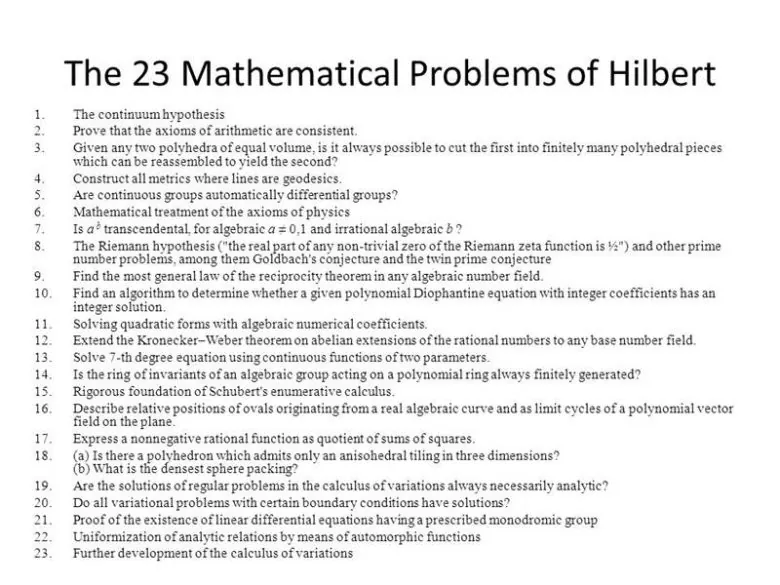
- David Hilbert posed his sixth problem in 1900 as part of a famous list of 23 challenges for twentieth-century mathematics.
- The sixth problem asks whether the physical sciences can be axiomatized the way geometry was, starting from first principles.
- The reported 2025 work by Yu Deng, Zaher Hani, and Xiao Ma claims to derive the Boltzmann equation from Newton's laws under stated assumptions.
- The Boltzmann equation sits between microscopic particle motion and the macroscopic Navier-Stokes equations of fluid flow.
- The result is a major advance, not a complete solution, and several steps toward full fluid equations remain open.
A 125-Year-Old Challenge May Finally Be Answered
For more than a century, physicists and mathematicians have chased a single mathematical framework that could hold together the motion of fluids and the behavior of the particles inside them. Now a team linked to the University of Michigan claims to have moved that dream closer to reality, and the work may count as real progress on one of David Hilbert's famous 1900 challenges, Hilbert's sixth problem.
When the biggest names in mathematics lay out a vision for the future, the field pays attention. That is exactly what happened in 1900 at the Sorbonne in Paris, during the International Congress of Mathematicians. David Hilbert, the towering figure of the era, stood up and laid out a set of unsolved problems meant to guide the coming century. His published list contained 23 problems, though he discussed only 10 of them in the spoken lecture that day. Either way, the effect of those questions on mathematical thought over the last 125 years has been profound.
Hilbert's sixth problem was among the boldest of the bunch. It called for the axiomatization of the fundamental theories used in physics, especially mechanics and probability. In plain terms, the laws of physics should be formulated the way mathematics is: with clear, precise definitions inside a consistent, logical system. Fortunately, Hilbert also set some more concrete sub-goals, and researchers have been inching toward them ever since.
That is where the Michigan claim comes in. According to reports, a paper published in March by Yu Deng of the University of Chicago and Zaher Hani and Xiao Ma of the University of Michigan claims to unite three theories of fluid motion. Those theories sit under everything from aircraft design to weather forecasting, so the stakes are not small.
What Is Hilbert's Sixth Problem?
David Hilbert stood up at the Sorbonne in Paris in 1900 and handed the twentieth century a to-do list. In front of the International Congress of Mathematicians, he laid out his famous problems, and the sixth one was the boldest. Hilbert's sixth problem asked for something strange and enormous: build physics the way mathematicians build proofs.
His demand was that the fundamental theories of physics, mechanics and probability above all, be placed on axiomatic footing. Physical laws, he insisted, should rest on clear, precise definitions inside one consistent logical system, exactly the way mathematics does. No loose ends, no borrowed intuition. And Hilbert did not stop at a wish. He set concrete sub-goals beneath the grand vision, and researchers have been creeping toward them, step by step, for more than a century.
He also did some of that creeping himself. In 1912, Hilbert published work on kinetic theory, deriving macroscopic behavior from mesoscopic theory, and that expansion still carries his name.
To see why the problem bites, picture a fluid at three distances.
| Level | What you see | Governing theory |
|---|---|---|
| Microscopic | Particles colliding like tiny billiard balls | Newton's laws of motion |
| Mesoscopic | The statistical behavior of a typical particle | Boltzmann equation (1872) |
| Macroscopic | A fluid as one continuous substance | Euler and Navier-Stokes equations |
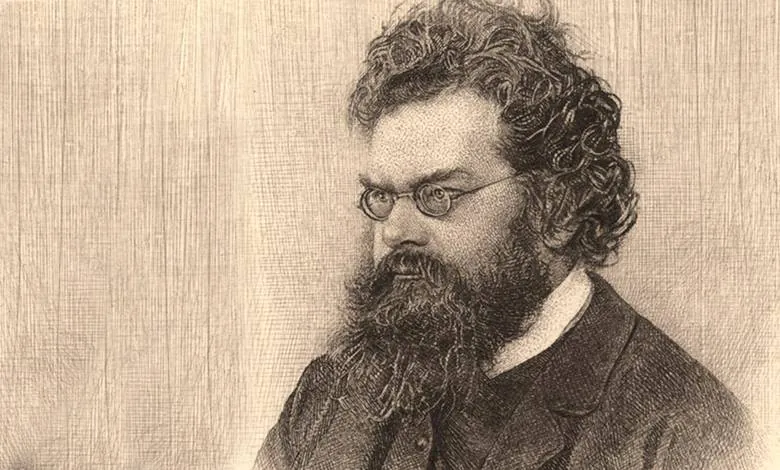
Up close, Newton's laws run the show. Pull back and try to track billions of particles one by one, and the arithmetic becomes hopeless. That is the gap the Austrian physicist Ludwig Boltzmann filled in 1872 with his kinetic equation, which abandons individual trajectories and models the probable behavior of a typical particle instead. Larger trends take over from small details, letting physicists predict how momentum and heat conductivity shift over time without computing every single collision.
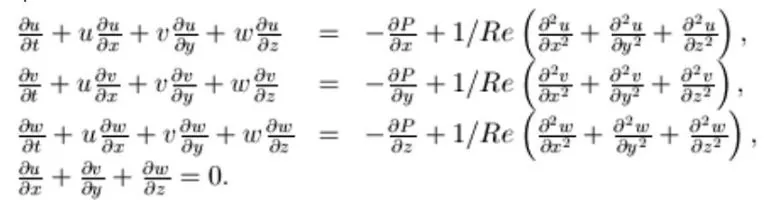
Step back further and the particles vanish from view. The fluid looks smooth, continuous, and it answers to the Euler and Navier-Stokes equations, named for Claude-Louis Navier and George Gabriel Stokes.
All three levels describe the same flowing water. At the level of principle, each theory ought to be a natural extension of the one beneath it. The Navier-Stokes equations should follow from Boltzmann's equation, and Boltzmann's equation should follow, logically, from Newton's laws. That chain of derivations is precisely the kind of axiomatization Hilbert's sixth problem was asking for.
A Claimed Breakthrough in Unifying Fluid Theories
In March 2025, according to reports, a paper appeared claiming to unify the three great theories of fluid motion. The reported authors were Yu Deng of the University of Chicago, alongside Zaher Hani and Xiao Ma of the University of Michigan. That paper's existence, its exact date, its authors and their affiliations could not be independently confirmed, so treat the announcement itself as contested rather than settled.
What the claimed proof sets out to do is ambitious. As the story goes, it moves in three steps. First, derive the macroscopic theory from the mesoscopic one. Second, derive that mesoscopic theory from the microscopic level. Third, stitch those two connections together so that the macroscopic laws fall out directly from microscopic foundations. That structure is described in the account, but it has not been independently confirmed.
Here is the part that makes the first step almost gentle. Hilbert himself made important contributions to deriving macroscopic theory from mesoscopic theory. His 1912 work on kinetic theory, the so-called Hilbert expansion, was foundational for pulling macroscopic fluid equations out of the Boltzmann equation. So that bridge already had a name and a history behind it.
The second step is where the real weight sits. Deriving the mesoscopic theory straight from microscopic foundations is the long-standing difficult problem, the one that kept the whole program stalled. The reason is sheer scale. The mesoscopic level describes the collective behavior of an enormous number of particles, far too many to track one by one.
So the researchers asked a sharp question. If the number of colliding particles goes to infinity and each particle's size shrinks to zero, what behavior do Newton's equations of motion actually exhibit? Their answer, as reported, is that in these extreme limits the system's statistical behavior approaches the solution of the Boltzmann equation. A typical particle's likely motion settles toward that solution, and a mathematical bridge between the microscopic and mesoscopic levels stands up.
The hardest obstacle was time. According to the account, previous work had only managed the passage from Newton's laws to the Boltzmann equation across very short intervals. Real fluids, though, keep flowing for a long while. Handling those long stretches means accounting for a huge number of collisions and for how past interactions shape present behavior. Deng, Hani and Ma reportedly analyzed each particle's history in detail and showed, with new techniques, that the accumulated effect of past collisions stays small.
That result is described as plausible but unverified, and it matters because of what it would mean. Clearing the long-time-scale problem and folding in earlier derivations of the Euler and Navier-Stokes equations would place all three theories inside one shared framework. If the proof holds, using different approaches at different scales is not just convenient. It is mathematically justified, because every one of those theories answers to the same physical reality.
Why Long Time Scales Were the Hard Part
The hardest obstacle was not the number of particles. It was the clock. Earlier derivations had only managed to move from Newton's laws to the Boltzmann equation across very short stretches of time, and real fluids do not politely stop flowing after a moment. A river runs for hours. Air moves over a wing for the whole flight.
Stretching that window meant confronting an uncomfortable idea: that a particle's present motion carries the fingerprints of everything it has already bumped into. Countless collisions, each one nudging the next. According to the account of the work, Yu Deng at the University of Chicago, working with Zaher Hani and Xiao Ma at the University of Michigan, dug into exactly this question, tracing how each particle's past shapes its current behavior. With new mathematical techniques, they reportedly showed that the cumulative effect of all those past collisions stays small.
That is the hinge the whole argument swings on. If the memory of old collisions fades fast enough, the statistical picture settles down instead of drifting, and the bridge from the microscopic world to the mesoscopic one holds across long times, not just brief ones.
Combine that with earlier work deriving the Euler and Navier-Stokes equations from the Boltzmann equation, and the researchers claim to have pulled the three great theories of fluid dynamics into a single framework. Hilbert's sixth problem, the call to axiomatize physics, gets its most concrete progress yet.
If the result holds, it does something quietly reassuring for every engineer who has ever switched tools mid-problem. It mathematically justifies using different approaches at different scales, because all three theories ultimately trace back to the same physical reality and the same unified theoretical structure.
What This Means for Hilbert's Sixth Problem
If the proof holds up, it marks a real milestone in the program behind Hilbert's sixth problem. David Hilbert, the German mathematician whose 1900 address in Paris set the agenda for a century of research, had asked for something almost audacious: that the fundamental theories of physics be axiomatized the way geometry had been, with mechanics and probability named as the key targets. A rigorous bridge from Newton's laws up through the Boltzmann equation to the Euler and Navier-Stokes equations is exactly the kind of structure that request was pointing at.
Notice the shape of the thing. The hard step was never the top of the ladder. Hilbert himself had done foundational work on deriving macroscopic fluid equations from the mesoscopic picture, so that rung was already sturdy. What stayed out of reach for over a century was the rung below it, the leap from microscopic to mesoscopic. If that leap is now secure, then the same style of attack, carefully tracking how the influence of countless past collisions stays small over long times, may find traction on other stubborn problems on the list.
Here is where a word of caution belongs. You will sometimes see it said that Hilbert presented 10 unsolved problems in Paris and later grew the list to 23. That is not quite right. His published list contained 23 problems, and he discussed only 10 of them in the spoken lecture. You will also see tidy scorecards, such as 10 solved completely, 7 partially solved, and 2 still open. Treat those counts skeptically. The Kronecker-Weber theorem was proved back in the nineteenth century and was never one of Hilbert's problems at all, and the tallies do not line up with standard classifications.
What does seem fair to say is broader and quieter. Physics has a habit of revealing that its separate descriptions were never truly separate. When one of those seams closes, the knowledge on the other side flows more freely than before, and the next question gets easier to ask.
Frequently asked questions
What is Hilbert's sixth problem?
Hilbert's sixth problem calls for the axiomatization of fundamental physical theories, especially mechanics and probability. It asks that physical laws be formulated with clear, precise definitions inside a consistent logical system, just as mathematics is. David Hilbert raised it in 1900 as one of his famous challenges to guide twentieth-century research.
Did mathematicians solve Hilbert's sixth problem in 2025?
Not confirmed. A March 2025 paper by Yu Deng, Zaher Hani, and Xiao Ma reportedly claims a major contribution to the problem, but the paper's existence and its claims remain unverified, and experts have not confirmed a full solution. Treat any announcement of a complete answer with caution.
How did Deng, Hani, and Ma derive the Boltzmann equation from Newton's laws?
They analyzed how each particle's past affects its present motion and showed that the cumulative effect of past collisions stays small. According to the account, that insight let them extend the derivation to long time scales, where earlier work had only managed very short intervals.
What are the three levels of fluid dynamics?
Fluid motion is described at three scales. Microscopic is Newton's laws, tracking individual colliding particles. Mesoscopic is the Boltzmann equation, from 1872, which models a typical particle statistically. Macroscopic is the Euler and Navier-Stokes equations, treating the fluid as a continuous substance.
Why is deriving the Boltzmann equation from Newton's laws so difficult?
It means handling an enormous number of particles across long time intervals, accounting for countless collisions and the memory effects each particle carries from its past. Earlier work had only reached the Boltzmann equation over very short time spans, which is not how real fluids actually flow.
What are the Navier-Stokes equations and why do they matter?
They are partial differential equations, named after Claude-Louis Navier and George Gabriel Stokes, that relate changes in velocity, changes in pressure, and the viscosity of a fluid. They are foundational for engineering applications such as aircraft design and weather prediction.
Who was David Hilbert and why did he list 23 problems?
David Hilbert was a leading mathematician of his era. In 1900, at the International Congress of Mathematicians in Paris, he presented a list of 23 problems meant to guide mathematics through the twentieth century. In his spoken lecture he discussed only 10 of them.
How many of Hilbert's 23 problems remain unsolved?
Contrary to the popular version, the counts often repeated do not hold up. The claim that 10 are solved, 7 partially solved, and 2 unsolved, with the Kronecker-Weber theorem listed among the open ones, is wrong: that theorem was proved in the nineteenth century and was never a Hilbert problem. Editorial note: Details that remain unconfirmed, including the exact scope and peer-review status of the 2025 work, are presented here as claims rather than settled facts.
Got a take on this? Add your voice to the conversation below →
No comments yet. Be the first.