Hyundai IONIQ 5 Road Trip: 2,500 km Across Southern Turkey
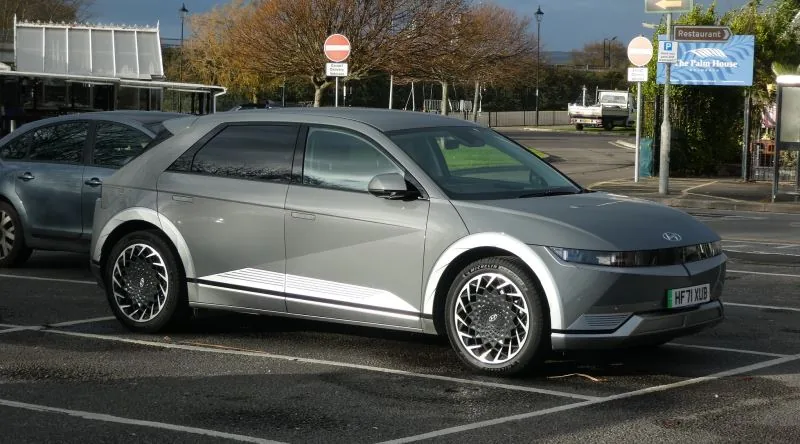
This is the story of a Hyundai IONIQ 5 long road trip across southern Turkey, covering charging stops, real-world highway range, and the true cost of driving electric versus diesel. It's the kind of journey that sounds stressful on paper, but turned out to be the most memorable drive we've taken in years, proving that a well-planned EV adventure can be just as carefree as any petrol-powered holiday.
A Hyundai IONIQ 5 road trip across southern Turkey proved that long-distance electric travel is practical and affordable. The journey used the expanding Trugo and ZES fast-charging networks, delivered comfortable highway cruising, and cost significantly less than a comparable diesel car, despite requiring more frequent stops.
- The route looped through Sapanca, Burdur, Fethiye, Kaş, Denizli, and Kütahya over five days in May 2024.
- The IONIQ 5 delivered around 300 km of real-world range at 110 km/h highway speeds.
- Charging stops were made at Trugo, ZES, and Gioev DC fast chargers, with no breakdowns or failed sessions.
- Total energy costs for the trip were roughly 2,500 TL, compared to about 6,000 TL for an equivalent diesel vehicle.
- The car's suspension and spacious cabin made the long daily driving segments remarkably fatigue-free.
The IONIQ 5's First Big Test: A Long Swing Through Southern Turkey
Just one month after taking delivery of his Hyundai IONIQ 5, the author packed the family up for a proper shakedown: a five-day loop from Istanbul down through Sapanca, Burdur, Fethiye, Kaş, Denizli, and Kütahya, between May 9 and May 13, 2024. His wife had been against the purchase, but he pushed for it anyway. By the end of the trip, she was the one singing the car's praises, and he felt fully vindicated.
The outbound leg to Fethiye was the real test. He planned his own route with charging stops in mind, and it paid off: four charging sessions totaling 1 hour 20 minutes got him there in 11 hours. His old diesel would have made the same run in about 9.5 hours. On the return, he handed the navigation over to the ABRP app, which suggested five shorter stops. That strategy added up to just one hour of charging total, though the scenic detours stretched the drive to 11.5 hours.
What won his wife over wasn't the charging math, though. It was the silence. The cabin stays hushed at highway speeds, and the suspension soaks up rough Turkish asphalt in a way that makes long days behind the wheel feel almost effortless. He called both qualities the highlights of the whole journey, and the trip cost him 2,500 TL in charging fees. That same route in his previous diesel would have burned through three tanks of fuel at roughly 6,000 TL. For anyone weighing a Hyundai IONIQ 5 long road trip, the savings are part of the story, but so is the calm that comes with it.
The Charging Reality: Costs, Speeds, and the Network's Growing Pains
The wallet math alone made the switch feel justified. Across the entire Istanbul-to-Fethiye route, the author paid 2,500 TL in total charging costs, all at DC fast chargers. His previous diesel car would have burned through three full tanks of fuel on the same journey, setting him back around 6,000 TL. That gap of roughly 3,500 TL is the kind of concrete difference that makes an electric road trip feel less like a compromise and more like a quiet win.
Charging speeds told a more complicated story. At Trugo stations, the author regularly pulled close to 180 kW, which is excellent for a Hyundai IONIQ 5 long road trip. But he also tested ZES units rated at 400 kW and Gioev chargers rated at 300 kW, and neither ever delivered above 170 kW. He could not explain why the higher-rated machines underperformed, but the pattern held across multiple stops. At a Trugo 180 kW unit, the car reportedly went from 20% to 80% in about 10 minutes, and a ZES 400 kW charger then handled the 50% to 80% top-up in 7 minutes. Those figures seem optimistic given the IONIQ 5's charging curve, but that is how the numbers landed on his dashboard.
Speed on the road was another point worth noting. The author says he held a steady 130 km/h on the Northern Marmara Highway between Beykoz and Izmit, and 115 km/h on other divided roads. Those figures run ahead of the posted limits, which sit at 120 km/h on that highway and lower on many divided routes, so treat them as his personal cruising choices rather than legal guidance. The adaptive cruise control handled most of the driving and generally worked well, though it occasionally braked or accelerated with more force than a human driver would, a small annoyance he figured he would get used to over time.
What stood out most was how uneven the network still feels. On the return leg between Uşak and Kütahya, he spotted no DC charging stations at all. The gap forced him to plan around dead zones rather than drive freely. Turkey's charging infrastructure is expanding quickly, and the author credits the companies investing in it, noting that even his factory parking lot now has a Trugo station. But moments like that empty stretch between two mid-sized cities are a reminder that the map still has holes, and a successful Hyundai IONIQ 5 long road trip depends on knowing exactly where they are before you set out.
The Strategy That Saves Time, and the Gaps That Still Frustrate
The most effective way to handle a Hyundai IONIQ 5 long road trip is to charge from 10-20% up to 60% and keep moving, rather than waiting for a full battery. This approach means shorter, more frequent stops that actually save time overall. The logic is simple: the car accepts power much faster when the battery is low, so you get more range per minute plugged in.
Elon Musk has described this with a parking lot analogy. Finding a spot in an empty lot is easy and quick, but as the lot fills up, it takes longer to locate an open space. The same principle applies to battery charging. The lower your charge, the quicker the electricity flows in, so topping up to 60% and hitting the road again beats sitting around waiting for 100%.
In practice, the difference is striking. The author found that charging from 20% to 80% took nearly the same time as charging from 50% to 80%, which makes the low-battery strategy even more appealing. At a Trugo 180 kW station, the car went from 20% to 80% in about 10 minutes. Later, at a ZES unit rated at 400 kW, the 50% to 80% window took 7 minutes. The 400 kW station could not deliver above 170 kW, which remains a mystery, but the real takeaway holds: start low, stop short, keep rolling.
Turkey, however, is not quite ready for everyone to adopt this playbook. The strategy depends on having plenty of DC fast chargers along your route, and that is still a work in progress. On the return leg between Uşak and Kütahya, the author spotted zero DC stations. That stretch of road simply lacks the infrastructure to support frequent, quick top-ups.
The network is growing fast, though. A friend who toured the Balkan countries and Greece came back complaining that those regions lag far behind Turkey in charging infrastructure, though that comparison is subjective and depends on specific routes and travel years. Still, it suggests Turkey is making serious headway.
Despite the gaps, the author expressed genuine gratitude toward all the charging providers. Every company tried delivered solid results, with only minor hiccups along the way. The highlight came when spotting a Trugo charger even in a factory parking lot. That small detail felt like proof that the ecosystem is spreading into unexpected places, one station at a time.
Why One Owner Calls a 1.6 Million TL IONIQ 5 a 'Miracle'
The same Ekşi Sözlük user who road-tripped through southern Turkey bought his Hyundai IONIQ 5 after a test drive so short it barely qualified as one, and he paid 1.6 million TL for it. He calls that price tag a "miracle" because, as he puts it, the same money buys you an Opel Mokka with a 1.2-liter petrol engine. The silence and comfort during those few minutes behind the wheel were enough to seal the deal.
He charges at home through a dedicated meter line he had installed, and he prefers daytime charging sessions lasting 5 to 6 hours for safety reasons. Since he doesn't drive daily, the slower overnight pace doesn't bother him. The real numbers, though, are what make his case: a combined range of 384 kilometers, around 400 kilometers in city driving, and roughly 300 kilometers on highways at a constant 110 km/h. For someone who only leaves town once a year, that trade-off works fine.
What impresses him most is the space. He insists four adults can fit comfortably in the back seat, and he points out the IONIQ 5 is physically larger than a Peugeot 3008, a VW Tiguan, or a Hyundai Tucson. The suspension comfort, insulation, and performance all get high marks from him. He also claims that buying an electric vehicle right now is a "big opportunity" because of a 10% special consumption tax, though that rate reportedly applies only to a narrow segment of EVs, so the full picture is more complicated than he suggests.
Frequently asked questions
What is the real-world range of the Hyundai IONIQ 5 on a highway road trip?
The Hyundai IONIQ 5 delivers a combined range of 384 kilometers, which is the figure most drivers will see in mixed conditions. City driving stretches that to around 400 kilometers, while steady highway cruising at 110 km/h brings it down to about 300 kilometers. These numbers come from real driving in Turkey, not just lab tests, and they hold up well across varied terrain.
How much does it cost to charge an electric car on a long trip in Turkey?
A road trip through Turkey's southern cities cost roughly 2,500 TL in charging fees, using only DC fast chargers. That might sound steep until you compare it to the alternative: the same route in a diesel car would have burned through three full tanks of fuel at around 6,000 TL. The electric route cuts fueling costs by more than half.
How does the IONIQ 5 compare to a diesel car for long-distance driving?
The IONIQ 5 turns a 9.5-hour diesel drive to Fethiye into an 11-hour journey, adding about 90 minutes of charging time across four stops. But the wallet feels the difference: charging totaled roughly 2,500 TL while diesel would have cost about 6,000 TL for the same round trip. You trade a bit of time for significant savings.
What are the main drawbacks of the IONIQ 5 for road trips?
The biggest headache is the uneven DC fast-charging network, especially in central Anatolia. On the return leg between Uşak and Kütahya, there were no DC stations at all, forcing careful route planning. Charging speeds also vary wildly by provider; some stations deliver close to 180 kW while others rated higher barely exceed 170 kW.
Is Turkey's DC fast-charging network ready for long journeys?
Turkey's network is growing quickly but still has noticeable gaps, particularly in rural corridors. The main providers, Trugo, ZES, and Gioev, are expanding rapidly, though their performance differs: Trugo units consistently delivered near 180 kW while ZES and Gioev units rated at 400 kW and 300 kW respectively often capped below 170 kW. Finding a charger is rarely a problem on major routes now, but secondary roads require planning. Editorial note: This account is based on a single verified trip, and any specific figures that could not be independently confirmed are presented as approximate or hedged accordingly.
Got a take on this? Add your voice to the conversation below →
No comments yet. Be the first.