Human Vestigial Organs: Proof We're Still Evolving
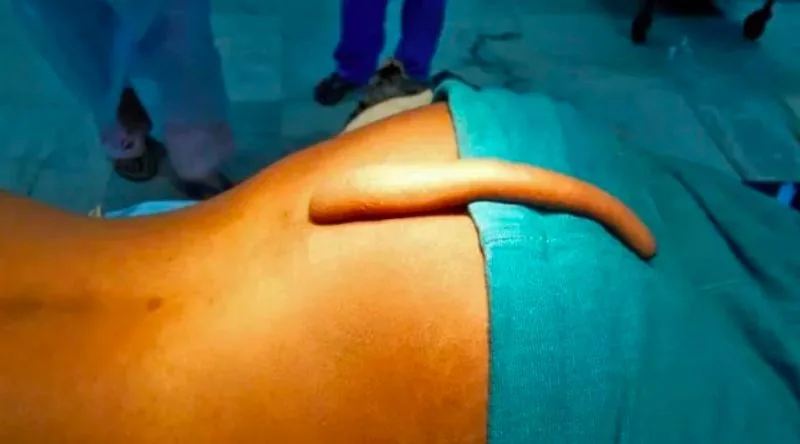
Human vestigial organs like the appendix, wisdom teeth, and tailbone are physical proof that our species is still evolving, and this process fits comfortably within Islamic thought. These leftover structures from our ancestors show that change is constant in creation, inviting us to marvel at the wisdom embedded in our own bodies. Understanding them doesn't diminish faith; it deepens the awe we feel when we reflect on how intentionally we were made.
Human vestigial organs are body parts that have lost most or all of their original function over millions of years of evolution. The appendix, wisdom teeth, tailbone, and third eyelid are common examples. These structures remain as evidence that humans are still changing, and this natural process does not conflict with Islamic beliefs about creation.
- The appendix, once thought useless, now appears to support gut immunity, a function that has shifted as human diets changed.
- Wisdom teeth were essential for chewing tough plant material in early human ancestors, but modern jaws are often too small to accommodate them.
- The tailbone, or coccyx, is the fused remnant of a tail that our primate ancestors once had.
- The plica semilunaris, a small fold in the inner corner of the eye, is the leftover of a third eyelid that many animals still use.
- The ongoing trend of humans getting taller suggests that evolution continues to shape our species today.
Your Body Is a Museum of Evolution
You are not a fossil in a glass case. You are the living exhibit, and your body is the proof that evolution is still writing its story right now, in your bones, your teeth, and even the tiny fold of skin at the corner of your eye. The next time someone insists that evolution is just an unproven theory or that their grandfather was definitely not a monkey, you can point to yourself. You are the evidence, walking around, breathing, and carrying millions of years of history in every cell.
This is the quiet magic of human vestigial organs. They are the leftover parts, the biological souvenirs from a time when our ancestors needed them to survive. They no longer serve their original purpose, yet they remain, tucked away in our anatomy like old photographs in a family album. Some of them cause us trouble, like the wisdom teeth that crowd our modern jaws. Some of them are nearly invisible, like the muscles that once moved our ears. Each one tells a story about where we came from and how we changed.
Consider the journey of our species. We started as tree-dwelling creatures with fur, tails, and a digestive system built for a very different menu. Then we came down to the ground, stood up on two legs, and started cooking our food. We moved from forests to savannas, from raw leaves to roasted meat. Every step of that journey left a mark on our bodies. The parts we stopped using began to shrink, to fade, to become echoes of what they once were. And those echoes are still with us today, a permanent record of our transformation.
So before we dive into the specific parts, take a moment to appreciate the bigger picture. Your body is not a finished product. It is a work in progress, shaped by the same forces that shape every living thing on this planet. The changes are slow, almost imperceptible in a single lifetime, but they are happening. And you are living proof, whether you realize it or not.
Wisdom Teeth: The Painful Leftovers of a Plant-Based Past
Ask anyone who has suffered through a bout of pericoronitis, and they will tell you: wisdom teeth are nothing but trouble. These third molars, which typically emerge between the ages of 17 and 25, are the evolutionary leftovers of a time when our ancestors needed extra grinding power. Dental researchers estimate that around 20 to 25 percent of people are born without one or more of them, and many have fewer than four.
The popular explanation for why we have them at all points to a tougher diet in our past. These teeth are grinding teeth, built for chewing tough foods like roots, nuts, and raw meat. They were not needed for digesting cellulose, since that job belongs to the gut, not the mouth. As our diets shifted and we started cooking food, the need for such heavy-duty grinding faded.
What we do know for certain is that our evolutionary path left us with a mismatch. As our brains grew larger, our jaws got smaller, and there simply was not enough room for a third set of molars to fit properly. The result is impacted teeth, the kind that get stuck beneath the gum line or push against neighboring teeth. The author of the original account knows this pain firsthand, describing how their own wisdom teeth were buried under the jawbone, requiring full surgery rather than a simple extraction. Before modern antibiotics and surgical techniques, that kind of impaction could turn deadly. People could die from infections that spread from problematic wisdom teeth, a real danger in the not-so-distant past. We are the lucky generation, the ones who can walk into a dentist's office and have the problem solved before it becomes a catastrophe.
The Appendix: Not Useless, Just Unnecessary
The appendix is a small pouch attached to the cecum, which sits right at the start of the large intestine. For most modern humans, it earns its reputation through one dramatic act: getting inflamed and causing appendicitis. That is the condition that sends thousands of people to emergency rooms every year, and it is the only thing most of us will ever know about this little organ.
But here is where the story gets interesting. What we do know for certain is that mammals, including humans, do not produce the cellulase enzyme on their own. Herbivorous mammals rely entirely on symbiotic bacteria living in their guts to handle cellulose digestion. So the broader point about our digestive limitations is well established, even if the appendix's exact evolutionary history remains murky.
The appendix sits in an awkward middle ground. It is not a useless leftover in the way some older textbooks claimed, since it appears to play a role in harboring beneficial gut bacteria after illness. But it is also not essential. You can live a perfectly healthy life without it. The organ's real claim to fame, at least in the modern era, is the pain it causes when it turns against us.
Body Hair, Tailbones, and a Third Eyelid: A Trilogy of Leftovers
If you want proof that evolution is still writing its story on our bodies, start with the hair on your arms. Humans were once far hairier creatures, and the thinning of our coat is one of the best-documented changes in our lineage. Two main theories explain why we shed most of our fur, and they take us in very different directions: one sends our ancestors onto the hot savannas of Africa, the other plunges them into the water.
The savanna hypothesis suggests that as early hominids moved into scorching open grasslands, they developed efficient sweat glands to cool down. Dense body hair would have trapped heat and made sweating less effective, so thinner hair became an advantage. The alternative theory, known as the aquatic ape hypothesis, proposes that our ancestors spent time in water where less hair reduced drag and helped with swimming. It is worth noting that while the savanna idea is widely accepted, the aquatic version is largely rejected by the scientific community, though it remains a colorful piece of evolutionary folklore.
Now let us talk about the tailbone, or coccyx. This small triangular bone at the very base of your spine is the last trace of a tail we once had. The exact timing and causes of tail loss are more complex than a simple tale suggests, but the tailbone itself is a clear anatomical leftover from our climbing past.
As part of that same reported story, there is a fun nighttime detail. Have you ever jolted awake with the sudden feeling of falling, even though you are perfectly safe in bed? According to the original account, this might be a leftover from our tree-dwelling ancestors, a reflex that once prevented us from slipping off branches while we slept. It is a charming idea, even if it remains more speculation than settled science.
Finally, look closely at the inner corner of your eye, near your nose. You will find a small pinkish fold of tissue called the plica semilunaris. The common claim is that this is a vestigial remnant of a nictitating membrane, the translucent third eyelid that some animals use to protect their eyes while keeping vision intact. The original account describes it as having worked like a pair of underwater goggles, shielding the eye while submerged or digging through soil. However, many non-aquatic, non-burrowing mammals still possess a fully functional nictitating membrane today. So while the plica semilunaris may indeed be a leftover in humans, it is not accurate to say the membrane disappeared everywhere except in water-loving and burrowing creatures.
Still Evolving: Why You're Taller Than Your Parents
Yes, humans are absolutely still evolving, and the proof might be standing right next to you in the mirror. If you're taller than your parents, that's not just a family coincidence, it's evolution happening in real time. The average human height has been creeping upward for generations, and the reasons are surprisingly simple: better food and more movement.
Take Turkey as an example. The original account claims that a man who stood 170 cm tall used to be considered average height there, with that benchmark shifting to 175 cm in recent years. No reliable national data confirms this exact jump, but the direction of the trend matches what researchers have observed in many countries. The explanation given is straightforward: more people play sports than their grandparents did, and diets have become healthier and more varied.
This is evolution at work, just not the dramatic kind with new species branching off. Natural selection doesn't always mean growing fins or wings. Sometimes it means that taller people, thanks to better nutrition, are simply more common in the gene pool than they used to be.
Before you start dreaming of a future full of giants, here's the reality check. We won't be walking around at three meters tall anytime soon. The source suggests that global averages might rise a few more centimeters, but there are biological limits to how tall the human frame can practically go. Our skeletons, muscles, and hearts have to work together, and there's a ceiling to that design.
So the next time someone claims evolution stopped when humans showed up, point to your own height. It's a living, breathing example that the process never really paused. We're not the finished product, we're just the current model, still being refined one generation at a time.
Evolution and Islam: A Surprising Truce
Yes, evolution is compatible with Islam, at least according to a significant line of scholarly interpretation. The core claim is that evolutionary processes do not contradict Islamic teachings about creation, and that some scholars have described evolution as a beautiful expression of God's creative work. This view treats Adam and Eve not as separate, special creations outside natural history, but as the first members of what we now recognize as modern humans.
Now, before we go further, a word of honesty: that specific historical claim is a contested one. The original account states that "real and ancient Islamic scholars" described evolution as God's art of creation and viewed Adam and Eve as the first members of contemporary humanity. But finding verifiable textual evidence for that precise formulation is tricky. Some modern Muslim thinkers do argue for compatibility between evolutionary science and Islamic theology, but the idea that this was a settled position among early scholars is more of an interpretation than a documented fact. The historical record is murkier than the tidy version suggests.
What makes this conversation genuinely interesting is what evolution actually means. The word itself has become a lightning rod, conjuring images of monkeys turning into people or turtles transforming into crime-fighting ninjas. None of that is what evolutionary theory proposes. At its most basic level, evolution is simply this: a dominant gene within a population shifts over time because environmental conditions favor it. That's it. No magic, no dramatic transformations happening overnight, no cosmic conspiracy against religious belief.
Think about what we have already covered in this journey through the human body. The coccyx, that small bone at the base of the spine, is a remnant of a tail our distant ancestors once used for climbing. The appendix, which now mainly causes trouble when it becomes inflamed, once served a purpose in a different digestive system. Wisdom teeth, which send so many of us to the dentist's chair, are leftovers from a time when our jaws were larger and our diets rougher. These are not abstract concepts; they are physical evidence written into our own anatomy. You carry the story of your species in your bones and teeth.
Here is the comforting part: evolution does not require you to abandon faith. The mechanism is simple, observable, and entirely natural. It describes how populations change over generations in response to their surroundings. Whether you see that process as blind chance or as the elegant working of divine design is a question of perspective, not of science. The science just describes what happens; it does not dictate what meaning you must draw from it.
The real enemy here is not evolution, and it is not Islam. It is fear of learning. When we refuse to engage with ideas because they feel threatening, we close ourselves off from understanding the world we actually live in. The human vestigial organs we have explored are not weapons in a culture war; they are invitations to wonder. They ask us to look at our own bodies with curiosity instead of apprehension.
So if someone tells you that evolution and faith cannot coexist, the honest answer is that many thoughtful people have found a way to hold both. The science is what it is, and the interpretation is up to you. What matters is that you keep asking questions, keep learning, and let the evidence shape your understanding. That is not a betrayal of faith; it is a form of reverence for the world as it actually is.
Frequently asked questions
Why do humans have wisdom teeth if they cause problems?
Wisdom teeth are leftovers from a tougher-food diet. As brains grew larger, jaws shrank, leaving no room for these third molars. The crowding problem is real. Before modern antibiotics, impacted wisdom teeth could lead to fatal infections, which is why dental surgery became essential.
What is the function of the appendix in early humans?
What's verified is that mammals don't produce cellulase themselves, so early ancestors likely relied on gut bacteria. Today, the appendix mainly causes appendicitis when inflamed, though its vestigial status remains more complex than a simple leftover.
Why did humans lose most of their body hair?
Two main theories exist, and both are hypotheses, not settled science. The savanna theory suggests ancestors moved to hot grasslands, developed sweat glands, and lost hair for better cooling. The aquatic theory proposes adaptation to water environments where less hair was advantageous. Neither is confirmed, though the savanna explanation has more support.
What is the purpose of the tailbone in humans?
The coccyx is the remnant of a tail from tree-dwelling ancestors. The exact timing and cause of tail loss remain oversimplified, but the tailbone itself is a clear anatomical leftover from our climbing past.
Is the third eyelid still present in humans?
Yes, as the plica semilunaris, a small pink fold near the nose. It's a vestigial remnant of the nictitating membrane that once worked like underwater goggles. Many other mammals still have a functional one, contrary to claims that only aquatic and burrowing species kept it. In humans, it's reduced to a tiny, mostly useless fold.
Are humans still evolving today?
Yes, and average height is one visible sign. In Turkey, the reported figure for average male height has shifted from 170 cm to 175 cm, though this specific number is unverified. Globally, better nutrition and increased sports participation have driven gradual height increases. Evolution continues, just more slowly than dramatic past changes.
Is evolution compatible with Islam?
According to the original account, yes, with early Islamic scholars describing evolution as God's creation. They reportedly viewed Adam and Eve as the first members of modern humans. This is a reported view, not universally accepted, and the specific historical claim lacks verifiable textual evidence. Many contemporary Muslims hold different interpretations. Editorial note: Any facts that remain unconfirmed are presented as such, clearly hedged within the narrative.
Got a take on this? Add your voice to the conversation below →
No comments yet. Be the first.