Maria Agnesi: Mathematician Behind the Witch's Curve
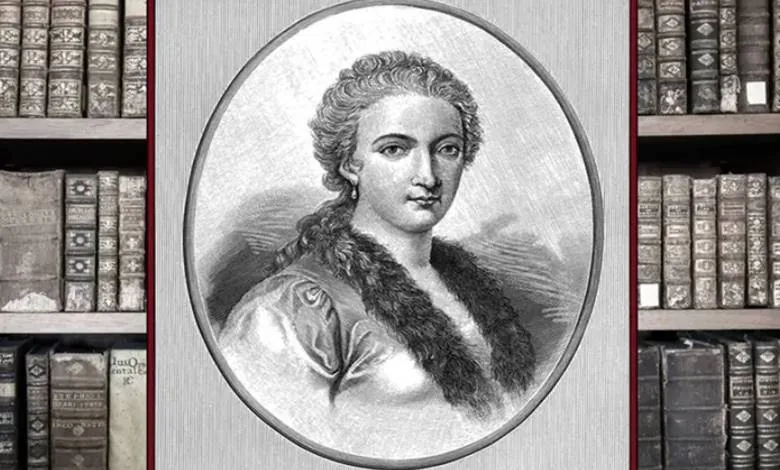
Maria Agnesi, an 18th-century mathematician from Milan, Italy, earned a papal appointment to the University of Bologna in 1750, a rare honor for a woman of her time. Her 1748 textbook, *Analytical Institutions*, made calculus accessible to a generation of students and cemented her legacy as one of history's most significant women in science. Her story is one of quiet brilliance, deep faith, and a curve that accidentally got a very witchy name.
Maria Agnesi, born in Milan in 1718, wrote a comprehensive calculus textbook in 1748 that unified the work of Newton and Leibniz. Pope Benedict XIV appointed her to the University of Bologna in 1750, a remarkable honor for a woman in 18th-century Italy. She later devoted her life to charity work, and her famous curve, the Witch of Agnesi, got its name from a translation error.
- Maria Agnesi was born in Milan, Italy, on May 16, 1718, the eldest of 21 children in a wealthy and intellectually ambitious family.
- Her 1748 textbook, *Analytical Institutions*, was a comprehensive survey of algebra and calculus that unified the competing approaches of Newton and Leibniz.
- In 1750, Pope Benedict XIV appointed her to the University of Bologna, a rare honor for a woman in her era.
- The "Witch of Agnesi" curve, named for her, got its "witch" moniker from a mistranslation of the Italian word "versiera," which also meant "she-devil."
- After her father's death in 1752, Agnesi turned away from mathematics entirely and devoted the rest of her life to caring for the sick and dying in Milan.
The Woman Behind the Witch's Curve
In 2014, Maryam Mirzakhani shattered a stubborn stereotype when she became the first woman to win the Fields Medal, mathematics' most prestigious honor. But nearly three centuries earlier, another woman had already struck a devastating blow at the same outdated belief that women lacked mathematical ability. Her name was Maria Agnesi, and her legacy hides behind a curve with a ridiculous name.
Maria Gaetana Agnesi was born on May 16, 1718, in Milan, Italy, and she was anything but ordinary. By age 11, she could speak French, Latin, Greek, German, Spanish, and Hebrew. Seven languages before she hit her teens, and mathematics was still her greatest passion. She was the eldest of 21 children, a detail that hints at both the chaos and the opportunity of her childhood home.
Today, almost nobody remembers her name, yet her curve appears in textbooks everywhere. The "Witch of Agnesi" shows up in her 1748 book Analytical Institutions, a work that would become one of the first systematic treatments of calculus. The curve itself has nothing to do with witches, spells, or anything supernatural. That misleading name came from a simple translation error, and it has stuck for over 250 years.
The story of how a brilliant 18th-century mathematician became forever linked to witches is one of those historical accidents that makes you shake your head. But before we get to the mistranslation, we should understand the woman herself. Agnesi was not just a footnote in mathematics history. She was a prodigy who turned down fame, fortune, and a papal appointment to live life on her own terms.
A Prodigy in Milan: The Making of a Mathematician
Maria Gaetana Agnesi was born on May 16, 1718, in Milan, Italy, and by the time she turned 11, she could already converse in French, Latin, Greek, German, Spanish, and Hebrew. She was the eldest of 21 children in a household where her father held a mathematics chair at the University of Bologna. That combination of academic ambition and a large family created an unusual environment for a young girl in 18th-century Italy.
Her father noticed her gifts early and made sure they were cultivated. According to the original account, he arranged for Don Ramiro Rampinelli, a mathematics professor at the University of Pavia, to serve as her tutor. Some biographical sources describe Rampinelli more as a mentor and correspondent than a formal teacher, but either way, the connection gave Maria access to serious mathematical training that most women of her era simply never received.
The Agnesi home became a gathering place for intellectuals who wanted to hear the young prodigy speak on mathematics and philosophy. These salon meetings drew curious minds from across Milan, all eager to watch a teenage girl hold her own in discussions that would have challenged grown scholars. When her father's wife passed away, he put an end to the public performances. The responsibility of running a household with so many children fell to Maria, the oldest daughter.
Here is where the story takes an unexpected turn. Despite her extraordinary talents and the attention they brought, Maria's deepest wish was to enter a convent. She wanted out of the spotlight entirely. Her father refused to allow it. So instead of taking religious vows, she spent the next two decades doing two things: educating her younger brothers and pursuing her own mathematical work.
At 17, she wrote a commentary on the Marquis de L'Hôpital's analysis of conic sections. The work never got published, but it circulated in private circles and cemented her reputation as someone worth watching. Then in 1738, she published Propositiones Philosophicae, a collection of 190 essays covering philosophy, logic, mechanics, elasticity, celestial mechanics, and Newton's theory of universal gravitation. The collection also included a strong argument in favor of educating women, a position that was far from popular at the time.
The young woman who would later become known as a brilliant mathematician was already making her mark, even if the world wasn't quite ready to acknowledge it. Her father's insistence on keeping her in the secular world, against her own wishes, turned out to be one of the most consequential decisions in the history of mathematics. The convent's loss was mathematics' gain.
The Masterpiece: Analytical Institutions
Agnesi wrote her most important work not for fame, not for a university post, but for her younger brothers. In her twenties, she sat down to craft an Italian textbook that would teach them the new mathematics sweeping through Europe. What emerged from that family project would become one of the most influential math books of the 1700s.
The two-volume work, Analytical Institutions, appeared in 1748. The first volume walked through finite quantities, covering algebra and geometry with patient clarity. The second volume tackled something far more daring: differential and integral calculus, the revolutionary methods that Gottfried Wilhelm Leibniz and Isaac Newton had each developed independently decades earlier. Agnesi didn't just summarize their ideas. She packed her book with worked examples, original methods, and clever generalizations that made the dense material feel approachable.
Scholars quickly recognized what she had accomplished. Here was one of the first systematic treatments of calculus written for students, not for fellow experts. The book earned translations into multiple languages, spreading Agnesi's clear explanations across Europe. A young woman in Milan, writing to educate her siblings, had produced a work that professors would assign for generations.
A Turning Point: Family Duty and a Papal Appointment
In 1748, Maria Gaetana Agnesi stepped into her father's lecture role at the University of Bologna, and two years later Pope Benedict XIV named her to the chair of Mathematics and Natural Philosophy. The formal record is clear on the appointment, though whether she ever actually stood before a classroom full of students remains a matter of debate. According to some accounts, she never taught a single lecture, while others insist she did. Either way, the honor itself was extraordinary for a woman in eighteenth-century Italy.
Her father, Pietro Agnesi, had long been the family's driving force. A mathematics professor at Bologna, he had pushed his eldest daughter into the intellectual spotlight from childhood. When he died in 1752, the house in Milan suddenly had no patriarch, and Maria, then thirty-four, found herself responsible for thirteen of her twenty-one siblings who still lived at home. The brilliant young woman who had dazzled Europe's philosophers in her family's salon now spent her days managing a crowded household, tutoring younger brothers and sisters, and quietly letting go of the mathematics that had once defined her.
The withdrawal was gradual but unmistakable. She stopped answering scientific correspondence. She gave away her scientific library, piece by piece. Her reading turned almost exclusively to religious texts, and she began writing devotional works of her own. In 1762, when asked to evaluate an exciting new paper by the French mathematician Joseph-Louis Lagrange, she declined with a simple explanation: such matters no longer occupied her mind. The mathematician who had produced one of the century's most important calculus textbooks was, by her own choice, becoming someone else entirely.
The Witch of Agnesi: A Mistranslation That Stuck
Agnesi's legacy carries a strange burden: the curve that bears her name has nothing to do with witches, yet "Witch of Agnesi" is how the world knows it. The story begins inside her 1748 textbook Analytical Institutions, where she discussed a curve that had been studied by others before her. Pierre de Fermat and Guido Grandi are both credited with examining it, with Grandi's work dating to 1703, though the exact timeline of who came first is a matter of scholarly debate. What is certain is that Agnesi's treatment of the curve contained no mention of anything sinister or supernatural.
The trouble started with a single Italian word. Agnesi called the curve versiera, a term derived from the Latin for "to turn," describing the curve's shape as it swings around its axis. But when an English translator got hold of her book, a fateful mistake occurred. The word versiera was rendered as avversiera, which in Italian means "she-devil" or "witch." The curve suddenly acquired a name that Maria Gaetana Agnesi never intended, and the "Witch of Agnesi" was born.
The misnomer stuck. Despite having nothing to do with magic or folklore, the curve became famous under its accidental title. Today, mathematics students still encounter the Witch of Agnesi in textbooks, where it appears as a bell-shaped curve with practical applications in modeling and statistics. The curve's equation describes phenomena ranging from probability distributions to the behavior of certain physical systems. That a simple translation error created such enduring fame is one of the more curious ironies in the history of mathematics.
What makes the story especially fitting is that Agnesi herself had long left the field by the time her name became attached to this mathematical oddity. She spent her final decades devoted to religious work and charity, having given away much of her wealth to live in a religious community. The curve, meanwhile, carried her name forward through classrooms and research papers, albeit under a title she never chose and a meaning she never endorsed.
Frequently asked questions
Who was Maria Agnesi?
Maria Gaetana Agnesi was an 18th-century Italian mathematician born on May 16, 1718, in Milan. She was a child prodigy who spoke seven languages by age 11 and became one of the most celebrated intellectuals of her era. Her landmark 1748 textbook, Analytical Institutions , made calculus accessible to a generation of students across Europe.
What is the Witch of Agnesi curve?
The Witch of Agnesi is a distinctive bell-shaped curve that Maria Agnesi discussed in her 1748 book Analytical Institutions . In mathematics, it is defined as the curve traced by a point on a circle as the circle rolls along a straight line. The curve remains widely used today in statistics and calculus textbooks.
Why is it called the Witch of Agnesi?
The name comes from a translation error. In Italian, Agnesi called the curve "versiera," meaning "turning curve." When an English translator encountered the term, he confused it with "avversiera," which means "she-devil" or "witch." The mistranslation stuck, and the curve became known as the Witch of Agnesi.
How did Maria Agnesi become a professor?
In 1750, Pope Benedict XIV appointed Agnesi to the chair of Mathematics and Natural Philosophy at the University of Bologna. According to the original account, she took over her father's lectures in 1748. However, she reportedly never actually taught from that position, as she preferred her quiet life of study and religious devotion.
What did Maria Agnesi write?
Agnesi wrote two major works. Her 1738 publication Propositiones Philosophicae contained 190 essays on philosophy, logic, mechanics, elasticity, celestial mechanics, and Newton's theory of universal gravitation. Her masterpiece, Analytical Institutions (1748), was a comprehensive Italian textbook covering algebra, geometry, and differential and integral calculus.
Why did Maria Agnesi stop doing mathematics?
After her father's death in 1752, Agnesi shifted her focus entirely. She cared for 13 of her siblings who still lived at home, devoted herself to religious life, and gave away most of her wealth to charity. By 1762, when asked to review a paper by the French mathematician Lagrange, she declined, saying such matters no longer occupied her mind.
Was Maria Agnesi the first female mathematician?
No, Agnesi was not the first female mathematician, but she was a pioneering figure in the field. Women like Hypatia of Alexandria and Émilie du Châtelet came before her. What made Agnesi remarkable was the breadth of her influence, her systematic textbook that trained countless students, and the papal appointment that recognized her genius. Editorial note: While the broad strokes of Agnesi's life are well documented, some details of her personal motivations and her exact role at the University of Bologna remain unconfirmed and are presented as such.
Got a take on this? Add your voice to the conversation below →
No comments yet. Be the first.