Golden Ratio Myth: What's Real, What's Hype
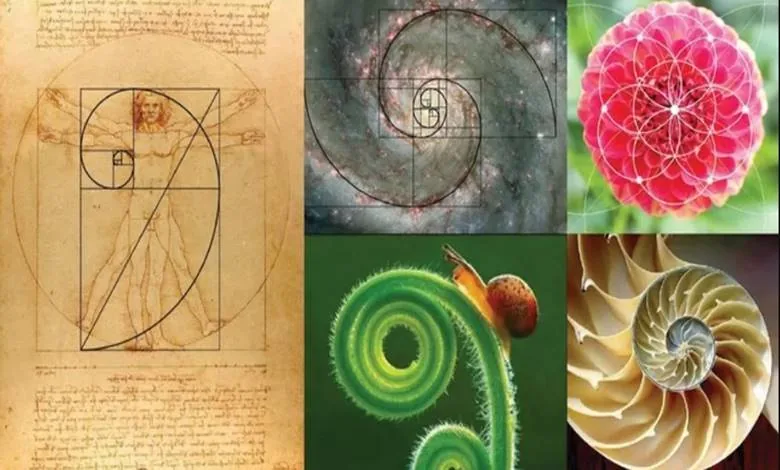
The golden ratio myth is the story of a real mathematical number, roughly 1.618, that has been wildly oversold as a universal formula for beauty in art, nature, and architecture. For over a century, enthusiastic claims have linked it to the Mona Lisa, the Parthenon, and even human faces, but historians and scientists have repeatedly shown that most of these connections are shaky at best. What remains true is that the ratio is a fascinating piece of geometry with a genuine, if limited, role in nature and design.
The golden ratio is a real mathematical constant, about 1.618, first studied by ancient Greek geometers. Its fame as a universal standard of beauty is largely a modern invention, fueled by a few overzealous writers. While it appears in some natural patterns, most famous claims about art and architecture are unverified or outright false.
- The golden ratio was formally defined by Greek mathematicians like Euclid around 300 BCE, who called it the "extreme and mean ratio."
- The term "divine proportion" was popularized by the Italian mathematician Luca Pacioli in his 1509 book, which was illustrated by Leonardo da Vinci.
- The association of the ratio with the Fibonacci sequence was only made in the 19th century, centuries after both were known.
- No surviving documents show that Leonardo da Vinci deliberately used the golden ratio in the Mona Lisa, and the painting's proportions do not match it closely.
- The claim that the Parthenon was built using the golden ratio rests on measurements taken after centuries of damage and reconstruction, and no ancient Greek text mentions it as a design rule.
The Golden Ratio Myth: A Number That Captured Our Imagination
There is a number, roughly 1.618, that has convinced millions of people that Egyptian pyramids, Greek temples, and even the human face were designed around a single divine formula. It is called the golden ratio, and it is one of the most persistent myths in mathematics. The truth is that while phi (φ) is a genuinely fascinating mathematical concept, most of the mystical claims attached to it simply do not hold up under scientific scrutiny.
You have almost certainly encountered the golden ratio myth before. It shows up in Dan Brown's The Da Vinci Code, in countless YouTube videos, and in school projects where students measure everything from pinecones to the Parthenon looking for a magic number. The idea is seductive: that beauty, nature, and great art all secretly follow one perfect proportion. It makes the world feel ordered, meaningful, and mathematically harmonious.
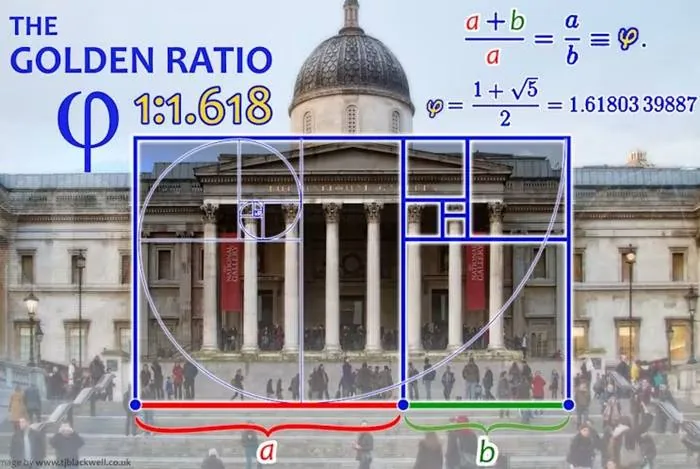
Here is what the number actually is. Take two quantities, a larger one a and a smaller one b. If the ratio of the larger to the smaller, a/b, equals the ratio of their sum to the larger, (a+b)/a, then you have the golden ratio. Its value is (1+√5)/2, which works out to approximately 1.6180339887 and continues on forever without repeating, just like pi. Unlike pi, however, phi is not transcendental; it can be expressed as the root of an algebraic equation with integer coefficients.
The symbol φ itself comes with a story, though a shaky one. As the tale goes, the letter was chosen as a nod to the Greek sculptor Phidias, who lived around 490 to 430 BC and supposedly used the ratio in his compositions. Whether Phidias actually did so is not documented in any primary source, but the association stuck anyway.
The real issue is not the number itself. Phi genuinely appears in unexpected mathematical places, and it has intrigued thinkers for centuries. The problem begins when people project it onto art, architecture, and nature without evidence. Claims about the Great Pyramid of Giza, the Mona Lisa, and the human body all circulate widely, yet careful examination consistently fails to confirm them. The golden ratio myth persists not because it is true, but because it is a beautiful story that people want to believe.
What Is the Golden Ratio, Really?
At its core, the golden ratio is a simple relationship between two quantities, usually written as a and b, where the larger one is a. When the ratio of the larger to the smaller, a/b, equals the ratio of their sum to the larger, (a + b)/a, you have found the golden ratio. Its exact value is (1 + √5)/2, which works out to roughly 1.6180339887 and keeps going forever without repeating.
That endless, non-repeating decimal means the number is irrational, just like pi. You cannot write it as a simple fraction of two whole numbers, no matter how hard you try. But here is where phi, as it is often called, differs from pi: it is not transcendental. In plain terms, phi can be the solution to a straightforward algebraic equation with whole number coefficients, specifically x² = x + 1. Pi cannot claim that same status, which gives phi a certain mathematical pedigree that pi simply lacks.
The symbol itself carries a bit of mystery. The Greek letter φ, or phi, is said to honor Phidias, the celebrated Greek sculptor who lived from roughly 490 to 430 BC and who supposedly built the golden ratio into his famous works. The story goes that because Phidias's name begins with phi in Greek, the letter became the natural shorthand for the ratio he loved. But here is the honest truth: nobody has ever found a primary source confirming this connection. It is an anecdote that has been passed around for generations, charming and plausible, yet completely undocumented. The link between Phidias and the symbol remains, as far as historians can tell, a pleasant story rather than a verified fact.
Art and Architecture: Where the Golden Ratio Myth Thrives
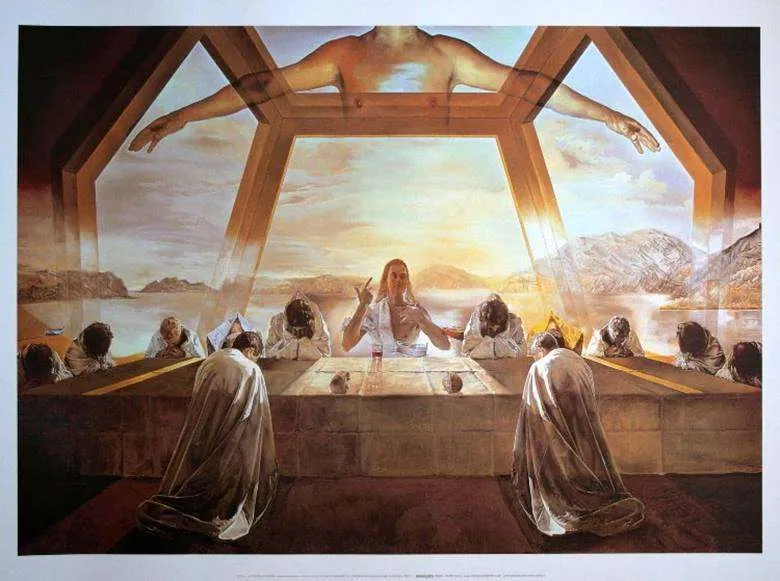
Salvador Dalí's The Sacrament of the Last Supper, a massive canvas often cited as measuring roughly 166.7 × 267 centimeters, hangs in Washington's National Gallery of Art as one of the most frequently referenced examples of deliberate golden ratio use in modern painting. The story goes that Dalí built the entire composition around that mathematical proportion, not just in the canvas dimensions but in the placement of every major element.
The table's upper edge reportedly sits at the golden ratio point along the painting's height. The two apostles flanking Jesus are positioned at matching horizontal ratios. The whole scene unfolds inside a giant dodecahedron, that twelve-sided geometric solid whose pentagonal faces each contain the intersection of three golden rectangles. Through the pentagonal windows, the Catalan landscape of Dalí's birthplace stretches toward the horizon.
According to the original account, Dalí likely drew inspiration from Leonardo da Vinci, who was a close friend of the mathematician and Franciscan friar Luca Pacioli. Pacioli published De Divina Proportione in 1509, a three-volume work entirely devoted to the golden ratio, and Leonardo himself created the illustrations for it. That much is confirmed fact.
What remains uncertain is whether Leonardo actually used the golden ratio in his own paintings. Claims about The Last Supper and the Mona Lisa surface constantly, with people drawing golden rectangles around the faces and finding alignments in the architecture. But whether these placements were intentional or accidental has never been established. For the Mona Lisa specifically, there is no agreement on where exactly the rectangle should even be drawn.
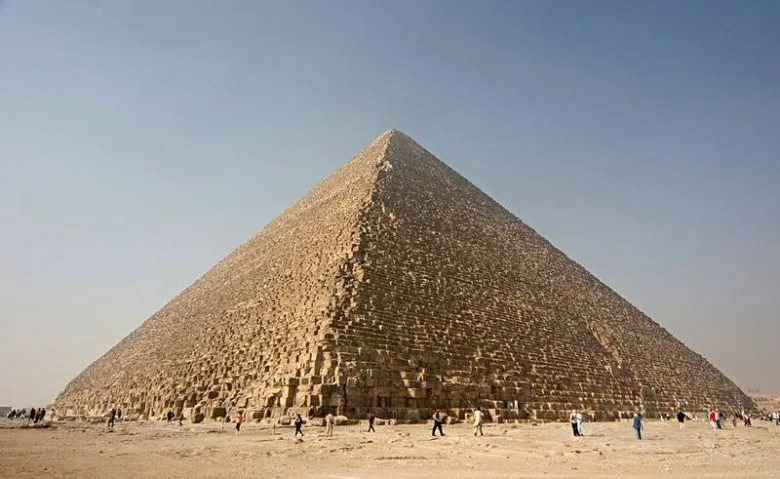
Beyond these Renaissance canvases, the golden ratio myth extends to far older monuments, and here the evidence gets even thinner. The claims about Egyptian pyramids and Greek temples being designed around the golden ratio have been repeated so often they feel like common knowledge, yet they rest on remarkably little support. Measurements of the Parthenon and the Great Pyramid tend to vary depending on who is measuring and what they decide to include, and the ancient builders left no records indicating they knew anything about this particular proportion. The romantic idea that classical architects were secretly encoding a divine mathematical formula into their stone is a story that says more about modern fascination than ancient practice.
The Fibonacci Connection: Real Math, Misleading Spiral
Leonardo Fibonacci, an Italian mathematician, defined his famous sequence around 1200, and it has been tangled up with the golden ratio myth ever since. The sequence starts with 0 and 1, and each new number is simply the sum of the two before it: 0, 1, 1, 2, 3, 5, 8, 13, and onward. Here is what is genuinely true about the connection, and where the popular story starts to wobble.
Divide any Fibonacci number by the one that came before it, and something curious happens. The larger the numbers get, the closer that ratio creeps toward phi, the golden ratio, about 1.618. This is not a coincidence; it is a solid, verifiable property of the sequence, and it is the reason the two concepts are so frequently mentioned in the same breath.
But here is where the familiar picture goes sideways. Those elegant spirals you see drawn over sunflowers, seashells, and rose petals? The ones that supposedly prove nature loves the golden ratio? That shape is not actually a spiral at all. It is a series of circular arcs connected at right angles, arranged inside adjacent rectangles whose sides follow Fibonacci measurements. It looks like a spiral, and it photographs beautifully, but mathematically it is a chain of quarter-circles pretending to be something smoother. The visual trick is convincing, which is probably why it has been repeated so often.
The golden ratio myth also picked up a famous ally it never really had. A common myth claims that Johannes Kepler, the German astronomer and mathematician who lived from 1571 to 1630, discussed the golden ratio and Fibonacci numbers in his essay De nive sexangula, a work about snowflakes. The record shows otherwise. That essay, written in 1611, is about the six-sided structure of snowflakes and does not discuss the golden ratio or the Fibonacci sequence at all. Kepler did write admiringly about the golden ratio elsewhere in his work, but the snowflake essay has been misattributed somewhere along the line, and the error has stuck.
The real relationship between Fibonacci and phi is impressive enough on its own. The sequence shows up in plant growth patterns, in the arrangement of leaves, and in the number of petals on many flowers. None of that requires the golden ratio myth to be true. The math stands fine by itself, without the decorative spiral being what it claims to be.
Beauty and the Golden Ratio: What the Experiments Really Show
Gustav Fechner, a German physicist and psychologist, put the golden ratio myth about beauty to the test in the 1860s, and the results were far less dramatic than the legend suggests. Fechner showed participants rectangles with different proportions and asked them to pick the most pleasing one. The rectangle with a ratio of 1.62, close to the golden ratio of about 1.618, did come out on top. But here is the honest part: the preference was not overwhelming. People also liked rectangles with ratios of 1.50 and 1.75 nearly as much.
Fechner did not stop with those rectangles. He went on to measure window frames, museum paintings, and book pages, and in his work Vorschule der Aesthetik, he claimed the average of these measurements landed close to the golden ratio. Modern researchers still debate how much of that result came from selective sampling and wishful interpretation. The takeaway from his experiments is clear enough: the golden ratio may have a slight edge in what people find pleasing, but it hardly holds a monopoly on beauty.
The debate eventually moved from rectangles to human faces. In 1994, an orthodontist named Mark Lowey reportedly published a study suggesting that model faces conform to the golden ratio. As the story goes, his findings pointed to something special in the facial proportions of fashion models. But the claim did not survive scrutiny for long.
Alfred Linney and his team at the same hospital's jaw surgery unit took a different approach. They used laser measurements to map model faces with remarkable precision, then compared those measurements against the general population. The data was unambiguous: model faces were no more regular and no more "golden" than anyone else's. The golden ratio myth about beautiful faces simply did not hold up under careful measurement.
Frequently asked questions
What is the golden ratio and how is it calculated?
The golden ratio is a mathematical relationship where the ratio of the larger quantity to the smaller one equals the ratio of their sum to the larger one. Written as (a+b)/a = a/b, its value works out to (1+√5)/2, which is approximately 1.6180339887. Like pi, it is irrational, meaning its decimal expansion never repeats and never ends.
Why is it called the divine proportion?
Renaissance thinkers gave it that lofty title. In 1509, the mathematician and Franciscan friar Luca Pacioli published a three-volume work called De Divina Proportione , with illustrations by his close friend Leonardo da Vinci. The name stuck because the number kept appearing in geometry, nature, and art, which felt almost spiritual to scholars of that era.
Is it really in the Mona Lisa and Last Supper?
Claims about Leonardo's paintings are shaky at best. People say you can draw a golden rectangle around the Mona Lisa's face, and that the Last Supper's composition follows the ratio. But there is no consensus on where exactly those lines should go, and no evidence Leonardo consciously used the ratio in either work. What is documented is his friendship with Pacioli and his illustrations for the 1509 book on the divine proportion.
How are golden ratio and Fibonacci sequence connected?
The Fibonacci sequence, defined by Leonardo Fibonacci around 1200, starts with 0 and 1, with each new term being the sum of the two before it. As the numbers grow, the ratio of consecutive Fibonacci numbers gets closer and closer to phi, the golden ratio. This numerical proximity also produces a spiral-like curve when you draw connected rectangles with Fibonacci dimensions, a shape often spotted in seashells and sunflower seeds.
What did Fechner's experiments find?
In the 1860s, German physicist and psychologist Gustav Fechner showed participants rectangles with different width-to-height ratios and asked which they found most pleasing. Preferences clustered around ratios of 1.50, 1.62, and 1.75, with the 1.62 rectangle winning most often. That number sits very close to the golden ratio, though whether the preference was statistically meaningful remains debated.
Was it used in the Great Pyramid?
The idea that the Great Pyramid of Giza was built according to the golden ratio is popular but unproven. No ancient Egyptian texts or architectural records confirm the builders used phi. The pyramid's proportions can be made to fit the ratio if you measure certain lines and ignore others, which is exactly the kind of selective math that fuels the golden ratio myth.
Who first used phi?
According to a widely repeated but unverified anecdote, the symbol φ was chosen as a nod to the Greek sculptor Phidias, who lived around 490 to 430 BC and supposedly used the ratio in his compositions. Since Phidias's name starts with the Greek letter phi, the symbol was a natural fit. But no primary sources document this connection, so it remains an anecdote rather than a confirmed fact.
Does it make faces more attractive?
Researchers have tested this idea, and the evidence says no. A 1994 study attributed to orthodontist Mark Lowey is often cited as evidence that model faces conform to the golden ratio, but no reliable source confirms this study exists. Alfred Linney and his team at the same hospital's jaw surgery unit used laser measurements to scan model faces with extreme precision. Their data showed model faces were no more golden, and no more regular, than the general population's faces. Editorial note: Any facts which remain unconfirmed are presented as such, with hedged language that reflects the current state of historical and scientific research.
Got a take on this? Add your voice to the conversation below →
No comments yet. Be the first.