Franz Mesmer: The Man Behind 'Mesmerize' and Modern Hypnosis
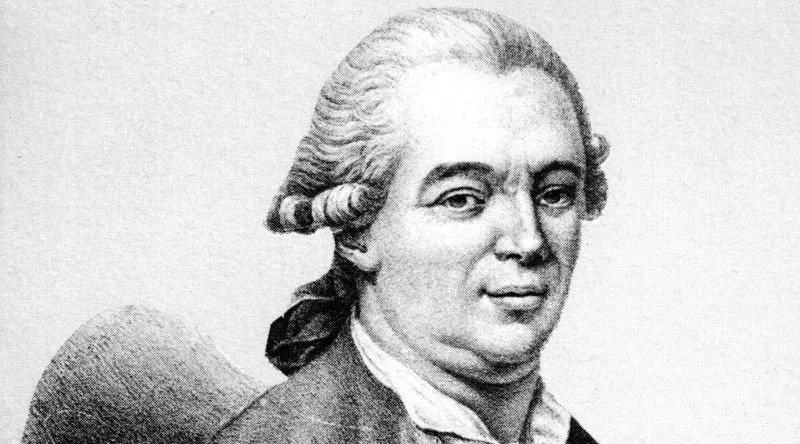
Franz Mesmer, an 18th-century Austrian physician, developed the controversial theory of animal magnetism in the 1770s and 1780s, dazzling Parisian society and even treating patients associated with Marie Antoinette's court before a royal commission led by Benjamin Franklin debunked his work in 1784. His name lives on in the word "mesmerize," and his techniques laid the groundwork for what we now call modern hypnosis. It's a story of a charismatic healer whose remarkable successes, like curing a pianist's hysterical blindness, ultimately unraveled when science demanded proof.
Franz Mesmer was an Austrian physician who claimed a universal invisible fluid, which he called animal magnetism, could heal illness by rebalancing the body. He achieved fame in 1770s Paris, but in 1784 a royal commission, including Benjamin Franklin, tested his methods and concluded the effects came from imagination, not any magnetic force. Mesmer faded into obscurity, but his techniques influenced the development of hypnotherapy.
- Franz Mesmer developed his theory of animal magnetism in Vienna during the 1770s, treating patients with magnets and his own touch.
- In 1778, Mesmer moved to Paris, where his practice attracted wealthy clients, including figures connected to the court of Marie Antoinette.
- A celebrated case involved a young pianist who reportedly regained her sight after treatment with Mesmer, though the cure was later attributed to suggestion.
- In 1784, King Louis XVI appointed a royal commission, which included Benjamin Franklin, to investigate Mesmer's claims.
- The commission concluded that Mesmer's results were due to the power of imagination and suggestion, not any physical fluid, effectively debunking his theory.
The Man Who Made Hypnosis a Parisian Craze
Franz Anton Mesmer (1734–1815) didn't just stumble into the history books; he marched straight into them with a theatrical flair that Paris could not ignore. A German physician with a taste for the dramatic, Mesmer is now remembered as the pioneer of modern hypnotism in the Western world, the man who gave us the word "mesmerize" and turned a medical theory into the favorite entertainment of French high society.
His rise to fame began with a young pianist named Maria Theresia Paradis, a woman suffering from hysterical blindness. When Mesmer restored her sight, it should have been a triumphant miracle. Instead, the aftermath turned tragic. Once she could see, Paradis reportedly became obsessed with watching her own hands play, the notes blurring together, and her once-brilliant career collapsed into failure. According to the original account, she may have even taken her own life later, though that detail remains contested. What is certain is that this cure, controversial as it was, launched Mesmer into the spotlight.
Soon, mesmerism became the darling of the Parisian elite. Salons buzzed with talk of "animal magnetism," the invisible fluid Mesmer claimed flowed through living bodies. The story goes that even Marie Antoinette found joy in his treatments, though no reliable evidence confirms her personal participation. As for Mozart, he and Mesmer were certainly acquainted, and the composer even wove a mesmerism scene into his opera Così fan tutte. But the claim that both men shared a Masonic lodge together? That part of the legend remains unverified.
The establishment eventually pushed back. King Louis XVI appointed a royal commission in 1784 that included Benjamin Franklin, the chemist Lavoisier, and Dr. Guillotin. When patients were blindfolded and couldn't tell whether Mesmer was in the room, the effects simply stopped. The commission concluded that animal magnetism was pure imagination, not science. And as for Guillotin himself, he wasn't the inventor of the guillotine at all; similar devices existed long before him. He merely advocated for its use as a more humane method of execution.
Mesmer escaped the guillotine's shadow but lived out his final years far from the glory he once knew. Today, his legacy survives in a single English word: "mesmerize," meaning to hypnotize, to captivate, to hold someone utterly in your spell.
The Royal Commission That Exposed Animal Magnetism
By 1784, Franz Mesmer's reputation had grown so loud that King Louis XVI of France could no longer ignore it. The monarch appointed a royal commission to investigate animal magnetism, the invisible fluid Mesmer claimed flowed through his hands and into patients' bodies. Among the investigators sat some of the most brilliant minds of the era: Benjamin Franklin, the American diplomat and scientist; Antoine Lavoisier, the chemist who had identified oxygen; and Joseph-Ignace Guillotin, a physician whose name would later become attached to a very different machine.
The commission designed experiments that were elegantly simple. They blindfolded patients and told them Mesmer was in the room when he was not. They also placed patients in rooms where Mesmer actually was present, but led them to believe he was elsewhere. The results were devastating to Mesmer's theory. When patients could not see whether Mesmer was there, the effects of animal magnetism simply did not occur. The healing power, the commission concluded, came not from any magnetic fluid but from the patients' own imaginations.
The commission's 1784 report declared animal magnetism a false doctrine, a superstition with no basis in physical reality. It was a public humiliation for Mesmer, delivered by the most respected scientific authorities in France. The timing proved dangerous, too. The French Revolution was brewing, and Mesmer's ties to the aristocratic circles that had celebrated him made him a target. According to the original account, he narrowly escaped the guillotine in the years before the Revolution, retreating into obscurity and spending his final years far from the Parisian salons where he had once been a star.
As for Guillotin, the commission member whose name became synonymous with the execution device, the popular version of history has treated him unfairly. Contrary to what many believe, he did not invent the guillotine. Similar decapitation devices existed before him. Guillotin merely advocated for its use, arguing that it offered a more humane method of execution than the alternatives. The irony is rich: a man who sat on the commission that debunked Mesmer's magnetic healing would lend his name to one of history's most infamous machines, while the man he helped expose would lend his name to the English word "mesmerize," meaning to hypnotize or captivate.
Mesmer's Fall and the Word He Left Behind
Franz Mesmer's star burned brilliantly in Paris, then it went out fast. By the late 1780s, the physician who had once charmed French high society was fighting for his survival, and the story goes that he barely escaped the guillotine before the French Revolution swept through. Whether that narrow escape really happened is hard to pin down, but what is certain is that his final years looked nothing like his glory days.
The fall began with a royal commission. King Louis XVI, bothered by Mesmer's growing popularity, appointed a panel in 1784 that included Benjamin Franklin, the chemist Lavoisier, and Joseph-Ignace Guillotin. The commission's experiments were clever: when patients were blindfolded and couldn't tell whether Mesmer was in the room, his so-called animal magnetism simply stopped working. The effects, they concluded, came from imagination, not from any mysterious magnetic fluid.
Guillotin's name on that commission is a small historical joke. He wasn't the inventor of the guillotine at all, decapitation devices existed long before him. He simply argued for its use as a more humane method of execution. The irony of Mesmer's near-miss with that very blade, if the story is true, is almost too neat.
Mesmer retreated from Paris and spent his remaining years far from the salons that had once adored him. He died in 1815, largely forgotten by the public that had once packed his treatment rooms.
But his name refused to die. Today, the English verb "mesmerize" meaning to hypnotize, captivate, or hold someone spellbound, comes directly from Franz Mesmer's surname. Every time someone says they were mesmerized by a performance or a person, they are unknowingly invoking the legacy of the man who tried to heal with magnets and ended up giving the world a word for enchantment.
Frequently asked questions
Who was Franz Mesmer and why is he important?
Franz Anton Mesmer (1734–1815) was a German physician who pioneered what became modern hypnotism in the Western world. He developed a controversial treatment called animal magnetism in the 1770s, which drew both devoted followers and fierce critics. His methods influenced later figures including Sigmund Freud, making Mesmer a foundational name in the history of psychology. Mesmer first captured public attention by treating a young pianist named Maria Theresia Paradis, who reportedly suffered from hysterical blindness. The story goes that when her sight returned through his sessions, her musical career took a strange turn. She began staring at her hands constantly, the notes jumbled together, and she faded into obscurity as a performer. Some versions of the tale even suggest she later took her own life, though that detail remains uncertain. Whatever truly happened with Paradis, the episode turned Mesmer into a sensation. He swept through French high society, transforming animal magnetism into the most fashionable entertainment in Paris. His popularity grew so enormous that it eventually unsettled the king himself.
What was Mesmer's animal magnetism theory?
Animal magnetism was Mesmer's belief that an invisible natural force flowed through all living beings, and that blockages in this force caused illness. He claimed he could manipulate this fluid using magnets, passes of his hands, or specially designed tubs filled with iron filings. By restoring the proper flow, he said, he could cure patients of everything from headaches to paralysis. According to the original account, even Marie Antoinette reportedly found joy in Mesmer's treatments, though no reliable evidence confirms her direct participation. The composer Wolfgang Amadeus Mozart was certainly acquainted with Mesmer, and they may have shared Masonic connections, but Mesmer's lodge membership remains unverified. What is certain: Mozart's 1790 opera Così fan tutte includes a scene where a character uses a magnet, a clear nod to Mesmer's famous methods. Mesmer's Paris practice grew so lucrative that he trained groups of healers and charged wealthy clients for private sessions. His baquet, a wooden tub with protruding iron rods, became the centerpiece of his group treatments, with patients clutching the rods while connected by ropes. The theatrical atmosphere, dim lighting, and dramatic crises his patients experienced only added to the mystique.
How did Benjamin Franklin's commission debunk Mesmer?
King Louis XVI appointed a royal commission in 1784 to investigate Mesmer's claims, and its members included Benjamin Franklin, the chemist Antoine Lavoisier, and Joseph-Ignace Guillotin. The commission designed careful experiments that separated suggestion from any real magnetic force. When patients were blindfolded and could not tell whether Mesmer was present in the room, the magnetic effects simply did not occur. The commission concluded that animal magnetism was a delusion driven by imagination, not any genuine fluid. Guillotin, despite his name being forever attached to the execution device, did not actually invent the guillotine. Similar decapitation machines existed long before him. He simply advocated for its use as a more humane method of execution, a distinction that history has largely blurred. Mesmer survived the scandal and the revolution that followed, though he narrowly escaped the guillotine in the turbulent years before 1789. He spent his final years far from the glory of his Parisian heyday, a fallen star in an age that had moved past him. Yet his legacy endured in the English language itself. The word "mesmerize," meaning to hypnotize or captivate completely, still carries his name today, a permanent reminder of the man who once held all of Paris in his spell.
Got a take on this? Add your voice to the conversation below →
No comments yet. Be the first.