Person of Interest: The Show's 8 Best Female Characters
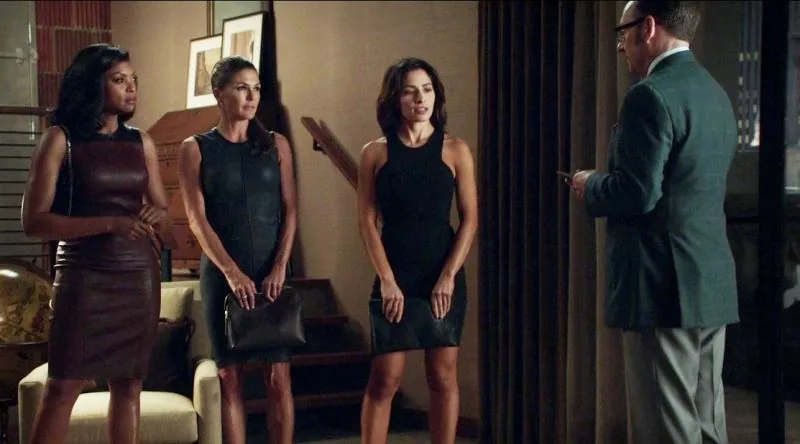
Person of Interest female characters, Root, Shaw, Carter, and Finch's ally Zoe Morgan, are widely celebrated as some of the best-written women on television, and this CBS drama that ran from 2011 to 2016 built its reputation on giving them organic, non-stereotypical arcs. These women aren't love interests or damsels; they're hackers, assassins, detectives, and fixers who drive the plot with their own agendas, loyalties, and razor-sharp wit. Watching them navigate a world of surveillance and moral gray areas feels less like a checklist and more like a masterclass in character writing.
Person of Interest, which aired on CBS from 2011 to 2016, features a roster of female characters, Root, Shaw, Carter, and Zoe, who are praised for being complex, capable, and refreshingly free of clichés. Each woman holds her own in a male-dominated espionage thriller, with storylines that prioritize agency, intelligence, and deep, supportive bonds over romance or rivalry.
- Root, introduced in season one, evolves from a mysterious hacker into a devoted ally of the Machine, becoming a central figure in the show's final seasons.
- Sameen Shaw, a former Army medic and intelligence operative, joins the team in season two, bringing a clinical, action-first approach to every mission.
- Detective Joss Carter, a homicide detective in New York City, spends her first two seasons hunting the mysterious John Reese before becoming a trusted partner.
- Zoe Morgan, a "fixer" who makes problems disappear for the wealthy, appears across multiple seasons as an independent contractor whose skills rival the team's.
- The women of Person of Interest frequently work together, share information, and save each other's lives, avoiding the catty infighting that plagues many TV dramas.
Why Person of Interest Still Pulls in New Viewers
Person of Interest, which aired from 2011 to 2016, became a classic because it wove diversity into its fabric so naturally that you barely notice it's there. The show features a gay character, a refugee, a Black lead in Taraji P. Henson's Detective Joss Carter, a strong female character, a fat character, and a dog named Bear. None of these elements feel forced or manufactured, which is exactly why it holds up so well against today's output.
The secret isn't that the show checked boxes. It's that the characters are so fully realized that their identities are just one layer of who they are. Lionel Fusco, for instance, is an NYPD detective whose special talent is simply being one hell of a detective. His weight is never a punchline or a plot point. It's just part of him, like his crooked past and his gradual path toward redemption.
When I rewatched the series recently, I kept noticing how effortlessly the show balanced its massive cast. The gay character, the refugee, the Black lead, the strong women, the fat character, the dog. On paper, that sounds like a checklist from a studio diversity mandate. On screen, it plays like life. These people exist in the same world, work the same cases, and their differences are noted without being spotlighted. That's the magic trick Person of Interest pulled off week after week from 2011 to 2016.
This is the first show I recommend when anyone asks for a series suggestion. Not just because it's gripping or original, but because it proves that representation doesn't have to come with a sledgehammer. The show's Person of Interest female characters, in particular, demonstrate how to write women who are powerful, complicated, and utterly themselves without ever turning into walking manifestos.
The Women of Person of Interest, One by One
Person of Interest female characters earned their place in television history not by ticking boxes, but by being unforgettable people first. The CBS series, which ran from 2011 to 2016, introduced viewers to a roster of women who were agents, artists, hackers, detectives, and fixers, each one written with such care that they felt less like characters and more like people you might actually meet.
Take Kara Stanton, for instance. She was a former CIA agent who served as John Reese's handler and partner, and she was, in every sense of the word, a total agent. No melodrama, no hesitation, just cold professionalism and the kind of instincts that kept you alive in the field. She embodied the spy life so completely that you understood exactly how Reese learned his trade.
Then there was Grace Hendricks, Finch's great love. She was an elegant, intellectual artist who believed Finch had died in a bombing, and she mourned him with a nobility that felt almost old-fashioned. Despite everything that happened to her, she chose the light. That quiet strength made her one of the most poignant figures in the whole series.
Control was a tactical genius, a senior government official who oversaw Samaritan with a single-minded focus that bordered on obsession. The original account suggested she may have been the first official to code Samaritan as relevant, though the machines themselves ultimately determined relevance. What is certain is that she was a woman utterly devoted to her mission, with no trace of power corruption. She knew her job, she knew her agents, and she earned her name completely.
Zoe Morgan deserves special affection. She was a high-end fixer, not a prostitute, despite what some might assume. Elegant, beautiful, and terrifyingly intelligent, she operated in a man's world without a hint of drama about her femininity. Her power came from her mind, which is why she never had to compromise her grace, her style, or her luxury. She simply out-thought everyone in the room.
Joss Carter, played by Taraji P. Henson, was a cool-headed, intelligent, sexy homicide detective who also happened to be a mother with unshakeable moral standards. She could handle any heavy weapon, dismantle a criminal network, and still look devastatingly good at a bar. Her death was a wound the show never fully healed.
Root, whose real name was Samantha Groves, was a brilliant hacker who fought with dual weapons. Some viewers have compared her fighting style to the Dimachaerus technique of ancient gladiators, though that specific term was never prominently used in the series. She painted her nails black, curled her hair, and wielded her seductive voice and leather jacket as weapons of their own. She fell in love with someone who had Axis II personality disorder and loved them fiercely despite their emotional blindness. Her transformation from chaos agent to devoted ally was one of the show's great pleasures.
Jessica was Reese's anchor to a normal life, his good side personified. She was brave, ready to wait for him, and her memory haunted him throughout the series. Though she appeared rarely, her importance was immense.
And then there was Sameen Shaw, a former Marine, ISA operative, and doctor with suppressed emotions, not absent ones. She loved food, honored her fallen friends, and communicated entire relationships with a single raised eyebrow. Far from being emotionless, she simply felt things differently, and that made her no less female, no less human.
What made these women truly special was that they never fought each other. Shaw helped Carter, Carter admired Shaw's weapon, Zoe noticed custom shoes and praised them. They supported each other without ever making a spectacle of it. That organic solidarity felt real, and it was exactly why the show worked.
These Women Never Fight Each Other
In Person of Interest, the female characters share a remarkable bond: they simply do not tear each other down. Sameen Shaw, the former Marine and ISA operative introduced in season two, regularly steps in to help NYPD Detective Joss Carter, played by Taraji P. Henson. Carter openly admires Shaw's weaponry without a hint of jealousy. Their mutual respect feels earned, not manufactured for the camera.
Zoe Morgan, the high-end fixer who navigates corporate and political circles, notices other women's custom shoes and pays genuine compliments. She never treats another woman as a threat to her position or her worth. That instinct, or rather that deliberate absence of instinct, sets this show apart.
What makes this camaraderie stand out is how organic it feels. The show never pauses to announce that its women support each other. There is no speech about solidarity, no lingering close-up to hammer home a message. Shaw simply shows up when Carter needs backup, and Carter acknowledges Shaw's skills the way she would any competent ally. Root, the hacker also known as Samantha Groves, operates in her own orbit, yet she never undermines the other women either. Even as her loyalty to the Machine puts her at odds with the team's methods, her conflicts stay aimed at systems, not at the women around her.
This lack of infighting among the Person of Interest female characters becomes a defining feature of the series. In a television landscape where female characters are often pitted against one another for screen time, approval, or romantic attention, this show simply declines to play that game. The women are too busy being competent at their jobs, too focused on the mission, too secure in their own skins to bother with petty rivalries.
Zoe, for instance, could easily resent Carter for her moral clarity or Shaw for her combat prowess. Instead, she appreciates what each woman brings. Carter, a homicide detective with high ethical standards, never questions Shaw's unorthodox methods when they produce results. Shaw, who struggles with emotional expression due to her conditioning, still finds ways to show loyalty through action rather than words.
The show trusts its audience to notice this dynamic without spelling it out. That restraint is precisely why it works. The women of Person of Interest exist as fully realized individuals first, not as archetypes designed to clash with one another. Their solidarity emerges naturally from their shared purpose and mutual respect, making it one of the most quietly progressive aspects of a series that ran from 2011 to 2016.
Why Person of Interest Feels So Real
The world of Person of Interest, which aired from 2011 to 2016, is packed with every kind of variation you can imagine, yet no one is ever defined by identity, orientation, or gender. Instead, characters stand out purely through their talents, intelligence, flaws, and weaknesses. That is the secret sauce that keeps the show feeling alive more than a decade later.
Think about how rare that actually is. The show gives you a gay character, a Black lead, a refugee, strong women, even a beloved dog named Bear. But none of them are reduced to a checkbox. They are people first, labels second. The Person of Interest female characters are a perfect example. Joss Carter, played by Taraji P. Henson, is a homicide detective with unshakeable moral standards and a fierce protective instinct for her son. Sameen Shaw is a former Marine and ISA operative with a medical degree who speaks in a low monotone and loves food. Root, whose real name is Samantha Groves, paints her nails black, curls her hair, and wields dual pistols like a gladiator. Zoe Morgan is a high-end fixer whose power comes entirely from her mind. Grace Hendricks is an artist and Finch's great love, mourning him with quiet dignity. None of them fight each other for screen time or approval. Shaw helps Carter. Carter admires Shaw's weapon. Zoe notices Carter's custom shoes and compliments them. The solidarity feels organic because it is never announced, just lived.
The Machine itself learned from humanity, and perhaps it is still learning. That organic approach is exactly why the show remains a classic. It does not lecture you about diversity. It simply shows you a universe where people are measured by what they do, not what they are. And that, more than any plot twist, is what pulls new viewers in year after year.
Frequently asked questions
Who are the main female characters?
The main women of Person of Interest include Kara Stanton, Grace Hendricks, Control, Zoe Morgan, Joss Carter, Root, Sameen Shaw, and Jessica. The series aired from 2011 to 2016 and built its reputation partly on how these women were written: as fully realized people rather than stock figures.
What makes them unique?
Each woman is defined by her abilities, intelligence, mistakes, and flaws, never by her gender or sexuality. The show presents them organically, without leaning on stereotypes or preaching to the audience. They simply exist as competent, complicated individuals whose identities never become the centerpiece of their stories.
How does Root evolve?
Root, whose real name is Samantha Groves, starts as a chaotic hacker and transforms into a devoted ally of the Machine. She forms a deep bond with Sameen Shaw and ultimately sacrifices herself. Her arc from unpredictable wildcard to committed protector is one of the show's most compelling character journeys.
Why is Shaw a standout?
Sameen Shaw is a former Marine and ISA operative with a medical degree, introduced as a cool-headed professional who keeps her emotions tightly suppressed. She is not emotionless, as some viewers assume, but rather a woman who has learned to bury her feelings. Her bond with Root, built through shared danger and unspoken understanding, makes her one of television's most memorable agents.
What role does Carter play?
Joss Carter, portrayed by Taraji P. Henson, is a principled homicide detective and mother who never loses her high moral standards or her belief in justice. She can handle any weapon, dismantle a criminal network on her own, and still show up to a bar looking devastating. Carter's integrity anchors the early seasons before her tragic death.
How does Zoe stand out?
Zoe Morgan is a professional fixer, elegant and fiercely intelligent, who draws her power from her mind rather than her appearance. Contrary to what some might assume, she is not a prostitute but a high-end consultant who navigates the worlds of politics and corporate power. She supports other women without ever treating them as threats.
Do they ever conflict?
No, they do not. Shaw helps Carter, Carter admires Shaw's weapon, and Zoe notices and praises another woman's custom shoes. The women of Person of Interest support each other organically, without manufactured drama or rivalry. Their solidarity feels natural because it grows from mutual respect rather than forced messaging.
How does the show handle diversity?
The series weaves in diverse characters, including a gay character, a refugee, a Black lead, and strong women, without ever making their identities the point. Everyone is defined by their talents, their intelligence, their errors, and their weaknesses. The show trusts its audience to see these people as human first, which is exactly why it still feels fresh.
Got a take on this? Add your voice to the conversation below →
No comments yet. Be the first.