Pied Piper of Hamelin: The 1212 Children's Crusade Truth
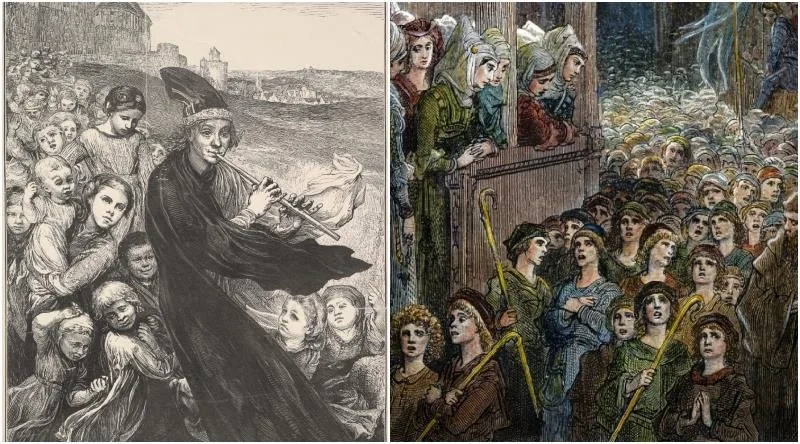
The Pied Piper of Hamelin Children's Crusade theory links the famous 1212 legend to a grim historical tragedy, where thousands of youths vanished while marching toward the Mediterranean. The story of Hamelin's lost children may be a folk memory of the Children's Crusade, a real 1212 event that saw young people leave home, only to face slavery, shipwreck, and death. It is a haunting thought: the fairy tale you heard as a child might be a coded lament for a generation that never came home.
In 1212, two separate youth movements, led by Stephen of Cloyes in France and Nicholas of Cologne in Germany, marched toward the Holy Land. Most participants never returned, with many dying en route or being sold into slavery. The Pied Piper legend, first recorded in Hamelin, Germany, may symbolize this tragic disappearance.
- In 1212, a French shepherd boy named Stephen of Cloyes led a march of thousands of children toward the Mediterranean, believing the sea would part for them.
- Nicholas of Cologne, a German youth, led a parallel expedition across the Alps, where many followers died from cold, hunger, and exhaustion.
- Surviving children from both groups were reportedly sold into slavery in North Africa, while others drowned in shipwrecks.
- The earliest known reference to the Pied Piper story dates to a stained-glass window in Hamelin's church, created around 1300.
- Historians suggest the legend may preserve a collective memory of a local tragedy, possibly a mass emigration or a documented 1284 loss of children.
The Legend We All Know, and the Darker Story It May Hide
Everyone remembers the fairy tale: a rat-infested town, a mysterious piper who promises to clear the vermin for a purse of gold, and a village that breaks its word. The piper drowns the rats in the river, the townsfolk refuse to pay, and he returns at night to lure away all their children with his enchanted flute. It's a chilling story, but a popular theory suggests the Pied Piper of Hamelin Children's Crusade connection is real, that this German folk tale might actually be a coded memory of one of medieval Europe's strangest and saddest episodes.
The story as we know it was compiled and fictionalized by the Brothers Grimm, who gave literary shape to older local legends. The classic version is set in Hamelin, a town in northern Germany, where rats have devoured every scrap of food and pushed the village to the brink of famine. A piper arrives and strikes a deal: clear the rats, receive a purse of gold. He plays his pipe, and thousands of rats follow him into the river, drowning as he keeps blowing his melody. But when he returns for his reward, the villagers refuse to pay. Seeking revenge, the piper comes back one night and plays his magic flute again, this time leading all the children out of town, never to be seen again.
For centuries, people assumed this was a simple cautionary tale about keeping promises. But the darker interpretation suggests something far more tragic. According to this theory, the piper represents the charismatic leaders who led thousands of children on a doomed journey to the Holy Land in 1212, a movement now remembered as the Children's Crusade. The story's mass departure of children mirrors the real exodus of young people who left their homes, following a dream of reclaiming Jerusalem, and never came back.
A Crusade Fever Sweeps Europe, and Children Catch It
In 1099, crusaders stormed Jerusalem and took the Holy City, capping the First Crusade with a victory that seemed to prove God was on their side. But that triumph didn't last. In 1187, Saladin crushed the crusader army at the Battle of Hattin, and Jerusalem slipped back into Muslim hands. The loss stung deep, and the warriors who had held the city for nearly nine decades were not about to let it go quietly.
So they turned to the poor. Medieval Europe was already ragged and hungry, and the crusaders and clergy knew exactly which chords to strike. Go east, they told the weary peasants, and you'll win back the Holy Land. Do it for God, and He will forgive your sins. Do it for yourselves, and you'll taste the riches of the East, where streets reportedly flowed with honey and milk. Priests fanned out across the villages, preaching fire and brimstone, spinning tales of Eastern treasure until even the youngest ears burned with desire for Jerusalem.
By 1212, that fever had reached a boiling point. The atmosphere was so charged that children began to believe they could do what their elders could not, that their innocent hearts might move God where armored knights had failed. The stage was set for the Children's Crusade, a desperate, tragic chapter that would see thousands of young lives swallowed by the very dream their parents and priests had planted in them. The Pied Piper of Hamelin Children's Crusade connection would come later, but the frenzy that made it plausible was already sweeping the continent.
Stephen of Cloyes: A Boy, a Letter, and 30,000 Followers
In 1212, a 12-year-old French shepherd boy named Stephen of Cloyes claimed Jesus had handed him a letter ordering him to retake Jerusalem from Muslim control. The French king dismissed the boy outright, but Stephen's visions soon attracted monks, priests, and thousands of families desperate for divine favor. What happened next became one of the most tragic and contested episodes of medieval Europe.
Stephen first approached the French king with his story, explaining that Christ had sent him a personal letter commanding a new crusade to reclaim the Holy Land. The monarch was unimpressed and sent the boy away. But Stephen refused to disappear. He began sharing his visions publicly, and as the story goes, his sincerity won over local clergy who saw something holy in the child's conviction.
The response was overwhelming. Families across the French countryside handed over their children to Stephen, believing that youthful innocence would succeed where adult sinfulness had failed. Priests reinforced this message, telling parents that God would grant victory to pure-hearted children. By 1212, the church had reportedly gathered around 30,000 young people to march from Marseille toward Jerusalem under Stephen's leadership.
The numbers that follow are murky at best. According to the original account, only about 7,000 of those children ever returned home. The rest, as the story goes, were captured by pirates along the way and sold into slavery in Egypt and Algeria. These precise figures, however, are not supported by reliable historical evidence and are largely legendary. Contemporary records from the period are sparse and contradictory, making it impossible to verify exactly how many children left Marseille or what truly became of them.
What remains certain is the pattern that made Stephen's movement possible. The First Crusade had succeeded spectacularly when Jerusalem fell to crusader forces in 1099, but Saladin's victory at the Battle of Hattin in 1187 returned the city to Muslim hands. That loss haunted medieval Europe, and the dream of recovering Jerusalem never faded. Stephen's crusade, whatever its true scale, emerged from that longing. The boy himself reportedly vanished from historical records after the expedition, leaving only the haunting story of thousands of children who followed him and never came back.
Nicholas of Cologne: A Second March into the Alps
While Stephen's story was still rippling through France, a German boy named Nicholas caught the same fever and reportedly gathered around 20,000 children to follow him across the Swiss Alps toward Jerusalem in 1212. The human cost was staggering: according to the original account, thousands of children froze to death in the mountain cold, and only a handful ever made it back, with some captured or vanishing without a trace.
Nicholas was just a child himself when he stepped into Stephen's shadow. The legend says he was inspired by the French boy's mission and decided to lead his own army of the faithful. Where Stephen had Marseille and the sea, Nicholas had the brutal land route, a path that meant crossing the Alps on foot with nothing but faith and whatever meager supplies the children could carry.
As the story goes, the march was a disaster from the moment the cold set in. The Swiss Alps in 1212 were unforgiving, and these were children, not soldiers, many of them barely old enough to understand what they were marching toward. The source claims thousands died from exposure along the way, their bodies left in the snow as the survivors pressed on or turned back in despair.
What makes this chapter so haunting is how little we actually know. Contemporary evidence from 1212 is sparse and contradictory, and the exact numbers of Nicholas's following are not verifiable. The 20,000 figure, the death toll, even the route itself, all of it rests on retellings that grew more dramatic with each generation. Some records suggest the march may have been smaller or less organized than the legend insists, and historians have long debated whether Nicholas himself even existed as a single identifiable boy.
What we do know from the broader context is that this was a time when the Pied Piper of Hamelin Children's Crusade narrative was taking shape in the European imagination. The First Crusade had ended successfully with Jerusalem captured in 1099, and Saladin had taken it back at the Battle of Hattin in 1187. Between those two fixed points, a desperate hope that children could succeed where knights had failed swept through medieval Europe, and Nicholas's march was one of its most tragic expressions.
The survivors who did make it back had little to show for their ordeal. According to the original account, some were captured along the way, others simply disappeared, their families never learning what became of them. The silence that followed those empty returns may be the most truthful detail in the whole legend, because it matches what records do suggest about the era's chaos.
Years later, the Brothers Grimm would compile and fictionalize the Pied Piper tale in their 19th-century collection, giving the story its enduring shape. But the bones of it, the image of a figure leading children away from their homes into an unknown fate, echo what reportedly happened to Nicholas's young followers in the Alps. The mountain cold did not care about their mission, and the children who marched with him learned that faith alone could not stop frostbite.
The Grimm Brothers and the Birth of the Pied Piper
The Brothers Grimm did compile the Pied Piper story and turned it into the fairy tale "The Pied Piper of Hamelin," a verified fact in literary history. Jacob and Wilhelm Grimm, German scholars working in the early 1800s, gathered local legends from the town of Hamelin in northern Germany and gave the tale its lasting written form. But the connection between that fairy tale and the events of 1212 is where the story takes a much darker turn.
According to the original account, the piper in the fairy tale actually represents two real children who led thousands of their peers to disaster during the Children's Crusade of 1212. The theory suggests the piper embodies Stephen, a 12-year-old French boy, and Nicholas, a German boy, who together drew tens of thousands of children toward Jerusalem. This interpretation frames the Pied Piper of Hamelin Children's Crusade connection as a symbolic retelling of a tragic historical episode, where the magical flute player stands in for the charismatic young leaders who marched children to their doom.
Historians, however, caution against reading the legend this way. The tale more likely reflects local events in Hamelin in 1284, when something caused a significant number of children to leave the town, possibly related to emigration or a tragic accident. The Grimm Brothers' version, published in their famous collection, drew on these regional stories rather than on any documented link to the crusade. So while the Grimm connection is solid, the crusade symbolism remains a contested theory, intriguing but unproven.
What makes the parallel so tempting is the shared pattern: a charismatic figure, a crowd of children, and a disappearance that no one could fully explain. In the fairy tale, the piper leads the children into a mountainside, never to be seen again. In the historical record, the children of 1212 marched off toward the Holy Land, and for many of them, the outcome was just as final.
Frequently asked questions
What is the true story behind the Pied Piper of Hamelin?
The classic tale is a German folk legend, but some believe it symbolizes the 1212 Children's Crusade, where thousands of children followed leaders like Stephen and Nicholas and many never returned. This connection is a theory, however, not a proven historical fact. The legend more likely reflects local events in Hamelin from 1284.
Who was Stephen of Cloyes in the Children's Crusade?
Stephen was a 12-year-old French boy who claimed to have received a letter from Jesus, reportedly leading around 30,000 children from Marseille toward Jerusalem. According to the original account, only 7,000 returned, but these numbers are not verified by reliable historical evidence. Contemporary sources about Stephen are sparse and contradictory.
How did the Children's Crusade of 1212 end?
It ended in disaster. According to legend, children died from cold and hunger, or were captured and sold into slavery, though exact details are uncertain. The precise figures and outcomes are not supported by reliable historical evidence and are largely legendary. What remains clear is that thousands of young people set out and many never came home.
Why did the Pied Piper lead away the children in the legend?
In the tale, the piper sought revenge after the villagers refused to pay him for ridding the town of rats. Symbolically, some suggest the piper may represent the child leaders of the crusade who led thousands astray. The Brothers Grimm compiled this story from local German legends, providing a literary retelling rather than a historical record.
Did the Grimm Brothers base the Pied Piper on real events?
The Brothers Grimm did compile and fictionalize the Pied Piper story, including it in their famous collection of fairy tales. Whether it directly reflects the Children's Crusade, however, is a theory rather than a proven fact. The tale more likely draws from local German legends about the departure of children from Hamelin.
What happened to the children led by Nicholas of Cologne?
Nicholas reportedly led around 20,000 children across the Swiss Alps toward Jerusalem, inspired by Stephen's example. According to the story, thousands died from the cold in the mountains, and few survived, but these details are not historically verified. The exact fate of these children remains uncertain and likely exaggerated in the retelling.
Got a take on this? Add your voice to the conversation below →
No comments yet. Be the first.