Jamais Vu: The Brain's Strange Trick When Familiar Feels New
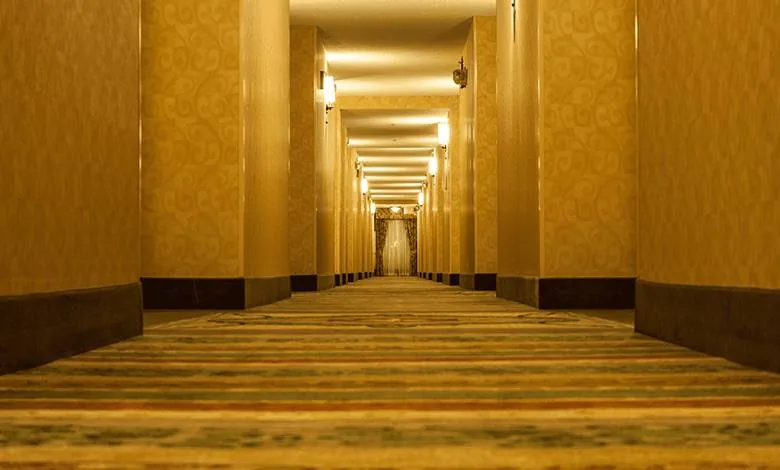
Jamais vu is a startling brain quirk where something completely familiar, your own street, a friend's face, or a common word, suddenly feels alien and unreal, and researchers have been studying it for decades to understand why our memory momentarily fails us. This strange sensation is the exact opposite of déjà vu: instead of feeling like you've experienced something new before, you feel like you've never seen something you know perfectly well. For most people, it's a fleeting, unsettling moment that passes quickly, but it offers a fascinating window into how our brains construct reality and hold onto memory. Scientists have even reproduced jamais vu in laboratory settings, giving us concrete evidence that this isn't just a figment of imagination but a measurable neurological event.
Jamais vu is the eerie feeling of unfamiliarity with something known, the opposite of déjà vu. Researchers have induced it in experiments by having people repeat words until they lose meaning. The effect is linked to how the brain's memory systems handle repetition and familiarity, revealing the delicate balance that keeps our world feeling real.
- Jamais vu is the sensation that a familiar person, place, or word suddenly feels strange or unknown.
- The term comes from French, meaning "never seen," and was coined in the early 20th century.
- A 2022 study at the University of Groningen successfully induced jamais vu in a laboratory by having participants repeat a single word dozens of times.
- The phenomenon is thought to involve the brain's memory networks, particularly the hippocampus, which helps distinguish between familiarity and novelty.
- While usually harmless and brief, chronic jamais vu can occasionally accompany certain neurological conditions, though this is considered rare.
That Odd Feeling When Familiar Suddenly Feels Alien
You know that strange moment when you walk into a room you have visited a hundred times, and suddenly it feels like you have never been there before? That unsettling sensation has a name: jamais vu, French for "never seen." It is the exact opposite of déjà vu, that eerie "already seen" feeling we all know, and it tends to be far rarer and considerably more disturbing when it strikes.
Déjà vu gets all the attention. You meet someone new and get the nagging sense you have met them before, or you visit a city for the first time and swear you have walked those streets already. Most of us shrug it off with a quick "I know this from somewhere" and move on with our day. Jamais vu flips that script entirely.
Picture this: you are deep in conversation with a close friend, someone you have known for years, and all of a sudden they feel like a complete stranger. Their face is familiar, their voice is recognizable, but something about the whole scene feels off, like you are watching a stranger wear your friend's skin. Or imagine stepping into your favorite coffee shop, the one where the barista already knows your order, and having the space feel somehow foreign, as if the walls have shifted while you were away.
The same thing can happen with something as simple as a word. You are writing an email, typing a common word over and over, and then it happens. The word stops meaning anything. It becomes a jumble of sounds, a meaningless collection of letters that suddenly looks alien on the page. That is jamais vu in its purest form: a memory illusion where something you know deeply suddenly feels unknown, unreal, as if you have never encountered it before in your life.
While déjà vu tricks you into thinking something new is old, jamais vu does the opposite. It takes something genuinely familiar, something your brain has processed countless times, and makes it feel brand new in the most disorienting way possible. Researchers describe it as a glitch in the memory system, a moment where your brain's sense of familiarity briefly short-circuits. And unlike its more famous cousin, which most people find mildly curious, jamais vu tends to leave people genuinely shaken, wondering if something is wrong with their mind.
What Is Jamais Vu, and How Does It Differ From Déjà Vu?
Jamais vu is the eerie opposite of déjà vu: a familiar face, place, or word suddenly feels entirely new, unreal, or foreign. While déjà vu makes you feel like you've lived a moment before, jamais vu makes you feel like you've never seen something you absolutely know you have. It's rarer, stranger, and often more unsettling than its better-known cousin.
Think about the last time you walked into a room you visit daily, and for a split second, everything looked wrong. Or the moment you stared at a friend's face mid-conversation and felt like you were looking at a stranger. That's jamais vu in action. It can strike anywhere, with anyone, and it's so disorienting that people sometimes question their own sanity before the feeling passes.
The term itself comes from French, meaning "never seen," and it's the exact mirror image of déjà vu, which means "already seen." Déjà vu likely happens when a current scene's layout, furniture placement, or object arrangement matches a different scene you experienced in the past, triggering a false sense of familiarity. Jamais vu flips that script entirely, making the known feel unknown.
Researchers still don't know exactly what causes jamais vu, but they're looking to déjà vu for clues. In the brain, the hippocampus, the memory center, works with the dentate gyrus, a region involved in short-term memory, to record experiences like a computer. It splits what you see, hear, and feel into separate models, then files them into a mental map. Sometimes, similar but not identical pieces overlap, creating a blur. That blur is what produces déjà vu, with the hippocampus insisting "you've seen this before" while the neocortex firmly replies "no, you haven't."
The same machinery likely plays a role in jamais vu, though the experience feels completely different. One moment you're writing a word you've typed a thousand times, and suddenly it becomes a meaningless jumble of sounds. That's not a glitch, it's your brain hitting a saturation point, and it's a signal that something has become too automatic, too fluent, too repetitive. The unreality you feel is actually a reality check, a way of snapping you out of autopilot before you lose yourself in repetition.
The Lab Experiment That Made Jamais Vu Happen on Demand
For years, the biggest headache for researchers studying jamais vu was simple: how do you make someone feel that something familiar has suddenly turned foreign, right there in a lab? You cannot just wait around and hope it happens. So a team of scientists tried a different approach, and their work earned them an Ig Nobel Prize in literature. The trick, it turned out, was boredom. Pure, relentless repetition.
The idea was almost childishly simple. Ask someone to write the same word over and over again. At some point, the word stops feeling like a word. It becomes a strange collection of letters, a noise with no meaning attached. That feeling, that sudden alienation from something you know perfectly well, is the heart of jamais vu.
In the first experiment, researchers had 94 participants write out 12 randomly selected words, again and again, according to the original account. They were told they could stop whenever their hands hurt, when they got bored, or when something started to feel off. That last reason turned out to be the most popular. About 70 percent of the participants reported stopping because they felt the strange sensation of jamais vu, typically after about 33 repetitions, which took roughly one minute.
A second experiment narrowed things down to a single word: "the." It is the most common word in English, so familiar that nobody thinks twice about it. Yet when participants wrote it on repeat, they stopped after an average of 27 repetitions, reportedly for the same unsettling reason. The word had somehow become alien.
These specific numbers come from the study as reported, so take them as the researchers described them. What is clear is that repetition does something strange to meaning. Psychologists call this effect semantic satiation. The word loses its meaning because the brain gets tired of processing it, and what is left is just a shape on the page or a sound in the air.
Why Your Brain Does This: The Self-Protection Theory
Try this right now: say any word out loud ten times in a row. It doesn't matter which one. By the fifth or sixth repetition, something shifts. The word starts to sound hollow, foreign, almost like it belongs to another language entirely. That strange unraveling is your brain quietly changing how it treats that word, and the reason behind it is surprisingly practical.
Every time a familiar word appears, your brain runs a quick scan. It checks the sound, the spelling, the context, the meaning, all in a fraction of a second. Repeat that word enough times, though, and the brain eventually decides the effort isn't worth it. Instead of continuously searching for meaning, it lets the word exist as pure sound. The result is a cost-saving measure: less energy spent on a stimulus that has already proven itself known.
This is where the experience of jamais vu enters as a useful signal rather than a malfunction. When something becomes too automatic, too fluent, too repetitive, the feeling of unreality acts as a wake-up call. The eeriness is actually a reality check, a nudge that helps you snap out of autopilot and re-engage with the present moment. That sudden sense of strangeness is your brain saying, "Hey, pay attention to what you're doing."
The loss of meaning, then, is not a curse. It is a self-protection mechanism. Just as your skin builds resistance to repeated friction, your brain develops resistance to repeated stimuli. When you are constantly exposed to the same input, the neural response gradually dulls to prevent overload. In this view, jamais vu is less about something going wrong and more about your mind protecting its own resources.
The main scientific explanation for all of this comes down to one concept: saturation. The technical term is semantic satiation, and it describes what happens when a representation gets overloaded until it becomes meaningless. The brain keeps firing in response to the repeated word, but eventually the connection between the sound and its meaning wears thin. What remains is the raw sensory experience, stripped of significance, and that stripped-down version feels profoundly unfamiliar.
So the next time a common word suddenly sounds bizarre on your tongue, know that your brain is not failing. It is doing exactly what it was designed to do: conserving energy, breaking free from routine, and reminding you that even the most familiar things can be seen anew.
Frequently asked questions
What is jamais vu?
Jamais vu is the opposite of déjà vu, a French phrase meaning "never seen." It's a memory illusion where something you know is familiar suddenly feels completely unfamiliar, unreal, or brand new. You might look at a close friend's face and momentarily feel like you're staring at a stranger, even though you know exactly who they are.
How is jamais vu different from déjà vu?
Déjà vu is that eerie sense that you've experienced something before when you haven't. Jamais vu flips it entirely: you're experiencing something you definitely have experienced before, yet it feels foreign. The word "the" on a page, your own handwriting, a familiar room, all can suddenly strike you as strange and unknown.
Why do words look weird after repeating them?
This happens because of semantic satiation. When you repeat a word over and over, your brain eventually stops processing its meaning and focuses only on its sound and shape. The word becomes a meaningless jumble of letters or noises. It's a strange sensation, but it's completely normal and happens in every language.
What causes jamais vu in the brain?
The exact cause isn't fully understood, but researchers link it to a conflict between the hippocampus and the neocortex. The hippocampus, the brain's memory center, records experiences, while the neocortex processes new information. When these two regions disagree about whether something is familiar, that mismatch can produce the unsettling feeling of jamais vu.
How did scientists test jamais vu in a lab?
Researchers triggered jamais vu by having participants write words repeatedly. In the first experiment, participants wrote selected words over and over, and roughly 70% stopped because they experienced jamais vu. In a second experiment, participants writing the common English word "the" stopped after about 27 repetitions on average, according to the original account.
Is jamais vu a sign of a brain problem?
No, jamais vu is a normal brain quirk, not a sign of disease. It's actually a self-protection mechanism. When something becomes too automatic, too fluent, or too repetitive, jamais vu acts as a reality check. That feeling of unreality snaps you out of autopilot and helps your brain conserve energy by resetting your attention.
What is semantic satiation?
Semantic satiation is the phenomenon where a word loses its meaning after repeated use. The more you repeat a word, the more it becomes just a sound, stripped of its significance. This effect is closely linked to jamais vu and helps explain why familiar things can suddenly feel so alien.
Got a take on this? Add your voice to the conversation below →
No comments yet. Be the first.