Francisco Franco: Spain's Dictator Who Outlasted Hitler
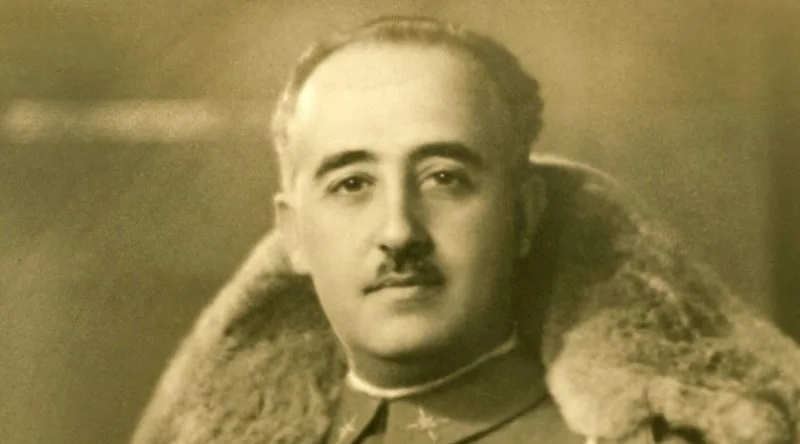
Francisco Franco was the Spanish military general who led the Nationalist faction to victory in the Spanish Civil War and then ruled Spain as a dictator for 36 years, from 1939 until his death in 1975, famously outlasting his wartime ally Adolf Hitler. His iron-fisted regime transformed Spain from a war-torn republic into an isolated, authoritarian state that only began to modernize in its final years, leaving a complex and painful legacy that Spaniards still debate today.
Francisco Franco was a Spanish general who seized power after winning the Spanish Civil War in 1939. He ruled Spain as a dictator until his death in 1975, kept Spain out of World War II, and eventually restored the monarchy by naming King Juan Carlos as his successor.
- Francisco Franco was born in El Ferrol, a coastal town in Galicia, Spain, in 1892, the son of a naval officer.
- He became the youngest general in Europe by 1926, at age 33, after rising through the ranks during Spain's colonial wars in Morocco.
- Franco led the Nationalist forces to victory in the Spanish Civil War in 1939, with military support from both Nazi Germany and Fascist Italy.
- Despite his ideological alignment with Hitler, Franco kept Spain officially neutral during World War II, meeting with Hitler in 1940 but refusing to enter the war.
- Franco ruled Spain as dictator until his death in 1975, and his chosen successor, King Juan Carlos, subsequently led Spain's transition to democracy.
A Sailor's Son Who Became Spain's Youngest General
Francisco Franco was born in 1892 in El Ferrol, a coastal town and naval center in Galicia, northwest Spain. His father served as an officer in the Spanish Naval Administrative Corps, but the household was far from serene. The elder Franco was known as eccentric, extravagant, and somewhat immoral, leaving young Francisco to gravitate toward his devout, conservative mother, a pious upper-middle-class Roman Catholic.
The family had produced naval officers for four generations, and his older brother followed that path too. Francisco intended to do the same, but reduced admissions to the Naval Academy closed that door. So at age 14, in 1907, he entered the Infantry Academy in Toledo instead, graduating three years later in 1910.
In 1912, at age 19, Franco was transferred to Morocco, where he volunteered for active duty in the colonial campaigns that had been underway since 1909. The following year, he was promoted to first lieutenant in an elite regiment of native Moroccan cavalry. In an era when many Spanish officers were characterized by carelessness and a lack of professionalism, the young Franco quickly showed his ability to command troops effectively and soon earned a reputation for total professional dedication.
He paid great attention to his unit's operational preparations and took more care than usual for the welfare of his men. He was known as an extremely honest, reserved man with relatively few close friends, and he steered clear of all frivolous amusements.
In 1915, he became the youngest captain in the Spanish army. The following year, a bullet to the abdomen during combat sent him back to Spain to recover. In 1920, he was chosen as second commander of the newly organized Spanish Foreign Legion, taking full command in 1923. That same year, he married Carmen Polo, and the couple had one daughter.
His leadership during critical operations against Moroccan rebels turned him into a national hero. In 1926, at age 33, he was promoted to brigadier general, making him the youngest general in Europe. In early 1928, he was appointed director of the newly created General Military Academy in Zaragoza, a post that would cement his reputation as a serious, disciplined military mind.
The Republic Sidelined Him, Then the Civil War Made Him Caudillo
When the Spanish monarchy collapsed in 1931, Francisco Franco's stellar military career hit a wall. The new Republic's leaders, bent on shrinking an oversized officer corps, dissolved the General Military Academy in Zaragoza and placed him on the inactive list. For a man who had been Europe's youngest general at 33, it was a humbling fall.
Franco, a devout monarchist who had served in the king's court, accepted the demotion with remarkable discipline. He didn't protest, didn't scheme. He simply waited. His patience paid off when conservative forces regained control of the Republic in 1933, restoring him to active command and promoting him to major general in 1934.
That October, Asturian miners rose in a bloody revolt against the government's inclusion of three conservative members. Franco was called in to crush the uprising, and his ruthless efficiency brought him fresh fame. By May 1935, he'd been appointed chief of the General Staff of the Spanish army, the highest military post in the land.
The pendulum swung again in February 1936, when the leftist Popular Front won the elections. Franco, though never a party member, urged the government to declare a state of emergency. His request was rejected. Within weeks, he was stripped of his General Staff position and packed off to an obscure command in the Canary Islands.
At first, Franco refused to join the military conspiracy brewing against the government. But as Spain's political system disintegrated into chaos, he changed his mind. On July 18, 1936, his manifesto endorsing the military uprising was broadcast from the Canary Islands. The next day, Franco flew to Morocco and within 24 hours had firm control of the protectorate and the Spanish army there.
On October 1, 1936, Franco became head of state of the new nationalist regime. His proven ability to secure military aid from Hitler's Germany and Mussolini's Italy made him the obvious choice. On April 19, 1937, he merged the Falange, Spain's fascist party, with the Carlists to create the official political movement of the rebel regime.
The civil war that followed was a grinding, bloody war of attrition marked by atrocities on both sides. Franco's army, with superior military quality and continued German and Italian support, won a complete and unconditional victory on April 1, 1939. But the victory came at a terrible cost: tens of thousands of executions carried out by the nationalist regime brought Franco more condemnation than any other aspect of his rule.
The Dictator Who Outsmarted Hitler: Franco's World War II Tightrope
Francisco Franco kept Spain out of the Second World War by playing the most dangerous diplomatic game in Europe, and it worked. After winning the Spanish Civil War in April 1939, he declared his country neutral when the wider conflict erupted that September. But when Germany crushed France in June 1940, Franco saw an opportunity, and he approached Adolf Hitler with a stunning offer.
The Spanish dictator wanted in on the war, but on his own terms. He told Hitler that Spain would join the Axis cause in exchange for massive German military and economic aid, plus most of France's territories in northwest Africa. It was a breathtaking demand, and it set the stage for one of the most memorable confrontations of the entire war.
On October 23, 1940, the two men met face to face at the Hendaye railway station in France, near the Spanish border. The meeting stretched for hours and produced nothing but frustration for Hitler. The German leader reportedly complained afterward that he would rather have "three or four teeth pulled" than negotiate with Franco again. The Spanish dictator had refused to commit to a firm date for entering the war, and he kept raising his price for cooperation.
Franco's government continued to sympathize with the Axis powers throughout the conflict, but he carefully avoided any direct diplomatic or military commitment that might drag Spain into the fighting. He watched the war's momentum shift, and in 1943, as German fortunes collapsed at Stalingrad and in North Africa, Spain quietly returned to full neutrality. The timing was too late to win any favorable treatment from the Allies, who remembered his earlier flirtations with Hitler with deep suspicion.
Yet Franco's wartime diplomacy, marked by cold realism and careful timing, achieved exactly what he needed. The regime survived the Axis defeat intact, and the man who had once seemed Hitler's willing partner emerged from the war still in power. While Mussolini was executed by partisans in 1945 and Hitler took his own life in a Berlin bunker, Francisco Franco remained firmly in control of Spain, having outmaneuvered the most dangerous gambler in modern history.
Outcast to Cold War Ally: Franco's Long Survival
The hardest years for Francisco Franco came right after World War II ended, when the newly formed United Nations voted to exclude his government in 1946 and hostile foreign opinion branded him "the last surviving fascist dictator." Yet the man who had outmaneuvered Hitler at Hendaye in 1940 would outlast the isolation too, trading his pariah status for a role as one of the Western world's leading anti-communist statesmen as Cold War tensions between the Soviet bloc and the West deepened.
The turning point arrived in 1948, when other countries began normalizing relations with Madrid. Spain's international rehabilitation accelerated in 1953, the year the country signed a 10-year military assistance agreement with the United States, a pact later renewed in more limited form. The Americans got air and naval bases on Spanish soil; Franco got the legitimacy, military aid, and strategic importance that came with being Washington's southern European bulwark against Moscow.
Domestically, the 1950s and 60s brought a gradual loosening. Franco's policies became somewhat more liberal, and his regime's continuity, combined with its capacity for creative evolution, earned him at least limited respect from some of his critics. He once remarked that he did not find the burden of government especially heavy, and his rule was marked by absolute self-confidence and a relative indifference to criticism.
What made Franco politically formidable was his talent for reading people. He gauged the psychology of different elements, from moderate liberals to extreme reactionaries, maintaining a careful balance among them. He positioned himself as an arbiter above ordinary political conflict, leaving the actual running of policy largely to his appointees. When policies failed or proved unpopular, blame tended to fall on individual ministers rather than on Franco himself.
The Falange, the Spanish fascist party he had merged with the Carlists in 1937 to create his official political movement, was reduced in the early 1940s. In later years it became known only as the "Movement," shedding much of its original semi-fascist identity as Franco reshaped it into a more pluralistic instrument of his rule. The party served the government, he made clear, not the other way around.
The Succession Plan: How Franco Tried to Secure His Legacy
Francisco Franco, who had ruled Spain with an iron grip since October 1, 1936, began planning for the day he would no longer be in charge as early as 1947. In that year, he held a referendum that officially declared the Spanish state a monarchy, while confirming his own powers as a kind of lifetime regent. It was a careful move, one that let him have it both ways: Spain would be a kingdom again, but only after he was gone.
The scheme grew more concrete as the years passed. In 1967, Franco introduced direct elections for a small minority of parliament seats, a gesture toward openness that changed little in practice. Then came the big decision. In 1969, he appointed Prince Juan Carlos as his official successor. The prince, born in 1938, was reportedly 32 at the time, though some accounts suggest he was actually 31. Either way, the choice was deliberate. Juan Carlos was the grandson of Spain's last king, Alfonso XIII, and Franco saw in him a figure who could carry the regime forward without dismantling it.
Franco stepped down as prime minister in 1973, but he kept the titles that mattered. He remained head of state, commander-in-chief of the armed forces, and leader of the political movement known simply as "the Movement." The man who had once been the youngest captain in the Spanish army, who had risen through colonial campaigns in Morocco and crushed an uprising of Asturian miners in 1934, was not about to surrender his grip entirely. He was making sure that when death finally came, his system would outlive him.
Frequently asked questions
What was Francisco Franco's role in the Spanish Civil War?
Francisco Franco was the military general who led the Nationalist forces to victory over the Republican government in the Spanish Civil War, which lasted from 1936 to 1939. He became head of state of the new nationalist regime on October 1, 1936, and ruled Spain as a dictator for nearly four decades until his death in 1975. The war began with a military uprising that Franco endorsed in a manifesto broadcast from the Canary Islands on July 18, 1936. He had been posted there after being removed as chief of the General Staff when his request for a state of emergency was rejected by the leftist Popular Front government that won the February 1936 elections. Franco flew to Morocco on July 19 and quickly took firm control of the protectorate and the Spanish army there within 24 hours. As commander-in-chief during the conflict, Franco proved a careful and systematic leader. He avoided reckless moves, and his forces advanced slowly but steadily, suffering only a few temporary defeats. His army's superior military quality, combined with continued German and Italian aid, brought him a complete and unconditional victory on April 1, 1939.
How did Francisco Franco maintain power for so long?
Francisco Franco ruled Spain from 1939 until his death in 1975 by combining ruthless political maneuvering with careful institutional design. He skillfully balanced different factions within his regime, positioned himself above ordinary political conflicts, and took steps to ensure his government would survive him, including appointing Prince Juan Carlos as his official successor in 1969. On April 19, 1937, Franco united the Falange, the Spanish fascist party, with the Carlists to form the official political movement of the rebel regime. He made clear that the party served the government, not the other way around, creating an institutionalized authoritarian system distinct from the fascist party-states of Germany and Italy. The Falange was later reduced in size and became known simply as the "Movement," losing much of its original semi-fascist identity. Franco showed a marked political talent for gauging the psychology of different elements, from moderate liberals to extreme reactionaries. He maintained a careful balance among them and left policy execution largely to his appointees, meaning blame for unpopular policies tended to fall on individual ministers rather than on Franco himself. In 1947, he held a referendum that made the Spanish state a monarchy and confirmed his powers as a kind of lifetime regent. He introduced direct elections for a small minority of parliament seats in 1967. His survival also depended on international circumstances. After World War II, the newly formed United Nations excluded his government, and hostile foreign opinion labeled him "the last surviving fascist dictator." But as Cold War tensions escalated, Franco came to be seen as a leading anti-communist statesman. His international rehabilitation advanced in 1953 when Spain signed a 10-year military assistance agreement with the United States.
Why did Francisco Franco keep Spain neutral in World War II?
Francisco Franco kept Spain officially neutral in World War II because he recognized his country was exhausted and impoverished after the civil war, and he could not afford the price Hitler demanded for Spanish entry. Although sympathetic to the Axis "new order," Franco initially declared Spain's neutrality and carefully avoided direct diplomatic and military commitments to Germany and Italy. His policy shifted after the fall of France in June 1940. Franco approached Hitler and offered to bring Spain into the war on Germany's side in exchange for extensive German military and economic aid and most of France's territories in northwest Africa. Hitler could not or would not meet this price. After meeting Franco in Hendaye, France, in October 1940, Hitler reportedly said he would rather have "three or four teeth pulled" than negotiate with him again. Spain returned to full neutrality in 1943, which proved too late to gain favorable treatment from the rising Allies. Yet Franco's wartime diplomacy, marked by cold realism and careful timing, prevented his regime from being destroyed along with the Axis powers. His careful balancing act kept Spain out of the war while preserving his own position through the conflict's shifting fortunes.
Got a take on this? Add your voice to the conversation below →
No comments yet. Be the first.