Do Parrots Understand What They Say? Inside Alex's Mind
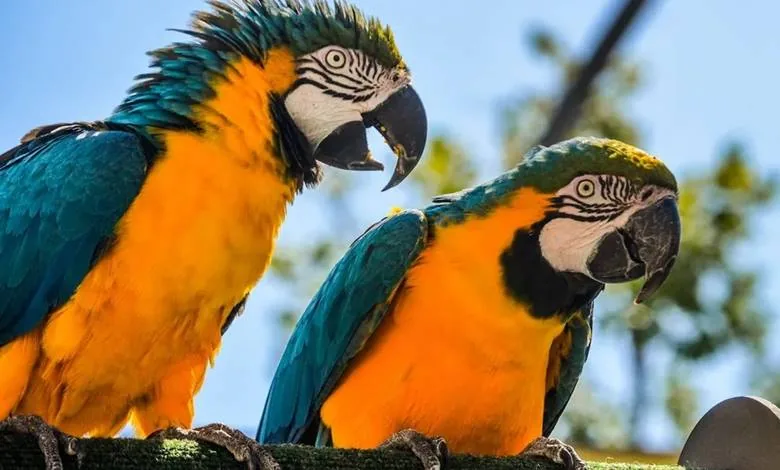
Do parrots understand what they say, or are they just very good mimics? The most famous bird to take on that question was Alex, an African grey parrot who spent decades as a research subject. Alex could count to six, grasped the idea of zero at a basic level, and sorted objects by color, shape, and material. He even used words like "bigger," "smaller," "same," and "different" correctly. His story sits at the heart of everything we now ask about parrot minds.
Parrots can do far more than repeat sounds. Alex the African grey learned labels, categories, and small numbers, while wild parrots use signature contact calls to address each other. Kea in New Zealand have shown basic statistical reasoning. The evidence suggests real comprehension exists alongside mimicry, though the depth of it remains debated.
- Alex, an African grey parrot studied by psychologist Irene Pepperberg, could count to six, grasp a basic idea of zero, and distinguish the color, shape, and material of objects.
- Wild parrots use signature contact calls, individual vocal labels that function like names for flock members.
- Kea parrots in New Zealand have demonstrated statistical inference by choosing tokens based on the odds of a hidden reward.
- Parrot mimicry appears to serve social bonding and flock integration, not just random copying.
- Researchers still debate whether parrots grasp abstract concepts the way humans do or rely on learned associations.
Do Parrots Understand What They Say, or Are They Just Mimics?
Watch a budgie rattle off a phrase it heard yesterday and the question practically asks itself: do parrots understand what they say, or is the whole performance just a very good trick? The honest answer starts in the wild, not in a living room. Parrots are deeply social birds, and a flock that cannot talk to itself does not last long.
In forests and savannas, parrots whistle, sing, and call across long distances. Those sounds do real work. A bird announces food, warns the group about a hawk, or simply checks that its mate is still nearby. Group bonds in a flock are held together by this constant chatter, which may explain why a silent parrot often seems distressed.
Here is the part that surprises people. Research on wild parrots, including parrotlets, shows they use what scientists call signature contact calls. Each bird has its own distinct call, and flockmates learn it and answer it. The function is strikingly close to a human calling a friend by name across a crowded room: a specific sound aimed at a specific individual, expecting a specific reply. That finding, published in Proceedings of the Royal Society B in 2012, tells us parrot vocal life is not random noise. It is addressed.
So why does a pet parrot end up mimicking a human instead of chirping like its cousins? Because when a parrot lives with people, there are no other parrots around to learn from. Its specialized brain still wants to acquire a social code, and the only one on offer is ours. It picks up human speech the way a wild chick would pick up the flock dialect, because for a parrot, learning the sounds of your group is not a party trick. It is how you belong.
Alex the African Grey: Counting, Colors, and the Fall of "Bird Brain"
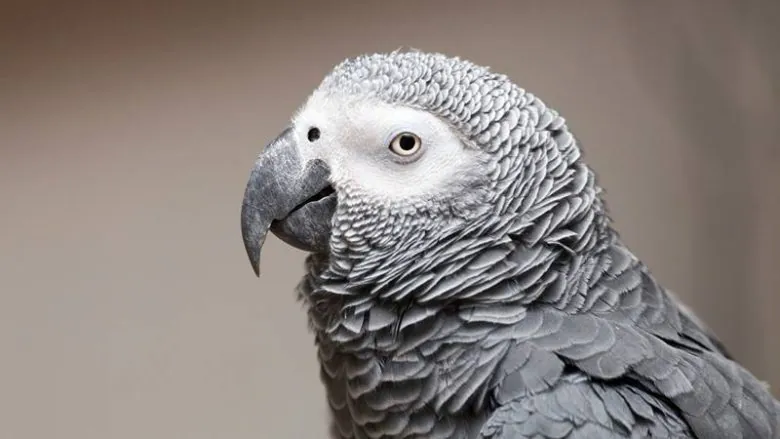
Alex was an African grey parrot, and he could count to six. Not mimic the sounds of numbers. Count. When researchers showed him a tray of objects and asked how many, he gave the right label up to six, and he grasped the idea of zero at a basic level, treating "none" as a real quantity rather than silence.
That alone would have been a headline. But Alex went further. Give him a wooden key and a woolen key and he could tell you which was which by material. Show him a red triangle and a blue square and he sorted them by color and shape. He used comparative words too: "bigger," "smaller," "same," "different."
None of this happened by accident. Alex was trained systematically to understand that a word is a label for something out there in the world, not just a noise that earns a reaction. That distinction is crucial when we ask whether parrots understand what they say. A bird that learns "key" means key is doing something categorically different from a bird that learns "hello" gets attention.
Before the Alex studies, birds were generally not considered intelligent animals. The phrase "bird brain" was an insult, the kind you used for someone you thought was running on instinct and nothing else. Alex's abilities shook that perception hard. Here was a creature that sorted objects by material and counted to six, and the old dismissal started to look less like science and more like habit.
So what does "bird brain" mean now? It means a brain built differently, not a brain built worse. Alex did not just repeat sounds. He attached words to categories, and then he used those words to answer questions about the world. That is the difference between a recording and a mind.
Why Parrots Imitate Their Owners, and What They Actually Pick Up
Parrots are unusually good at learning words that stick to something you can hold. Give a bird a peanut every time you say "peanut," often enough, and the label and the object fuse in its mind. That is the whole trick behind the question of do parrots understand what they say: the answer depends on whether the word has a thing attached to it.
There is a clean little test for this. If a parrot asks for a peanut and you hand it a different food instead, and the bird rejects what you offer and repeats "peanut," it is not parroting a sound. It knows the word stands for the peanut, and it wants the peanut.
Abstract phrases work differently. "Hello," "sorry," and "I love you" probably do not land in a parrot's mind the way they land in ours. What the bird does learn is when a phrase pays off. Say "hello" each time someone walks into the room, and if that earns attention, the greeting becomes a tool. Alex, the African grey parrot studied by Irene Pepperberg, picked up "sorry" the same way. He said it when he broke something or landed in trouble. He almost certainly felt no regret. He had simply learned that the word calmed things down.
So parrots are not tape recorders stuck on repeat. They attach certain words to certain situations and deploy them where they work. A greeting gets a visitor to look up. An apology gets the scolding to stop. That is not grammar, and it is not deep thinking about regret, but it is language doing real work.
Can Parrots Do Probability? The Kea Experiments in New Zealand
Kea, a parrot species native to New Zealand, can understand simple probability relationships. In a set of experiments published in Nature Communications in 2020 by Amalia Bastos and Alex Taylor, the birds compared jars holding different ratios of tokens and picked the one more likely to pay off. That points to genuine statistical inference, not a party trick.
Here is how the setup worked. The birds first learned a simple rule: black tokens meant a treat, orange tokens meant nothing. Once that rule was locked in, they were shown jars containing different ratios of black and orange tokens and allowed to choose which jar to draw from. More often than not, the birds went for the jar where black tokens were more common. They were not guessing. They were weighing the odds.
The cleverness went further. When researchers covered the lower part of the jar, the birds paid attention only to the accessible upper section. In other words, they accounted for where a reward token could actually come from, not just how many black tokens existed somewhere inside the container. That is a subtle mental move, the kind you would expect from a creature that understands where a reward can come from.
Then came the twist that makes this study memorable. In another experiment, two researchers handled the tokens. One picked at random. The other deliberately searched for black tokens. The keas distinguished the difference and approached the person more likely to pick black. They were sensitive to the experimenter's behavior, not just the objects in front of them. Keas, it turns out, can compare ratios, adjust to changing conditions, and take cues from human behavior. That is a long way from a bird that just copies sounds.
What This Says About Parrot Intelligence
Put the pieces together and the old idea of parrots as mindless mimics starts to crumble. Parrots are not running on memorization or mimicry alone. Alex, the African grey parrot studied by Irene Pepperberg, counted to six, grasped a basic idea of zero, and sorted objects by color, shape, and material. Keas in New Zealand, tested by Bastos and Taylor in a 2020 Nature Communications study, weighed proportions before choosing. That is not repetition. That is flexible reasoning, and it changes what we thought we knew about the bird brain.
Start with the parrots themselves. Wild flocks keep in touch through signature contact calls, the same way you and I use names. Those calls appear to be learned, and flockmates answer them. So the ability to link a sound to a specific individual was already there long before any parrot met a human. When a pet bird starts borrowing your words, it is repurposing that ability, not inventing something from nothing.
Ask yourself the question the whole story turns on: do parrots understand what they say? The evidence says sometimes, and more often than we assumed. They compare, they decide, and they read the situation around them.
Alex was not a lucky accident. He was trained systematically, with words tied to objects and concepts, and that training is exactly what let him use labels like "bigger," "smaller," "same," and "different" correctly. Keas went further. Taught that a black token meant a reward and an orange one did not, they picked the jar holding the higher proportion of black tokens in most trials. They even adjusted when researchers covered the lower half of a jar, tracking only the section a token could actually be drawn from. In a separate test, they told apart a person pulling tokens at random from one deliberately hunting for black tokens, and walked toward the deliberate one.
Here is something worth thinking about. We tend to rank animals below ourselves and call it settled science. A parrot that compares ratios, responds to a human's behavior, and learns a call that works like a name does not fit that ranking. Judge these birds by their full communication capacity, not by the party trick of a bird saying "hello." The talking was never the whole story. What sits behind it is.
Frequently asked questions
Do parrots actually understand what they say, or do they just mimic sounds?
It depends on the individual bird and how it was trained. Research shows that some parrots can use human words in appropriate contexts, not just repeat them. The African grey parrot Alex, studied by Irene Pepperberg, learned labels for objects, colors, shapes, and materials, and used them correctly in response to questions.
How did Alex the African grey learn to count and name colors?
Alex was trained systematically, with words linked directly to objects and concepts. He learned to count up to six and grasped the idea of zero at a basic level. He also distinguished the color, shape, and material of objects, and used comparative terms like "bigger," "smaller," "same," and "different."
Why do parrots imitate their owners' speech?
In a human home, a parrot has no other parrots around to learn from. Its highly specialized brain picks up human speech instead. Wild parrots rely on complex calls to find food, warn each other of danger, and maintain bonds within the flock, so the drive to communicate and imitate is already built in.
What are signature contact calls?
Signature contact calls are distinct vocal labels that parrots use to address each other, much like humans calling one another by name. Research on wild parrotlets and other species shows that flockmates learn and respond to these individual calls, which help keep the group connected.
How did kea parrots show statistical inference?
In a 2020 study published in Nature Communications, researchers Bastos and Taylor trained kea parrots in New Zealand that choosing a black token earned a reward while an orange token did not. When shown jars with different proportions of black tokens, the keas usually chose from the jar with the higher proportion. When the lower part of a jar was covered, they tracked only the accessible upper section, and they also preferred a researcher who deliberately searched for black tokens over one who chose randomly.
Can parrots understand abstract words like "sorry" or "love"?
They may not grasp the deep meaning the way humans do, but they learn when to use such phrases. Alex said "sorry" when he broke something or got into trouble. He likely felt no regret, but he understood that the word eased tension, so he used it where it worked. Editorial note: Details that remain unconfirmed or contested in the scientific literature are presented here as such, with appropriate hedging.
Got a take on this? Add your voice to the conversation below →
No comments yet. Be the first.