Books Like On the Origin of Species: 4 Easier Reads
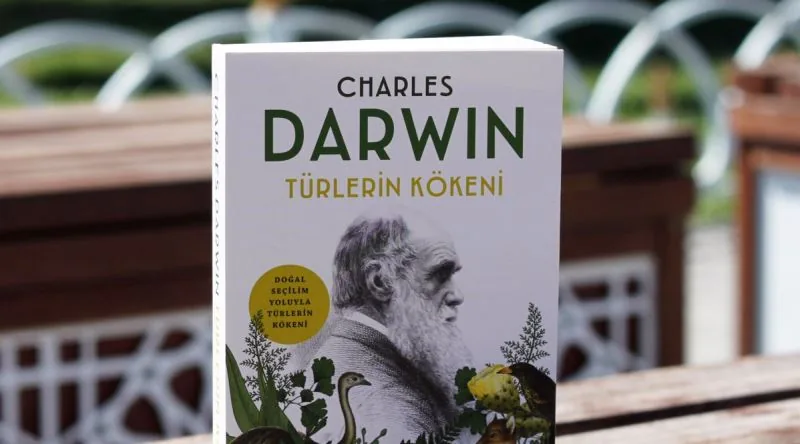
If you have ever wanted to understand evolution but stalled on page ten of On the Origin of Species, you are in good company. Darwin's 1859 book is a landmark, and it is also a slow, dense read built for Victorian scientists rather than curious modern readers. The good news is that four other books cover the same ground far more gently, including Darwin's own autobiography and three well-regarded biographies. Each one lets you follow the man and his idea without fighting the prose.
For readers who find On the Origin of Species heavy going, four books offer easier paths: Darwin's autobiography, plus biographies by Adrian Desmond and James Moore, Janet Browne, and Patrick Tort. They cover his life and his theory in plainer, more modern prose, and they are widely considered reliable introductions.
- On the Origin of Species was published in 1859 and remains the foundational text of evolutionary biology.
- Darwin's autobiography, written late in life and published posthumously, covers his childhood, his voyage on the Beagle, and his working methods in his own words.
- Adrian Desmond and James Moore's biography examines Darwin against the religious and political turmoil of Victorian Britain.
- Janet Browne's two-volume life of Darwin is frequently recommended as the most readable full-length biography of the naturalist.
- Patrick Tort's work focuses on Darwin's theory and its later influence, and is often suggested as a companion for readers who want the ideas without the original text.
Why On the Origin of Species Defeats Even Determined Readers
Charles Darwin published On the Origin of Species in 1859, and more than a century and a half later it still stands as his masterpiece: a dense, demanding biology text that argues living things evolved gradually through natural selection. It is also, by the admission of plenty of honest readers, a slog.
One reader who knows this firsthand describes himself as someone who actually enjoys hard books. He worked through Ulysses and Das Kapital without flagging, he says, yet On the Origin of Species beat him twice. The first attempt came in his twenties, and he understood almost nothing. The second came at thirty-one, and he still could not claim he had fully grasped it. According to his own account, it remains the one book that got away from him.
That frustration has two sources, and neither one is the reader's fault. Part of it is the translation, and part of it is Darwin's own prose, which was written for Victorian naturalists rather than for casual readers. The pattern repeats so often it has become a quiet cliché: people drawn to Darwin reach for the Origin first, out of curiosity or loyalty, and put it down again after fifteen or twenty pages.
Which is why the hunt for books like On the Origin of Species is such a natural instinct. If the goal is to actually understand what Darwin was saying, the famous book is often the worst place to start, and the alternatives turn out to be far friendlier companions.
The Translation Problem and Why English Readers Should Pick the 6th Edition
If you read in English, the advice is simple and it is repeated everywhere: skip the early printings and go straight to the 6th edition of On the Origin of Species, which is the version English readers are routinely told to pick up. That recommendation exists because the book has a reputation problem, and the reputation is earned.
Darwin published On the Origin of Species in 1859, and its central argument is that living things gradually evolved. It is also, by any honest measure, a hard biology book. The author of the original account describes trying to finish it twice, once in his twenties and again at thirty-one, and admits he never fully got there. Whether those two attempts happened exactly as described is his own story, but the difficulty he names is real and widely shared.
His frustration pushed him toward the Turkish editions from Evrensel, Onur and Alfa. What he reports finding there are strained coinages such as ıra and olmayasılık, invented words that send a reader back to the dictionary mid-paragraph. According to his account, Alfa's version reads better than the others, yet it was translated from the 2nd original edition. That detail matters. In the foreign forums he browsed, commenters reportedly warn that the 1st and 2nd editions are even more punishing for readers than the later ones.
Stack those two problems together, an awkward translation built on an early, rougher source text, and you get his conclusion: there is no good Turkish translation of the book. That verdict is his own judgment, not a settled fact, and other readers may disagree. What is not a matter of taste is the English side of the equation. The 6th edition is the one most often recommended as the most readable, and it is what English readers are routinely told to pick up.
So where does that leave someone who wants to understand Darwin without being defeated by him? There are friendlier routes into the same ideas, and several of them are books like On the Origin of Species in spirit if not in difficulty. They cover his life, his letters, his world and the slow birth of his theory, and they let you meet the argument before you wrestle the original.
Book 1: Darwin's Own Memoir, My Life
If you want to meet Darwin the man rather than Darwin the monument, start with his own memoir, My Life, published in Turkish by Alfa Yayınları. He did not write it for glory or for the reading public. He wrote it in his later years partly for his own pleasure and partly to hand down an account of himself to his children and grandchildren. That private purpose is exactly what makes it read so differently from his scientific work.
The publishing history is messier than most readers assume. His son Francis Darwin gathered and compiled the recollections, and the material first appeared in print as Life and Letters of Charles Darwin in 1887. That first edition was selective and did not include everything Darwin had written. The Alfa edition is reportedly translated from later, more complete editions published under the title Charles Darwin's Autobiography.
What you get on the page is a mind in motion. Darwin traces how his religious beliefs shifted as his evolutionary ideas took shape, and the honesty of that self-examination is the real draw. One thing worth correcting, though: contrary to the popular version, Darwin did not first discover that all living things share a common ancestor. Common descent had been proposed by earlier thinkers. His distinctive contribution was natural selection, and that is the idea the memoir quietly circles.
Read it before you reach for the big book. It is a gentler doorway into the same mind, and it makes the harder volumes feel less like a wall.
Book 2: The Desmond and Moore Biography
Adrian Desmond and James Moore wrote the biography that the author treats as the single best companion for anyone curious about Darwin, and the author's verdict on it is blunt: it must be read. The Turkish edition reportedly came out from İş Bankası Yayınları, and according to the original account it is a superb source, one that widens well past the man himself.
That is the real draw. You do not get a narrow portrait of a bearded naturalist in a study. You get Victorian England in full, the history of science as a living argument, and the slow, contested birth of evolutionary thinking. For a reader who picked up On the Origin of Species hoping to understand the world behind it, this is a much gentler doorway into the same rooms.
The author also pulls out one passage, quoted from the 1991 edition on page 645, where Darwin explains his own restraint. He writes that although he was a strong supporter of free thought on every subject, right or wrong, direct arguments against Christianity and God seemed to have almost no effect on the public. Free thinking, in his view, advanced best through the gradual enlightenment of human reason that follows the growth of science. So he kept himself to science, and he deliberately avoided writing on religion.
It is a strange thing to sit with. The man whose work did more than almost any other to unsettle Victorian faith chose, again and again, to say nothing about faith at all. If you are hunting for books like On the Origin of Species that give you the world around the book rather than the book itself, this biography is where the author would send you first.
Book 3 and Book 4: Janet Browne and Patrick Tort
Two more writers take the same subject and pull it in two very different directions. Janet Browne is a well-known historian of science and biographer, and her book on Darwin arrived in Turkish from Versus Kitap under a title built around "books that shook the world." Patrick Tort is a French philosopher and epistemologist, and his volume came from Yapı Kredi Yayınları. Both belong on any shelf of books like On the Origin of Species, because neither one asks you to grind through Darwin's own dense prose.
Browne's angle is reception and reputation. She makes the case that the Origin is the greatest scientific book ever written, and she does it in a flowing, vivid style rather than a dry one. She walks through how Darwin's theories actually formed, how Victorian readers met them, and why the argument still holds up today. The social and historical conditions that shaped the book get nearly as much room as Darwin himself, which is the part that makes it feel alive.
Tort's book is a different kind of door. He presents Darwin as the principal founder of evolutionary science, a thinker on peace, and one of the key researchers into the genealogy of morality. The story he tells runs from Darwin's passion for natural history to the five-year voyage of the Beagle, then through decades of work that produced a vast, many-sided body of writing. The Oxford debate and the shock that rippled through the public both get their due. The book is said to gather 160 documents to help readers discover the most productive theorist of biological evolution.
One number is worth holding onto here. Darwin established his theory of evolution in 1838 but did not publish it until 1859, a gap of 21 years. Both of these books live in that gap, asking what took so long and what the waiting cost.
Frequently asked questions
Which edition of On the Origin of Species should English readers pick up?
English readers are generally pointed toward the 6th edition of On the Origin of Species, which is commonly recommended as the most readable of the editions. It spares newcomers some of the friction of the earliest printings. If you read English comfortably, this is the version most often recommended.
What are the best books like On the Origin of Species for someone who wants Darwin without the struggle?
Four stand out. Darwin's own memoir, published in English as his autobiography; the Darwin biography by Adrian Desmond and James Moore; Janet Browne's study of the book itself; and Patrick Tort's Darwin and the Science of Evolution. Each opens a different door into the same mind, and none demands that you grind through Victorian prose first.
Why is On the Origin of Species so hard to read?
Darwin published it in 1859, and the writing carries all the weight of Victorian scientific prose. Long sentences, dense argument, endless examples. For Turkish readers the problem doubles, since translation choices in the available editions have been disputed. Many people who feel drawn to Darwin quit somewhere in the first fifteen or twenty pages.
Who wrote the definitive Darwin biography?
Janet Browne is a celebrated historian of science and biographer, and her work on Darwin is the one most often named as definitive. Adrian Desmond and James Moore also wrote a major biography, a book that covers not only Darwin but the England and the science of his era.
Was Darwin's autobiography published after his death?
Yes. Darwin wrote his memoirs privately, for fun and to pass information along to his children and grandchildren. His son Francis Darwin compiled them, and they first appeared in 1887 as Life and Letters of Charles Darwin. That first edition did not include everything Darwin had written.
Did Darwin really wait 21 years to publish his theory?
He did. Darwin established his theory of evolution in 1838 and published On the Origin of Species in 1859, roughly 21 years later. The theory itself argued that living things gradually evolved, and the delay has fascinated readers ever since. Editorial note: Details that remain unconfirmed, including publication specifics for some of the recommended titles, are presented here as such.
Got a take on this? Add your voice to the conversation below →
No comments yet. Be the first.