Chandrasekhar Limit: The 1930 Discovery That Shaped Astrophysics

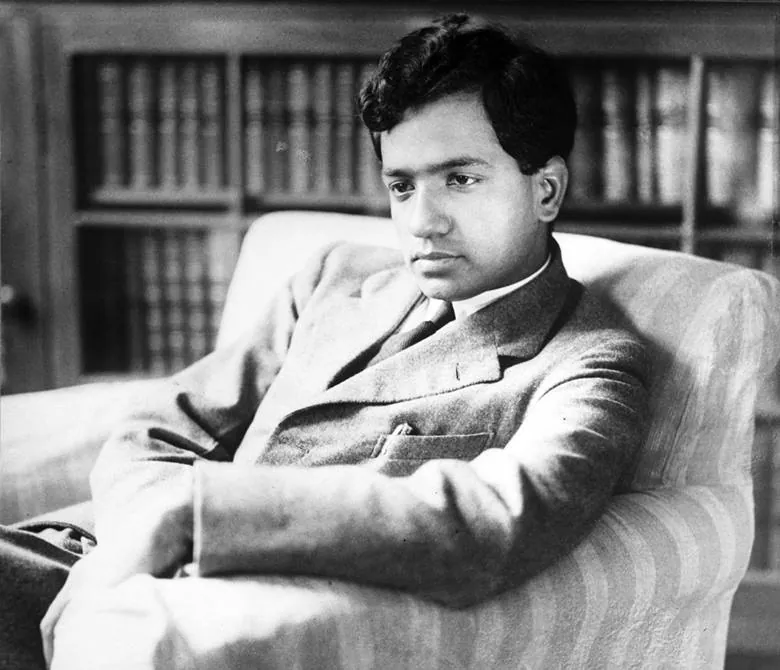
In 1930, a 19-year-old Subrahmanyan Chandrasekhar calculated the mass limit that decides whether a dying star becomes a white dwarf or collapses into a black hole, a discovery now known as the Chandrasekhar limit. The story begins on a ship from India to England, where a young man with a notebook changed how we understand the universe. It is a tale of youthful brilliance, a bitter scientific feud, and a truth that took decades to be fully embraced.
In 1930, Subrahmanyan Chandrasekhar, a young Indian physicist, calculated that a star with more than about 1.4 times the mass of our Sun cannot end its life as a white dwarf. Instead, it must continue collapsing into a neutron star or a black hole. This limit, named after him, became a cornerstone of modern astrophysics.
- During a sea voyage from India to England in 1930, Subrahmanyan Chandrasekhar performed the calculations that led to his famous limit.
- The Chandrasekhar limit states that a white dwarf cannot exceed approximately 1.4 times the mass of the Sun.
- In 1935, the prominent astronomer Arthur Eddington publicly ridiculed Chandrasekhar's findings at a Royal Society meeting in London.
- Chandrasekhar's work was eventually vindicated as the reality of gravitational collapse became accepted in the scientific community.
- Subrahmanyan Chandrasekhar was awarded the Nobel Prize in Physics in 1983 for this and other contributions to astrophysics.
The 19-Year-Old Who Solved a Cosmic Mystery on a Boat
Subrahmanyan Chandrasekhar was just 19 years old in 1930 when he boarded a ship from India to England and, during the long sea voyage, worked out the mathematical limit that would define the fate of every star in the universe. That number, now called the Chandrasekhar limit, would eventually earn him the 1983 Nobel Prize in Physics and change how humanity understands the cosmos. All of it started with a young man doing calculations in his cabin while the ocean stretched endlessly around him.
Chandra, as friends and colleagues would call him, entered the world on 19 October 1910 in Lahore, then part of British India. He arrived as the third of ten children in a family where intellectual life was simply part of the air they breathed. His mother, a translator, took on the task of teaching him to read at home. His father served as Deputy Auditor General for the North Western Railway, a position that kept the household rooted in discipline and order. The family tree also carried scientific brilliance: his paternal uncle was C. V. Raman, the physicist who would win the Nobel Prize in 1930 for his work on the scattering of light.
School in the traditional sense did not shape Chandra's early years. He was homeschooled until age 12, learning under the guidance of his parents and private tutors. At 14, he moved to Madras to begin studying physics at college, a startlingly young age by any standard. His talent did not stay hidden for long. By 1930, the Government of India awarded him a scholarship to pursue a PhD in astrophysics at Cambridge University. The boy from Lahore was heading to one of the most prestigious academic institutions on Earth.
But the most important part of that journey happened before he even reached Cambridge. During the ship voyage to England, Chandra began thinking deeply about white dwarfs, the dense, cooling remnants of stars that have exhausted their nuclear fuel. He wanted to understand how much mass such an object could actually support. Working through the physics on board, he calculated a specific upper limit. If a dying star's core exceeded that mass, roughly 1.4 times the mass of our Sun, it could not settle into the quiet existence of a white dwarf. Instead, it would keep collapsing, ultimately becoming either a neutron star or a black hole.
This was not a small insight. It meant that not all stars shared the same destiny, a direct challenge to the scientific consensus of the time. And Chandra had arrived at this conclusion not in a laboratory or a library, but on a boat, with nothing but his mind, his papers, and the patience of a long ocean crossing.
The Brilliant Idea That Angered a Scientific Giant
In the early 1930s at Cambridge University, a young doctoral student named Subrahmanyan Chandrasekhar was about to overturn everything astronomers thought they knew about the death of stars. His advisor, R.H. Fowler, had been the first to explain stellar evolution using quantum theory. But Chandrasekhar spotted something Fowler had missed, and that insight would eventually earn him the 1983 Nobel Prize in Physics, though not before it sparked one of the most famous scientific feuds of the twentieth century.
Chandrasekhar had arrived at Cambridge in 1930 on a Government of India scholarship, barely nineteen years old. His uncle, C.V. Raman, had won the Nobel Prize in Physics that same year, so the family already knew something about scientific greatness. But Chandra, as friends called him, was about to carve his own path.
Fowler's model treated white dwarfs, the dense remnants of dead stars, as objects held up by quantum pressure from electrons. It was elegant work. Yet Chandrasekhar noticed a problem. In sufficiently massive stars, the electrons in the core would be moving at speeds approaching that of light. That meant quantum theory alone was not enough. He needed Einstein's special relativity, the physics of objects moving near light speed, folded into the calculation.
So he reworked Fowler's entire framework. The mathematics led him to a startling conclusion. If a star's mass exceeds a critical threshold, now known as the Chandrasekhar limit, it can never settle into the peaceful final state Fowler had predicted. Instead, gravity wins. The star keeps collapsing, crushing itself into ever denser forms until it becomes a neutron star or, in the most extreme cases, a black hole.
That threshold sits at about 1.4 times the mass of the Sun. Below it, a star ends its life as a white dwarf. Above it, the universe has something far more dramatic in store.
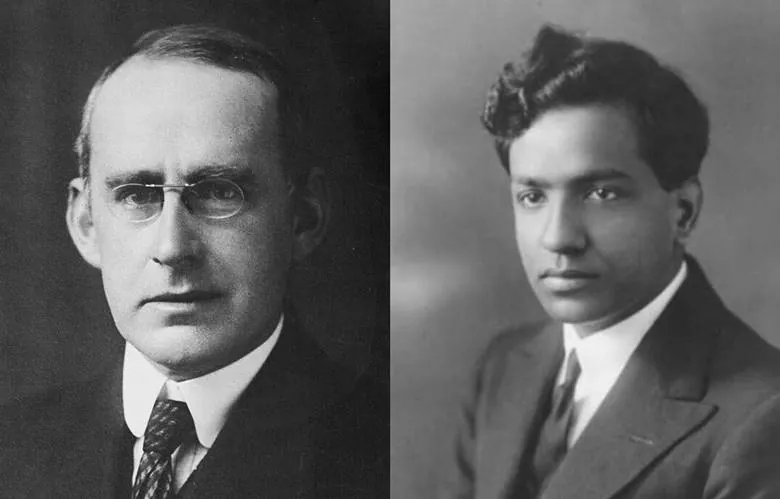
The story gets complicated here, because the man who should have championed this young genius became his fiercest opponent. Sir Arthur Eddington, the celebrated British astronomer famous for experimentally confirming Einstein's general relativity, had taken an interest in Chandrasekhar's work. Some accounts describe Eddington as the first to recognize the young Indian's talent, but that version of events is contested. What is certain is that Eddington later became the loudest voice against Chandrasekhar's theory.
When Chandrasekhar presented his findings at a Royal Society meeting in London in 1935, Eddington arranged to speak immediately afterward. His goal was to demolish the young man's ideas in public. He did the same at a major international conference in Paris. The message was clear: this brilliant young physicist must be wrong.
For Chandrasekhar, the experience was deeply discouraging. A promising scientific career in Europe suddenly seemed impossible. He made the decision to leave and accepted a position at the University of Chicago in 1937, where he would spend the rest of his working life.
Time proved him right. The Chandrasekhar limit became a cornerstone of modern astrophysics, the dividing line that determines whether a star fades gently into a white dwarf or explodes into a supernova, leaving behind a neutron star or black hole. The scientific establishment eventually acknowledged what Eddington could not accept. In 1983, Chandrasekhar received the Nobel Prize in Physics for his work on stellar structure and evolution, becoming the second Indian-born physicist to win the award after his uncle C.V. Raman.
When Eddington Tried to Destroy a Young Scientist's Career
Sir Arthur Eddington, the celebrated astronomer who had confirmed Einstein's theory of general relativity by measuring how the Sun's gravity bends starlight, could not accept what a young graduate student was telling him about the fate of stars. Eddington studied stellar structure himself and had earned his reputation as one of the most brilliant minds in astrophysics. When Subrahmanyan Chandrasekhar presented a mathematical result that challenged everything Eddington believed about how stars end their lives, the elder scientist chose to use his considerable power to shut the young man down publicly rather than engage with the physics.
The confrontation came to a head at a meeting of the Royal Society in London in 1935. Chandrasekhar was scheduled to present his work on the maximum mass a white dwarf star could sustain. Eddington quietly arranged with the meeting's chair to speak immediately after the young researcher. When Chandrasekhar finished laying out his careful calculations, Eddington rose and proceeded to dismantle the ideas before the assembled scientific elite, declaring them invalid and illogical. The room fell into stunned silence. Chandrasekhar later recalled the moment as one of the most humiliating experiences of his scientific life, and the same scene played out again at a major international conference in Paris, where Eddington once more attacked the young physicist's conclusions before a global audience.
The experience left Chandrasekhar deeply demoralized. He had arrived at Cambridge University in 1930 on a scholarship at just 19 years old, having already derived what would become known as the Chandrasekhar limit during his sea voyage from India. Now, with the most respected astronomer in Britain publicly dismissing his life's work, he realized that Europe offered no future for his ideas. In 1937, Chandrasekhar made the decision to leave and accepted a position at the University of Chicago in the United States. There, away from Eddington's shadow, he would continue his research in relative peace, building the foundation for a career that would eventually earn him the 1983 Nobel Prize in Physics.
The 1.4 Solar Mass Threshold That Decides a Star's Fate
Before Subrahmanyan Chandrasekhar did his calculations in 1930, astronomers assumed every star in the sky would eventually fade into a white dwarf. That tidy assumption fell apart when a 19-year-old student worked out a single number that separates quiet endings from cosmic violence: about 1.4 times the mass of our Sun. That number, now called the Chandrasekhar limit, draws the line between a star that dies gently and one that becomes a neutron star or black hole.
To understand why that threshold matters, you have to picture the tug-of-war happening inside every living star. Gravity pulls all that gas and plasma inward, trying to crush the star into a tiny ball. Pushing back is the gas pressure generated by nuclear fusion in the core, where hydrogen atoms smash together to form helium and release enormous heat. As long as those two forces stay balanced, the star shines steadily. But fuel does not last forever.
When the hydrogen in the core starts running low, something shifts. The core fills with helium ash and grows denser. That denser core strengthens gravity's pull, and the gas pressure can no longer hold the line. The core begins to collapse inward while the outer layers respond in the opposite way: they swell outward and cool down. The star's surface temperature drops, giving it a reddish hue, yet because its surface area has ballooned so dramatically, it radiates roughly a thousand times more power than before. This is the red giant phase, a swollen, dying star that has entered its final act.
What happens next depends entirely on that core mass figure. If the leftover core stays at or below 1.4 solar masses, it can settle into a stable white dwarf, a dense, hot cinder that slowly cools over billions of years. But cross that line, and the white dwarf state becomes impossible. The core keeps collapsing, and the star's fate takes a far more extreme turn. It may detonate as a supernova and leave behind a neutron star, or it may collapse all the way into a black hole.
This single limit applies to every star in the universe, including our own Sun. Our Sun's core will eventually produce a white dwarf comfortably below the threshold, so it will end its life quietly. More massive stars, the ones that start their lives with significantly more material, face the dramatic endings that Chandrasekhar first predicted during a sea voyage to England. The balance between gravity and pressure that keeps a star alive is fragile, and that 1.4 solar mass boundary marks exactly where that balance gives out for good.
Vindication, a Nobel Prize, and a Telescope Named in His Honor
By 1983, the scientific world had fully embraced what Chandrasekhar had calculated on that ship in 1930, and the Nobel Committee in Stockholm formally agreed by awarding him that year's Nobel Prize in Physics. He became the second Indian-born physicist ever to win the prize, following his uncle C. V. Raman who had won in 1930. The long wait of more than five decades had ended, and the man who had once been publicly humiliated by a senior colleague now stood at the very peak of his field.
The years between rejection and recognition were filled with quiet, relentless work. Chandrasekhar had moved to the University of Chicago in 1937 after realizing Europe offered him no scientific future, and there he built a career of extraordinary depth. He did not stop at the Chandrasekhar limit that made his name. He went on to study stellar dynamics, radiative transfer, and the mathematics of black holes, publishing paper after paper with a discipline that amazed his colleagues. In his later years, he turned his attention to history, diving deep into Isaac Newton's Principia Mathematica, interpreting the dense geometric arguments that had shaped modern physics centuries earlier.
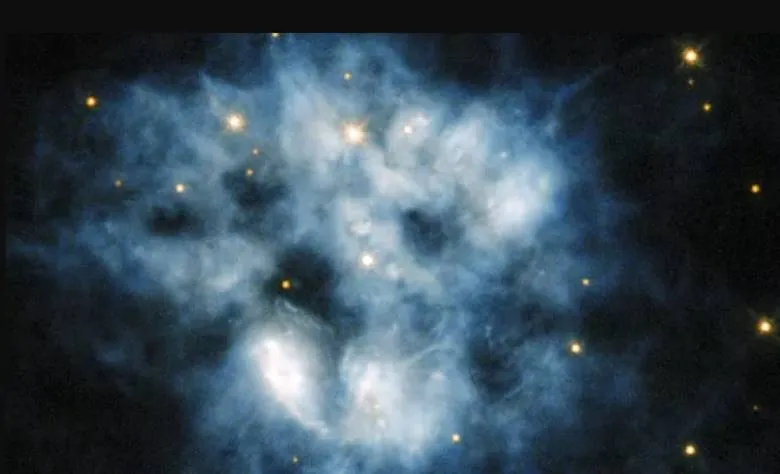
Chandrasekhar died of a heart attack on 21 August 1995 in Chicago. His legacy, though, had already taken on a life of its own, quite literally in orbit. NASA named its Chandra X-ray Observatory in his honor, and the telescope launched in 1999 as the third of its four Great Observatories. Today, that telescope circles Earth, scanning the heavens for the X-rays emitted by the very objects Chandrasekhar first predicted: the crushed remnants of massive stars, the neutron stars and black holes that form when a star's core exceeds the Chandrasekhar limit of about 1.4 times the mass of the Sun.
Frequently asked questions
What exactly is the Chandrasekhar limit?
The Chandrasekhar limit is the maximum mass a white dwarf star can support, approximately 1.4 times the mass of our Sun. When a dying star's core exceeds this threshold, it cannot settle into a stable white dwarf. Instead, gravity wins the fight and the star collapses further into either a neutron star or a black hole.
Who discovered the Chandrasekhar limit?
Subrahmanyan Chandrasekhar, an Indian astrophysicist born in 1910, discovered this limit while he was a graduate student at Cambridge University. According to the original account, he reportedly worked out the calculation during his sea voyage from India to England in 1930. He was just 19 years old when he sailed off to pursue his doctorate.
Did anyone oppose Chandrasekhar's theory at first?
Yes, and the story is famously tense. Sir Arthur Eddington, a highly respected British astrophysicist, publicly opposed Chandrasekhar's ideas at a Royal Society meeting in London in 1935 and again at a conference in Paris that same year. Eddington believed the young graduate student had made an error, and he made his doubts very public.
What happens to a star that exceeds the Chandrasekhar limit?
A star whose core mass exceeds the limit cannot stabilize as a white dwarf. The core keeps collapsing under its own gravity, and the result is dramatic. The star either becomes an incredibly dense neutron star or continues collapsing entirely into a black hole. The limit marks the dividing line between a gentle fading and a violent end.
Was C. V. Raman really Chandrasekhar's uncle?
Yes, he was. C. V. Raman, who won the Nobel Prize in Physics in 1930 for his work on light scattering, was Chandrasekhar's paternal uncle. That family connection meant young Chandra grew up in a household where world-class physics was not a distant dream but a dinner table conversation.
Did Chandrasekhar win a Nobel Prize for his work?
He did, though the recognition took decades to arrive. In 1983, Chandrasekhar won the Nobel Prize in Physics for his theoretical studies on the structure and evolution of stars. That work included the mass limit that now carries his name, making him the second Indian-born physicist to receive the honor after his uncle.
Is the Chandra X-ray Observatory named after Chandrasekhar?
Yes, NASA named its Chandra X-ray Observatory in his honor. The space telescope launched in 1999 and has been orbiting Earth ever since, observing the very kinds of cosmic objects that Chandrasekhar spent his career trying to understand. The observatory was not named in 1979, as some accounts suggest, but rather in the years leading up to its 1999 launch. Editorial note: Any facts which remain unconfirmed are presented as such, hedged with appropriate qualifiers in the text above.
Got a take on this? Add your voice to the conversation below →
No comments yet. Be the first.