Waldorf vs Montessori: Key Differences in 2026

Waldorf vs Montessori is a comparison many parents face when choosing an alternative education path, and the two methods diverged dramatically in early 20th century Europe, with Maria Montessori opening her first Casa dei Bambini in Rome in 1907 and Rudolf Steiner founding his first Waldorf school in Stuttgart in 1919. These two philosophies, while both child centered, offer profoundly different daily realities for your preschooler, from how they learn their letters to whether they ever touch a plastic toy. Understanding these core differences now can save you years of second guessing your choice, and it all comes down to how each approach views the child's imagination, the teacher's role, and the very purpose of early childhood itself.
Waldorf and Montessori are two distinct alternative education methods. Montessori, founded by Maria Montessori in Rome in 1907, emphasizes child led choice, hands on learning with specific materials, and mixed age classrooms. Waldorf, founded by Rudolf Steiner in Stuttgart in 1919, uses a teacher led, arts integrated curriculum with imaginative play and delayed academics. Your choice hinges on which environment suits your child's temperament and your family values.
- Maria Montessori opened the first Casa dei Bambini in Rome in 1907, where she developed her method through close observation of children.
- Rudolf Steiner established the first Waldorf school in Stuttgart, Germany, in 1919, initially to serve the children of factory workers at the Waldorf Astoria factory.
- Montessori classrooms group children in mixed age groups to encourage peer mentorship and collaborative learning.
- Waldorf classrooms typically keep a single age group together with the same teacher for multiple years, emphasizing a stable, home like social rhythm.
- Montessori education introduces abstract academic concepts like reading and math earlier, while Waldorf delays formal academics in favor of imaginative play and artistic expression.
Two Schools, Two Visions: Why the Waldorf vs Montessori Choice Matters
Parents hear it everywhere, often said with great confidence: 90% of brain development happens in the first five years of life. It is a striking number, though brain science actually shows development continuing well into the mid-20s, so treat that figure as a popular talking point rather than settled fact. Either way, the underlying instinct rings true. Early childhood shapes so much of who a child becomes, which is why so many parents find themselves weighing the two great alternative education approaches: Waldorf vs Montessori.
The choice can feel overwhelming, especially when both names get thrown around as if they were nearly the same thing. They are not. Waldorf and Montessori grew from very different roots, and they lead to very different classrooms. Waldorf traces back to Rudolf Steiner, an Austrian philosopher who lived from 1861 to 1925 and founded the first Waldorf school in 1919 in Stuttgart, Germany, at the Waldorf-Astoria factory for workers' children. Montessori comes from Dr. Maria Montessori, a medical doctor and psychiatrist who opened her first Casa dei Bambini, or Children's House, in Rome in 1907.
One man, one woman. One factory floor, one Roman tenement. Two visions of childhood that still shape classrooms around the world today.
Waldorf Schools: The Art of Childhood, Inspired by Rudolf Steiner
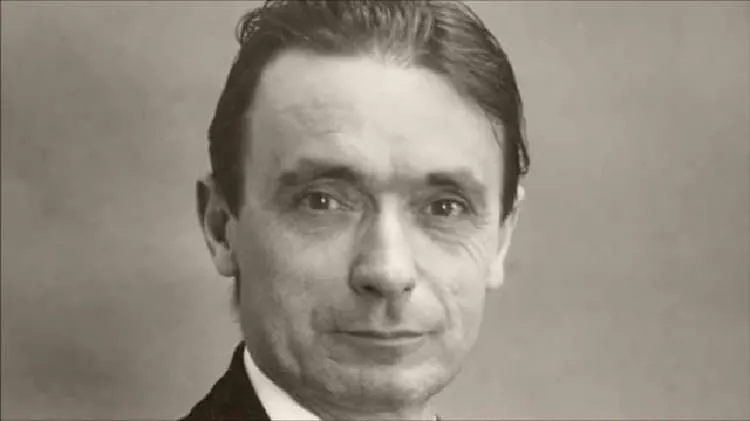
Rudolf Steiner, an Austrian philosopher who lived from 1861 to 1925, gave his name to an educational approach that became known as Waldorf education. The first Waldorf school opened in 1919 in Stuttgart, Germany, at the Waldorf-Astoria factory, which is where the schools get their familiar name.
Steiner built his teaching philosophy on something he called anthroposophy. The word comes from Greek roots, "anthropos" meaning human and "sophia" meaning wisdom, so the whole idea translates roughly to the wisdom of being human. This spiritual philosophy shaped how he thought children should learn and grow.
The Waldorf model sees childhood as unfolding in three distinct seven-year phases: birth to age 7, ages 7 to 14, and ages 14 to 21. Each stage asks for a different kind of teaching. The curriculum aims to develop the whole person, not just the intellect, weaving together cognitive, emotional, ethical and spiritual growth. The motto "head, heart and hands" captures this balance perfectly.
Walk into a Waldorf kindergarten and you might feel like you have stepped into someone's cozy living room. The classroom is seen as an extension of home, warm and inviting rather than stark and institutional. Toys are deliberately open-ended, simple objects that a child can turn into anything their imagination wants. A plain wooden block might become a phone, a car, or a loaf of bread depending on the game at hand. Through this kind of play, children take on different roles, build social bonds and practice what they are learning.
Technology waits until later in a Waldorf child's life. Younger students instead often engage in painting, molding clay, knitting, carving wood and sewing. These hands-on activities sit side by side with academic subjects, each supporting the other. The approach stays child-centered throughout, emphasizing what each child does well rather than dwelling on weaknesses. Teachers shape lessons around the abilities they see in front of them.
Art runs through everything, from preschool through high school. Visual, auditory and tactile arts are woven directly into the curriculum rather than treated as separate extras. This artistic thread is one of the clearest differences when families compare Waldorf vs Montessori approaches, since each philosophy handles creativity and structure in its own particular way.
Montessori: A Doctor's Scientific Method for Independence
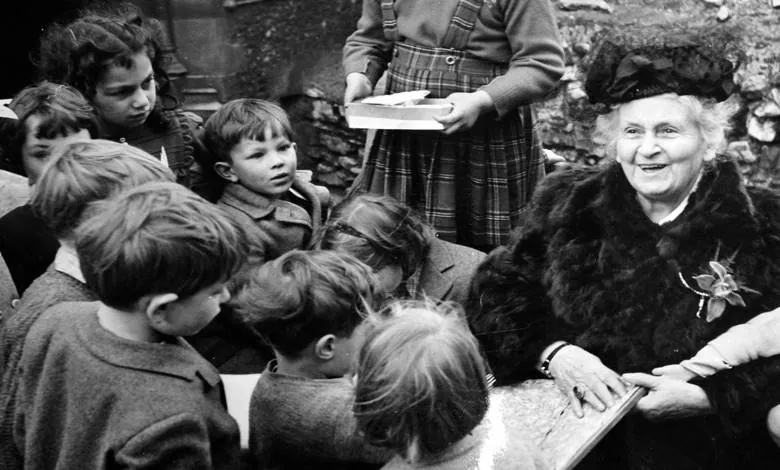
Maria Montessori was a medical doctor and psychiatrist who turned her scientific training toward the young. She had spent years watching children in hospitals and clinics, noting what captured their attention and how they taught themselves through play. In 1907, she put those observations to work in a new kind of school in Rome, the Casa dei Bambini, which translates to "Children's House." That classroom became the laboratory for what the world now calls the Montessori method.
Her core belief was simple yet radical. The child already contains the person they will become, and what they need most is freedom to grow into that potential. Not aimless freedom, but freedom guided by order and self-discipline. Everything in a Montessori classroom serves that goal. The furniture is child-sized so small hands can manage independently. Learning materials line the shelves from simple to complex, concrete to abstract, each one inviting a child to pick it up and figure it out.
Walk into a Montessori room and you might see a child tying her own shoes, another fastening a belt, a third working buttons through buttonholes. These practical life exercises are not busywork. They build the coordination and confidence a person needs to function in the real world. The materials themselves are designed to be self-correcting. If a child fits a piece into the wrong spot, the puzzle simply does not work, and the child sees the mistake before the teacher ever says a word. Teachers deliberately do not point out errors. The discovery belongs to the child.
Age mixing is another deliberate choice. Different age groups share the same classroom, so younger children watch and learn from older ones, while older children reinforce their own knowledge by helping the younger. There is no coercion in this approach. The emphasis falls on self-confidence, self-expression, respect for others, and cooperation. Technology does not get promoted in Montessori classrooms. Art appears, but it serves to support other subjects rather than standing alone as its own discipline. The child learns by doing, and the teacher steps back to let that happen.
Waldorf Criticisms and the Shared Alternative Vision
Critics of the Waldorf approach point to its lack of emphasis on technology and standardized testing, a concern many parents raise when comparing Waldorf vs Montessori options. These critiques deserve a fair hearing, but they also miss a larger point about what both methods are trying to accomplish in an educational landscape that has grown fixated on measurable outcomes.
Walk into most conventional classrooms today and you will find a curriculum shaped by whatever appears on the next round of centralized exams. Schools have increasingly become training grounds for test-taking habits, with market pressures pushing administrators to prioritize scores over curiosity. The Waldorf and Montessori philosophies both push back against this tide, though from different angles. Waldorf shields young children from academic pressure in favor of imaginative play and artistic expression. Montessori hands children real tools and real responsibilities, trusting that self-directed activity builds genuine understanding rather than rote memorization.
Neither system claims to be perfect. Waldorf's critics argue that avoiding screens entirely may leave children unprepared for a digital world, and skipping standardized tests can make transitions to traditional schools challenging. Montessori faces its own questions about whether such freedom suits every child's temperament. Yet these concerns exist within a broader context: an education system where the human element often gets squeezed out by metrics and rankings.
For parents weighing Waldorf vs Montessori, the choice ultimately comes down to which window they want to open for their child. Waldorf offers a view of childhood protected from premature intellectual demands, where imagination and the arts lead the way. Montessori opens a different vista, one of independence, hands-on discovery, and respect for each child's natural pace. Both reject the notion that a child's worth can be measured by a test score. Both trust that children learn best when they are genuinely engaged rather than coerced. In an era of educational marketization, that shared conviction may be the most valuable thing either approach offers.

Frequently asked questions
What is the main difference between Waldorf and Montessori?
The main difference comes down to who leads the learning. Waldorf education follows a teacher-guided philosophy developed by Rudolf Steiner, with artistic, imaginative lessons delivered in three seven-year stages. Montessori education, created by Dr. Maria Montessori in 1907, is child-led: children freely choose from self-correcting materials arranged in a carefully prepared classroom designed for independence.
Who founded Waldorf education?
Waldorf education was founded by Rudolf Steiner, an Austrian philosopher who lived from 1861 to 1925. He opened the first Waldorf school in 1919 in Stuttgart, Germany, at the Waldorf-Astoria factory for workers' children. Steiner based his educational approach on anthroposophy, a spiritual philosophy whose name combines the Greek words "anthropos" (human) and "sophia" (knowledge or wisdom).
Why does Waldorf education delay technology?
Waldorf schools intentionally keep young children away from screens and digital devices to protect their natural, imaginative play. The philosophy holds that children in the early years learn best through hands-on activities like painting, knitting, clay modeling, wood carving, and sewing. Technology is introduced gradually in later years, only after children have developed strong creative and sensory foundations through direct interaction with the physical world.
How is a Montessori classroom different from a traditional one?
A Montessori classroom is designed entirely around the child's scale and needs. Furniture is child-sized, and learning materials sit on low shelves where children can reach them independently. These materials are self-correcting, meaning children can see and fix their own mistakes without a teacher pointing them out. Classrooms also mix different age groups together, so younger children learn from older peers while older children reinforce their knowledge by teaching others.
What are common criticisms of Waldorf schools?
The most frequent criticism of Waldorf education centers on its limited emphasis on technology and standardized testing. Critics worry that delaying digital literacy and avoiding conventional assessments may leave students unprepared for a competitive, test-driven academic world. Supporters counter that this approach protects childhood creativity and reduces pressure, though the debate continues among parents weighing their options.
Did Montessori open her first school in Rome?
Yes, Maria Montessori opened her first school, Casa dei Bambini, in Rome in 1907. The name translates to "Children's House," and it was established there. There, Montessori applied her medical and psychiatric training to observe how children naturally learn, developing the child-centered method that now bears her name and operates in thousands of schools worldwide.
Which method is better: Waldorf or Montessori?
Neither approach is objectively better; they simply reflect different values. Waldorf prioritizes artistic expression, imagination, and spiritual development through a structured, teacher-led curriculum. Montessori prioritizes independence, self-discovery, and practical life skills through child-directed exploration. The right choice depends on your child's temperament and your family's educational priorities. Many parents find one philosophy resonates more strongly than the other once they observe classrooms in action. Editorial note: Any facts which remain unconfirmed are presented as such, hedged for accuracy within the context of ongoing pedagogical debate.
Got a take on this? Add your voice to the conversation below →
No comments yet. Be the first.