Friedrich Nietzsche Quotes: Life Lessons on Suffering & Love
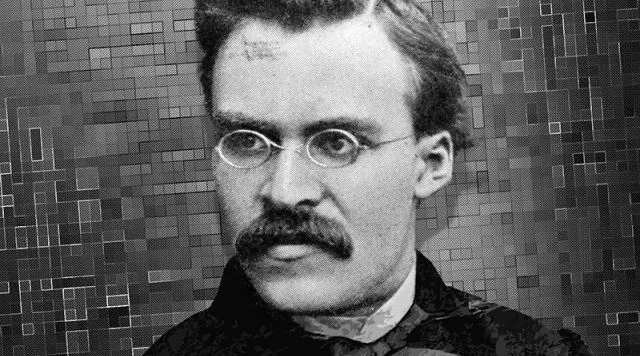
Friedrich Nietzsche quotes cut through a century of philosophical dust to deliver raw, unfiltered observations on suffering, love, and the human condition, penned by the German philosopher in the late 1800s. His words on Friedrich Nietzsche quotes about resilience and passion still hit like a cold splash of water in our modern, comfort-seeking world, daring us to embrace difficulty rather than run from it. Reading him feels less like studying history and more like getting a blunt, caring challenge from a brilliant, troubled friend.
Friedrich Nietzsche, a German philosopher writing in the 1880s, produced a vast collection of aphorisms on suffering, love, and morality. His quotes challenge readers to transform pain into strength, question traditional values, and embrace life's difficulties as essential to personal growth. His works remain widely quoted today for their piercing psychological insight.
- Nietzsche was a German philosopher who produced his most famous philosophical works during the 1880s.
- His book "Thus Spoke Zarathustra" contains some of his most celebrated quotes about overcoming adversity.
- Nietzsche's writings on love and suffering emphasize personal transformation rather than passive endurance.
- His works span several decades and continue to influence modern thought on ethics and human potential.
Nietzsche's Most Famous Quotes: The Man Who Saw Life in the Raw
Friedrich Nietzsche, the 19th-century German philosopher, had a way of writing that felt less like philosophy and more like lightning strikes. He distrusted easy comfort, rejected cozy certainties, and filled his books with sharp, unforgettable aphorisms that cut straight to the bone. His most famous lines on suffering and resilience have outlived him by more than a century, and they keep showing up in modern conversations about mental health and human endurance. "What does not kill me makes me stronger" is probably the single most quoted Nietzsche line in existence. It comes from his book Twilight of the Idols, specifically Aphorism 8 in a section he called "Maxims and Arrows." The man wrote it while his health was already deteriorating, which makes the sentiment feel less like an armchair observation and more like a hard-won confession. Right there in the same collection, Aphorism 12 delivers its quieter companion: "He who has a why to live can bear almost any how." Both lines have become so embedded in popular culture that people often repeat them without knowing they came from the same slim volume. But here is what gets lost when these Friedrich Nietzsche quotes get printed on posters and shared as daily affirmations. These were not motivational slogans meant to pump you up before a workout. They were the compressed, concentrated core of a philosophy that insisted hardship is not an obstacle to a meaningful life. It is the raw material. Nietzsche believed that pain, struggle and resistance were the very substances out of which a person builds something worth calling a self. He was not telling you to smile through suffering. He was telling you that suffering, properly metabolized, becomes strength. That blunt talk about pain is exactly why these lines keep resurfacing in resilience conversations today. In an age of comfort optimization and pain avoidance, Nietzsche's voice arrives like a splash of cold water. He does not offer sympathy. He offers a challenge. And somehow, people keep deciding that the challenge is worth hearing.When You Stare Into the Abyss: Nietzsche on Morality and Self-Overcoming
The most famous warning Friedrich Nietzsche ever wrote lands like a slow punch to the gut: "Whoever fights monsters should see to it that in the process he does not become a monster. And if you gaze long enough into an abyss, the abyss will gaze back into you." He published that line inside Beyond Good and Evil as Aphorism 146, and it has only grown sharper with age.
Nietzsche was not talking about literal monsters. He was describing what happens when a person dedicates their life to opposing something they hate, whether that is an unjust system, a political enemy, or a personal rival. The fight itself reshapes the fighter. You start by condemning cruelty, and somewhere along the way you learn to enjoy inflicting it. You begin with righteous anger, and the anger becomes a permanent resident in your chest. The abyss is not a place you fall into. It is a thing you stare at until you forget you are being watched back.
This warning feels almost prophetic in an age of online outrage and self-righteous crusades. The very people who set out to expose corruption often end up mimicking the tactics they claim to despise. Nietzsche saw this dynamic clearly more than a century before social media made it a daily ritual.
But he did not leave his readers stranded in that darkness. The same philosopher who warned about monsters also offered a way through. In Thus Spoke Zarathustra, he wrote: "One must still have chaos in oneself to be able to give birth to a dancing star." The line appears in the Prologue, Section 5, and it flips the abyss warning on its head.
Chaos is not the enemy. The problem is never that you have messy, contradictory, turbulent impulses inside you. The problem is what you do with them. Nietzsche believed that the most creative human beings were not the calmest or the most well-adjusted. They were the ones who carried real turbulence within themselves and learned to shape it into something luminous. A dancing star is not born from tidy order. It is born from the churning material that most people try to suppress or ignore.
So the two quotes sit side by side as a single teaching. If you fight darkness without understanding your own capacity for it, the darkness will claim you. But if you can hold your internal chaos without being consumed by it, you might create something that was never possible before. The risk of being devoured is real. So is the reward of transformation.
God Is Dead, and What That Means for You
No, Friedrich Nietzsche was not celebrating. When the German philosopher wrote in The Gay Science that "God is dead. God remains dead. And we have killed him," he was delivering a eulogy, not a victory speech. The famous line, spoken by a madman in Section 125, is a lament about what happens when a civilization loses its shared moral foundation.
Nietzsche saw something coming that most of his contemporaries refused to admit. The Enlightenment, science, and industrialization had quietly made the old religious worldview untenable. People were no longer looking to heaven for answers, yet they still clung to Christian morality as if it were an eternal law of nature. That contradiction, Nietzsche argued, was about to implode. The madman in his parable runs through the marketplace shouting about God's death, but the atheists he meets just mock him. They do not yet grasp that killing the divine also kills the ground beneath their own feet.
This was not a philosophical proof that God does not exist. Nietzsche never claimed to have demonstrated that. He was pointing at a cultural fact, an event already underway, and asking a chilling question: if the old absolutes are gone, what do we build in their place?
His answer, worked out across his later books, was not comforting. In The Antichrist, he went after Christianity with a scalpel. Aphorism 55 contains one of his sharpest observations: "The most common lie is the lie one tells to himself." Faith, as he saw it, was often a mask for weakness, a way to avoid the terrifying freedom of being responsible for one's own values. People who cannot bear the weight of their own choices invent a God who makes the choices for them. They prefer obedience to self-command.
Nietzsche's critique cut deeper than simple atheism. He did not think the problem was belief itself. The problem was that Christianity had trained Europeans to value weakness, humility, and self-denial, virtues that made people useful to the herd but starved their potential for greatness. When the belief collapses, as he predicted it would, the morality built on it collapses too. And then what? Nihilism. The sense that nothing matters, that there is no purpose, no direction, no reason to strive.
That is the real crisis he was naming. The madman in The Gay Science carries a lantern in broad daylight, searching for God, because he understands what the smug atheists do not: killing God means killing the source of meaning for an entire civilization. The churches may still stand, but they are empty tombs. People will keep going through the motions of morality for a while, but without the divine anchor, the whole system drifts.
So what does Nietzsche offer in response? He offers the Übermensch, the overman, the human being who creates their own values in full awareness that no external authority will validate them. He offers the eternal recurrence, the thought experiment that asks whether you could say yes to your life so completely that you would want it repeated infinitely. He offers amor fati, the love of fate, the embrace of everything that has happened to you, including the suffering.
None of this is easy. Nietzsche never promised easy. He promised something better than comfort: he promised meaning that you build yourself, honestly, without illusions. The death of God is not the end of the story. It is the opening chapter of a much harder, much more demanding one.
On Love, Women, and the Danger of Being a Plaything
Nietzsche's most uncomfortable territory is also his most revealing. In Beyond Good and Evil, he wrote one of his most quoted lines about love: "What is done out of love always takes place beyond good and evil." It is a genuine aphorism, Aphorism 153, and it captures something thrilling about the way passion upends our usual moral accounting. When you act from love, you are no longer calculating right and wrong. You have stepped outside that ledger entirely.
But the same philosopher who elevated love beyond morality also wrote things about women that are hard to read without wincing. In Thus Spoke Zarathustra, he put these words into his prophet's mouth: "The true man wants two things: danger and play. For that reason he wants woman, as the most dangerous plaything." This is not a mistranslation or a misattribution. It is genuinely there, in Part 1, in a section called "On Little Old and Young Women."
The passage gets worse before it gets better. In the same book, in a section on friendship, Zarathustra declares: "Woman is not yet capable of friendship: women are still cats and birds. Or at best, cows." These are real Friedrich Nietzsche quotes, verified against the text, and they sit uneasily next to his more soaring observations about the human spirit. The man who urged humanity to become overmen, who proclaimed the death of God, who wrote that "one must still have chaos in oneself to be able to give birth to a dancing star," also looked at half the human race and saw domestic animals.
How do we square that? The honest answer is that we do not square it. We hold both truths at once. Nietzsche was a product of his era, a 19th-century European intellectual whose ideas about gender were shaped by the world he lived in. That context does not excuse the misogyny. But it does explain it as something human and historical, not as timeless wisdom handed down from on high.
There is also a gentler thread running through his thoughts on love, one that complicates the picture. In Thus Spoke Zarathustra, he wrote that "there is always some madness in love. But there is also always some reason in madness." And in Human, All Too Human, he offered this unexpectedly tender prescription: "The only cure for the male disease of self-contempt is being loved by a clever woman." That line does not sound like a man who despised women. It sounds like a man who knew exactly what it felt like to be rescued by one, or who desperately wished he had been.
One more quote circulates widely on social media, often attributed to Nietzsche: "In the true love, it is the soul that embraces the body." It is a beautiful sentiment, but this exact wording cannot be verified as a genuine Nietzsche quote. It may be a paraphrase of his ideas, or a misattribution that has taken on a life of its own. Treat it with caution the next time you see it in a quote graphic.
What are we to make of a thinker who could write so perceptively about self-contempt and love, yet so reductively about women? Perhaps the answer lies in his own admission. He knew that human beings are contradictions, that we contain multitudes, that the same man who reaches for the stars can also stumble over his own prejudices. His quotes about women are not his finest hour. But they are part of his record, part of the messy, brilliant, deeply flawed legacy of Friedrich Nietzsche quotes that we are still wrestling with today.
Walking, Music, and the Art of Living: Nietzsche's Practical Wisdom
Friedrich Nietzsche did not write from a tidy desk. The German philosopher composed his most piercing thoughts while tramping through the Swiss Alps and the Italian Riviera, notebook in hand. "All truly great thoughts are conceived while walking," he declared in Twilight of the Idols, Aphorism 34. He meant it literally. When his body cooperated, he walked for hours, and the rhythm of his boots on mountain paths became the rhythm of his sentences.
That same book, Twilight of the Idols, holds another of his most quoted lines. "Without music, life would be a mistake," he wrote in Aphorism 33. This was not an ornament. Nietzsche carried a lifelong devotion to Johann Sebastian Bach, whose music he said gives the feeling of being present when God created the world. His friendship with composer Richard Wagner began with mutual admiration, when Nietzsche felt he had found a kindred spirit. The bond soured badly, and Nietzsche's later pamphlet The Wagner Case tore apart the very man he had once idolized. Yet even in his fury, he never abandoned music itself. He only insisted on honesty about what art does to us.
His philosophy always circled back to the body, that inconvenient container we so often ignore. In Thus Spoke Zarathustra, he has his prophet say, "There is more wisdom in your body than in your deepest philosophy." The line appears in the chapter "On the Despisers of the Body," and it cuts against two thousand years of thinkers who treated the flesh as a prison for the mind. Nietzsche flipped the hierarchy. Your gut knows things your brain cannot articulate. Your posture shapes your mood. Your exhaustion invites old thoughts to attack you, as he put it, "when we are tired, thoughts that we conquered long ago come to attack us again."
Which brings us to his most famous call to action, scrawled in Twilight of the Idols, Aphorism 8: "What does not kill me makes me stronger." It has become a gym slogan, a meme, a tattoo. But read it in context and it is something else entirely. Nietzsche wrote it for a man who had watched his health collapse, who could barely hold a pen. He was not cheering from the sidelines. He was describing a survival strategy. Suffering, in his view, is not an enemy to be defeated. It is raw material to be shaped, the clay from which a self is built. The person who treats pain as an obstacle stays small. The person who treats it as information grows.
So take the Friedrich Nietzsche quotes that have become wallpaper and read them again with his biography in mind. The walking philosopher, the music lover, the man who trusted his body more than his arguments. He was not writing for scholars in quiet libraries. He was writing for people who get up, hurt, walk, listen, and somehow keep going. His wisdom was never meant to stay on the page. It was meant to be lived, one sore step at a time.

Frequently asked questions
What did Nietzsche mean by "God is dead"?
When Friedrich Nietzsche wrote "God is dead. God remains dead. And we have killed him" in The Gay Science (Section 125), he was not celebrating. He was issuing a warning about the collapse of Europe's shared moral foundation, observing that the Enlightenment and scientific progress had made belief in God untenable for modern people, leaving a cultural void that nothing had yet filled. The madman in that passage runs through the marketplace with a lantern in broad daylight, searching for God. The bystanders mock him. They do not yet understand what his news means. Nietzsche's point was that the death of God leaves humanity without an absolute source of meaning, and we have not yet built anything to replace it. He saw this as both a crisis and an opportunity, a chance to create new values rather than a triumphant atheist proclamation.
Did Nietzsche believe in the concept of the Übermensch?
Nietzsche introduced the Übermensch, or Overman, in Thus Spoke Zarathustra as an ideal of human self-overcoming, a vision of what a person could become by fully embracing life and creating their own values. He explicitly wrote that "there has never been a superman yet," presenting it as a future possibility rather than an existing reality. The concept is frequently misunderstood. It has nothing to do with racial superiority or a master race, an interpretation that Nazi propagandists later twisted for their own purposes. Nietzsche's Übermensch is a solitary, creative figure who affirms life in all its suffering and joy, who says yes to existence even at its most terrible. Zarathustra, the prophet figure in the book, is not himself the Übermensch. He is the teacher who points the way toward this ideal, urging his listeners to become who they are rather than imitate what has come before.
What are Nietzsche's most famous quotes about suffering?
Two of Nietzsche's most quoted lines about hardship come from Twilight of the Idols . "What does not kill me makes me stronger" appears as Maxim 8, and "He who has a why to live can bear almost any how" appears as Maxim 12 in the opening section of that work. The second line, in particular, carries a deep psychological insight. Nietzsche observed that people who have a purpose, a reason to endure, can withstand extraordinary pain and difficulty. Those without such a purpose crumble under far lighter burdens. He returned to this theme throughout his later writings, arguing that suffering is not something to be eliminated but something to be transformed into strength, growth, and self-mastery.
Why did Nietzsche criticize religion and morality?
Nietzsche's critique of religion and traditional morality, developed across books like Beyond Good and Evil and On the Genealogy of Morality , centered on his claim that Christian morality had inverted natural human values. He argued that it favored the weak, the sick, and the resentful, teaching them to see strength, pride, and worldly success as sinful while elevating humility, pity, and meekness as virtues. This was not simple atheism. Nietzsche called for a "revaluation of all values," a complete rethinking of what we consider good and evil. He saw traditional morality as a system born from ressentiment, the bitter resentment of those who could not compete with the strong and therefore declared strength itself to be wicked. His philosophy of Friedrich Nietzsche quotes and ideas asks us to question whether our inherited moral framework serves life or diminishes it, and to have the courage to create new values that affirm existence in all its complexity. Editorial note: Any facts which remain unconfirmed are presented as such, hedged carefully to distinguish verified biographical details from interpretive readings of his work.
Got a take on this? Add your voice to the conversation below →
No comments yet. Be the first.